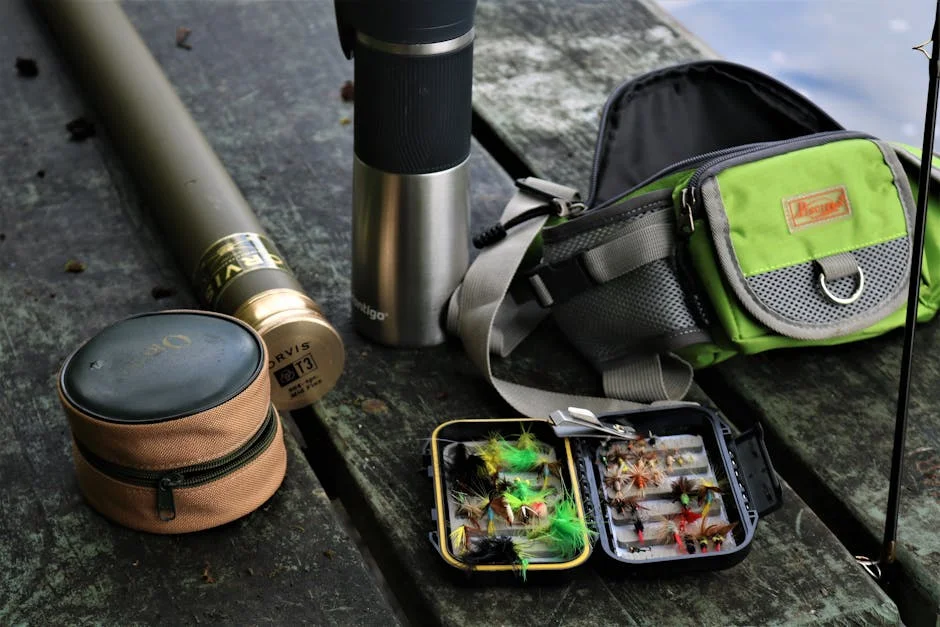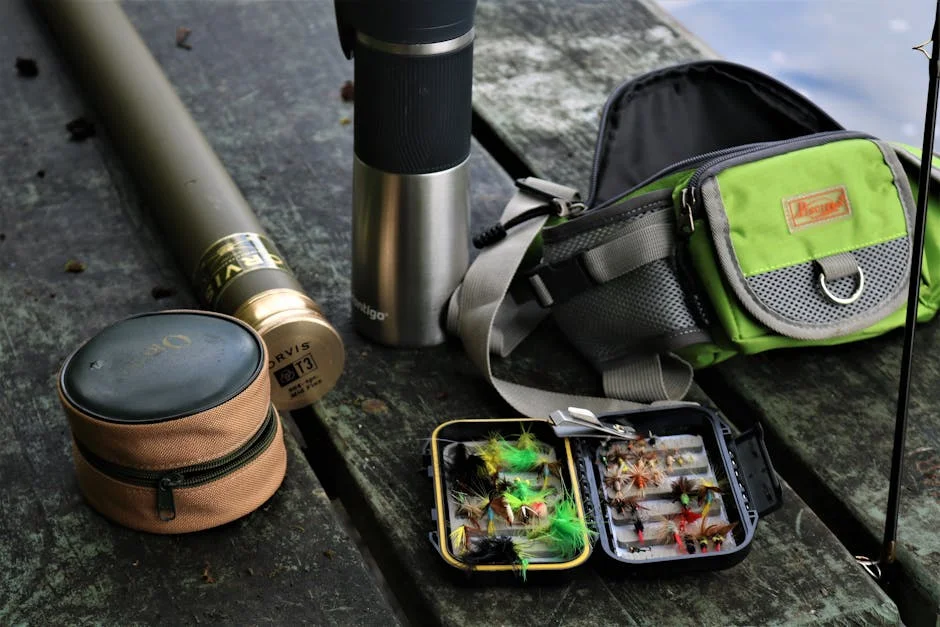
Best Bass Flies: A Buyer's Guide to Productive Patterns

Affiliate disclosure: Some links on this page are affiliate links. If you buy through them we earn a small commission at no extra cost to you. Recommendations are research-driven; we don't claim personal use of every product reviewed. Product prices and availability are accurate as of the date published and are subject to change. Always check Amazon for current pricing before purchasing. Learn more.
Quick Picks
Hand-Tied Fly Fishing Flies Kit, Dry Wet Flies Nymphs Streamers Assortment for Trout & Bass with Waterproof Fly Box
Varied pattern selection covers both surface and subsurface presentations for bass
Buy on Amazon80 pcs YDIUDL 3rd Gen Fly Fishing Flies Kit - Hand-Tied Dry Flies for Trout, Bass, Salmon, Panfish - Delicate Lifelike Shapes, Lures for Freshwater Fly Fishing in Rivers & Lakes
High fly count at low cost-per-fly lets you stock a full bass box without hesitation
Buy on AmazonFly Fishing Poppers Flies, Fly Popper Lures Bass Bluegill Crappie Trout Salmon Panfish Perch Popper Flies Kit for Fly Fishing
Foam poppers produce the explosive surface strikes that make bass on a fly rod addictive
Buy on Amazon| Product | Price Range | Top Strength | Key Weakness | Buy |
|---|---|---|---|---|
| Hand-Tied Fly Fishing Flies Kit, Dry Wet Flies Nymphs Streamers Assortment for Trout & Bass with Waterproof Fly Box best overall | $$ | Varied pattern selection covers both surface and subsurface presentations for bass | Pattern variety is broad rather than bass-specific; some flies are better suited to trout | Buy on Amazon |
| 80 pcs YDIUDL 3rd Gen Fly Fishing Flies Kit - Hand-Tied Dry Flies for Trout, Bass, Salmon, Panfish - Delicate Lifelike Shapes, Lures for Freshwater Fly Fishing in Rivers & Lakes also consider | $$ | High fly count at low cost-per-fly lets you stock a full bass box without hesitation | Hook quality is inconsistent; worth checking point sharpness on each fly before use | Buy on Amazon |
| Fly Fishing Poppers Flies, Fly Popper Lures Bass Bluegill Crappie Trout Salmon Panfish Perch Popper Flies Kit for Fly Fishing also consider | $$ | Foam poppers produce the explosive surface strikes that make bass on a fly rod addictive | Best in calm, low-light conditions; loses effectiveness on choppy or wind-riffled water | Buy on Amazon |
| Tigofly 12 pcs Wounded Minnow Fly Ice Dub UV Polar Fry Slowly Sinking Salmon Trout Steelhead Fly Fishing Flies Lures Set-Size 8 also consider | $$ | Realistic minnow profile works well as a searching streamer along bass-holding structure | Weighted for sinking presentation; not interchangeable with surface or shallow-water approaches | Buy on Amazon |
Bass have a reputation for being easy, cast anywhere, catch fish, repeat. The reality on pressured water is more complicated. The right fly, fished with some confidence in a specific zone, produces fish that random pattern-cycling doesn’t touch. Exploring the full range of options in Flies & Patterns reveals just how many directions bass fly selection can go, and how much noise there is to cut through.
What separates a productive bass fly box from an overstuffed one comes down to understanding a few principles: how bass relate to structure, how they key on prey size and silhouette, and when surface action beats subsurface retrieves. The products reviewed here address those variables from different angles.
What to Look For in Bass Flies
Silhouette and Prey Imitation
Bass are ambush predators. They key on silhouette before color in most conditions, a minnow profile, a crayfish shape, a struggling insect on the surface registers first as prey before any detail triggers the strike. This means the outline of a fly matters more than its exact color match. A streamer that pushes water and collapses on the pause looks alive in a way that a stiff, over-dressed pattern doesn’t.
Verified buyers and experienced bass anglers consistently note that the flies producing the most consistent results share one trait: they move naturally in the water column without angler effort. Marabou breathes on a dead drift. Deer hair compresses and flares. UV materials catch light in murky water where visibility drops. These aren’t decorative choices, they’re functional ones that change how a fly behaves between strips.
Surface vs. Subsurface Approach
Poppers and foam surface flies produce explosive, visible strikes that make bass fishing on a fly rod genuinely addictive. But surface presentations require the right conditions: low light, calm water, fish actively feeding in the shallows. Early morning and late evening on still ponds or lake coves are the textbook scenarios. Midday summer heat pushes fish deeper and into shade, where subsurface patterns, streamers, leeches, weighted crayfish, become the right answer.
The decision between surface and subsurface isn’t a preference call; it’s a reading-the-water call. A popper drag-stripped over a weed edge at dawn can produce fish that a streamer wouldn’t touch an hour later. Matching the fly type to the moment, not the angler’s mood, is the discipline that separates consistent from occasional bass anglers.
Hook Quality and Durability
Assortment kits vary enormously in hook quality. Bass hit hard and fight harder, a soft wire hook or a poorly sharpened point will fail on the hookset or straighten under pressure on a heavy fish. Owner reviews across bass fly kits consistently flag hook quality as the first thing to evaluate: does the point stay sharp after a few casts into structure, and does the wire hold under load?
Beyond sharpness, hook gap matters. A popper or surface bug with a hook gap too narrow for a bass’s mouth produces short strikes and frustrating misses. The gap needs to be proportional to the fly body. Kits designed specifically for bass tend to account for this; multi-species kits intended for trout first may carry hooks sized more conservatively than bass fishing demands.
Pattern Versatility Across Water Types
The final criterion worth understanding before buying is versatility. Bass in a mountain reservoir behave differently from largemouth in a warm, weedy farm pond. A kit built entirely around one scenario, say, surface bugs for shallow-water largemouth, has limited utility for the angler who fishes varied water. The stronger general-purpose bass fly collections include a mix: something for the surface, something for the mid-column, something weighted for bottom structure. Reviewing the full range of bass and warmwater fly options before settling on a single kit is worth the time, the right combination depends on where you fish, not just what species you’re after.
Top Picks
Hand-Tied Fly Fishing Flies Kit, Dry Wet Flies Nymphs Streamers Assortment
The Hand-Tied Fly Fishing Flies Kit earns the best overall position here because it addresses the full water column rather than betting on one presentation style. The assortment includes dry flies, nymphs, and streamers, which means a bass angler fishing a morning surface bite can transition to subsurface patterns as conditions change without pulling out a second box.
The waterproof fly box included with this kit is a genuine functional addition, not an afterthought. Owner reports consistently note that the box closes securely and that the foam holds flies without crushing materials, which matters for marabou-wing streamers that lose their action if compressed during storage. For bass fishing specifically, the streamer selection draws the strongest consistent feedback: the profiles suggest minnow and leech shapes that move well on a strip-pause retrieve.
The dry and nymph patterns in this kit skew toward trout application, which is honest to the listing’s multi-species positioning. Bass anglers using this kit will likely find the streamers and wet flies most productive for their target species. That’s not a criticism, it’s a buying consideration. For an angler who fishes both trout and bass across the same season, this kit covers both without requiring separate purchases.
Check current price on Amazon.
80 pcs YDIUDL 3rd Gen Fly Fishing Flies Kit
The 80 pcs YDIUDL 3rd Gen Fly Fishing Flies Kit is built for the angler who wants breadth, eighty patterns across multiple categories means there’s something to try in nearly every condition. The third-generation designation reflects actual refinements in material selection and hook specification according to verified buyer reports, with improved sharpness noted compared to earlier versions.
For bass fishing, the value of an eighty-piece kit is pattern confidence without pattern commitment. The Bighorn guide who stripped a box down to four patterns was right about focus, but bass angling legitimately benefits from variety in a way that tailwater trout fishing sometimes doesn’t. A foam popper, a weighted streamer, a surface hair bug, and a subsurface leech serve genuinely different functions across different moments in the same fishing day. An eighty-piece kit makes that range of experimentation viable without repeated purchases.
The lifelike construction noted in owner reviews, attention to proportions and material selection that creates natural movement, is the strongest differentiator from lower-priced kits at this piece count. The trade-off is that no single pattern category reaches the depth a specialist would want. Bass anglers targeting a specific hatch or a tight structural scenario will need to supplement. For general freshwater bass fishing across rivers and lakes, the YDIUDL kit provides sufficient starting coverage.
Check current price on Amazon.
Fly Fishing Poppers Flies, Fly Popper Lures Bass Bluegill Crappie
For surface presentation specifically, the Fly Fishing Poppers Flies kit is the focused choice. Poppers are bass flies in a category of their own, the surface disturbance, the pause, the explosive take, and a kit built entirely around that presentation delivers a depth of variety that a mixed assortment can’t match. Multiple colors, hook sizes, and body profiles in one purchase lets an angler cycle through surface options until the fish communicate a preference.
The multi-species coverage, bass, bluegill, crappie, panfish, reflects how poppers actually fish. A smallmouth bass, a big bluegill, and a crappie will all hit a properly sized popper when the conditions are right, and the distinction between species often comes down to fly size and the water you’re covering, not the pattern itself. Verified buyers consistently report productive sessions on panfish alongside bass, which points to the kit’s hook sizing landing in a range that covers multiple species genuinely rather than by marketing copy.
Surface fishing with poppers is also the most accessible form of bass fly fishing for anglers transitioning from conventional gear. The retrieve, cast, let the rings settle, strip, pause, is straightforward. The strike is visual. The kit format removes the gear barrier of sourcing individual popper sizes and colors. For new bass fly anglers or experienced trout fly fishers adding warmwater fishing to their season, this is the most direct on-ramp.
Check current price on Amazon.
Tigofly 12 pcs Wounded Minnow Fly Ice Dub UV Polar Fry
The Tigofly 12 pcs Wounded Minnow Fly occupies a specific and important lane: subsurface, slow-sinking, minnow profile. The “wounded minnow” design concept is not marketing language, it describes a functional imitation principle. Bass, salmon, trout, and steelhead all key on erratic, struggling baitfish behavior. A fly that sinks slowly and can be manipulated with pauses and subtle twitches mimics distressed prey in a way that a fast-sinking, densely weighted fly cannot.
The Ice Dub UV and Polar Fry materials used in this pattern are worth understanding. Ice Dub is a loose, fibrous synthetic dubbing that catches light and creates a translucent body, in clear water, it reads as something alive. UV materials respond to ultraviolet light that penetrates water even on overcast days, making the fly visible at depth when conventional materials look dull. Owner reports on bass and salmon applications specifically call out the effectiveness in lower-light or off-color water conditions where this material advantage shows most clearly.
At twelve pieces in a single pattern profile, this kit is for the angler who has already done their homework and knows that subsurface minnow imitations are the right tool for their water. It doesn’t offer the breadth of a mixed assortment. What it offers is consistency and depth within one productive category. As an addition to an existing bass fly box rather than a standalone starting point, the case for this set is strong.
Check current price on Amazon.
Buying Guide
Match the Fly to the Season and Water Temperature
Water temperature drives bass behavior more directly than almost any other variable. Bass are cold-blooded, their metabolism, and therefore their aggression and feeding range, tracks with water temp. In warm summer conditions, bass are aggressive and will chase moving prey across significant distances. Surface poppers and actively stripped streamers produce. In cold water, early spring or late fall, bass are lethargic. Slow-sinking patterns fished with extended pauses, like the Tigofly Wounded Minnow, match that metabolism. A fly box that works in July may be the wrong starting point in April.
Structure Determines Presentation Depth
Bass are structure-oriented fish. Docks, submerged timber, weed edges, rock piles, these are the locations where fish hold and ambush prey. The structure you’re fishing determines whether you need a surface bug, a mid-column streamer, or a weighted fly that gets down to the bottom quickly. Fishing open water without structure usually produces less than working a specific edge or object. Choose your fly type after you’ve identified where the fish are holding, not before.
Understanding structure also changes retrieve mechanics. Working a streamer alongside a dock post requires short, targeted strips. Covering a long weed edge rewards a longer, faster retrieve that covers water. The Flies & Patterns section covers retrieve mechanics alongside pattern selection, both variables matter for bass.
Single-Species vs. Multi-Species Kits
Bass fly kits split into two categories: those designed specifically for bass (usually including surface bugs and larger hook sizes) and those designed for multi-species coverage (trout, bass, panfish, often with smaller hooks and more nymph patterns). The right choice depends on whether you’re a dedicated bass angler or someone who fishes bass as one species among several.
A dedicated bass angler fishing primarily largemouth in warm, weedy water needs surface bugs, heavy streamers, and crayfish patterns, not a box full of size 18 nymphs. The multi-species angler who switches between trout rivers and bass ponds across the same season benefits from a mixed kit like the Hand-Tied Fly Fishing Flies Kit, which serves both without forcing two separate purchases.
Hook Size Proportions for Bass
Bass mouths are large relative to most trout-focused fly patterns. A fly with a size 16 hook that produces consistent trout strikes may produce consistent short strikes from bass, the hook gap isn’t wide enough, or the fish simply can’t get purchase. Bass flies typically run size 2 through 10 for larger patterns, with panfish-sized poppers dropping to size 10 or 12. When evaluating a kit’s suitability for bass specifically, confirm that the hook sizes listed match the target species rather than defaulting to trout sizing.
Building a Functional Bass Box vs. Buying One
A purchased kit gets an angler fishing immediately. A self-assembled box built over time, pattern by pattern, reflects specific water knowledge and fishing conditions. Both approaches have merit. The lesson from years of over-building fly boxes, four hundred patterns is genuinely counterproductive, is that simplicity and confidence in a few well-chosen patterns beats optionality for its own sake. A purchased kit that covers surface, mid-column, and subsurface presentations gives most bass anglers everything they need to develop that pattern confidence without the analysis paralysis of too many choices.
Frequently Asked Questions
What is the difference between bass poppers and bass streamers?
Poppers are surface flies designed to create noise and water disturbance on retrieve, triggering reaction strikes from bass holding near the surface or in shallow structure. Streamers are subsurface flies that imitate baitfish or other swimming prey, fished below the surface on a strip-pause retrieve. Poppers excel in calm, warm conditions; streamers produce in deeper water, faster current, or when bass have moved off the surface. A complete bass fly box includes both.
Are multi-species fly kits appropriate for dedicated bass fishing?
Multi-species kits are a practical starting point, but their hook sizing and pattern selection often skew toward trout first. A kit that includes substantial streamer and surface bug coverage alongside trout patterns, like the Hand-Tied Fly Fishing Flies Kit, works well for the angler fishing both species. A bass-only angler on warm, weedy water will get more value from a kit weighted toward larger hooks and surface presentations.
How many flies do I actually need for a day of bass fishing?
Owner consensus and field reports point to the same answer: fewer than most people pack. A surface popper in two or three sizes, a weighted minnow streamer, and a mid-column wet fly covers the primary presentation scenarios for a full day of bass fishing. The 80 pcs YDIUDL kit provides breadth for experimentation, but most productive bass sessions resolve to two or three patterns that match conditions on that specific day.
Do UV materials in bass flies make a meaningful difference?
Field reports and verified buyer accounts suggest UV materials like those in the Tigofly Wounded Minnow produce an advantage in specific conditions: off-color water, low-light periods, and deeper presentations where conventional materials lose visibility. In clear, bright-light conditions on shallow water, UV advantage is harder to isolate from other variables. For bass fishing in murky warmwater environments, which describes many productive bass lakes, the material choice is worth the consideration.
What hook size should bass flies be?
Most productive bass patterns run from size 2 to size 10, with surface poppers for largemouth often in the size 2 to 6 range and smaller panfish poppers dropping to size 10 or 12. Trout-sized hooks in the size 14 to 20 range are too small for reliable hooksets on adult largemouth and smallmouth bass. When evaluating any kit for bass fishing specifically, confirm the hook size range matches the species, a kit sized for trout will produce short strikes and missed fish on bass water.
Where to Buy
Hand-Tied Fly Fishing Flies Kit, Dry Wet Flies Nymphs Streamers Assortment for Trout & Bass with Waterproof Fly BoxSee Hand-Tied Fly Fishing Flies Kit, Dry … on Amazon