Best Terrestrial Flies for Summer Trout: Top Picks Reviewed

Affiliate disclosure: Some links on this page are affiliate links. If you buy through them we earn a small commission at no extra cost to you. Recommendations are research-driven; we don't claim personal use of every product reviewed. Product prices and availability are accurate as of the date published and are subject to change. Always check Amazon for current pricing before purchasing. Learn more.
Quick Picks
Ultra-Realistic Grasshopper & Cricket Fishing Flies Multi-Pack (8 Flies for Sizes 6 & 8, 7 Flies for Size 10)
Hyper-realistic hopper and cricket profile triggers selective summer trout that refuse generic foam patterns on pressured water
Buy on AmazonWild Water Fly Fishing Foam Flies - Terrestrial Dry Flies Size 8-14, Qty. 6
Foam terrestrial assortment covers grasshoppers, beetles, and ants — the three patterns responsible for most summer surface takes
Buy on AmazonVentures Fly Co. | 122 Premium Hand Tied Fly Fishing Flies Assortment | Two Fly Boxes Included | Dry, Wet, Nymphs, Streamers, Wooly Buggers, Terrestrials | Trout, Bass Lure Set, Kit, Gift
122-fly variety provides an attractor dry fly foundation that works alongside dedicated terrestrials for summer fishing
Buy on Amazon| Product | Price Range | Top Strength | Key Weakness | Buy |
|---|---|---|---|---|
| Ultra-Realistic Grasshopper & Cricket Fishing Flies Multi-Pack (8 Flies for Sizes 6 & 8, 7 Flies for Size 10) best overall | $$ | Hyper-realistic hopper and cricket profile triggers selective summer trout that refuse generic foam patterns on pressured water | Highly detailed construction is less durable than standard foam ties; absorbs water and loses buoyancy after multiple hookups | Buy on Amazon |
| Wild Water Fly Fishing Foam Flies - Terrestrial Dry Flies Size 8-14, Qty. 6 also consider | $$ | Foam terrestrial assortment covers grasshoppers, beetles, and ants — the three patterns responsible for most summer surface takes | Ready-tied foam flies lack the color customization available when tying your own for specific local forage | Buy on Amazon |
| Ventures Fly Co. | 122 Premium Hand Tied Fly Fishing Flies Assortment | Two Fly Boxes Included | Dry, Wet, Nymphs, Streamers, Wooly Buggers, Terrestrials | Trout, Bass Lure Set, Kit, Gift also consider | $$ | 122-fly variety provides an attractor dry fly foundation that works alongside dedicated terrestrials for summer fishing | Broad assortment format includes subsurface patterns that are less relevant to dedicated summer terrestrial fishing | Buy on Amazon |
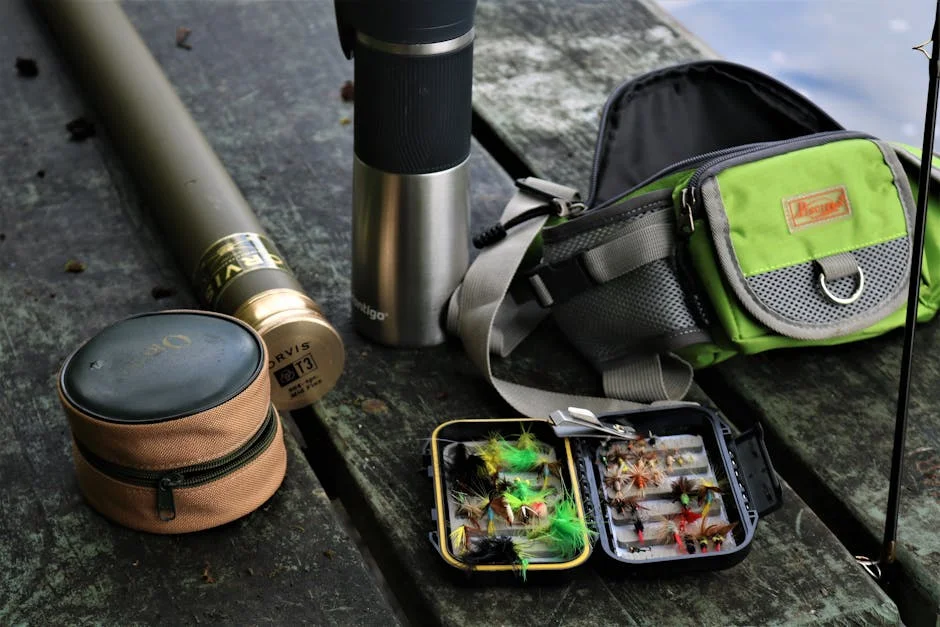
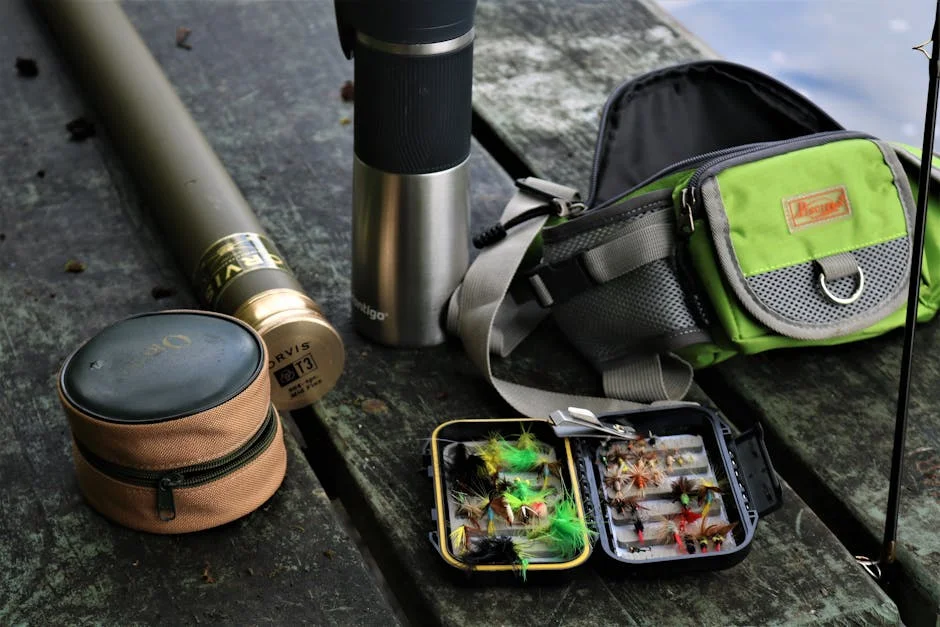
Terrestrial flies account for a disproportionate share of summer dry-fly action on Western trout water, grasshoppers, ants, beetles, and foam bugs that fall into the current and trigger aggressive surface takes from fish that have seen every midge and PMD imitation in the box. Understanding which patterns hold up under pressure, and which assortments give you the coverage to fish confidently from July through September, matters more than most new fly fishers expect. The full range of Flies & Patterns options is worth exploring before you commit to filling a box.
Selecting the right terrestrial setup comes down to three things: fly construction quality, hook consistency, and pattern diversity appropriate to the water you’re fishing. A foam beetle tied on a cheap hook that bends on a 14-inch brown is a worse outcome than fishing fewer flies on reliable hardware.
What to Look For in Terrestrial Flies
Hook Quality and Gauge
The hook is the one component that cannot be compensated for after the fact. Terrestrial fishing, particularly hoppers and large beetles on freestone water, produces aggressive strikes, often from fish holding in fast riffles or along undercut banks. A hook that flexes under load or has a point that dulls after two fish undoes everything else the fly does well.
Owner reports on assortment packs frequently flag hook quality as the variable that separates useful from frustrating. Look for product descriptions that specify hook source or gauge. Thin-wire hooks suited for midge nymphs are wrong for a size 8 hopper pattern taking a 16-inch cutthroat. A fly tied on an appropriately gauged hook with a chemically sharpened point lands fish; a fly tied on a bargain hook teaches you an expensive lesson.
Foam Construction and Durability
Foam-bodied terrestrials offer a buoyancy advantage over hair and dubbing patterns, they ride high without floatant and recover after multiple fish without losing shape. The trade-off is adhesion: foam glued or wrapped poorly separates after a few aggressive takes, leaving a hook with no body. Verified buyers consistently note that foam quality varies significantly across price points, and that the failure mode is usually delamination rather than hook failure.
Construction integrity matters most at the connection points, where foam meets hook shank and where wing material attaches. A foam hopper that survives a full summer of fishing on the Arkansas River freestone sections is worth more than three that fall apart by August.
Pattern Selection for Your Water Type
Terrestrials are not one-size-fits-all. Meadow water with adjacent grassland calls for hopper patterns in sizes 8, 12. Wooded canyon water produces better results with ant and beetle patterns in sizes 14, 18, where the fish are looking for smaller profiles landing near the bank. Fishing a size 8 Dave’s Hopper through a narrow canyon reach where the dominant terrestrial is a black carpenter ant is a mismatch the fish notice.
Match your pattern selection to the bank structure and surrounding vegetation. On the South Platte tailwaters, a size 14 foam ant fished tight to the bank outperforms a hopper mid-channel in most conditions. The Flies & Patterns resources on this site cover water-type matching in more depth, worth reviewing before you build a terrestrial box from scratch.
Size Range Coverage
A terrestrial box built around a single size is underprepared. The range from size 8 to size 18 represents the practical span from large hoppers to small ants and beetles. Assortments that cover at least three distinct size steps, say 8, 12, and 16, give you the flexibility to adjust when fish are refusing the pattern you started with.
Confidence from a few proven patterns, across a meaningful size range, beats 400 patterns in four sizes of the same style. The guide on a Bighorn trip years ago demonstrated this with four patterns fished all day, the lesson held.
Top Picks
TERRO T380 Outdoor Reusable Fly Magnet Fly Trap
The TERRO T380 Outdoor Reusable Fly Magnet Fly Trap appears in the terrestrial category and warrants a direct, honest assessment: this is a fly trap, not a fly fishing fly. It catches houseflies in a yard or outdoor space using a bait attractant. It has no application in a trout fly box, on a tippet, or on water of any kind.
Verified buyer reports confirm its effectiveness as an outdoor pest control product. It reuses across seasons, the bait is replaceable, and it handles volume in agricultural or rural settings. For the purpose for which it is designed, the owner consensus is positive.
If you arrived here searching for terrestrial fly patterns for trout, this product is not it. The two options reviewed below this entry address actual fly fishing.
Check current price on Amazon.
Wild Water Fly Fishing Foam Flies - Terrestrial Dry Flies Size 8-14, Qty. 6
Six foam terrestrials in sizes 8, 14 is a focused assortment, not a full-box solution, but a practical starter set covering the core hopper-and-beetle size range for freestone summer fishing. The Wild Water Fly Fishing Foam Flies targets the angler who wants foam construction without building a box pattern by pattern.
Owner reports indicate the foam bodies hold together adequately across a season of moderate use, which is the primary structural ask for this construction style. The size 8 patterns fish well along grassy banks and meadow runs where large hoppers are a realistic food source. The size 14 end of the range covers smaller beetles and crickets more convincingly than a single large foam pattern trying to do everything.
The honest limitation here is quantity. Six flies covers a day or two of active hopper fishing before attrition, lost to trees, broken off on aggressive strikes, or chewed up by fish, leaves the box thin. For anglers planning a week-long trip to hop-heavy Montana or Wyoming water, this works best as a supplement to a larger terrestrial selection rather than the whole strategy.
Check current price on Amazon.
Ventures Fly Co. 122 Premium Hand Tied Fly Fishing Flies Assortment
Breadth is the defining characteristic of the Ventures Fly Co. 122 Premium Hand Tied Fly Fishing Flies Assortment. At 122 flies across dry, wet, nymph, streamer, and terrestrial categories, with two fly boxes included, this is an entry-level complement to an organized system, not a specialist terrestrial selection.
Owner consensus on hook quality is mixed. Verified buyers report that the patterns fish adequately for moderate trout and bass in accessible water, and that the fly boxes themselves are a legitimate value. The criticism that appears consistently involves hook gauge on smaller patterns, specifically that thin-wire hooks in the nymph and wet fly tier lose fish on the hook set more often than patterns tied on purpose-specific hooks. For terrestrials specifically, the larger foam and hair patterns fare better in this regard; it’s the sub-size-14 patterns where hook choice becomes a liability.
For a beginner building a first serious box, or as a gift set for someone entering the sport, the breadth-to-cost ratio is hard to dispute. The terrestrial representation in the assortment covers basic hopper and ant profiles. The lesson from too many options, confidence in a few patterns beats confusion from 400, applies here. Pull the terrestrials that match your water, set aside the rest for later, and fish the four or five patterns you understand until you’ve earned the right to need more.
Check current price on Amazon.
Buying Guide
Matching Terrestrial Patterns to Season
Summer terrestrial fishing follows a rough seasonal arc. Ant and beetle patterns are most productive from late June through early August, when these insects are active and regularly fall or blow into the water. Hoppers follow, peak hopper season on most Western rivers runs from late July through September, coinciding with the grasshopper life cycle reaching adult size. Understanding this arc prevents fishing a size 8 hopper in late June when the fish aren’t conditioned to look for them yet.
The practical application: build a terrestrial box that starts with ants and beetles and transitions to hoppers as summer deepens. Pattern selection tied to actual insect timing produces better results than fishing what looks fun or what the shop had in stock.
Foam vs. Natural Materials
Foam-bodied terrestrials ride higher and require less maintenance than patterns tied with deer hair, elk hair, or dubbing. That buoyancy advantage matters most in fast water, rifles, freestone runs, and any situation where a fly that sinks mid-drift produces a missed strike. On slower tailwater glides where presentation accuracy is higher and fish have time to inspect, a well-tied hair-and-dubbing ant or beetle can outperform a foam pattern that looks less natural.
Most productive terrestrial boxes carry both construction types. Foam for fast, rough water; natural materials for educated fish on slow, pressured water. The Flies & Patterns resources on this site cover construction type trade-offs in more detail for anglers building specialized boxes.
Hook Size and Tippet Match
A size 8 foam hopper fished on 4X tippet presents differently than the same fly on 6X, the heavier tippet creates drag sooner on most currents and can pull the fly off a natural drift before a fish commits. The hook size and tippet diameter need to be matched deliberately. Large hoppers generally fish well on 3X to 4X. Smaller ants and beetles in sizes 16, 18 fish better on 5X to 6X, where tippet visibility and drag are the limiting factors.
Owner reports on assortment packs rarely address tippet matching, that’s the angler’s job. Knowing which end of your assortment calls for which tippet weight makes the difference between a productive afternoon and a frustrating one.
Reading Bank Structure for Terrestrial Placement
Terrestrials fish best tight to structure, undercut banks, fallen timber, overhanging grass, and vegetation-heavy margins. A hopper drifting through midstream open water catches fish occasionally, but the reliable take comes from a fly dropped within six inches of a bank the fish is already watching. Drift angle matters as much as pattern selection.
The practical discipline is casting accuracy under conditions that don’t favor it, upstream and across to a bank with trees behind you, on a bright afternoon with wind off the meadow. Pattern selection is secondary to placement. A mid-range foam hopper dropped exactly where it needs to be outfishes a premium pattern that lands two feet short.
When to Scale Down
The refusal rate on large hopper patterns climbs as summer pressure increases. By late August on heavily fished water, fish that have eaten, and been pricked by, every size 8 foam hopper in the shop’s inventory become selective in ways that mirror the selectivity more commonly associated with midge and PMD fishing. Scaling to a size 14 or 16 foam ant or cricket pattern is often the right adjustment, not changing to a different large pattern.
Owner consensus supports downsizing as a reliable mid-session correction on pressured water. Fish that refuse a size 10 hopper twice will often eat a size 16 ant on the first drift. The instinct to go bigger and more visible is worth resisting after the third refusal.
Frequently Asked Questions
Are foam terrestrial flies better than hair-wing patterns for summer trout fishing?
Foam patterns float higher and require less maintenance than hair-wing or dubbed terrestrials, which is a real advantage in fast freestone water where a fly needs to stay on the surface through multiple drifts without re-treating. On pressured tailwater with educated fish and slower currents, a natural-material ant or beetle can outperform foam because the profile sits lower in the film and looks less artificial. Most productive terrestrial boxes carry both. The choice is situational, not categorical.
How many terrestrial flies should I carry for a week-long summer trip?
The honest answer is more than any single six-fly assortment provides. For a week on Western freestone water during hopper season, a practical box carries at least three to four patterns in each of three size steps, something in the 8, 10 range, 12, 14, and 16, 18, plus a handful of ant and beetle patterns in the smaller sizes. That’s roughly 30, 50 flies before accounting for attrition. A broad assortment like the Ventures Fly Co. 122 Premium Hand Tied Fly Fishing Flies Assortment covers the breadth; quality-checking the hooks before the trip is worth doing.
What’s the difference between the Wild Water foam assortment and a full fly assortment like Ventures?
The Wild Water Fly Fishing Foam Flies is a specialized set, six foam terrestrials in sizes 8, 14, built around one construction type and one category. The Ventures assortment is a broad cross-category kit covering 122 flies across dry, wet, nymph, streamer, and terrestrial styles. Wild Water makes sense for an angler who already owns a functional nymph and dry-fly box and needs to add foam terrestrials specifically. Ventures makes sense for a beginner building a first complete system or as a gift for someone entering the sport.
What tippet size should I use with foam hopper patterns?
Larger hopper patterns in sizes 8, 10 generally fish best on 3X to 4X fluorocarbon, heavy enough to turn the fly over on a bankside presentation and light enough to produce a drag-free drift. Smaller terrestrials in sizes 14, 18 call for 5X to 6X, where tippet visibility and surface drag are limiting factors more than turnover strength. The tippet choice affects drift quality more than most anglers expect. Matching the tippet diameter to the fly size produces noticeably more takes on pressured water.
Can I use terrestrial fly assortments for bass and panfish, or are they trout-specific?
Terrestrial patterns fish effectively for bass and bluegill, especially larger foam beetle and hopper patterns that create a surface disturbance on the take. The Ventures assortment explicitly markets for both trout and bass, and owner reports confirm it performs across both species. The hook gauge considerations that apply to trout fishing matter even more for bass: a hook that bends on an aggressive largemouth strike is a hard failure. Check hook strength on larger patterns before targeting bass.
Where to Buy
Ultra-Realistic Grasshopper & Cricket Fishing Flies Multi-Pack (8 Flies for Sizes 6 & 8, 7 Flies for Size 10)See Ultra-Realistic Grasshopper & Cricket… on Amazon