Breathable vs Neoprene Waders: A Detailed Comparison

Affiliate disclosure: Some links on this page are affiliate links. If you buy through them we earn a small commission at no extra cost to you. Recommendations are research-driven; we don't claim personal use of every product reviewed. Product prices and availability are accurate as of the date published and are subject to change. Always check Amazon for current pricing before purchasing. Learn more.
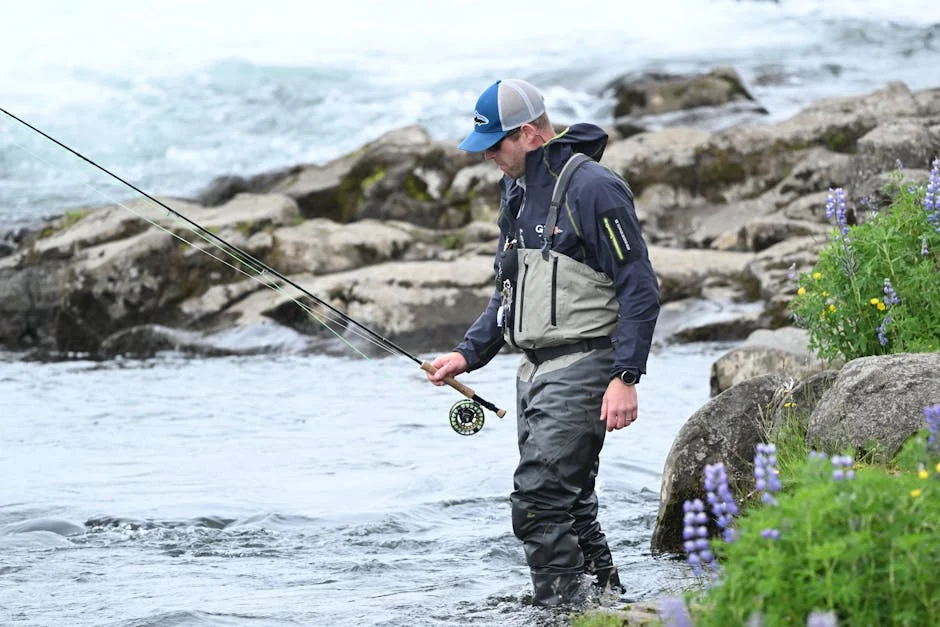
Breathable waders dominate the fly fishing market, but neoprene still has a legitimate place in the rotation, and the choice matters more than most gear decisions. Getting it wrong means either sweating through summer runs or shivering through late-season wade-ins. The full context on wader materials, seam construction, and fit is worth your time at Waders & Wading Boots before committing to a pair.
Both materials work. Neither works everywhere. What follows is a direct comparison of five mid-range waders, three breathable, two neoprene, to clarify which material fits which angler and which specific conditions.
What to Look For in Chest Waders
Material and Breathability
The core trade-off between breathable and neoprene waders comes down to thermal regulation and moisture management. Breathable waders use a waterproof-breathable membrane, varying in quality from basic laminate to multi-layer constructions, that allows vapor to escape while blocking water entry. On a warm August morning on the South Platte, that membrane is the difference between a comfortable wade and a miserable one.
Neoprene traps heat by design. The same property that makes it valuable in October becomes a liability in July. The 4mm to 5mm thickness range typical of mid-range neoprene waders provides genuine insulation, but there’s no adjusting for that warmth once you’re in the water. Breathable waders allow layering underneath, which means one garment handles a wider temperature range through the season.
The quality of the breathable membrane varies significantly across price bands. Budget breathable waders often use a single-layer laminate that loses breathability after repeated washing or minor abrasion. Mid-range constructions step up to reinforced fabrics at contact points, knees, seat, and inner thighs, which directly affects how long the breathability holds up in real use.
Seam Construction
Seam failure is the primary way waders die. Based on owner reports and field experience across fishing communities, the failure points are consistent: ankle gussets, crotch seams, and zipper attachments. Cheaper waders use sewn seams, adequate dry, but a point of failure under sustained hydrostatic pressure. Quality waders tape or weld the seams, eliminating the stitch holes that eventually wick water through.
The gap between sewn and fully taped seams is not marginal. Owner consensus across forums and verified buyer reports strongly favors fully taped seams for any wader used in moving water above knee depth. If a wader description doesn’t specify “fully taped” or “welded seams,” assume it’s sewn and factor durability accordingly.
Mid-range waders often use critically taped seams, taped at the highest-stress joints but not throughout. That’s a reasonable compromise for occasional use. For 20-plus days a year in the water, fully taped is worth the step up in cost.
Fit and Mobility
Fit matters more in waders than in most garments because poor fit directly affects wading safety. Waders that bag in the hips and seat catch current on every upstream move, that drag accumulates fatigue and reduces stability in faster water. Owner reports consistently flag baggy fit as a complaint on budget-tier breathable waders, particularly in the hip and thigh region.
Neoprene waders fit differently than breathable. The 4mm material has inherent stretch, which makes sizing more forgiving but also means the garment hangs differently when dry versus wet. Bootfoot neoprene waders in particular require sizing that accounts for both the wader itself and the attached boot, there’s no separate adjustment between the two.
Stockingfoot designs allow independent boot selection and typically fit closer through the leg, which reduces current drag and improves walking comfort. Bootfoot designs are faster to put on and better for stationary situations, duck blinds, still-water fishing, where walking distance and wading agility matter less.
Traction System
For breathable stockingfoot waders, boot selection determines traction. Felt soles are banned across many Colorado and Western tailwaters due to invasive species concerns, and the ban is warranted, even if felt genuinely outperforms rubber on algae-slicked bedrock at moderate current. Rubber with aluminum studs closes that gap substantially. On hard, slick cobble, studded rubber holds well. On soft silt or loose freestone, unstudded rubber is often preferable because studs catch unpredictably between rocks.
Neoprene bootfoot waders come with the boot attached, sole selection is made at purchase and cannot be changed. Mid-range bootfoot neoprene waders typically ship with a basic rubber lug sole. Verify the sole specification before purchase if traction in moving water is a priority.
For a broader look at how boot sole choice interacts with wader type across different water conditions, the waders and wading boots resource covers the full range of options.
Top Picks
FROGG TOGGS Hellbender Breathable Waterproof Stockingfoot Fishing Chest Wader
The FROGG TOGGS Hellbender Breathable Waterproof Stockingfoot Fishing Chest Wader enters the mid-range breathable category with a three-ply construction that steps above the single-layer laminates found in budget waders. Verified buyer reports note the fabric holds up better at contact points than typical entry-level FROGG TOGGS, with reinforcement at the knees that owner consensus considers the weakest point on cheaper versions of this design.
Fit runs consistently on the roomier side through the hip and thigh, multiple owner reports flag this specifically. For anglers wading significant current, that extra material creates drag and reduces stability. For still-water or slow-wade scenarios, the room reads as comfort. The stockingfoot design means boot selection is independent, which allows pairing with quality wading boots and appropriate soles.
Seam construction is critically taped rather than fully taped. Owner reports of seam failure increase after eighteen to twenty-four months of regular use, consistent with critically taped construction under sustained hydrostatic pressure. For occasional or seasonal use, the construction is appropriate for the price band. For high-frequency use, the seam limitation is a genuine durability concern.
Check current price on Amazon.
FROGG TOGGS Canyon II Breathable Waterproof Stockingfoot Fishing Chest Wader
The FROGG TOGGS Canyon II Breathable Waterproof Stockingfoot Fishing Chest Wader sits a step above the Hellbender in the FROGG TOGGS lineup, and the differences are in the places that matter. The Canyon II uses a heavier face fabric that owner reports describe as noticeably more abrasion-resistant, particularly at the knee patches, which on the Hellbender are the first area to show wear.
Storage is better specified on the Canyon II: the chest pocket is larger and the handwarmer pockets are accessible while wearing a wading pack chest harness, which is a real functional advantage that owners in the verified buyer pool consistently call out. The gravel guards are also better constructed, they seal more reliably around boot tops, which reduces the sand and grit intrusion that accelerates liner wear.
Breathability performance between the Hellbender and Canyon II is similar in mild conditions. On full-sun summer days in warmer air temperatures, verified buyers note the Canyon II performs better, the heavier face fabric appears to hold membrane integrity longer. Seam construction is critically taped, the same limitation as the Hellbender. Owner expectations should be calibrated accordingly for multi-season durability.
Check current price on Amazon.
Foxelli Chest Waders, Waterproof 4mm Neoprene Hunting & Fishing Waders for Men & Women with Boots
The Foxelli Chest Waders, Waterproof 4mm Neoprene Hunting & Fishing Waders make a genuine case for neoprene in one specific scenario: cold-weather use where the angler is stationary or moving slowly. Duck hunters and late-season still-water anglers appear most frequently in the verified buyer pool, and their reports are generally positive on warmth and durability at this price band.
The 4mm construction provides substantial insulation, owner consensus is consistent that these waders handle cold-morning conditions that would require significant underlayer investment in breathable alternatives. The integrated boot simplifies setup, which matters in low-light pre-dawn field conditions where speed of entry is practical rather than aesthetic.
The limitation is direct: these are cold-weather waders. Owner reports from warmer-season use are negative on comfort, and that’s a material physics issue, not a manufacturing defect. The rubber lug sole on the bootfoot construction is adequate for soft bottom and low-velocity water but doesn’t approach the traction of a quality studded wading boot. For any significant moving water, sole grip is a genuine concern.
Check current price on Amazon.
BASSDASH Men’s Lightweight Breathable Chest Wader Black Camo Stockingfoot
The BASSDASH Men’s Lightweight Breathable Chest Wader is the most packable option in this group, and that’s the right frame for evaluating it. Verified buyer reports from backpack anglers and hikers who wade small streams with a pack-in component consistently rate it well. The camo colorway also broadens its use case into hunting without the dedicated hunting market positioning that adds cost to purpose-built hunting waders.
Breathability is the strongest comparative attribute in the BASSDASH owner reviews. Multiple buyers note it performs well in warm conditions, with fewer complaints about heat accumulation than competing breathable waders at this price point. The lightweight construction is the trade-off here: the face fabric is thinner, and abrasion reports at the knee and seat appear earlier in the product’s lifecycle than on the Canyon II.
Seam construction follows the same critically taped pattern found across this price band. The lighter fabric means the seams face less total stress in mild conditions, but also that abrasion at high-contact points can compromise the membrane before the seam itself fails. For anglers prioritizing packability and warm-weather comfort over long-term durability, the BASSDASH earns its place in the comparison.
Check current price on Amazon.
FROGG TOGGS Amphib Neoprene Bootfoot Waterproof Fishing Camo Chest Wader
The FROGG TOGGS Amphib Neoprene Bootfoot Waterproof Fishing Camo Chest Wader is the strongest neoprene argument in this comparison, not because it outperforms breathable waders in most fly fishing scenarios, but because it’s properly specified for what neoprene does well. The Amphib uses a 3.5mm neoprene construction that’s lighter than the Foxelli’s 4mm, which reduces fatigue on longer walks to access points while retaining meaningful cold-weather insulation.
Owner reports are consistent on two points: the fit runs large (size down from your normal wader size), and the boot construction is more durable than comparable bootfoot neoprene waders in this price range. The camo pattern reads as a secondary feature that appeals to duck hunters, but the wader’s field reports from cold-weather wade fishing are genuinely positive in the verified buyer pool.
The bootfoot design limits sole selection, the FROGG TOGGS cleated rubber sole handles soft and moderate-firmness bottoms but is not the right tool for hard, algae-slicked tailwater cobble. Anglers whose primary water is that type of bottom should note this limitation clearly. For low-gradient freestone, lakes, or hunting marshes, it’s adequate. The warmth-to-packability ratio is the Amphib’s real competitive advantage over the Foxelli; it’s the better cold-weather fly fishing wader of the two neoprene options here.
Check current price on Amazon.
Buying Guide
Breathable vs. Neoprene: The Primary Decision
The material decision should precede every other consideration. Breathable waders are the right choice for the majority of fly fishing scenarios, wade fishing in three seasons, moving water at moderate to warm air temperatures, and any situation where the angler walks significant distance to the water. Neoprene waders are the right choice for cold-weather use where warmth is the primary objective and mobility is secondary.
The crossover point is roughly water temperature below 45°F combined with air temperatures that make breathable underlayer systems impractical or insufficient. Anglers fishing exclusively in those conditions benefit from neoprene. Everyone else benefits from breathable.
How Much Use Justifies the Investment
Seam construction quality scales with price in breathable waders, and seam failure is the primary failure mode. At under 15 fishing days per year, critically taped seams are a reasonable compromise, the wader may last three to four seasons at that frequency. At 20-plus days per year, fully taped seams are the floor for reasonable durability expectations.
Owner experience across fishing forums and verified buyer reports consistently points to the same math: two mid-range waders replaced within three years typically exceeds the cost of one quality wader with fully taped construction. The waders in this comparison are mid-range options appropriate for moderate use or as entry points for newer anglers building a gear baseline. Treat them as a two-to-three season investment at regular use frequency, not a permanent solution.
Stockingfoot vs. Bootfoot Construction
Stockingfoot waders allow independent boot selection, which matters for two reasons: sole choice is a traction decision that varies by water type, and proper boot fit is a safety factor in any wading scenario. For fly fishing in moving water, stockingfoot is the right default.
Bootfoot waders, both neoprene options in this comparison, simplify the kit and reduce transition time. For hunting applications or still-water scenarios, that simplicity has real value. For wading fast water, the fixed sole and fit limitations of a bootfoot design are genuine constraints. The wader and boot selection resources at Waders & Wading Boots cover the boot-pairing question in more depth for anglers weighing stockingfoot options.
Sizing and Fit
Fit errors are the most common complaint in verified buyer reviews across all five waders. The pattern is consistent: breathable waders in this price range run large through the hip and thigh. Neoprene bootfoot waders require sizing that accounts for both body fit and the boot, a wader that fits the torso correctly may constrain the foot, and vice versa.
Pull the manufacturer sizing chart before ordering, compare against your inseam and chest measurements directly rather than defaulting to your pants size, and weight owner fit reports in the verified buyer reviews heavily. Anglers who fish smaller streams or wade in faster current particularly benefit from a closer fit, the baggy-hip complaint is a current-drag and stability issue, not an aesthetic one.
Care and Longevity
Breathable membrane performance degrades predictably with neglect: washing in standard detergent strips the DWR (durable water repellent) coating, and heat-drying at high temperatures damages the membrane. The maintenance protocol is simple, use a technical fabric wash, tumble dry on low with periodic high-heat DWR reactivation, but owner forums show it’s routinely ignored until performance drops.
Neoprene requires less attention but should be rinsed after saltwater or silty-water use to prevent material breakdown at stress points. Both materials benefit from hanging storage rather than compression, neoprene that’s folded for months develops crease failure, and compressed breathable membranes lose their loft.
Frequently Asked Questions
Are breathable waders warm enough for cold-weather fishing?
Breathable waders handle cold water effectively when paired with appropriate underlayers, merino wool or synthetic fleece base layers down to moderately cold conditions. The advantage over neoprene is layering flexibility: you adjust the underlayer to the temperature rather than changing waders. Most verified buyers fishing water above 40°F report adequate warmth with mid-weight underlayers. Below that threshold in sustained cold air temperatures, neoprene’s dedicated insulation becomes a genuine advantage.
Which wader is better for a beginner fly angler?
Owner consensus and field reports point to the FROGG TOGGS Canyon II as the strongest entry point for a beginner, the storage layout, durability step-up over the Hellbender, and broadly available size range make it the most practical starting point. The BASSDASH is the better choice for anglers who prioritize warm-weather fishing or plan to pack the waders into backcountry access points. Either way, budget for wading boots separately and prioritize sole traction appropriate to your water type.
Do neoprene waders work for fly fishing, or are they mainly for hunters?
Neoprene waders work for fly fishing in cold-weather conditions where warmth outweighs mobility. Duck hunters dominate the verified buyer pool for both neoprene options here, but cold-season wade fishing appears regularly in owner reports for the FROGG TOGGS Amphib specifically. The practical limitation for fly fishing is traction, bootfoot neoprene soles are not designed for fast, rocky tailwater. For slow water, lakes, or late-season low-gradient streams, neoprene is a legitimate choice.
How long should mid-range waders realistically last?
Owner reports across this price band converge on two to three seasons at moderate use frequency, roughly 15 to 20 days per year. Seam failure and gravel guard wear are the primary failure modes. Anglers who maintain the DWR coating and avoid abrasive contact at the knees and seat extend that timeline. Both the Hellbender and Canyon II show owner reports of seam leakage emerging around 18 to 24 months in regular moving-water use.
What’s the difference between critically taped and fully taped seams?
Critically taped seams apply waterproof tape only at the highest-stress joints, crotch seam, ankle gusset, and shoulder attachment. Fully taped seams apply tape to every sewn seam throughout the garment. Both approaches outperform unsupported sewn seams, but fully taped construction eliminates the stitch-hole wicking pathways that eventually allow water entry under sustained hydrostatic pressure. All five waders in this comparison use critically taped construction, that’s appropriate for the price band, and it means seam leakage is an eventual outcome at high-use frequency rather than an edge-case failure.
Where to Buy
FROGG TOGGS Hellbender Breathable Waterproof Stockingfoot Fishing Chest Wader for FishingSee FROGG TOGGS Hellbender Breathable Wat… on Amazon