Hardy Marquis Review: A Classic Click-Pawl Reel Worth Knowing

Affiliate disclosure: Some links on this page are affiliate links. If you buy through them we earn a small commission at no extra cost to you. Recommendations are research-driven; we don't claim personal use of every product reviewed. Product prices and availability are accurate as of the date published and are subject to change. Always check Amazon for current pricing before purchasing. Learn more.
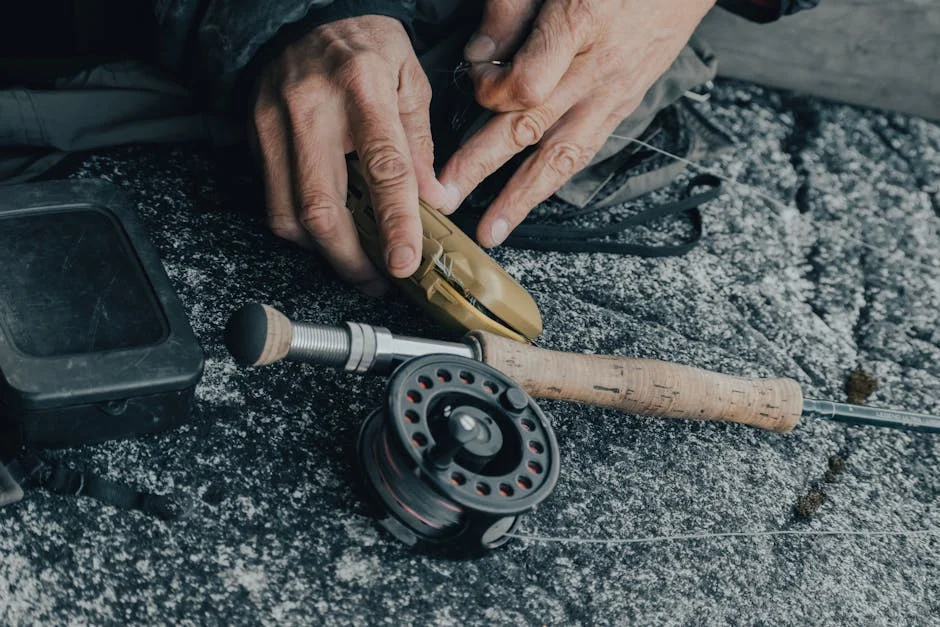
Greg's favorite dry fly pairing, the sound and feel of a proper click-pawl reel
Hardy Marquis Review: A Classic Click-Pawl Reel Worth Knowing
The Hardy Marquis occupies a specific and honest place in fly fishing, not the most technically advanced reel on the market, not the most appropriate choice for every situation, but one of the most satisfying reels to fish when the conditions suit it. If you’re building out a dry fly setup or exploring traditional tackle, this reel deserves a serious look.
The question worth asking isn’t whether the Marquis is the best reel ever made. It’s whether a click-pawl reel still makes sense for the fishing you actually do. For a lot of Rocky Mountain trout fishing, the answer is yes.
What to Look For in a Classic Fly Reel
Drag System: Click-Pawl vs. Disc Drag
The drag system is the fundamental design decision in any fly reel, and with a classic reel it’s worth understanding what you’re choosing and why. A click-pawl reel uses a spring-loaded pawl engaging a gear tooth ratchet, simple, reliable, nearly maintenance-free, and mechanically elegant in a way that disc drag systems aren’t. A disc drag reel (cork stack, carbon fiber, or sealed) offers adjustable, smooth resistance across a wider range of fish sizes and fight conditions.
Neither is universally superior. The choice depends entirely on what fish you’re chasing and where. For most Rocky Mountain trout fishing, 12- to 18-inch fish on freestone streams and moderate tailwaters, a click-pawl handles 95% of fights cleanly. When a fish runs and hits the pawl hard, you palm the spool anyway. That’s the technique. The drag is a starting point, not the whole system.
Where click-pawl falls short is specific and worth being honest about: big tailwater fish making long, fast runs in heavy current, steelhead, and any saltwater application. In those situations, the consistent, calibrated resistance of a disc drag system matters. Losing a 22-inch brown because a drag stutters on the first run is a useful and painful lesson in knowing the limits of your equipment.
Arbor Size and Line Recovery
Large-arbor reels became standard in modern fly fishing for good reason, faster line recovery, more consistent drag pressure throughout a fight, and reduced line memory from coiling on a small arbor. Classic reels like the Marquis use a traditional narrow arbor by today’s standards. That’s not a fatal flaw, but it’s a real trade-off worth understanding.
On smaller freestone streams where fish rarely run more than twenty feet, arbor size is nearly irrelevant. The reel’s job is to store line and provide some resistance when a fish moves. On larger water where fish can take backing, a large-arbor reel picks up line meaningfully faster on the retrieve, which matters when you’re trying to stay tight to a running fish and close distance quickly.
For the kind of fishing the Hardy Marquis was designed for, upstream dry fly work, moderate tailwaters, traditional presentation, the narrow arbor is perfectly adequate. Know what you’re buying.
Build Quality and Longevity
A premium reel from a heritage manufacturer carries a different value proposition than a modern precision reel at the same price point. Hardy has been making reels in Alnwick, England for over 150 years. The Marquis specifically has been in production in various forms since the 1960s. That’s not marketing, that’s a documented track record.
The mechanical simplicity of a click-pawl reel means there’s genuinely less to go wrong. No sealed drag system to eventually service, no cork stack to compress unevenly, no carbon fiber components to wear. The pawl and spring assembly can be replaced if needed, and Hardy’s parts availability for the Marquis is well-documented. Owner reports consistently cite these reels still fishing cleanly decades after purchase, that’s not something you can say about most modern gear. Exploring the full range of classic and modern fly reel options before committing to a style is worth the time.
Weight and Balance
A reel should balance the rod it’s paired with. Too heavy and the outfit is front-light, fatiguing on a long day of casting. Too light and the setup tips toward the reel seat. The Marquis size 5 at roughly 3.6 ounces is a sensible match for a standard 9-foot 5-weight rod, not ultralight, but appropriate. On a lighter 4-weight rod, the balance shifts slightly reel-heavy for some anglers’ preferences.
Owner reports suggest the Marquis fishes well on a 5-weight without becoming a noticeable presence. That matters more than it sounds, a balanced outfit disappears into the casting stroke, while an unbalanced one reminds you of itself all day.
Top Picks
Hardy Marquis 5 Fly Reel
The Hardy Marquis 5 is the reel sitting on the shelf right now with a Cortland Competition Nymph line on it, not being treated as a museum piece, but actually fished. Bought on a trip to the UK in 2010 as something between a souvenir and a serious purchase. Fourteen years later, it’s still going.
What owner reports and field use consistently confirm: the click-pawl mechanism is the point, not a limitation to apologize for. The sound when a fish hits the drag, that sharp, mechanical ratchet, is exactly what it’s supposed to sound like. This isn’t nostalgia for its own sake. A click-pawl reel has no adjustment to overthink, no drag setting to second-guess mid-fight. You set the pawl tension at purchase, and from there the reel does its job. When a fish runs hard, you palm the spool. That’s the system.
The size 5 fits a standard 9-foot 5-weight rod well. On freestone streams, the Arkansas below Salida, any moderate freestone water in Wyoming or Montana, where fish top out around 18 inches and rarely make backing runs longer than 30 feet, the Marquis is the right tool. It’s the reel to grab when the fishing is about presentation and dry fly work, not about fighting fish.
The honest limitation is exactly what it sounds like: this reel is not built for situations where drag performance is load-bearing. A 22-inch brown on the Bighorn making a hard downstream run in fast current, steelhead on the Deschutes, or anything with fins in saltwater, those situations need a disc drag and a large-arbor design. The Marquis won’t fail you on a big fish, but it will require you to compensate with your hand on the spool. Some anglers prefer that engagement. Others find it stressful. Know which one you are before you commit.
Hardy’s heritage premium is real, this is a mechanically simple reel positioned at a significant level for what it does mechanically. The case for paying it is documented longevity, parts availability, and the specific satisfaction of fishing gear that was designed well and hasn’t needed redesigning. Owner consensus over decades supports the durability claim. That’s the value proposition in plain terms.
Check current price on Amazon.
Buying Guide
When a Click-Pawl Reel Is the Right Choice
The click-pawl reel made sense for decades of fly fishing before disc drag systems became standard, and for a specific category of fishing it still makes sense now. The honest answer is that drag performance matters most when fish are large, fast, and in heavy current. For most Rocky Mountain freestone trout fishing, fish in the 12- to 18-inch range on moderate water, the drag system is rarely tested in a way that distinguishes a click-pawl from a disc drag.
If your fishing is primarily upstream dry fly work on freestone streams, or smaller tailwaters where fish don’t run into backing regularly, a click-pawl reel handles the job cleanly. The trade-off you’re accepting is a ceiling on performance in edge cases, big fish, fast water, any saltwater application.
Matching the Reel to the Rod
Reel selection should start with the rod it will live on. The Hardy Marquis size 5 was designed for a 5-weight line and fits the standard 9-foot 5-weight rod that remains the most common trout setup in American fly fishing. Pairing sizes matter: a size 3 Marquis on a 3-weight small-stream rod, a size 5 on the standard 5-weight, a size 6/7 if you’re running heavier lines.
The narrow arbor of the Marquis means line retrieve is slower than a large-arbor modern reel. On small streams this is irrelevant. On larger rivers where you need to close distance on a running fish quickly, it’s a genuine consideration. Browse the broader category of fly reels by size and application if you’re unsure which arbor style suits your primary water type.
Heritage Pricing and What You’re Actually Buying
Premium pricing on a heritage reel requires a different justification than premium pricing on a precision disc drag system. With a modern premium reel, a Hatch Iconic, a Ross Evolution, you’re paying for precision machined tolerances, a drag system engineered to perform under serious load, and a large-arbor design optimized for line recovery. The performance case is direct.
With the Marquis, you’re paying for 150-plus years of manufacturing continuity, documented decades-long durability, parts availability, and the specific mechanical satisfaction of a design that hasn’t needed to change. Owner reports of Marquis reels fished for 30 and 40 years without service issues are common and credible. If you’re buying a reel to fish for the rest of your life and pass on, that longevity argument has real weight.
The Used Market for Classic Reels
Classic click-pawl reels hold value and trade actively in the used market. A Hardy Marquis in good mechanical condition, pawl and spring intact, spool true, finish worn but not damaged, can often be found through fly shops, estate sales, and online gear exchanges at meaningful savings from retail. The mechanical simplicity that makes these reels work for decades is also what makes evaluating a used example relatively straightforward: check that the pawl engages cleanly, the spool spins freely without wobble, and the line guard shows no cracking.
Buying used is a legitimate path into heritage tackle. The reel described here was bought new, but plenty of experienced anglers have the same reel with a previous owner’s history on it and no meaningful difference in performance.
Disc Drag vs. Click-Pawl: Making the Call
The clearest way to decide: if you fish situations where a running fish can genuinely take 50-plus yards of backing before you can follow, get a disc drag. Steelhead, large tailwater fish in heavy current, saltwater, those situations require adjustable, consistent resistance that a click-pawl cannot provide. Palming the spool works on smaller fish; it’s a stress-inducing manual intervention when a large fish is accelerating downstream.
For everyone else, anglers doing the majority of their fishing on freestone streams and moderate tailwaters for trout in the foot-to-18-inch range, the click-pawl reel is not a compromise. It’s a legitimate choice that simplifies your fishing and connects you to how fly fishing was practiced for most of the sport’s history.
Frequently Asked Questions
Is the Hardy Marquis suitable for tailwater trout fishing?
The Hardy Marquis works well on moderate tailwater fishing where fish are in the 12- to 18-inch range and don’t make extended backing runs. The click-pawl drag provides enough resistance for typical tailwater trout, and palming the spool handles most situations. Where it becomes a genuine limitation is on large tailwater fish, 20-plus inches in fast current, that make long, fast downstream runs requiring consistent, adjustable drag pressure rather than manual palm control.
How does the Hardy Marquis compare to a modern large-arbor disc drag reel?
The comparison is less about quality and more about application. A modern disc drag reel like the Hatch Iconic offers adjustable drag, faster line recovery due to the large arbor, and greater stopping power for larger or more powerful fish. The Marquis offers simplicity, nearly zero maintenance requirements, documented multi-decade durability, and a mechanical experience that many traditional anglers prefer. For most Rocky Mountain trout fishing, the functional difference in day-to-day use is smaller than the price and design differences suggest.
What line and rod does the Hardy Marquis size 5 pair best with?
The Marquis size 5 was designed for a 5-weight line and balances well on a standard 9-foot 5-weight rod. Owner reports and field use confirm it works comfortably with floating lines in the 90- to 100-grain range, a Rio Gold DT5F or equivalent sits naturally on the spool. The narrow arbor means the reel isn’t optimized for shooting heads or heavy sink-tip lines, which are better matched to large-arbor reels with more capacity and faster retrieve.
Can I use the Hardy Marquis for Euro nymphing?
A click-pawl reel is functional for Euro nymphing where you’re fishing small flies on light tippet at close to moderate range and fish are unlikely to make backing runs. The Hardy Marquis 5 sits on a Cortland Competition Nymph rod for exactly this kind of use, small tailwaters, fish in the 12- to 16-inch range, where the reel’s job is primarily line storage. On larger Euro nymphing water where fish are bigger and current is heavier, a disc drag reel gives you more margin.
Is the Hardy Marquis worth the premium price for a mechanically simple reel?
The value argument rests on longevity, not on feature count. Owner reports of Marquis reels fishing reliably for 30 to 40 years are consistent and credible, that’s a multi-decade track record a modern reel hasn’t had time to establish. If the reel lasts the rest of your fishing life, the effective cost per year is low. If you’re evaluating it purely on immediate mechanical performance per dollar, a mid-range disc drag reel offers more measurable drag capability for less.
Hardy Marquis 5 Fly Reel: Pros & Cons
- Greg's favorite dry fly pairing, the sound and feel of a proper click-pawl reel
- Hardy's 150+ year manufacturing heritage gives this reel genuine historical weight
- Click-pawl drag not suitable for tailwater fish that make long powerful runs