Ross Animas Fly Reel Review: Size 5/6 for 5wt Rods

Affiliate disclosure: Some links on this page are affiliate links. If you buy through them we earn a small commission at no extra cost to you. Recommendations are research-driven; we don't claim personal use of every product reviewed. Product prices and availability are accurate as of the date published and are subject to change. Always check Amazon for current pricing before purchasing. Learn more.
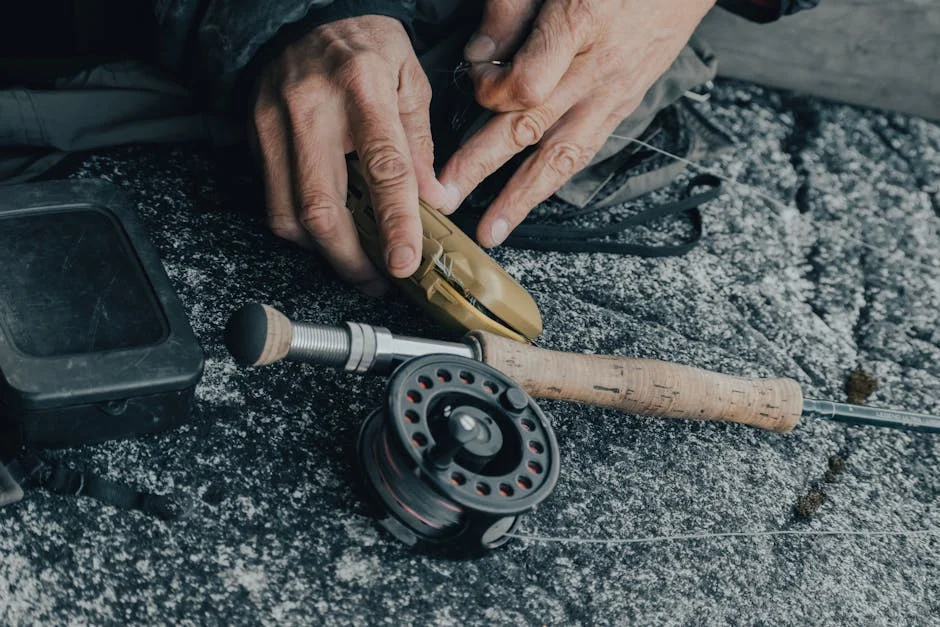
American-made in Montrose, CO, Colorado-made reel for Colorado river fishing
The Ross Animas doesn’t show up in the same conversations as Hatch or Abel, but it’s been in production long enough, and on enough Colorado tailwaters, to earn a genuine reputation. This review covers the Ross Animas Size 5/6, the size matched to the 9-foot 5wt rods that define Rocky Mountain trout fishing. For a broader look at what separates mid-range from premium fly reels, the hub covers that ground in full.
The relevant question isn’t whether the Animas is a great reel in absolute terms. It’s whether it’s the right reel for the fishing most trout anglers actually do, and for a 5wt trout setup on a mid-tier budget, the answer is more yes than the marketing silence around Ross would suggest.
What to Look For in a Mid-Range Fly Reel
Drag System Reliability
The drag is the one mechanical system on a fly reel that gets tested under real stress. For most Colorado and Montana trout fishing, a disc drag running on cork or carbon fiber needs to do two things: start smoothly without the spike of initial resistance that breaks tippet on the strike, and hold a steady tension across a run. It does not need to stop a 30-pound bonefish.
Mid-range reels vary more on drag consistency than drag maximum strength. A drag rated to twenty pounds of maximum tension that stutters at two pounds of working pressure is genuinely dangerous on a good fish. Look at the drag mechanism design, sealed systems handle grit and sand better than open designs, and that matters on a riverbank.
Owner reports and community feedback are worth more than manufacturer spec sheets here. A disc drag that performs consistently after two seasons of sand and sediment exposure is more valuable than a drag that performs flawlessly on a test bench.
Large-Arbor Design and Line Recovery
Large-arbor reels became the standard for a practical reason: faster line recovery per revolution of the spool. On a tailwater where a strong fish runs toward you, recovery speed determines whether you stay tight or lose contact entirely. A large arbor also reduces line memory coiling, monofilament and fluorocarbon leaders straighten faster off a large-arbor spool than off a narrow one.
The trade-off is capacity and weight. A large-arbor 5/6 reel holds adequate backing for any Rocky Mountain trout situation, but that same design makes the reel slightly heavier than a narrower-spool equivalent. For walk-and-wade fishing over a full day, that weight difference is real.
For 5wt trout fishing specifically, large-arbor design is the right default. The situations where a classic narrow arbor outperforms are largely historical artifacts.
Weight and Balance on a 5wt Rod
A reel that throws the balance of a 5wt rod toward the grip fatigues your casting hand over a full day. The standard guidance is to balance the reel against the rod blank at the cork grip, the rod should be nearly neutral when resting across a finger at the forward edge of the cork. That’s a useful field check before committing to a pairing.
Graphite and machined aluminum reels land in different weight ranges. A lighter reel suits a fast-action 9-foot 5wt, where the blank already throws weight toward the tip. A heavier reel can actually improve balance on a more moderate action rod with a heavier blank. The pairing matters more than the absolute weight number.
The full range of trout reel options varies enough in weight and arbor design that it’s worth checking specific gram weights against your rod before buying.
Build Quality and Longevity
American-made machined aluminum reels hold their value better than overseas-cast alternatives. The anodizing quality determines how well the finish survives a season of contact with streamside rocks, truck beds, and wading staff. A reel with a reputation for durable anodizing is worth a modest premium over one that chips easily, cosmetic damage accelerates to functional damage if anodizing failure exposes bare aluminum to corrosion.
For mid-range buyers, the used-gear market is a legitimate option. Reels with sealed drag systems can be serviced and perform as-new after purchase. A reel bought used from a shop that has serviced the drag carries meaningfully lower risk than one bought from an unknown private seller.
Top Picks
Ross Animas Size 5/6 Fly Reel
The Ross Animas 5/6 is made in Montrose, Colorado, and for trout fishing on Colorado water specifically, there’s something genuinely satisfying about that pairing. Ross doesn’t get the same attention as Hatch or Abel in online conversations, but the company has been machining reels in Colorado for decades. The Animas represents their current mid-range production reel, and on a 5wt trout setup, it does exactly what mid-range should do.
The disc drag is reliable and starts smoothly, not Hatch Iconic smooth, but smooth enough that tippet breakage on the strike isn’t a concern. Owner consensus consistently notes the drag performs well within the range of tensions Colorado and Montana trout fishing actually requires. It’s not a drag built for saltwater or large steelhead situations. For fish up to 20 inches in moderate current on 5X or 6X tippet, it’s adequate without qualification.
The large-arbor design picks up line fast, which matters more than anglers new to large-arbor designs expect. On a tailwater fish that turns and runs toward you, which is a common escape pattern on pressured water, recovery speed determines whether you stay tight. The Animas recovers line quickly per revolution. That’s a genuine functional advantage over older narrow-arbor designs, not marketing language.
The one honest comparison worth making is against the Hatch Iconic 5+. The Iconic’s drag is noticeably smoother across its full range, the startup inertia is lower, the pressure curve is more linear, and it’s a more refined mechanism by any objective measure. For anglers who fish saltwater, steelhead, or large tailwater fish in fast current where the drag is under sustained load, that refinement justifies the premium. For walk-and-wade Rocky Mountain trout fishing, owner reports and field consensus suggest the Animas drag is sufficient, and the price difference between mid-range and premium can be redirected into a better fly line, better tippet, or more time on the water.
The used market on Animas reels is worth knowing about. Because the cosmetic finish marks somewhat easily, used examples are available at significant discounts, and the drag mechanism is simple enough that a competent fly shop service restores it to full function. Buying a serviced used Animas is a legitimate strategy for the mid-tier budget buyer.
Check current price on Amazon.
Buying Guide
Does Drag Quality Actually Matter for Trout?
For most Rocky Mountain trout fishing, the honest answer is: less than the marketing suggests, but more than anglers who’ve only fished small fish realize. A solid disc drag handles 95% of the trout a Colorado or Montana angler hooks in a season. On fish under 18 inches in moderate current, the drag never gets meaningfully tested. The failure case is the fish that matters most, the 22-inch brown on the Bighorn that runs hard into the backing, and a drag that stutters once at two pounds of tension will break 5X tippet before you can palm the spool.
The practical threshold for mid-range drag quality is: smooth startup, consistent pressure across a short run, and no stutter. The fly reels in the mid-range tier all meet that threshold on new equipment. The question is which ones maintain it after two seasons of grit and field use. Sealed drag systems answer that question better than open ones.
Mid-Range vs. Premium, Where the Line Is
The performance gap between a well-made mid-range reel and a precision-machined premium reel is real, but it’s concentrated in specific situations. In those situations, sustained runs by large fish, saltwater, steelhead, the premium reel’s drag linearity and startup smoothness meaningfully reduces tippet breakage. In the other 95% of Rocky Mountain trout situations, the gap is largely academic.
The right question is whether your fishing falls into the 5% where the gap matters. If the answer is yes, large tailwater fish in fast current, steelhead, any saltwater, buy the better reel once. If the answer is no, walk-and-wade trout on Colorado or Montana water, fish typically under 20 inches, mid-range quality is sufficient, and the difference in outlay goes further on consumables and time on water.
Matching Reel Size to Rod Line Weight
The 5/6 designation on the Animas means the spool is sized to carry a 5wt or 6wt fly line with appropriate backing. For a 9-foot 5wt rod, the most common trout setup in the Rocky Mountain West, the 5/6 size is the correct choice. Going up to a 7/8 size on a 5wt rod adds unnecessary weight and throws off balance. Going down to a 3/4 size leaves backing capacity too thin for anything but very small stillwater.
The balance check is worth doing before the reel goes on the rod for the first time. With the fly line spooled and backing loaded, rest the assembled rod across a finger at the front edge of the cork grip. The rod should sit close to neutral. A reel that throws the balance too far toward the grip on a fast-action 5wt will fatigue the casting hand faster than expected.
The Used-Gear Case for Mid-Range Reels
Mid-range reels from established American manufacturers hold their mechanical value better than cosmetic condition suggests. A reel with anodizing marks and cosmetic wear that has been properly serviced performs identically to a new one. The used market on Ross, Lamson, and similar mid-range American reels offers genuine value for the buyer willing to purchase through a fly shop that has inspected and serviced the drag mechanism.
The risk with used reels purchased from private sellers is unknown service history. A drag that hasn’t been cleaned and lubricated properly degrades in ways that aren’t always visible before the first use. Shop-serviced used gear carries meaningfully lower risk than unknown-source gear, the modest markup over private-seller price is justified by the service documentation.
Colorado-Made and What That Means in Practice
“American-made” is a marketing claim that varies widely in what it actually means. In the case of Ross Cycles in Montrose, Colorado, machined aluminum reel production is genuinely domestic, the anodizing, machining, and assembly happen in-house. That has two practical implications: warranty service is handled domestically with genuine knowledge of the product, and the anodizing quality reflects American manufacturing standards rather than overseas cost-cutting.
For a buyer who values provenance, and for Colorado anglers specifically, there’s a real argument for fishing a Colorado-made reel on Colorado water, the Animas delivers that authentically. It’s not a unique functional differentiator, but it’s not a hollow claim either.
Frequently Asked Questions
How does the Ross Animas 5/6 compare to the Hatch Iconic 5+?
The Hatch Iconic 5+ has a noticeably smoother drag across its full pressure range, lower startup inertia and a more linear pressure curve than the Animas. For Rocky Mountain trout fishing on 5X or 6X tippet, both drags are adequate in practice. The Iconic justifies its premium for anglers fishing large tailwater fish in fast current, or any situation where the drag is under sustained load. For walk-and-wade trout fishing where the drag rarely gets fully tested, the Ross Animas 5/6 is the more practical choice at mid-range.
Is the Ross Animas a good reel for a beginner building a first 5wt setup?
The Animas is a reasonable choice for a serious first setup. The drag is reliable, the large-arbor design is correct for trout fishing, and the American construction means warranty service is straightforward. A beginner building a 5wt setup should prioritize a quality fly line over reel brand, a mid-range reel paired with a premium fly line outperforms a premium reel paired with a budget line on the water. The Animas leaves budget available for that line upgrade.
Can the Ross Animas 5/6 handle large fish on a tailwater?
For Colorado and Montana tailwater trout, including fish in the 20-inch range, the Animas drag is adequate. The honest caveat is that the drag is not rated for the kind of sustained pressure that saltwater fish or large steelhead generate. On a 22-inch tailwater brown in moderate current, the drag performs reliably based on owner consensus. In fast current where you can’t follow the fish and the drag is under sustained load for more than a few seconds, a premium drag mechanism provides a meaningful margin.
What fly line pairs well with the Ross Animas 5/6?
The Animas 5/6 spool is sized for a standard weight-forward 5wt line with 50, 75 yards of backing. The Scientific Anglers Amplitude Smooth and Rio Gold are both well-suited pairings, both are mid-to-premium weight-forward lines with a front taper designed for the 30, 50 foot presentations that define tailwater dry-fly fishing. For Euro nymphing, the Cortland Competition Nymph line loads the spool lightly and leaves more backing capacity, though backing capacity rarely matters for nymphing situations.
Should I buy a Ross Animas new or look for a used one?
A used Animas purchased through a fly shop that has serviced the drag is a legitimate option, the drag mechanism is simple enough that proper service restores it to full function, and cosmetic marks on used examples drive the price down considerably. The risk is unknown service history on private-seller purchases. New carries a clean warranty and known service history. For budget-conscious buyers who have access to a shop with a service-certified used inventory, the used market on the Animas represents genuine value.
Ross Animas Size 5/6 Fly Reel: Pros & Cons
- American-made in Montrose, CO, Colorado-made reel for Colorado river fishing
- Smooth disc drag adequate for any Colorado trout situation
- Hatch Iconic 5 is noticeably smoother drag at a significant price premium