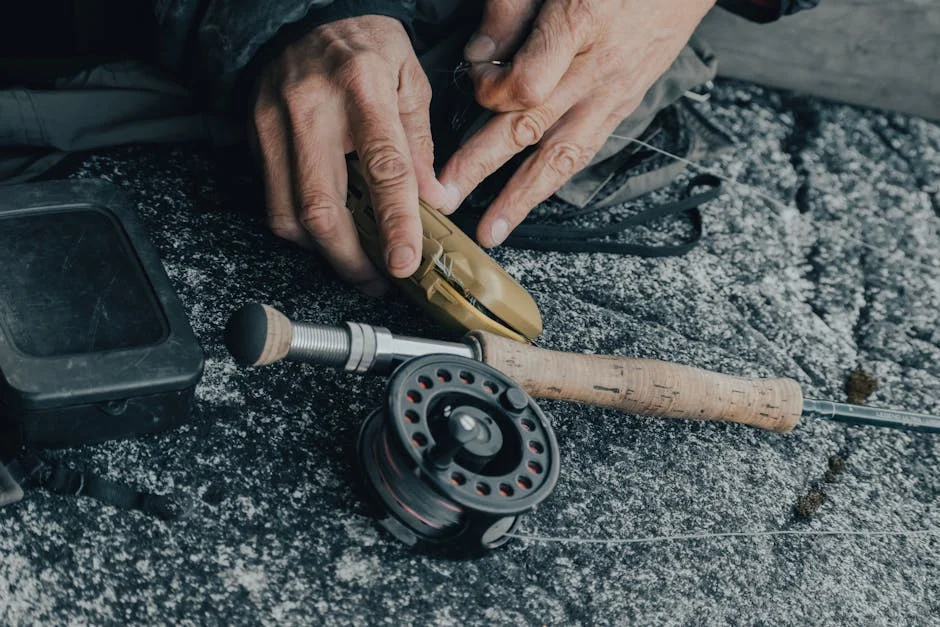
Scott Centric 6-Weight Review: Medium-Fast Action

Affiliate disclosure: Some links on this page are affiliate links. If you buy through them we earn a small commission at no extra cost to you. Recommendations are research-driven; we don't claim personal use of every product reviewed. Product prices and availability are accurate as of the date published and are subject to change. Always check Amazon for current pricing before purchasing. Learn more.
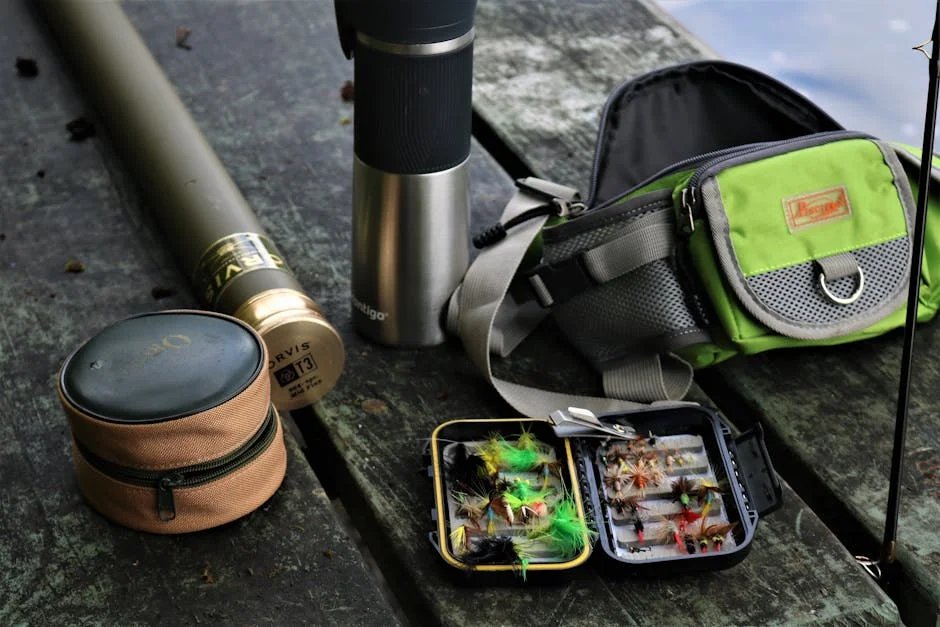
American-made in Montrose, Colorado, closest thing to a local rod for a Salida angler
The Scott Centric 9’ 6-Weight earns a place in my rod bag for the same reason most anglers skip straight past it, it’s slower than the flagships, and slower gets dismissed. That’s a mistake. For fly rods built to throw big flies on big water, medium-fast action is often the more useful tool.
The Centric 6wt sits in a narrow category: premium American-made rods designed for versatility rather than raw speed. Understanding where it fits, and where it doesn’t, starts with a clear look at what medium-fast action actually does.
What to Look For in a 6-Weight Fly Rod
Action and What It Actually Means on Water
Rod action describes where a blank flexes under load. Fast-action rods bend primarily in the upper third; medium-fast rods flex through roughly the upper half. That distinction sounds technical until you’re standing on the Arkansas in April throwing a heavy articulated streamer into a headwind at twenty-five feet. At that distance and with that fly weight, a fast-action rod struggles to load, it’s built for longer casts with lighter flies, and it wants a tight, precise loop you may not form when your shoulder is tired.
Medium-fast action loads more naturally at close range and tolerates more timing variation. The penalty is reduced tip speed at maximum distance. For most anglers working tailwaters at thirty to fifty feet, that penalty is invisible.
The first rod purchased on my own, before anyone corrected the approach, was a stiff fast-action blank chosen because the marketing promised longer casts. It did the opposite. Fast-action rods reward anglers who already have clean loop formation; they punish everyone else. Two seasons fighting that rod convinced me that action selection matters more than most reviews acknowledge.
Line Weight: Why 6wt Deserves Its Own Evaluation
A 6-weight fly rod occupies different water than a 5wt. Trout still show up, big fish on the Bighorn, browns on the Missouri, but the honest use cases extend to smallmouth, bass, pike in shallower systems, and any trout application involving weighted streamers, sink tips, or large conehead patterns. Evaluating a 6wt against the same criteria as a 5wt misses the point.
The right 6wt loads comfortably with a heavy tungsten cone streamer and still performs acceptably on a dry-dropper rig. Few blanks do both well. The ones that do tend toward medium-fast rather than fast, the softer tip loads under the weight of the fly, not just the running line.
Pairing matters as much as the blank itself. A quality integrated fly fishing setup, rod, reel, and line matched to the application, consistently outperforms a premium rod paired with the wrong line. For streamer work, a short-head sink-tip matched to the blank’s recovery speed matters more than the brand on the rod.
Build Quality Markers Worth Examining
Premium fly rods carry premium claims, and not all of them are meaningful. The markers worth scrutinizing: blank construction (where it’s made, resin system, fiber orientation), guide quality and thread wrapping consistency, reel seat tolerances, and warranty terms. A lifetime guarantee with the manufacturer absorbing labor and shipping costs is a different instrument than a “limited lifetime warranty” with a repair fee.
American-made blanks don’t automatically outperform imported competitors, there are excellent blanks made outside the US. But American manufacturing usually means the builder controls the supply chain, which matters for consistency and warranty fulfillment. Scott Fly Rod Company, based in Montrose, Colorado, manufactures every blank in-house. That’s a specific claim, not a marketing gesture.
Exploring the full range of fly rods available at different price bands before committing to a premium purchase is worth the time, the field is wide and the trade-offs are real.
Grip and Hardware: The Details That Add Up Over a Full Day
Cork quality and grip shape affect casting fatigue more than most anglers expect. A half-wells grip suits most casting styles; a full-wells adds forward purchase for hauling or fighting large fish. Low-grade cork, visible filler, rough surface, inconsistent density, telegraphs poorly on every stroke and becomes more noticeable as the day lengthens.
Reel seats on premium rods should lock without slop and release without binding. Stripping guides, particularly on 6wt rods throwing heavy flies, bear real load stress. Single-foot guides above the stripping guide reduce overall weight; double-foot guides add durability. Neither choice is wrong, the trade-off is weight against impact resistance on a rod that spends time in a truck bed.
Top Picks
Scott Centric 9’ 6-Weight Fly Rod
The Scott Centric 9’ 6-Weight came into the bag in 2022, purchased specifically for the streamer applications the Sage X 5wt was never designed to handle. On fall trips to the Madison and Bighorn, throwing four-inch articulated patterns on a Rio Streamer Tip, the Centric does something a faster rod doesn’t, it loads at twenty-five feet. That matters when the fish are stacked in a seam and there’s no room for a running cast. The blank flexes far enough into the midsection to grip a heavy fly on a short stroke.
The medium-fast action classification is accurate and worth taking seriously. This is not a dry fly presentation rod in the traditional sense, it won’t throw a size 20 parachute with the tip-speed finesse of a Sage X or a Winston Boron III. What it does is handle the full range of streamer work, from light unweighted patterns to double-articulated monsters with tungsten cones, with a shoulder-friendly stroke that doesn’t accumulate fatigue across a full day. On the Arkansas during runoff, when the water is moving hard and the fly needs to be in the bottom third of the water column, the Centric’s power section loads efficiently and transfers that load into line speed without requiring a long casting arc.
Scott builds every Centric blank in Montrose, Colorado, a drive of about two hours from Salida. The American manufacturing isn’t a sentimental preference. It means the blank consistency is controlled in-house, the warranty is fulfilled directly by the builder, and the repair turnaround is as fast as Scott’s schedule allows. The lifetime guarantee covers manufacturing defects, and Scott’s reputation on warranty fulfillment is sound, owner reports consistently describe responsive service. For a premium investment expected to last fifteen-plus seasons, that matters more than it might at lower price bands.
The legitimate case against the Centric 6wt involves its slower action in wind. Nymphing on the South Platte in a downstream gust, the blank’s wider flex profile makes tight-loop control harder to maintain than with a faster stick. The Sage X holds its loop shape better in difficult conditions. The Centric’s competition in the premium 6wt segment is real, Sage, Winston, and Orvis all make strong rods at similar price points with different action profiles. The decision ultimately reduces to application fit: if your 6wt is primarily a streamer rod with occasional nymph and dry use, the Centric’s action profile is well-matched. If you need a single rod to cover all three techniques equally in variable conditions, a faster 6wt may serve you better.
Check current price on Amazon.
Buying Guide
Matching Action to the Way You Actually Fish
The most common mismatch in rod purchases is buying for aspirational casting distances rather than realistic fishing ranges. Owner reviews and field reports on premium fly rods consistently show that most working anglers fish between thirty and fifty-five feet on familiar water. At those distances, a medium-fast rod loads more naturally and tolerates more variation in loop timing than a fast-action blank does.
Fast-action rods perform at their best above sixty feet in clean conditions, that’s where the tip speed and reduced flex translate directly into line distance and accuracy. If those conditions describe most of your fishing, the performance premium is earned.
Application Fit: Streamer Work vs. Dry Fly vs. Nymph
A 6wt rod used primarily for streamers wants different performance characteristics than one used primarily for dry flies or Euro nymphing. Streamer applications benefit from medium-fast or moderate action, the blank needs to load under the weight of a heavy fly, often at short distance, and it needs to transfer power through a sink-tip or full-sink line rather than a floating line with a standard leader. Dry fly and nymph applications favor faster tip recovery and finer tip control.
The strongest 6wt rods for all-around use tend toward medium-fast action precisely because the performance band is wider. For a dedicated streamer angler, that’s a bonus. For a dry fly specialist who throws a 6wt occasionally, the action may feel heavier than expected. Know which category your fishing falls into before committing.
American-Made vs. Imported Blanks
Manufacturing origin matters less than manufacturing consistency, but the two are often correlated at the premium tier. American-made blanks from Scott, Winston, and Sage are produced in facilities those companies own and control, quality variation is caught internally rather than at import. Reviewing the full spectrum of fly rod options across manufacturing origins reveals that price doesn’t cleanly track geography; excellent imported blanks exist at mid-range price points, and not every American-made rod justifies its premium.
The practical edge of domestic manufacturing is warranty service. A rod built in Montrose, Colorado by Scott Fly Rod Company is repaired by Scott Fly Rod Company with parts from the same production line. Lead times for domestic warranty repairs are generally shorter and the outcome more predictable.
Warranty Terms: What Actually Gets Covered
“Lifetime warranty” covers a wide range of actual policies. The distinction worth reading carefully is whether the warranty covers manufacturing defects only or also breakage under normal fishing use, and what the owner’s cost for a warranty claim is. Some premium manufacturers absorb all repair and shipping costs. Others require a service fee per incident.
Scott’s lifetime warranty covers the blank for the original owner and is transferable under some circumstances. The engineering-relevant detail is that Scott builds their blanks in-house, meaning they hold replacement material and can match the original construction. That’s a specific advantage over manufacturers who source blanks externally and may face supply issues on older models.
The Performance Gap Between Tiers
The performance difference between a quality mid-range 6wt and a premium flagship is real but narrow at typical fishing distances. Owner consensus and field reports consistently support this: the gap shows clearly at extremes, very long casts, heavy wind, throwing large weighted flies, and disappears below fifty feet in moderate conditions.
For anglers who regularly fish those extreme conditions, the flagship’s performance is the point. For anglers who primarily nymph at close range or throw moderate streamers on familiar water, the honest assessment is that a quality mid-range rod catches the same fish. That’s not an argument against premium rods, it’s an argument for buying the right tool for the fishing you actually do.
Frequently Asked Questions
Is the Scott Centric a good all-around 6-weight, or is it specialized for streamers?
The Scott Centric 9’ 6-Weight handles the full range of 6wt applications, but its medium-fast action makes it best-suited to streamer and heavier nymph work. It’s not the sharpest dry fly tool in the premium tier, faster blanks win there. For anglers whose 6wt will spend most of its time throwing articulated patterns or heavily weighted rigs, the action profile is well-matched.
How does the Scott Centric compare to a fast-action 6wt like the Sage Payload?
The Centric and a dedicated fast-action streamer rod like the Sage Payload serve related but distinct purposes. The Payload is optimized for long-distance streamer presentation and heavy sink-tip performance at sixty-plus feet. The Centric is more versatile at shorter distances and handles a wider range of fly types. Owner reports and field accounts suggest the Centric is the stronger choice for mixed-use 6wt fishing; the Payload earns its action profile on big water with long casts.
Does medium-fast action mean the Centric casts poorly in wind?
It means the Centric requires more attention to loop control in headwind conditions than a faster blank. Medium-fast rods flex through a wider section of the blank, which opens the loop slightly under load, that’s an advantage for loading at short distance and a disadvantage when tight loops are essential for cutting through wind. In moderate wind on the Arkansas or typical tailwater conditions, the performance gap is manageable. In sustained strong headwinds, a faster blank has a real edge.
Is the Scott Centric worth the premium price compared to mid-range 6wt options?
For anglers fishing streamers regularly in conditions that demand a purpose-built blank, big-water fall streamer fishing, sink-tip applications, heavy articulated patterns, the Centric justifies the premium through action fit, American manufacturing, and Scott’s lifetime warranty service. For anglers who throw a 6wt occasionally in moderate conditions, a quality mid-range rod closes most of the performance gap at typical fishing distances. The case for the Centric strengthens with frequency of use and specificity of application.
What line pairs best with the Scott Centric 6-Weight for streamer fishing?
Owner accounts and streamer-specific field reports consistently point toward short-head sink-tip lines matched to the target water depth, Rio’s InTouch Streamer line and Scientific Anglers Sonar Titan are common pairings. The Centric’s medium-fast action loads well with the heavier head weights these lines carry. For floating-line streamer work with unweighted patterns, a standard weight-forward 6wt line performs well. The blank’s recovery speed doesn’t favor ultra-short aggressive head profiles designed for fast-action rods.
Scott Centric 9' 6-Weight Fly Rod: Pros & Cons
- American-made in Montrose, Colorado, closest thing to a local rod for a Salida angler
- Moderate-fast action loads well at short distance and handles streamers beautifully
- Slightly slower action than Sage X, not ideal for windy nymphing situations