Tenkara vs Fly Fishing: A Detailed Comparison Guide

Affiliate disclosure: Some links on this page are affiliate links. If you buy through them we earn a small commission at no extra cost to you. Recommendations are research-driven; we don't claim personal use of every product reviewed. Product prices and availability are accurate as of the date published and are subject to change. Always check Amazon for current pricing before purchasing. Learn more.
Tenkara and conventional fly fishing share a target, wild trout in moving water, but the gear philosophies couldn’t be more different. One strips the system down to rod, line, and fly; the other builds in a reel, running line, and a casting arc that took me two full seasons to stop fighting. Both approaches catch fish. Choosing between them depends on where you fish, how you want to move, and how much system complexity serves you.
The comparison below covers the books and gear that matter most for anglers deciding between these two paths. There’s a link to the fly rods hub if you want to see the full spectrum of rod options alongside what’s covered here.
What to Look For When Comparing Tenkara and Fly Fishing Gear
Simplicity vs. System Depth
Tenkara’s core argument is reduction. Fixed line, no reel, no running line management, you fish, you don’t manage equipment. For backcountry creek fishing where every ounce in the pack matters and casting room is tight, that reduction is genuinely useful. The trade-off is range and versatility: a tenkara setup fishes well at 15 to 25 feet, and that’s where it lives.
Conventional fly fishing adds complexity at every layer, reel, backing, multiple line profiles, leader construction, and that complexity pays off in wider application. Big tailwaters, open meadow streams, stillwater, streamer fishing at distance, none of these fit the tenkara envelope well. The question isn’t which system is better in the abstract; it’s which system fits the water you actually fish.
Learning Curve and Technique Transfer
Tenkara is easier to start. The mechanics are simpler, drift control is more direct, and you don’t have to manage slack line on the water. New anglers can be catching fish on small streams within a session or two. That accessibility is a genuine advantage, and the tenkara literature addresses it well.
The caveat is that tenkara technique is not a shortcut to fly fishing technique. The two systems develop different skills. Anglers who plan to eventually fish both would do well to study how fly manipulation transfers, and where it doesn’t, before committing to one learning path. The right fly rod for a beginner in tenkara country looks completely different from the right rod for a beginner on a big tailwater.
Gear Portability and Pack Weight
A tenkara setup collapses to roughly the length of a hiking pole section. That matters when you’re covering four miles of approach terrain to reach water that sees almost no pressure. The Tenkara Rod Co. Sawtooth, for instance, collapses to a size that fits inside a pack lid or lashes to the side of a daypack without a dedicated rod tube.
Conventional setups are more portable than they used to be, multi-piece travel rods have improved significantly, but they still require a reel, rod case, and more terminal tackle. If your primary access mode is foot travel on technical terrain, the weight and pack-size argument for tenkara is real and not marketing.
Fly Selection and Presentation Depth
Tenkara fishing is historically associated with a single wet fly or soft hackle fished on the swing or with active manipulation. Modern tenkara practice has expanded that considerably, dry flies, bead head nymphs, and small streamers all work on tenkara rigs. The Wifreo fly assortments and the tenkara-specific literature reflect this expanded range.
That said, conventional fly fishing still covers more presentation ground. Deep nymphing rigs, heavy articulated streamers, large dry fly patterns on long, delicate leaders, these are not the tenkara home court. For anglers whose fishing vocabulary extends across multiple seasons and multiple species, a conventional setup with a well-matched fly selection remains the broader tool.
When the Waters Overlap
There is a zone where the two systems genuinely compete: freestone creeks from 10 to 30 feet wide with overhead brush, gin-clear water, and wary fish. In that zone, the tenkara advantage in drift control, presentation angle, and pack weight is meaningful. Outside that zone, open rivers, technical tailwaters, any situation requiring casts past 30 feet, conventional fly fishing holds the ground.
Exploring the full range of fly rod options before committing to either system is worth the time, especially if you’re early in figuring out where most of your fishing life will happen.
Top Picks
Tenkara Rod Co. Sawtooth Fly Rod
The Tenkara Rod Co. Sawtooth is the rod that convinced me tenkara is worth taking seriously as a backcountry tool. Tenkara Rod Co. is based in Colorado, which matters more than it sounds, this company was built by anglers fishing the same mountain stream environments this rod is designed for.
Collapsed, the Sawtooth fits inside a pack. Extended, it delivers the reach and flex profile that makes drift control on tight freestone water genuinely easier than a conventional rod. The action is forgiving at close range, which matches the 15 to 25 foot presentations that define creek fishing on Colorado’s high-elevation tributaries.
Owner reports are consistent: this rod handles well in tight brush, tracks cleanly on the forward cast, and holds up to the kind of treatment a backcountry setup takes. The fixed-line adjustment requires patience from anglers accustomed to reel-based systems, the skill set is different, not harder, but the transition takes more than a session or two.
For anglers whose primary fishing is mountain streams with pack-in access, the evidence for this rod is strong. For anglers who primarily fish bigger water or want a single setup that crosses multiple environments, this is a secondary tool rather than a primary one.
Check current price on Amazon.
Simple Fly Fishing (Revised Second Edition)
The Simple Fly Fishing (Revised Second Edition) is the most accessible entry point for anglers approaching tenkara from a western fly fishing background. Yvon Chouinard’s approach to the material is deliberately stripped down, the book advocates for reduction as a philosophy, not just a gear choice.
What the book does well is frame the why of tenkara alongside the how. That framing is useful for fly anglers who’ve spent time with conventional gear and want to understand what they’re trading and what they’re gaining. It’s not a technical manual in the sense that Dynamic Nymphing is a technical manual, it reads more as a case for simplicity made by someone who has fished both systems for decades.
The second edition updates several gear references and adds material on fly selection that the first edition handled too briefly. For a reader new to tenkara, this is the right first book. For an experienced tenkara angler looking for advanced technique content, the Tenkara Fly Fishing: Insights and Strategies title covers more ground.
Check current price on Amazon.
Tenkara Fly Fishing: Insights & Strategies
Where Simple Fly Fishing argues the philosophy, Tenkara Fly Fishing: Insights & Strategies gets into the mechanics. This is the more technically useful book for an angler who’s already committed to the system and wants to fish it better, reading water, managing line in current, adapting fly selection to season and stream type.
The material on presentation angles and line control translates directly to time on the water. Verified reader accounts note that the casting mechanics discussion, in particular, closes gaps that beginners carry from their first few seasons without realizing it.
The book is less useful as a standalone introduction than as a companion to time on the water. Read Simple Fly Fishing first if you’re deciding whether tenkara fits your fishing life. Come back to this one once you’re fishing the system and have specific technique questions to answer.
Check current price on Amazon.
Tenkara “Sasoi”: Fly Manipulation Techniques for Tenkara & Western Fly Fishing
Tenkara “Sasoi”: Fly Manipulation Techniques for Tenkara & Western Fly Fishing addresses the technique that separates competent tenkara fishing from advanced tenkara fishing. Sasoi, the active manipulation of the fly in the drift, is where tenkara’s presentation advantage over conventional nymphing becomes most pronounced on selective fish.
The reach of this book extends into conventional fly fishing as well, which is its most interesting quality. The manipulation principles transfer to wet fly and soft hackle technique on a standard fly rod setup, which means the material is worth studying even for anglers who primarily fish conventionally but want to expand their presentation vocabulary.
Owner consensus suggests the content rewards re-reading. The concepts are simple in description but take real water time to execute consistently. Readers who work through this alongside actual fishing sessions report the most benefit.
Check current price on Amazon.
Wifreo 24PCS Tenkara Flies with Waterproof Fly Box
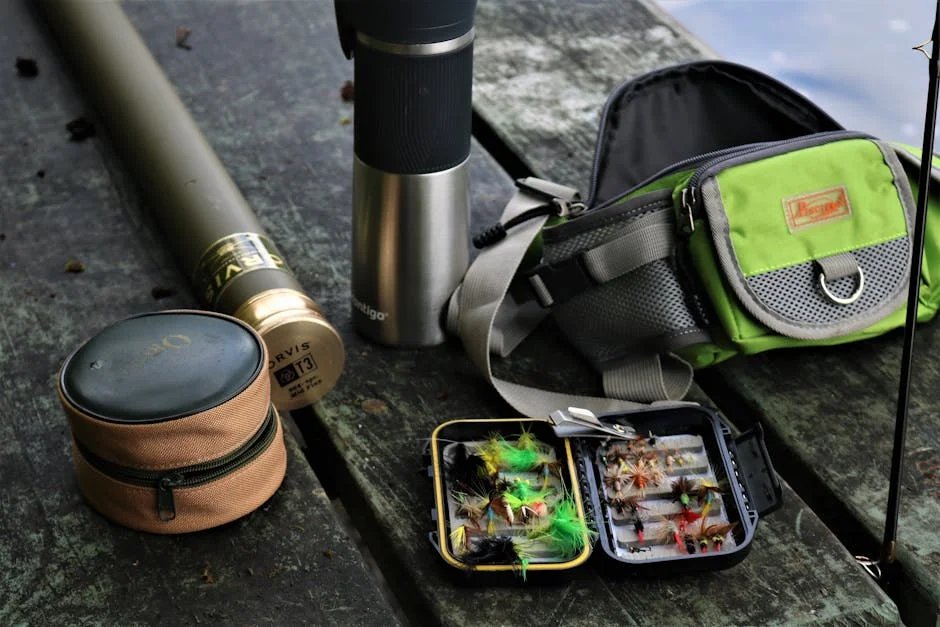
The Wifreo 24PCS Tenkara Flies assortment covers the core tenkara fly vocabulary: kebari-style wet flies, soft hackles, and a few bead head nymphs, packed in a waterproof box sized for a pack pocket or chest pack. For an angler starting out in tenkara, this is a practical way to get a functional fly selection on the water without building one fly at a time.
The fly quality is mid-range production tier, consistent hook gaps, reasonably proportioned bodies, nothing that would embarrass itself in the drift. Verified buyer feedback notes that the waterproof box earns its place: it survives the kind of dunking a backcountry pack takes in wet weather, which is more than some fly boxes at this price band manage.
The selection is designed around moving water trout. It fishes well on small freestone creeks and will cover most of the presentations the Sasoi and Insights & Strategies books discuss at the introductory level. Anglers who tie their own flies will eventually outgrow this assortment, but for the first two seasons of tenkara fishing, it’s a sensible starting point.
Check current price on Amazon.
Buying Guide
Which System Fits Your Primary Water
The most honest way to answer the tenkara vs. fly fishing question is to describe the water you fish most. Tenkara is optimized for small to medium freestone streams, creeks with variable depth, brushy banks, and fish that hold close. If that’s 80% of your fishing, tenkara deserves serious consideration.
If your primary water is a tailwater with long pools, open casting lanes, and fish spread across a 60-foot drift, tenkara’s range limitation is a real constraint. The system fishes best at 15 to 25 feet. On a big river with fish feeding across the full width, that ceiling matters.
Gear Investment to Get Started
Starting in tenkara is less expensive at the entry level than starting in conventional fly fishing, one rod handles the role that rod, reel, and line play in a standard setup. The Tenkara Rod Co. Sawtooth sits in the mid-range tier and represents a serious long-term tenkara setup rather than an introductory experiment.
Starting in conventional fly fishing involves more gear decisions: rod action, reel drag type, line taper, leader length. The fly rod selection process deserves its own research time. For backpacking anglers who want one rod that disappears into a pack, tenkara’s single-piece gear list is a real advantage on setup cost and carry weight.
Books First, Gear Second
The tenkara literature available now is meaningfully better than what existed five years ago. Simple Fly Fishing and Tenkara Fly Fishing: Insights & Strategies together give an angler a clear picture of the system before they’ve bought anything. That sequencing matters: understanding the technique philosophy before selecting gear produces better gear decisions.
The same principle applies to conventional fly fishing, where the published technique resources, George Daniel’s Dynamic Nymphing, Tom Rosenbauer’s Orvis work, are dense and worth reading before selecting a rod. In both systems, educated gear selection outperforms instinctive gear selection at every price band.
Technique Transfer Between Systems
One underappreciated point in the tenkara vs. conventional debate: the systems share more technique vocabulary than is usually acknowledged. Upstream presentation, drag-free drift, reading seams and pockets, these skills build in both systems. Anglers who learn tenkara on small creeks and later move to conventional gear on bigger water find the water-reading skills transfer well.
The reverse is also true. Experienced conventional fly anglers who pick up a tenkara rod on a mountain stream typically find the adjustment takes one session, not one season. The casting mechanics are different; the fishing instincts are the same.
The Case for Owning Both
For anglers who fish a range of Colorado terrain, high-elevation creeks in summer, tailwaters through winter, bigger freestone rivers in spring runoff season, the stronger argument is both systems rather than one. A tenkara setup for the pack-in days, a conventional mid-range 5wt for everything else.
That’s how the Sawtooth fits in the rotation here: it’s not a replacement for the Sage X on Cheesman or the Bighorn, it’s the rod that goes into the backcountry where the 9-foot 5wt has no business. Owning both is not redundancy, it’s tool selection appropriate to the task.
Frequently Asked Questions
Is tenkara easier to learn than conventional fly fishing?
Tenkara has a shorter ramp to catching fish. The mechanics are simpler, no reel, no line management, no mending, and beginners can develop a functional upstream presentation within a session or two on small water. Conventional fly fishing adds complexity at every layer, and that complexity takes longer to internalize. The trade-off is that conventional fly fishing, once learned, covers far more fishing situations.
Can you fish tenkara on big rivers and tailwaters?
The fixed-line system limits practical range to roughly 15 to 25 feet of presentation distance. On wide tailwaters or open rivers where fish are feeding across the full channel, that ceiling is a genuine constraint. Tenkara fishes best on small to medium freestone streams where tight quarters are the norm. For tailwater-focused anglers, a conventional setup with a well-matched 5wt is the more practical primary tool.
Should I read Simple Fly Fishing or Tenkara Fly Fishing: Insights & Strategies first?
Start with Simple Fly Fishing if you’re still deciding whether tenkara fits your fishing. It frames the philosophy and system trade-offs clearly. Move to Tenkara Fly Fishing: Insights & Strategies once you’re committed to the system and want to fish it more effectively, it covers presentation mechanics and water-reading at a level the Chouinard book doesn’t attempt.
Is the Tenkara Rod Co. Sawtooth appropriate for beginners?
Owner consensus points to yes, with one caveat. The Sawtooth is not a beginner-only rod, it’s a quality mid-range tenkara setup that experienced anglers use as a backcountry tool. For a new tenkara angler, it provides better feedback and durability than entry-level options. The fixed-line technique requires adjustment time regardless of which rod you start on, and starting on quality gear tends to shorten that adjustment period.
Do the flies in a tenkara-specific assortment work on a conventional fly rod?
Most tenkara flies, kebari wet flies, soft hackles, bead head nymphs, work perfectly well on a conventional setup. The Wifreo 24PCS Tenkara Flies assortment covers patterns that fish effectively swung or dead-drifted on standard leader and tippet. Fly selection is not system-specific at the pattern level; presentation technique is where the two approaches diverge most significantly.
Where to Buy
Simple Fly Fishing (Revised Second Edition)See Simple Fly Fishing (Revised Second Ed… on Amazon