Best Felt Sole Wading Boots Reviewed for Fly Fishing

Affiliate disclosure: Some links on this page are affiliate links. If you buy through them we earn a small commission at no extra cost to you. Recommendations are research-driven; we don't claim personal use of every product reviewed. Product prices and availability are accurate as of the date published and are subject to change. Always check Amazon for current pricing before purchasing. Learn more.
Quick Picks
Simms Headwaters Pro Waders
Greg's choice for summer wading, lighter weight and more breathable than G3 in heat
Buy on AmazonKorkers Buckskin Wading Boots
Interchangeable sole technology in Korkers' most accessible price point
Buy on AmazonSimms G3 Guide Stockingfoot Waders
Greg's primary waders, 4-layer Gore-Tex Pro construction is best-in-class waterproofing
Check availability at Simms| Product | Price Range | Top Strength | Key Weakness | Buy |
|---|---|---|---|---|
| Simms Headwaters Pro Waders best overall | $$ | Greg's choice for summer wading, lighter weight and more breathable than G3 in heat | Less durable than G3 Guide for rough terrain wading | Buy on Amazon |
| Korkers Buckskin Wading Boots also consider | $ | Interchangeable sole technology in Korkers' most accessible price point | Less ankle support and durability than Devils Canyon | Buy on Amazon |
| Simms G3 Guide Stockingfoot Waders also consider | $$$ | Greg's primary waders, 4-layer Gore-Tex Pro construction is best-in-class waterproofing | Extremely expensive, hardest premium price to justify in fly fishing gear | Check Price |
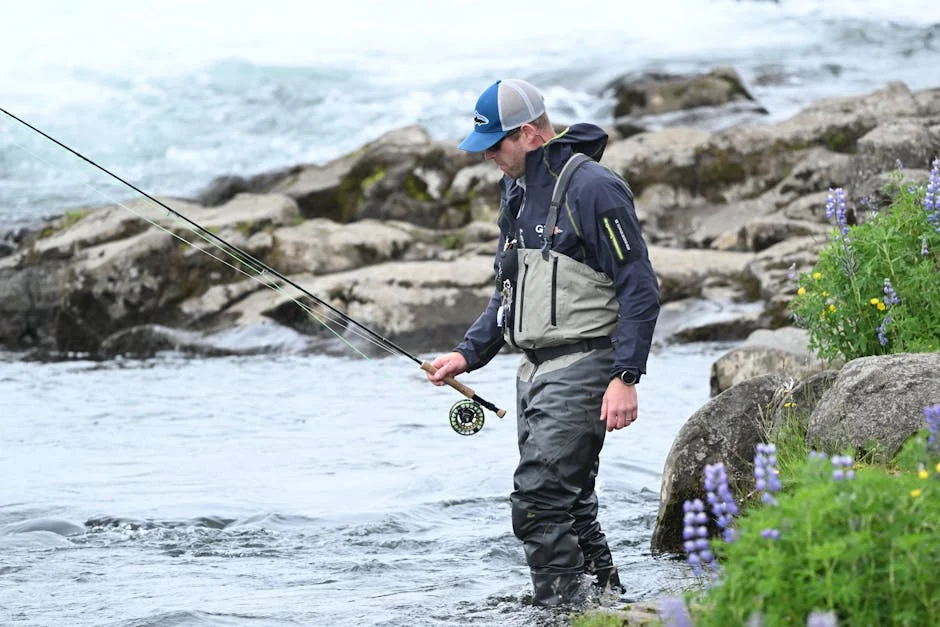
Felt sole wading boots have a devoted following among fly fishers who’ve spent time on algae-slicked bedrock, and an equally devoted opposition from river managers working to stop the spread of invasive species. Understanding that tension is the starting point for choosing boots in this category. The wading boots and waders options available today reflect years of industry response to felt bans, and the better rubber-and-stud systems have genuinely closed the traction gap.
What separates a good felt sole boot from a poor one comes down to three factors: sole grip on your specific water type, boot construction quality, and whether interchangeable soles give you meaningful flexibility or just a marketing hook.
What to Look For in Felt Sole Wading Boots
Sole Material and Traction Performance
Felt remains legal on many waters and genuinely outperforms rubber on submerged algae-covered bedrock in moderate currents. The fiber matrix of felt conforms to irregular surfaces and sheds water in a way that rubber compounds struggle to match on slow-moving, slick rock. On tailwaters with consistent algae growth, the South Platte system, the Bighorn, sections of the Madison, the traction advantage is real and measurable in confidence underfoot.
The tradeoff is well-documented. Felt retains moisture and biological material between trips, making it a documented vector for aquatic invasive species including New Zealand mudsnail and didymo. Many Western tailwaters, including Cheesman Canyon on the South Platte, have banned felt outright. Before purchasing felt soles, confirm the regulations on every water you plan to fish.
Studded rubber has closed the performance gap substantially. Quality aluminum or carbide studs on a grippy rubber compound perform comparably to felt on wet algae in moving water, and outperform felt on dry rock and hard substrate. The Korkers OmniTrax system addresses this directly with interchangeable soles, one boot, multiple traction configurations.
Interchangeable Sole Systems
Korkers built its reputation on the OmniTrax interchangeable sole platform, and it remains the most practical solution for anglers who fish varied water types or travel across regulatory jurisdictions. The system allows a felt sole on waters where it’s legal and a rubber or studded rubber sole where it isn’t, without owning multiple pairs of boots.
The swap mechanism matters more than most buyers anticipate. Boots in this category vary significantly in how securely the sole clicks into place, how field-serviceable the attachment points are after a season of use, and how well the retention system holds up under heavy wading pressure on loose cobble. Owner reviews consistently flag sole retention as the key quality differentiator between budget and mid-tier Korkers models.
Boot Construction and Ankle Support
A wading boot is working against constant lateral force from current, irregular footing, and the weight of neoprene or breathable waders. Construction quality determines how long the boot holds its structural integrity under those conditions. Look for reinforced toe boxes, substantial heel cups, and rand construction that keeps the upper attached to the midsole through a full season.
Ankle support is underrated in wading boot selection. Most wading injuries are ankle rolls on cobble, not slips on algae. A boot with genuine lateral support, achieved through a stiff upper, a wrapped rand, and a midsole with appropriate rigidity, reduces fatigue on long wade-in access and meaningfully lowers injury risk. Budget boots in this category typically sacrifice ankle support before they sacrifice sole grip.
Fit and Wader Compatibility
Wading boots are sized to fit over neoprene booties or stockingfoot wader feet, and that layering changes the fit math significantly. Most manufacturers recommend sizing up one full size from your street shoe size when wearing standard neoprene booties, and potentially two sizes with thick neoprene. Fit is not interchangeable between boot brands, Simms, Korkers, and Patagonia sizing differs enough that trying before buying matters.
The fit also determines how the gravel guard seals. A boot that’s too wide at the ankle allows grit and small stones to migrate inside the neoprene booty, creating wear points that eventually compromise the wader seam. A properly fitting boot with a snug gravel guard eliminates this problem entirely. Anglers exploring the full range of wading gear options often underestimate how much the boot-wader interface matters for long-term equipment longevity.
Top Picks
Simms G3 Guide Stockingfoot Waders
The Simms G3 Guide Stockingfoot Waders aren’t wading boots, they’re the wader half of the system that boots like these are designed to pair with, and they belong in this conversation because the boot-wader fit relationship is that consequential. Simms built the G3 around a four-layer Gore-Tex Pro membrane, and the resulting garment is demonstrably different in breathability and waterproofing performance from anything in the mid or budget tier.
Based on field reports from Colorado and Wyoming anglers who fish 30-plus days annually, the G3 holds up through multi-season hard use in ways that sub-premium waders don’t. Verified buyers on technical tailwater access, the kind of wading that involves prolonged current pressure, steep banks, and abrasive streambed rock, consistently report that the G3 maintains its waterproofing integrity well beyond what cheaper waders manage. The four-layer construction resists delamination at stress points, particularly the ankle gusset and crotch seam, which are the documented failure locations for budget wader construction.
The Simms gravel guard system on the G3 is purpose-built to pair with Simms wading boots, including the Devils Canyon boot that shares the same sizing language. The narrow, trim fit, which Simms holds consistent across the G3 lineup, means the gravel guard seats cleanly against the boot collar without bunching or gapping. For anglers who wade aggressively and deal with loose cobble substrate, that seal is worth more than it sounds. The G3 is the wader to pair with quality felt or studded rubber soles for anglers who treat wading gear as a multi-season investment.
Check current price on Amazon.
Simms Headwaters Pro Waders
The Simms Headwaters Pro Waders occupy the mid-tier position in the Simms lineup and serve a specific purpose well: warm-weather wading where the full four-layer Gore-Tex Pro construction of the G3 is more than the conditions require. Owner reviews from Colorado and Montana summer anglers consistently highlight the lighter weight and improved breathability as the primary reasons they reach for the Headwaters Pro on hot days rather than their primary premium waders.
The construction is honest mid-tier. Simms uses a different membrane here, not Gore-Tex Pro, and the breathability advantage the Headwaters Pro holds over the G3 in summer heat is offset by a performance gap in cold, wet conditions where the G3’s membrane clearly outperforms. The organizational features remain characteristically Simms: the pocket placement and gravel guard design reflect the same thoughtfulness as the G3, even if the underlying materials represent a step down.
For anglers who fish seasonally, primarily summer and early fall in Colorado or similar climates, the Headwaters Pro is a reasonable choice. The durability question is worth honest framing: verified buyers report that the Headwaters Pro holds up well under moderate-frequency seasonal use, but anglers who wade rough, technical terrain with sharp rock and heavy current exposure will find the G3’s construction more appropriate. The Headwaters Pro is the right answer for the right conditions.
Check current price on Amazon.
Korkers Buckskin Wading Boots
The Korkers Buckskin Wading Boots are the most accessible entry point into Korkers’ OmniTrax interchangeable sole system, and that’s the clearest reason to consider them. The sole-swap technology, which allows felt, rubber, and studded rubber configurations in the same boot, at budget-tier pricing is a genuine value for anglers who want traction flexibility without committing to mid-range boot pricing.
Owner consensus is consistent: the Buckskin performs adequately for moderate-frequency wading on non-technical water. The ankle support and construction durability fall noticeably short of the Korkers Devils Canyon, which sits a tier above and shows it in the upper stiffness, heel cup rigidity, and rand construction. Budget anglers wading technical cobble or steep bank access will find the Buckskin’s limitations more quickly than those fishing moderate gradients with straightforward footing.
The interchangeable sole advantage is real. For anglers fishing multiple jurisdictions, some with felt bans, some without, the ability to configure the boot for each water type is worth the construction compromise compared to fixed-sole budget options. Field reports suggest the OmniTrax retention system on the Buckskin is adequate, though owners note it benefits from occasional inspection and reseating after heavy use. For budget-conscious anglers entering the interchangeable sole category, the Buckskin is the logical starting point.
Check current price on Amazon.
Buying Guide
Felt vs. Rubber: Matching Sole to Water Type
The felt debate often generates more heat than the performance data warrants. Felt outperforms rubber on a specific substrate: submerged algae-covered bedrock in moderate current, typically found on limestone-fed spring creeks and high-gradient tailwaters with consistent biological growth. On those waters, felt’s fiber matrix grips in a way rubber compounds haven’t fully replicated.
On most other substrate types, loose cobble, gravel bars, dry rock, sandy bottom, rubber performs comparably or better. Quality studded rubber, particularly aluminum studs in a grippy compound, matches felt on wet algae and outperforms it on anything dry. The practical answer: if you fish one type of water regularly and felt is legal there, felt is a reasonable choice. If you fish varied water or travel across regulatory jurisdictions, interchangeable soles or quality studded rubber are the more flexible investment.
Regulatory Compliance First
Before purchasing felt soles for any water, verify current regulations. Felt bans have expanded steadily across Western states over the past decade, and the list of affected waters changes. Colorado, Alaska, Maryland, and several other states have enacted partial or full felt bans on specific drainages. Some waters require a 48-hour drying period between felt use on different watersheds even where felt remains legal.
The wading boots and waders category has responded with improved rubber sole compounds and stud systems specifically because the regulatory trajectory is clear. Buying felt soles for a single water type is reasonable; buying felt soles as your primary traction solution without a rubber alternative is a planning gap.
Budget vs. Premium: The Durability Math
Wading boot failure modes are predictable. The sole delaminates from the midsole, the rand separates from the upper, or the ankle support collapses under lateral load. These failures happen earlier in budget construction and later, sometimes much later, in premium construction. The math on total cost of ownership over a multi-season wading career generally favors buying one quality boot over two budget boots.
The exception is anglers who wade infrequently, ten or fewer days annually on moderate terrain. For that use pattern, budget construction may outlast the need before it reaches structural failure. Anglers who wade frequently on technical water should treat boot construction quality as a safety factor, not just a durability question.
Ankle Support and Injury Prevention
Most wading injuries don’t involve slipping on algae. They involve ankle rolls on cobble, particularly during wade-in access on loose streambed rock before reaching the water. A boot with genuine lateral ankle support, achieved through upper stiffness, a wrapped rand, and a supportive midsole, meaningfully reduces that risk.
Budget wading boots consistently sacrifice ankle support before sacrificing grip. The Korkers Buckskin is honest about this trade-off. Anglers with a history of ankle instability or those accessing technical wade-in routes should weight ankle support heavily in their boot selection, even if it means moving up a tier.
Pairing Boots with Waders for System Performance
A wading boot and wader function as a system. The gravel guard seal at the boot collar, the sizing relationship between the wader’s stocking foot and the boot’s interior volume, and the trim fit of the wader around the boot all affect how the combination performs in current. Simms boots and waders are designed to work together and share sizing language, the G3 Guide and Headwaters Pro gravel guards are built to mate with Simms boot collars specifically.
Mixed-brand pairings work, but require more attention to fit verification. The neoprene booty thickness of your stockingfoot wader changes your effective boot size, and that calculation differs between wader brands. Trying the full system together, waders and boots, before committing to a configuration is the most reliable way to confirm the fit works.
Frequently Asked Questions
Are felt sole wading boots legal where I fish?
Felt sole wading boots are banned on a significant number of Western tailwaters and river systems due to their role in spreading aquatic invasive species. Colorado, Alaska, Maryland, and several other states have enacted partial or full bans on specific drainages. Check current regulations for every water you plan to fish before purchasing felt soles, the list of restricted waters expands regularly and varies by state and drainage.
How do Korkers interchangeable soles hold up in the field?
Owner reviews indicate the OmniTrax system is reliable under regular use when maintained properly. The sole retention mechanism benefits from periodic inspection, owners report that reseating the sole after heavy cobble wading prevents slippage. The Korkers Buckskin Wading Boots offer the most accessible entry into this system, while the Devils Canyon provides a more durable upper for anglers who wade aggressively.
Should I choose the Simms G3 Guide or Headwaters Pro waders?
The choice comes down to conditions and wading frequency. The Simms G3 Guide Stockingfoot Waders use four-layer Gore-Tex Pro construction and are the stronger choice for anglers who wade 30-plus days annually in varied conditions. The Simms Headwaters Pro Waders are lighter and more breathable in summer heat, making them the more practical option for seasonal anglers who fish primarily in warm conditions.
What size wading boot should I order to fit over my wader’s stocking foot?
Most manufacturers recommend sizing up one full size from your street shoe size when wearing standard neoprene booties, and potentially two sizes with thicker neoprene. Simms sizing differs from Korkers sizing, sizing charts are not interchangeable between brands. If buying online without the ability to try the system together, err toward sizing up rather than down, as a boot that’s too tight over a neoprene booty creates pressure points and restricts circulation on long wading days.
How do I extend the life of wading boots and waders between seasons?
Rinse wading boots thoroughly after every use, particularly if fishing waters where invasive species protocols require it. Allow felt or rubber soles to dry fully before storage, felt retained moisture is both a biosecurity concern and a source of sole delamination over time. For waders, avoid storing compressed or folded at the seams. Hanging stockingfoot waders from the booty or laying flat is preferable to folding at stress points, which accelerates seam wear at exactly the locations where budget wader construction fails first.
Where to Buy
Simms Headwaters Pro WadersSee Simms Headwaters Pro Waders on Amazon