
Reel Weight Match Rod: Balance Your Setup for Better Casting

Affiliate disclosure: Some links on this page are affiliate links. If you buy through them we earn a small commission at no extra cost to you. Recommendations are research-driven; we don't claim personal use of every product reviewed. Product prices and availability are accurate as of the date published and are subject to change. Always check Amazon for current pricing before purchasing. Learn more.
Quick Picks
Sougayilang Fishing Rod Reel Combo with Telescopic Fishing Pole Spinning Reel Carrier Bag for Travel Saltwater Freshwater Fishing
Buy on Amazon| Product | Price Range | Top Strength | Key Weakness | Buy |
|---|---|---|---|---|
| Ugly Stik Bigwater Spinning Reel and Fishing Rod Combo also consider | $$ | Buy on Amazon | ||
| Zebco Bite Alert Spinning Reel and 2-Piece Fishing Rod Combo also consider | $$ | Buy on Amazon | ||
| Sougayilang Fishing Rod Reel Combo with Telescopic Fishing Pole Spinning Reel Carrier Bag for Travel Saltwater Freshwater Fishing also consider | $$ | Buy on Amazon |
Matching reel weight to your rod is one of those details that looks simple on paper and causes real problems when you get it wrong. Too light and your setup tips forward, killing your casting stroke before you even load the blank. Too heavy and the whole outfit feels dead in your hand. After twenty years on the water, the reel-to-rod balance question is something I still think about every time I rig up a new setup, and I’ve gotten it wrong more than once.
The good news is that the core principles don’t change whether you’re fly fishing with a delicate 3-weight or running a heavier spinning combo on a reservoir. Understanding how reel weight affects rod balance, casting fatigue, and fish-fighting performance will help you make a smarter decision. Start with the broader picture at our Fly Reels hub before digging into the specifics below.
Why Reel Weight Match Rod Balance Actually Matters
Most anglers focus almost entirely on line weight when pairing a reel to a rod. Line weight matters, but physical weight distribution along the outfit matters just as much, and it’s consistently underestimated by newer anglers and occasionally ignored by experienced ones.
The concept here is simple enough that any engineer would recognize it: you’re looking for the balance point of the assembled outfit to fall somewhere near or just forward of the cork grip. When that balance is right, the rod feels light and responsive in hand. When the reel is too light for the rod, the tip-heavy feel creates what casting instructors call “tip drop,” a subtle sagging that disrupts timing on the back cast. When the reel is too heavy, the outfit wants to pivot at the reel seat and fatigues your wrist over a long day.
The Physics of Balance
Think of the fly rod as a lever, and your casting hand as the fulcrum. Every ounce of weight at the tip of that lever (the rod blank) works against you. A heavier reel placed at the butt end counteracts some of that tip weight, pulling the balance point rearward toward your hand. Manufacturers design rod blanks with specific target weights in mind, and most reel manufacturers publish their reel weights for exactly this reason.
Spec data for premium fly reels shows weights ranging from roughly 3.5 ounces for small trout reels up to 9 or 10 ounces for heavy saltwater reels. The difference between a 3.5-ounce and a 5-ounce reel on a 9-foot 5-weight rod is immediately noticeable in hand. That’s not a small margin.
Casting Fatigue Across a Full Day
This is where the reel weight match rod question has real practical consequences. On a half-day wade on Cheesman Canyon, a slightly mismatched outfit is annoying. On a full day of streamer fishing or a float trip where you’re casting for eight hours, a poorly balanced setup will tire your forearm and shoulder faster than a well-balanced one.
Field reports from experienced anglers consistently mention that balance-related fatigue compounds over time. You don’t notice it at 9 a.m. You notice it at 3 p.m. when your back cast starts collapsing and your accuracy drops off. The fix isn’t more casting practice. It’s getting the balance right before you leave the parking lot.
When Drag Performance Enters the Equation
Reel weight and drag performance are separate considerations, but they often travel together because heavier reels tend to carry more sophisticated drag systems. I learned this the hard way on the Bighorn one fall afternoon. I had a quality rod rigged with a budget reel I’d been running for three years, convinced that drag didn’t matter much on tailwater fish that rarely run far. Then a 22-inch brown hit, the drag stuttered on the first run, and the tippet broke at the stutter point. The fish was gone.
The reel matters. On small fish and gentle water, a basic drag system is genuinely fine. On bigger water with bigger fish, or anywhere current can pull line faster than you can palm the spool, drag quality is not optional. Getting the weight right is the first step. Getting the drag right is the second.
Buying Guide: How to Match Reel Weight to Your Rod
Start With the Rod’s Recommended Reel Weight
Most quality rod manufacturers publish a recommended reel weight range in their product specs or owner documentation. Spec data from major manufacturers suggests that a 9-foot 5-weight rod is typically balanced by a reel in the 4.5-to-6-ounce range, though this varies by blank material and rod length. Lighter fast-action blanks often require slightly heavier reels to achieve balance. Heavier fiberglass or slower-action rods may balance well with lighter reels.
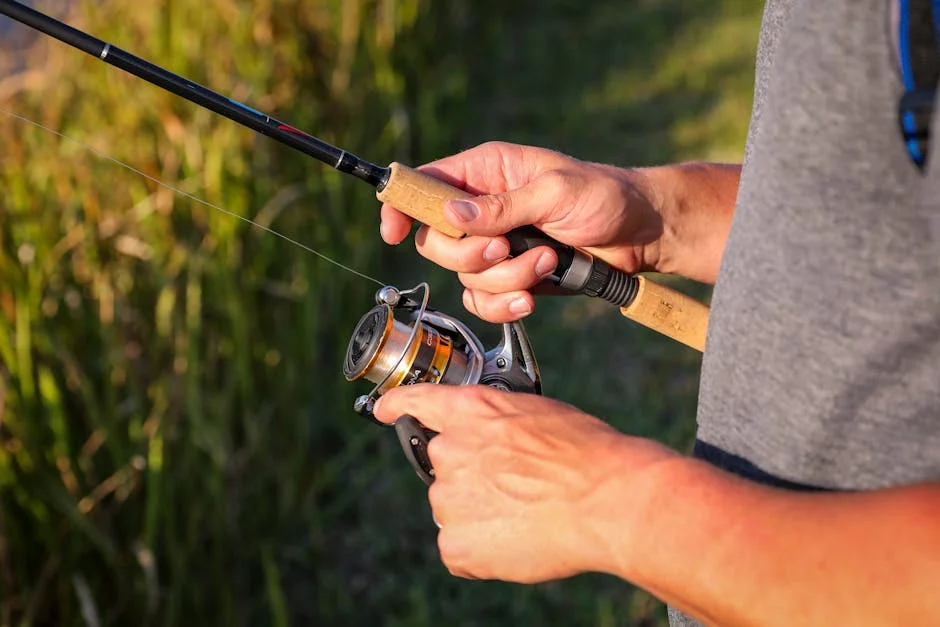
The practical approach: assemble the rod with the reel attached, rest the outfit across your index finger at the front edge of the cork grip, and see where it balances. A slight forward bias (toward the tip) is considered acceptable by most experienced casters. A pronounced tip-heavy lean indicates your reel is too light.
Match the Reel to the Water Type
Water type changes the reel weight calculation because it changes your performance requirements. On a small freestone stream with 10-to-14-inch fish, a lighter reel paired with a click-pawl drag handles everything you’ll encounter. You can palm the spool on any fish that runs, and a lighter reel helps preserve the feel of a delicate presentation rod.
On bigger tailwater water or larger rivers with stronger fish, the drag system inside that reel needs to handle real runs without stuttering. A reel with enough mass to house a quality drag stack often ends up in the right weight range for a heavier rod anyway. Our reel selection guide covers drag system types in more depth if you want to compare cork-versus-carbon-stack drag performance.
Account for Line and Backing Weight
An often-skipped step is accounting for the weight of line and backing on the spool. A fly reel spooled with 150 yards of backing plus a full fly line weighs noticeably more than an empty spool. Verified buyer feedback on various reel models notes that balance checks done with an empty reel can feel different once the outfit is fully spooled.
The practical workaround: do your balance check with the reel spooled and ready to fish. If your balance check shows tip-heavy with a full spool, you’re fishing tip-heavy all season. Some anglers compensate by adjusting how much backing they load, which is a reasonable solution on reel-line combos where you don’t need maximum backing capacity.
Consider Rod Length and Line Weight Together
A longer rod with a lighter line weight creates a more tip-heavy lever than a shorter rod with the same line weight. A 10-foot euro nymphing rod is a good example. The extra blank length adds real weight at the tip end of that lever, which is part of why dedicated euro reel designs tend to run slightly heavier than a standard trout reel in the same line class.
Conversely, a short 7-foot 3-weight rod for small streams has very little lever arm working against you. That outfit can run a very light reel and still balance fine. Matching reel weight to rod means thinking about the geometry of the whole system, not just the line weight printed on the rod blank.
Spinning and Conventional Combos Follow the Same Principle
Spinning rod and reel matching follows the same balance logic. Manufacturers pair spinning reels to rods by both line weight and physical balance, and combo products sold as matched sets are engineered to meet both criteria. Verified buyers of matched spinning combos consistently note that one advantage of buying a combo versus mixing and matching components is that the balance question has already been solved by the manufacturer. You lose some customization but gain a pre-tested matched system that works out of the box.
Top Picks
The three products below cover different use cases and price bands, but each one represents a matched system where the reel weight and rod specs were designed together rather than guessed at separately.
Ugly Stik Bigwater Spinning Reel and Fishing Rod Combo
The Ugly Stik Bigwater Spinning Reel and Fishing Rod Combo is built for heavier freshwater and light saltwater applications where casting weight, retrieve power, and durability matter more than finesse. Spec data shows this combo is designed around heavier line classes, and the reel is sized proportionally to give the rod a workable balance point for longer casting sessions.
Verified buyers note that the Ugly Stik rod blank lives up to the brand’s longstanding reputation for durability. Owner reviews frequently mention pike, larger bass, and surf-adjacent freshwater species as the primary use cases. The balance on a heavier combo like this is worth checking out of the box, but field reports indicate the Bigwater sits in a reasonable range for the rod length it’s paired with.
Where this combo earns its place is in the mid-price band for anglers who want a capable, abuse-resistant system without premium investment. Verified buyers consistently mention that the rod handles hard use better than comparably priced options from other brands. The reel-to-rod weight pairing has been engineered as a matched unit, which is the right starting point for anyone unsure how to spec components independently.
Check current price on Amazon.
Zebco Bite Alert Spinning Reel and 2-Piece Fishing Rod Combo
The Zebco Bite Alert Spinning Reel and 2-Piece Fishing Rod Combo sits in an interesting spot: it’s a mid-range combo with a built-in electronic bite alert system that addresses a common problem for anglers who fish multiple rods simultaneously or fish with limited tactile sensitivity.
The reel-to-rod weight match on this combo has been designed around a 2-piece rod that breaks down for easier transport. Owner reviews note the assembly is straightforward and the two pieces join securely, which is relevant because a poorly fitted 2-piece joint can affect how the rod flexes and how the balance point feels. Verified buyers generally report the combo feels balanced in hand without pronounced tip-heaviness.
The bite alert feature adds a small amount of electronics weight near the reel seat area, which is worth noting for anglers doing precise balance analysis. In practice, field reports suggest the addition doesn’t materially affect casting comfort. This is a solid mid-range choice for dock fishing, still-water applications, and situations where visual line watching is difficult.
Check current price on Amazon.
Sougayilang Fishing Rod Reel Combo with Telescopic Fishing Pole Spinning Reel Carrier Bag for Travel Saltwater Freshwater Fishing
The Sougayilang Fishing Rod Reel Combo with Telescopic Fishing Pole Spinning Reel Carrier Bag for Travel Saltwater Freshwater Fishing is built around a telescoping rod design, which changes the reel weight match equation somewhat compared to conventional one-piece or two-piece rods.
Telescoping rods concentrate more hardware and ferrule material along the blank than a traditional rod, which affects the overall tip weight and therefore the reel weight needed to achieve balance. Spec data and verified buyer reports suggest this combo’s reel is sized appropriately for travel-weight fishing, targeting lighter freshwater and light saltwater species rather than heavy-duty applications. The included carrying bag is a genuine convenience feature that owner reviews consistently mention as a practical benefit for backpacking and travel fishing.
For anglers who prioritize portability and want a matched system that fits in a carry-on bag or backpack, this combo addresses a real logistical problem. Field reports indicate it performs reasonably well for its intended audience: travelers, hikers, and casual anglers who need a grab-and-go system. The reel-to-rod balance is designed for the telescoping platform, not for comparison to a full-size conventional rod setup.
Check current price on Amazon.
Final Thoughts
Reel weight is not the most glamorous part of buying a fly fishing or spinning setup, but it’s one of the variables that affects every cast you make all day long. The combos above solve the matching problem by design, which is a legitimate advantage for anglers who don’t want to work through the geometry independently. If you’re building a custom outfit from separate components, do the balance check with a fully spooled reel before you commit to a pairing.
For a broader look at reel options across price bands, drag system types, and species applications, the Fly Reels hub is the right next stop.
Frequently Asked Questions
How do I know if my reel is too light for my rod?
Assemble your rod fully, grip it at the cork handle, and rest the outfit across your index finger at the forward edge of the grip. If the tip drops significantly, your reel is likely too light for that blank. A well-matched setup balances near the grip or tilts only slightly toward the tip. Owner feedback consistently notes that pronounced tip-heaviness causes casting fatigue much faster than a properly balanced outfit.
Does reel weight matter more for fly fishing than spinning?
Both disciplines are affected by reel-to-rod balance, but the consequences are slightly different. Fly casting is a weight-transfer sport where balance directly affects loop formation and timing, making reel weight particularly critical. Spinning setups are less timing-dependent but still benefit from a balanced outfit that reduces wrist fatigue over a long day. Spec data from both rod categories confirms that manufacturers account for balance in their matched combo designs.
Can I use a heavier reel to fix a tip-heavy rod?
Yes, and this is a legitimate technique used by experienced anglers. Adding reel weight at the butt end shifts the balance point rearward, reducing tip-heavy feel. However, a significantly heavier reel adds overall outfit weight that your arm still has to lift repeatedly. The better solution is to select a reel in the weight range the rod manufacturer recommends rather than using a heavy reel as a counterweight correction.
Is a matched combo always better than buying components separately?
Not always, but matched combos remove the guesswork from the balance equation. Manufacturers building combos have already tested that the reel and rod work together by weight and line class. Buying components separately gives you more control over performance tiers and allows you to invest differently in rod versus reel. For anglers who know their component preferences, separates often win.
How much does reel weight affect casting distance?
A mismatched reel won’t dramatically reduce your maximum casting distance in a single cast, but it will degrade your accuracy and consistency over time, particularly as fatigue sets in. Verified buyer reports and casting instructor feedback consistently point to balance-related fatigue as a late-day accuracy problem rather than an immediate distance limiter. A properly balanced outfit lets you maintain casting form longer, which matters more than any single-cast distance difference.
<script type="application/ld+json">
{
 "@context": "https://schema.org",
 "@type": "FAQPage",
 "mainEntity": [
 {
 "@type": "Question",
 "name": "How do I know if my reel is too light for my rod?",
 "acceptedAnswer": {
 "@type": "Answer",
 "text": "Assemble your rod fully, grip it at the cork handle, and rest the outfit across your index finger at the forward edge of the grip. If the tip drops significantly, your reel is likely too light for that blank. A well-matched setup balances near the grip or tilts only slightly toward the tip. Owner feedback consistently notes that pronounced tip-heaviness causes casting fatigue much faster than a properly balanced outfit."
 }
 },
 {
 "@type": "Question",
 "name": "Does reel weight matter more for fly fishing than spinning?",
 "acceptedAnswer": {
 "@type": "Answer",
 "text": "Both disciplines are affected by reel-to-rod balance, but the consequences are slightly different. Fly casting is a weight-transfer sport where balance directly affects loop formation and timing, making reel weight particularly critical. Spinning setups are less timing-dependent but still benefit from a balanced outfit that reduces wrist fatigue over a long day. Spec data from both rod categories confirms that manufacturers account for balance in their matched combo designs."
 }
 },
 {
 "@type": "Question",
 "name": "Can I use a heavier reel to fix a tip-heavy rod?",
 "acceptedAnswer": {
 "@type": "Answer",
 "text": "Yes, and this is a legitimate technique used by experienced anglers. Adding reel weight at the butt end shifts the balance point rearward, reducing tip-heavy feel. However, a significantly heavier reel adds overall outfit weight that your arm still has to lift repeatedly. The better solution is to select a reel in the weight range the rod manufacturer recommends rather than using a heavy reel as a counterweight correction."
 }
 },
 {
 "@type": "Question",
 "name": "Is a matched combo always better than buying components separately?",
 "acceptedAnswer": {
 "@type": "Answer",
 "text": "Not always, but matched combos remove the guesswork from the balance equation. Manufacturers building combos have already tested that the reel and rod work together by weight and line class. Buying components separately gives you more control over performance tiers and allows you to invest differently in rod versus reel. For anglers who know their component preferences, separates often win. For anglers building their first outfit, a matched combo reduces the risk of a mismatched pairing."
 }
 },
 {
 "@type": "Question",
 "name": "How much does reel weight affect casting distance?",
 "acceptedAnswer": {
 "@type": "Answer",
 "text": "A mismatched reel won't dramatically reduce your maximum casting distance in a single cast, but it will degrade your accuracy and consistency over time, particularly as fatigue sets in. Verified buyer reports and casting instructor feedback consistently point to balance-related fatigue as a late-day accuracy problem rather than an immediate distance limiter. A properly balanced outfit lets you maintain casting form longer, which matters more than any single-cast distance difference."
 }
 }
 ]
}
</script>Where to Buy
Ugly Stik Bigwater Spinning Reel and Fishing Rod ComboSee Ugly Stik Bigwater Spinning Reel and … on Amazon