Beginner Fly Fishing Kit: Essential Gear Without Overspending

Affiliate disclosure: Some links on this page are affiliate links. If you buy through them we earn a small commission at no extra cost to you. Recommendations are research-driven; we don't claim personal use of every product reviewed. Product prices and availability are accurate as of the date published and are subject to change. Always check Amazon for current pricing before purchasing. Learn more.
Getting into fly fishing without buying three things you don’t need yet is harder than it sounds. Most beginners either overspend on a full-featured setup that outpaces their current skills, or they grab a bargain-bin combo that frustrates them off the water inside a season. Neither outcome is great.
The good news is that a solid beginner fly fishing kit doesn’t require a lot of complexity. A well-matched rod, reel, line, and a few foundational accessories will cover almost every situation you’ll encounter in your first couple of years. The rest of this breakdown covers what those pieces are, how to evaluate them, and where beginners most commonly go sideways.
What Actually Goes Into a Beginner Fly Fishing Kit
Before sorting through gear options, it helps to understand what a complete starting kit actually includes. The term “fly fishing kit” gets used loosely. Sometimes it means a rod-reel-line combo. Sometimes it includes flies, leaders, and a vest. The honest answer is that a functional beginner setup has more components than most people expect, and each one has a job to do.
If you want broader context on how all of this fits together, the Guides & Resources section here at RM Fly Fishing covers water types, casting fundamentals, and species-specific gear in more depth than any single article can.
The Core Four: Rod, Reel, Line, and Leader
The foundation of any fly fishing kit is the rod-reel-line system, and these three pieces have to work together. Add a knotted leader to that and you have the delivery system that gets a fly in front of a fish.
For most beginners fishing trout water in the American West or Midwest, a 9-foot 5-weight rod is the standard starting point. It handles a wide range of fly sizes, works reasonably well in wind, and won’t feel out of place on tailwaters like the South Platte or freestone rivers like the Arkansas. A 5-weight covers everything from size 18 midges to size 6 streamers without being stretched too far in either direction. Field reports from new anglers across multiple fly fishing communities consistently reinforce this: the 9-foot 5wt is the most forgiving all-around entry point.
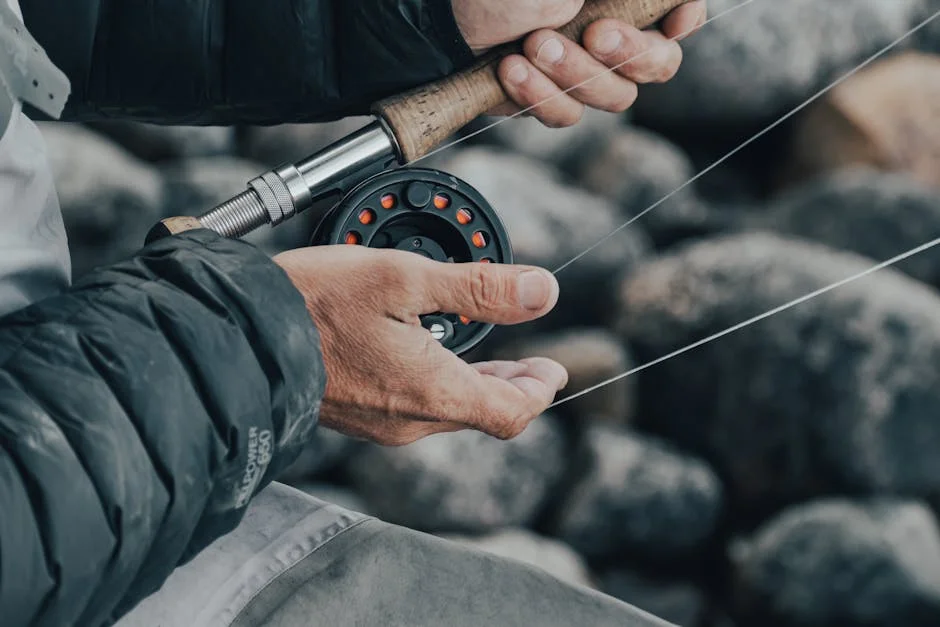
The reel at this level is primarily a line holder. Large arbor designs are standard now because they retrieve line faster and reduce memory coils. A simple click-pawl or basic disc drag system is all you need for trout fishing. Beginners do not need a premium drag system capable of stopping a bonefish run.
Line taper matters more than most beginners realize. A weight-forward floating line in the appropriate weight is the correct choice for nearly all beginner applications. It loads the rod quickly on shorter casts, which is where you’ll be fishing most of the time anyway. The leader attached to the end of the fly line should be a 9-foot tapered monofilament leader, typically finishing at 4X or 5X tippet for most trout scenarios.
Flies and Fly Selection
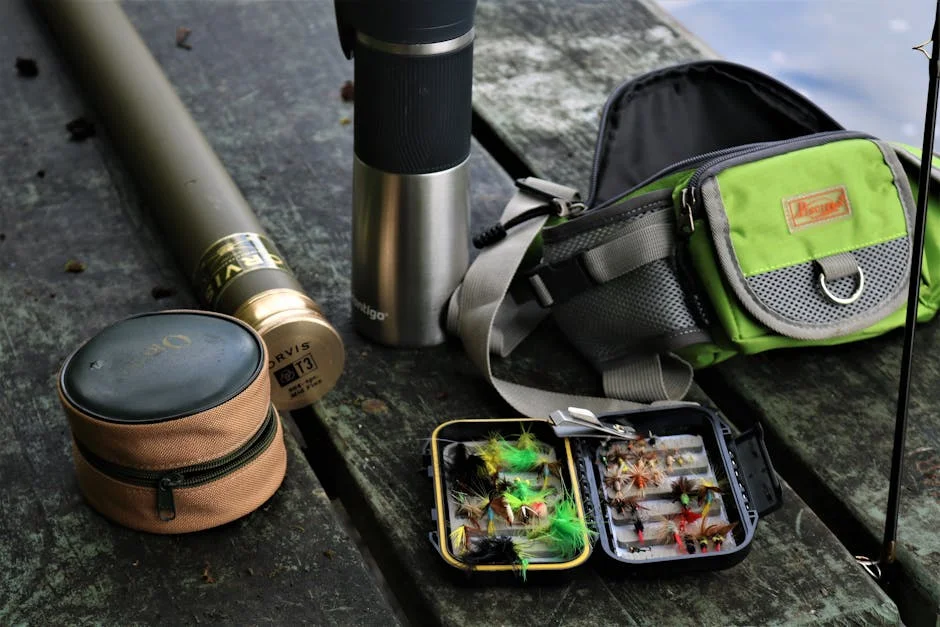
A beginner fly box does not need to contain forty patterns. It needs to contain reliable patterns in a range of sizes. On most trout water, that means a handful of dry flies (Elk Hair Caddis, Adams, Parachute Adams), a few nymphs (Pheasant Tail, Hare’s Ear, Copper John), and a couple of simple streamers (Woolly Bugger in olive and black).
Verified buyers and shop staff consistently make the same point: beginners buy too many fly variations and not enough sizes of the same proven pattern. A size 14 and a size 18 Adams covers more situations than fourteen different dry fly patterns in a single size.
Terminal Tackle and Accessories
This category includes tippet material, strike indicators, split shot, and forceps. These are small purchases but they determine whether you can actually fish when conditions change. Carry at least 4X and 5X tippet spools. Add a couple of size BB and size 3 split shot. A basic foam or yarn indicator and a pair of hemostats round out the essentials.
A landing net with rubber mesh is worth having from the start. It protects the fish and protects your hands. Knotless rubber mesh is the standard for catch-and-release fishing on quality trout water.
Buying Guide: How to Evaluate a Beginner Fly Fishing Kit
Rod Action and What It Means for a New Caster
Rod action describes how a blank flexes under load. Fast-action rods flex primarily in the tip. Moderate-action rods flex deeper into the blank. For beginners, a medium-fast or moderate-fast action is almost always the better choice over a stiff fast-action blank.
Here’s the practical reason. Fast-action rods are efficient and accurate in experienced hands, but they’re punishing for beginners because they require precise timing. A moderate-fast action forgives timing errors by flexing more through the cast, giving a new caster more feedback and a longer casting window. Spec data from most entry-level and mid-range manufacturers reflects this, with beginner-specific rods typically rated as “medium-fast” intentionally.
Graphite (carbon fiber) is the standard blank material at virtually every price point now. Fiberglass rods are a secondary conversation for beginners who want a slower, more tactile experience, but they’re not the primary recommendation for trout fishing versatility.
Line Quality: The Most Underrated Component
Owner reviews across fly fishing communities point to the same frustration: beginners buy a mid-range rod and then pair it with a bargain-bin fly line, then wonder why casting feels wrong. The fly line is the most important performance variable in the entire system.
A quality weight-forward floating line with a short front taper loads faster on close casts, which is where beginners are fishing. Lines with welded loops at both ends save time and simplify rigging. Textured or treated lines tend to float higher and shoot more easily, which helps on longer presentations.
This is one area where spending toward the mid-range rather than the budget end pays immediate dividends in castability. A premium rod paired with a budget line will fish worse than a mid-range rod with a quality line.
Waders and Boots: Do You Need Them Right Away?
Honest answer: not always. If you’re fishing smaller streams where you can access water from the bank, or if you’re in a warm climate, you can start without waders. But for most Western trout fishing, particularly tailwaters that run cold year-round, waders make you more comfortable and let you access water that bank anglers can’t reach.
Beginner waders in the budget-to-mid-range category are serviceable for someone still figuring out whether fly fishing is going to stick. The fly fishing gear and technique resources at /guides/ include water-specific breakdowns that can help you determine whether waders make sense for your primary fishing destinations before you commit to that purchase.
Felt-soled boots have been banned on many Western waters due to invasive species transport concerns. Rubber-soled boots with carbide studs are the safe default. Korkers-style interchangeable sole systems let you adapt to conditions without buying multiple pairs.
The Guide Investment: Undervalued in Every Beginner Conversation
After twenty years in, the best gear investment I ever made wasn’t a rod upgrade. It was hiring a competent guide at two different points in my development. Not a first-trip guide, but a guide when I already thought I knew what I was doing. Specifically to find out what I didn’t know.
The guide I fished with on the Bighorn in 2009 identified three casting and presentation errors I’d been making for five years without realizing it. One day of that kind of instruction changed more about my fishing than any equipment purchase I’ve made before or since. Spec sheets don’t tell you that you’re high-sticking wrong or that your drift is dragging because of how you’re mending.
If you’re assembling your first beginner fly fishing kit, build guide time into the budget from the start. One or two sessions with a skilled local guide, especially as you start to feel competent, will compress years of trial-and-error into a single morning on the water.
Price Bands and What to Expect at Each Level
Budget-tier combos (rod-reel-line packages from mass-market brands) will get you on the water, but blank quality, finish, and line performance are limited. They’re fine for testing whether fly fishing is for you.
Mid-range setups represent the value sweet spot for most beginners who are reasonably confident they’ll stick with the sport. At this level you get quality graphite blanks, reliable drag systems, and lines that actually perform. Most of the gear at this tier will last years without needing replacement.
Premium and luxury gear is real and worth it once you know what you’re optimizing for. But buying a luxury rod before you’ve developed the casting mechanics to feel the difference is money that won’t return value on the water.
What Beginners Get Wrong Most Often
Beyond gear selection, there are a handful of consistent mistakes that show up in beginner fly fishing across water types and regions.
Over-weighting the rod choice. The rod matters, but it matters less than your casting form, your reading of the water, and your fly selection. A mid-range rod in the hands of someone who’s had a few guided sessions will outfish an expensive rod in the hands of someone who’s never had a lesson.
Fishing the wrong size tippet. On pressured tailwaters like Cheesman Canyon or Eleven Mile, dropping to 5X or 6X tippet often makes the difference between refusals and takes. Beginners tend to fish 4X because it’s easier to tie and more forgiving of mistakes, but the fish often aren’t fooled by heavier tippet on clear, low water.
Ignoring the drift. A perfect fly fished on a bad drift catches nothing. The mechanics of a natural drift, how your fly is tracking relative to current speed at the surface versus depth, is where most fishing success actually lives. No gear purchase fixes a dragging fly.
Skipping the net. Beginners often try to hand-land fish. That’s fine for very small fish, but for anything worth protecting, a rubber mesh net limits handling time and reduces stress on the fish. It also means you’re not fumbling at the end of a good fight.
Frequently Asked Questions
What weight fly rod should a beginner start with?
A 9-foot 5-weight is the correct starting point for the vast majority of beginner trout fishing scenarios. It handles a wide enough range of fly sizes to stay useful across changing conditions, manages moderate wind reasonably well, and works on both small freestone streams and larger tailwaters. Field reports from beginner anglers across Western fisheries consistently validate this recommendation. As your fishing specializes, secondary rods in lighter or heavier weights make more sense to add.
Do I need to buy a complete kit or can I build my own setup?
Both approaches work, but they have different tradeoffs. Complete kits from reputable fly fishing brands simplify the matching problem: the rod, reel, and line are pre-balanced for each other. Building your own setup gives you more control over each component’s quality, but requires more research to make sure everything is properly matched. For most beginners, a kit from a mid-range manufacturer is a reasonable starting point, with the understanding that the line is the first thing worth upgrading.
What flies should a beginner carry first?
Keep it simple and cover the three basic categories: dry flies, nymphs, and streamers. An Elk Hair Caddis, Parachute Adams, Pheasant Tail nymph, Hare’s Ear nymph, and an olive Woolly Bugger in sizes 12 through 18 will handle most trout situations you’ll encounter in your first season. Verified buyers and local shop staff consistently report that beginners over-diversify their fly selection before they’ve developed the observation skills to match the hatch reliably. Carry fewer patterns in more sizes.
Are waders necessary for a beginner?
Not universally, but they’re highly recommended for most Western trout fishing. Tailwaters run cold year-round, and access to productive water often requires wading. If you’re primarily bank fishing or fishing in warm climates, waders can wait. Budget-to-mid-range entry waders are sufficient while you’re still determining whether the sport is a long-term investment.
Is a fly fishing lesson or guided trip worth it for beginners?
Absolutely, and probably more than any single gear purchase. A half-day guided trip with a skilled local guide accelerates the learning curve significantly. The guide sees what you’re doing wrong in real time, which is something no instructional video can replicate. One session focused on casting mechanics and reading water will improve your fishing more than upgrading your rod. Budget for at least one guided session as part of your initial kit investment, and consider a second session once you feel like you have the basics, specifically to identify the things you don’t know you’re doing wrong.
<script type="application/ld+json">
{
 "@context": "https://schema.org",
 "@type": "FAQPage",
 "mainEntity": [
 {
 "@type": "Question",
 "name": "What weight fly rod should a beginner start with?",
 "acceptedAnswer": {
 "@type": "Answer",
 "text": "A 9-foot 5-weight is the correct starting point for the vast majority of beginner trout fishing scenarios. It handles a wide enough range of fly sizes to stay useful across changing conditions, manages moderate wind reasonably well, and works on both small freestone streams and larger tailwaters. Field reports from beginner anglers across Western fisheries consistently validate this recommendation. As your fishing specializes, secondary rods in lighter or heavier weights make more sense to add."
 }
 },
 {
 "@type": "Question",
 "name": "Do I need to buy a complete kit or can I build my own setup?",
 "acceptedAnswer": {
 "@type": "Answer",
 "text": "Both approaches work, but they have different tradeoffs. Complete kits from reputable fly fishing brands simplify the matching problem: the rod, reel, and line are pre-balanced for each other. Building your own setup gives you more control over each component's quality, but requires more research to make sure everything is properly matched. For most beginners, a kit from a mid-range manufacturer is a reasonable starting point, with the understanding that the line is the first thing worth upgrading."
 }
 },
 {
 "@type": "Question",
 "name": "What flies should a beginner carry first?",
 "acceptedAnswer": {
 "@type": "Answer",
 "text": "Keep it simple and cover the three basic categories: dry flies, nymphs, and streamers. An Elk Hair Caddis, Parachute Adams, Pheasant Tail nymph, Hare's Ear nymph, and an olive Woolly Bugger in sizes 12 through 18 will handle most trout situations you'll encounter in your first season. Verified buyers and local shop staff consistently report that beginners over-diversify their fly selection before they've developed the observation skills to match the hatch reliably. Carry fewer patterns in more sizes."
 }
 },
 {
 "@type": "Question",
 "name": "Are waders necessary for a beginner?",
 "acceptedAnswer": {
 "@type": "Answer",
 "text": "Not universally, but they're highly recommended for most Western trout fishing. Tailwaters run cold year-round, and access to productive water often requires wading. If you're primarily bank fishing or fishing in warm climates, waders can wait. Budget-to-mid-range entry waders are sufficient while you're still determining whether the sport is a long-term investment. Prioritize a breathable design with reliable seam tape, and pair them with rubber-soled boots with studs rather than felt, which is banned on many Western waters."
 }
 },
 {
 "@type": "Question",
 "name": "Is a fly fishing lesson or guided trip worth it for beginners?",
 "acceptedAnswer": {
 "@type": "Answer",
 "text": "Absolutely, and probably more than any single gear purchase. A half-day guided trip with a skilled local guide accelerates the learning curve significantly. The guide sees what you're doing wrong in real time, which is something no instructional video can replicate. One session focused on casting mechanics and reading water will improve your fishing more than upgrading your rod. Budget for at least one guided session as part of your initial kit investment, and consider a second session once you feel like you have the basics, specifically to identify the things you don't know you're doing wrong."
 }
 }
 ]
}
</script>