How to Choose Your First Fly Fishing Water: A Beginner's Guide

Affiliate disclosure: Some links on this page are affiliate links. If you buy through them we earn a small commission at no extra cost to you. Recommendations are research-driven; we don't claim personal use of every product reviewed. Product prices and availability are accurate as of the date published and are subject to change. Always check Amazon for current pricing before purchasing. Learn more.
Quick Picks
Wild Water Standard Fly Fishing Combo Starter Kit, 5 Foot 6 Inch Graphite Rod, 3-Weight, 4-Piece Fly Rod Kit, Includes Die Cast Aluminum Reel, Fly Box, Flies and Hard Tube Case with Pouch
Buy on AmazonWild Water Deluxe Fly Fishing Combo Starter Kit, 5 or 6 Weight 9 Foot Fly Rod, 4-Piece Graphite Rod with Cork Handle, Accessories, Die Cast Aluminum Reel, Carrying Case, Fly Box Case & Fishing Flies
Buy on Amazon| Product | Price Range | Top Strength | Key Weakness | Buy |
|---|---|---|---|---|
| Wild Water Standard Fly Fishing Combo Starter Kit, 5 Foot 6 Inch Graphite Rod, 3-Weight, 4-Piece Fly Rod Kit, Includes Die Cast Aluminum Reel, Fly Box, Flies and Hard Tube Case with Pouch also consider | $$ | Buy on Amazon | ||
| Wild Water Deluxe Fly Fishing Combo Starter Kit, 5 or 6 Weight 9 Foot Fly Rod, 4-Piece Graphite Rod with Cork Handle, Accessories, Die Cast Aluminum Reel, Carrying Case, Fly Box Case & Fishing Flies also consider | $$ | Buy on Amazon |
Picking your first fly fishing water is one of those decisions that feels simple until you’re standing in front of a map with seventeen tabs open and no idea whether you need a permit, a 3-weight or a 5-weight, or whether that stretch of river even holds trout. The water you start on shapes how you learn, what gear makes sense, and honestly whether this sport sticks for you.
Getting this choice right matters more than your rod, your reel, or your flies. The right first water gives you enough fish to learn from, enough forgiveness in the current to practice a cast, and enough access to keep coming back. Here’s how to think through that decision.
Why Your First Water Choice Matters More Than Your First Rod
Twenty years in, I’ve watched a lot of new anglers get steered toward gear before anyone asked them where they planned to fish. That’s backwards. A 3-weight nymph rod on a big western freestone river is the wrong tool before you’ve found your footing. A 9-foot 6-weight on a tiny brushy creek in Vermont is overkill squared. Water choice drives gear choice, not the other way around.
If you’re brand new and looking for broader context on the decisions ahead of you, the Guides & Resources section of this site covers everything from knots to reading water in considerably more depth than a single article can.
The core principle for beginners is forgiveness. You want water that’s accessible on foot (no boat required), holds fish in catchable numbers, has relatively slow to moderate current speed, and offers some room to work a cast without hanging every backcast in a cottonwood. That description fits a lot of places across the country, and it’s worth being honest about what it does not fit: high-pressure tailwaters, technical spring creeks, tidal flats, and most steelhead rivers. Those are incredible water types, but they are not teaching water. Start somewhere that rewards persistence more than precision.
Reading Water Before You Wade It
The single most important pre-trip skill a beginner can develop is learning to identify where fish hold before getting boots wet. Fish burn energy constantly fighting current, so they position in lies where current delivers food but doesn’t cost much to maintain. Seams between fast and slow water, the inside bends of runs, the tailouts of pools, the slack water behind large rocks: these are the locations that produce for beginners on their first serious outings.
On Colorado tailwaters like Cheesman Canyon or the South Platte near Eleven Mile, fish stack in very specific lanes that guides can identify instantly after years on that water. On freestone rivers like the Arkansas, fish move more with conditions, which actually gives beginners more chances to find active fish in varied locations. For a first outing, a moderate-gradient freestone river with visible structure is easier to read than a flat, glassy tailwater where every variable is subtle.
Access and Regulations Before Anything Else
A frustrating but essential reality: public access to good trout water is not always obvious. State fishing atlases, Onx Maps, and Google Earth are useful starting points, but they don’t replace calling your local fly shop. Every reputable shop in trout country keeps current on access points, seasonal closures, catch-and-release sections, and which stretches are walk-in-only versus boat traffic. Frank at Ark Anglers in Salida has given accurate, practical access intel to hundreds of beginners over the years, and that’s exactly the kind of resource you should be using.
Before your first trip, confirm: the water is publicly accessible where you plan to enter, you have a valid fishing license for that state, you understand the regulations for that specific stretch (some have slot limits, gear restrictions, or seasonal closures), and you know whether the water requires a separate permit. Tailwaters below dams often have special regulations. National park water is beautiful but sometimes heavily restricted. Verify all of this before you go.
The Right Starter Gear for Your First Water
Gear conversations always carry the risk of running down a rabbit hole of brand debates that don’t help a beginner catch fish. What actually matters for first-water trips is simple: a rod-and-reel setup that’s appropriate for the water size and target species, a line that loads the rod properly, a handful of proven flies for that water type, and basic terminal tackle (tippet, split shot, indicators if you’re nymphing).
Combo kits solve the beginner gear problem reasonably well when they’re put together thoughtfully. The right combo gets you on water with a balanced, functional system rather than a collection of mismatched parts. The wrong combo gives you a reel that fights the rod action, a line that won’t load, and flies that don’t match any hatch within five states of where you’re fishing.
Top Picks
Wild Water Standard Fly Fishing Combo Starter Kit (5’6” 3-Weight)
The Wild Water Standard Fly Fishing Combo Starter Kit is a 5-foot-6-inch, 4-piece graphite rod in 3-weight with a die-cast aluminum reel, fly box, flies, and a hard tube case with pouch. That’s a complete system in one purchase, which matters when you’re trying to figure out what to buy without a background in gear.
Owner reviews consistently point to this kit as a solid entry point for very small water: brushy creeks, high mountain streams, smaller tailwater channels. Verified buyers note the 3-weight designation is accurate in terms of what it loads with, and the 4-piece breakdown travels well in the included case. Field reports from beginner communities indicate the guides are smooth and the cork handle is functional if not refined.
Where this kit fits and where it doesn’t is worth understanding. A 5’6” 3-weight is purpose-built for tight quarters. If your first water is a small Colorado mountain stream or an intimate eastern brook trout creek, this is a sensible match. If your first water is a medium-sized river like the Arkansas below Salida or the North Platte near Saratoga, you’ll outgrow this rod quickly and find it limiting in open casting situations. The die-cast aluminum reel is heavier than machined aluminum alternatives, which verified buyers occasionally note as a balance consideration, but it functions mechanically and holds up to normal beginner use. For mid-range pricing and small-stream applications, field reports suggest this kit delivers what it promises.
Check current price on Amazon.
Wild Water Deluxe Fly Fishing Combo Starter Kit (9-Foot, 5 or 6-Weight)
The Wild Water Deluxe Fly Fishing Combo Starter Kit addresses a wider range of first waters than its smaller sibling. This is a 9-foot, 4-piece graphite rod available in 5-weight or 6-weight, with a cork handle, die-cast aluminum reel, carrying case, fly box, and flies. The 9-foot length and heavier line weight open up substantially more water types than a 5’6” 3-weight can handle.
Spec data shows the 9-foot length is the industry-standard configuration for general trout fishing, and it’s the length recommend to most beginners asking what rod to start with on medium to large water. Verified buyers note the cork handle is more comfortable than synthetic alternatives at this price level, and that the 5-weight version in particular casts reasonably well for dry fly and nymph presentations in the 20-to-40-foot range that most beginners actually fish. Owner reviews from communities like Reddit’s r/flyfishing and various fly fishing forums indicate this kit holds up to a full season of regular use without critical failures.
For first-water applications, a 5-weight 9-foot setup is arguably the single most versatile starting configuration in fly fishing. It fishes the Arkansas, the South Platte, the Madison, the Bighorn, the Green, the Missouri, and hundreds of comparable medium-large trout rivers across the country. It handles dries, nymphs, and light streamers without requiring a second rod. At mid-range pricing, field reports suggest this Deluxe kit is a practical way to get that versatile configuration without individual component shopping.
Check current price on Amazon.
Buying Guide: What to Look for in a First Fly Fishing Setup
Rod Length and Line Weight Match Your Water
The single most important specification decision for a beginner is the match between rod length, line weight, and the size of water you’ll fish most often. Short rods (under 7 feet) belong on small, brushy streams where a long rod is physically impossible to use. Nine-foot rods in 4-weight to 6-weight cover the vast middle ground of American trout fishing. Six-weight and above starts to make sense on larger western rivers, for bigger fish, or when throwing heavy streamers. The Guides & Resources section covers line weight selection in considerably more detail for anglers who want to go deeper on this topic.
Reel Quality: Where to Set Expectations
At beginner price points, reels are almost universally die-cast aluminum rather than machined aluminum. Die-cast is heavier and less precisely manufactured, but it functions. For trout fishing on beginner water, you are unlikely to need a reel drag system that performs at the limits of its engineering. Drag matters most when a fish makes a serious run, and most beginner trout fishing involves fish in the 8-to-14-inch range where basic drag suffices. Verified buyers across multiple starter kits consistently report that die-cast reels hold up to normal use. What to check: the drag clicks smoothly, the spool seats securely, and the reel seat threads onto the rod without binding.
Fly Selection for First Water
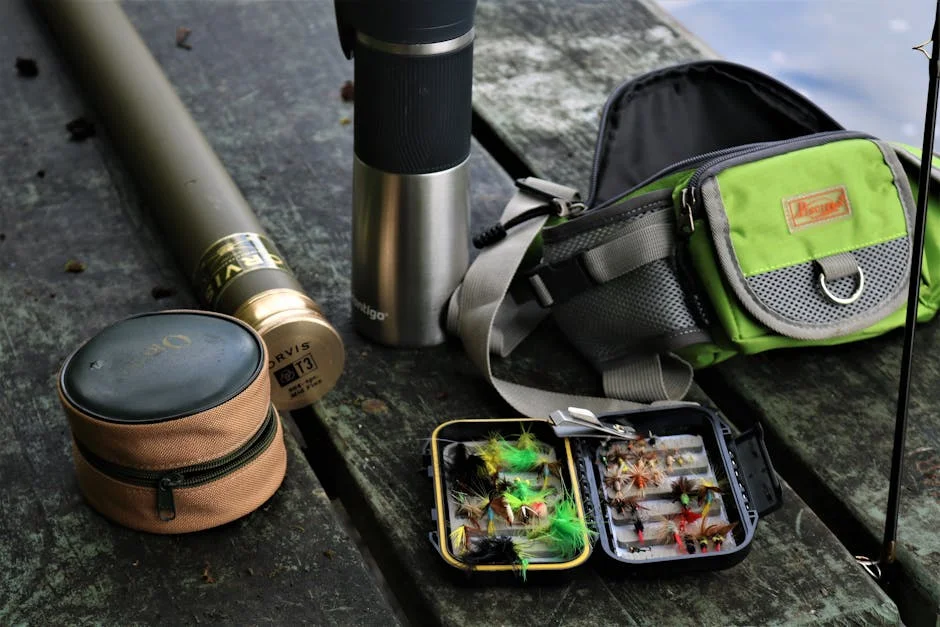
Combo kits include flies, and those flies are usually generic patterns selected to represent common food sources broadly rather than specifically. This is appropriate for beginner use. On most trout water, a handful of productive patterns covers the majority of first-trip situations: a Hare’s Ear nymph and a Pheasant Tail nymph in sizes 14-18, a Parachute Adams or Elk Hair Caddis for dry fly fishing, and a basic streamer like a Woolly Bugger. Verified buyers of both Wild Water kits note the included flies cover these categories adequately for getting started, though most serious anglers eventually source flies locally for their specific water.
Rod Action and Casting Learning Curve
Beginner rods are almost always moderate to moderate-fast action, which is appropriate. A very fast, stiff rod requires precise timing that takes years to develop. A moderate action rod loads more slowly, giving a beginner more time to feel what the rod is doing. Field reports from beginner communities consistently suggest that learning to cast is easier on a more forgiving action rod, even if experienced casters sometimes find those rods less satisfying. At the beginner stage, the rod that helps you learn casting mechanics is more valuable than the rod that performs best once you already know how to cast.
The Guide Question Nobody Talks About Enough
Here’s a genuine strong opinion, earned over twenty years: the best gear investment I ever made was not a rod or a reel. It was hiring a guide after I thought I already knew what I was doing. A guide on the Bighorn in 2009 showed me three things I’d been doing wrong for five years without realizing it. One day changed more about my fishing than any equipment purchase before or since. If you can afford a session with a qualified local guide on your chosen water, that investment returns more improvement per dollar than anything in a tackle shop. Do it early, and do it again once you think you’ve figured things out.
Wrapping It Up
Choosing your first fly fishing water thoughtfully, before you buy a single piece of gear, puts you ahead of most beginners who walk into a fly shop and start from the rod rack. Match water size to rod length and line weight, confirm public access and regulations before you go, pick water that forgives imprecision, and get a functional combo kit that covers your target water type without overcomplicating the gear decision.
For deeper reading on related topics, the fly fishing resources and skill-building content on this site covers water reading, knots, casting fundamentals, and gear selection across a range of experience levels. Start there alongside your first trips, and you’ll develop faster than most.
Frequently Asked Questions
What type of water is best for a first fly fishing trip?
Moderate-gradient freestone streams and smaller tailwater sections with public bank access are generally the most forgiving for beginners. You want visible structure, slower to moderate current, and enough fish density that you get takes before you get frustrated. Avoid extremely technical spring creeks and high-pressure tailwaters for early trips, as those fisheries reward precision that takes years to develop. Local fly shops are the most reliable source for water-specific beginner recommendations in any region.
Is a 5-weight rod the right choice for a beginner?
For most beginner situations on medium-sized trout water, a 5-weight 9-foot rod is the single most versatile starting configuration available. It handles dries, nymphs, and light streamers on rivers ranging from moderate to large in size. A 3-weight or 4-weight makes sense if your primary water is genuinely small and brushy. If you’re unsure about your primary water, the 5-weight covers more situations and gives you room to grow without replacing the rod immediately.
Are combo starter kits good enough to learn on?
Owner reviews and verified buyer reports consistently suggest that mid-range combo kits from established brands are functional enough to learn casting mechanics, practice presentations, and catch fish through a full first season. They are not lifetime tools, and most anglers upgrade individual components as they develop preferences and skills. The primary advantage of a combo kit is that all components are matched to work together, which removes a significant source of confusion for beginners assembling gear from individual parts.
Do I need a fishing guide on my first trip?
A guide is not required, but the return on that investment is real. Even a half-day guided trip on your target water provides access to current fly selection, water reading instruction, casting correction, and local regulatory knowledge that would take months of solo fishing to accumulate. The case for guiding is even stronger after you’ve been fishing independently for a season or two, when a guide can identify ingrained habits that are limiting your progress in ways you can’t see yourself.
How do fishing regulations affect where a beginner should start?
Regulations vary significantly by state, water body, and sometimes by specific section of the same river. Some stretches are catch-and-release only, some have gear restrictions (flies and lures only), and some require separate permits beyond a standard fishing license. Always verify the specific regulations for your exact access point before your trip. State fish and wildlife agency websites publish current regulations, and local fly shops can confirm any specifics or recent changes for waters in their area.
<script type="application/ld+json">
{
 "@context": "https://schema.org",
 "@type": "FAQPage",
 "mainEntity": [
 {
 "@type": "Question",
 "name": "What type of water is best for a first fly fishing trip?",
 "acceptedAnswer": {
 "@type": "Answer",
 "text": "Moderate-gradient freestone streams and smaller tailwater sections with public bank access are generally the most forgiving for beginners. You want visible structure, slower to moderate current, and enough fish density that you get takes before you get frustrated. Avoid extremely technical spring creeks and high-pressure tailwaters for early trips, as those fisheries reward precision that takes years to develop. Local fly shops are the most reliable source for water-specific beginner recommendations in any region."
 }
 },
 {
 "@type": "Question",
 "name": "Is a 5-weight rod the right choice for a beginner?",
 "acceptedAnswer": {
 "@type": "Answer",
 "text": "For most beginner situations on medium-sized trout water, a 5-weight 9-foot rod is the single most versatile starting configuration available. It handles dries, nymphs, and light streamers on rivers ranging from moderate to large in size. A 3-weight or 4-weight makes sense if your primary water is genuinely small and brushy. If you're unsure about your primary water, the 5-weight covers more situations and gives you room to grow without replacing the rod immediately."
 }
 },
 {
 "@type": "Question",
 "name": "Are combo starter kits good enough to learn on?",
 "acceptedAnswer": {
 "@type": "Answer",
 "text": "Owner reviews and verified buyer reports consistently suggest that mid-range combo kits from established brands are functional enough to learn casting mechanics, practice presentations, and catch fish through a full first season. They are not lifetime tools, and most anglers upgrade individual components as they develop preferences and skills. The primary advantage of a combo kit is that all components are matched to work together, which removes a significant source of confusion for beginners assembling gear from individual parts."
 }
 },
 {
 "@type": "Question",
 "name": "Do I need a fishing guide on my first trip?",
 "acceptedAnswer": {
 "@type": "Answer",
 "text": "A guide is not required, but the return on that investment is real. Even a half-day guided trip on your target water provides access to current fly selection, water reading instruction, casting correction, and local regulatory knowledge that would take months of solo fishing to accumulate. The case for guiding is even stronger after you've been fishing independently for a season or two, when a guide can identify ingrained habits that are limiting your progress in ways you can't see yourself."
 }
 },
 {
 "@type": "Question",
 "name": "How do fishing regulations affect where a beginner should start?",
 "acceptedAnswer": {
 "@type": "Answer",
 "text": "Regulations vary significantly by state, water body, and sometimes by specific section of the same river. Some stretches are catch-and-release only, some have gear restrictions (flies and lures only), and some require separate permits beyond a standard fishing license. Always verify the specific regulations for your exact access point before your trip. State fish and wildlife agency websites publish current regulations, and local fly shops can confirm any specifics or recent changes for waters in their area."
 }
 }
 ]
}
</script>Where to Buy
Wild Water Standard Fly Fishing Combo Starter Kit, 5 Foot 6 Inch Graphite Rod, 3-Weight, 4-Piece Fly Rod Kit, Includes Die Cast Aluminum Reel, Fly Box, Flies and Hard Tube Case with PouchSee Wild Water Standard Fly Fishing Combo… on Amazon