Best Wading Belts Reviewed: Top Picks for Fly Fishing Safety

Affiliate disclosure: Some links on this page are affiliate links. If you buy through them we earn a small commission at no extra cost to you. Recommendations are research-driven; we don't claim personal use of every product reviewed. Product prices and availability are accurate as of the date published and are subject to change. Always check Amazon for current pricing before purchasing. Learn more.
Quick Picks
Smith Creek Simms Wading Belt
Essential wader safety item, limits water entry if you take a fall
Patagonia Wading Belt
Essential safety item from a trusted outdoor brand
Simms G3 Guide Stockingfoot Waders
Greg's primary waders, 4-layer Gore-Tex Pro construction is best-in-class waterproofing
Check availability at Simms| Product | Price Range | Top Strength | Key Weakness | Buy |
|---|---|---|---|---|
| Smith Creek Simms Wading Belt best overall | $ | Essential wader safety item, limits water entry if you take a fall | All major brands offer functional wading belts at similar prices | — |
| Patagonia Wading Belt also consider | $ | Essential safety item from a trusted outdoor brand | All brands offer functionally equivalent wading belts at similar prices | — |
| Simms G3 Guide Stockingfoot Waders also consider | $$$ | Greg's primary waders, 4-layer Gore-Tex Pro construction is best-in-class waterproofing | Extremely expensive, hardest premium price to justify in fly fishing gear | Check Price |
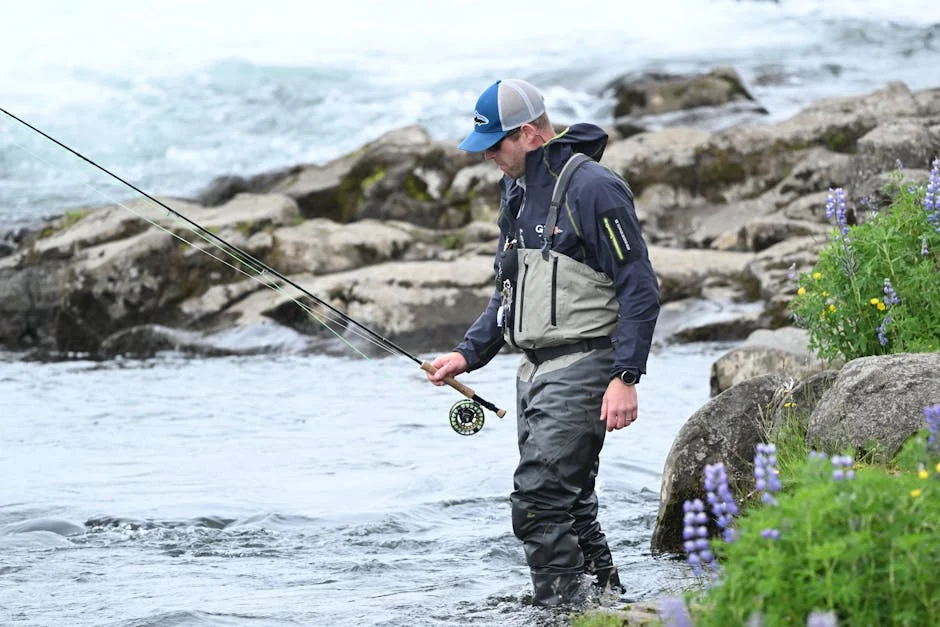
A wading belt is the most overlooked piece of safety gear in fly fishing, and one of the few pieces of gear where skipping it carries real consequences. If you go down in moving water while wearing waders, a properly cinched belt dramatically slows water entry and buys critical time for self-rescue. The full context for fit, materials, and pairing with your waders lives in the broader Waders & Wading Boots resource.
The evaluation calculus here is different from most gear categories. Quick-release buckle function, webbing width, and build quality matter, but so does whether you’ll actually wear the belt every time you wade. A belt that’s uncomfortable or awkward to adjust won’t get used.
What to Look For in a Wading Belt
Buckle Design and Emergency Release
The buckle is the functional heart of a wading belt. In an emergency, specifically, if water floods your waders after a fall, you need to shed the belt fast. Quick-release side-release buckles, the same design used in PFDs and technical harnesses, allow single-hand operation under stress. That matters.
Standard friction buckles work for adjusting fit, but they’re not appropriate for the primary wading belt closure. Look for a buckle that releases with a squeeze, not a slide or a lift. Field-test any belt before wading serious water by releasing the buckle with your non-dominant hand while simulating wet, cold fingers.
Webbing Width and Material
Belt width affects both security and comfort. Narrower webbing, under one inch, tends to roll under a wader jacket or pack hipbelt, which defeats the purpose. The standard for wading belts runs between 1.5 and 2 inches, wide enough to stay flat against the wader material and distribute pressure across the lower torso.
Polypropylene webbing holds up better than nylon in extended wet exposure. Nylon absorbs water and can stretch slightly when wet, which changes the fit between cinching and actual time on the water. Polypropylene stays close to its dry dimensions. Both materials degrade with UV exposure over seasons, inspect the webbing annually for fraying or stiffness.
Length Range and Adjustability
Wading belts need to fit over base layers, fleece, and wader material simultaneously, the fit range is wider than it looks in product photos. A belt that fits at the buckle hole on a warm-weather trip may not reach closure over a heavy fleece mid-layer in November.
Check the maximum and minimum adjustment range before buying. Most belts run generous to accommodate wader bulk, but body geometry and wader cut interact with adjustability in ways that aren’t obvious. Slim-cut waders like the Simms G3 sit differently at the waist than baggier designs, and the belt should cinch flat regardless.
Integration with Your Wader System
Some wading belts are designed to integrate with a specific wader manufacturer’s system, belt loops, D-rings, or keeper tabs built into the wader itself. This integration can improve security and prevent the belt from riding up or twisting during a full day of wading.
That said, any wading belt will work with any wader if the length range overlaps. Exploring the full range of wading gear options before committing to a brand-matched setup is worth the time, the match between belt and wader isn’t always the primary selection criterion, and third-party belts often work as well as manufacturer-matched options.
Top Picks
Simms Wading Belt
The Simms Wading Belt earns its place in the lineup on brand consistency and construction quality, though an honest review has to start with a caveat: wading belt function is largely equivalent across manufacturers. The physics don’t change based on who sewed the webbing. What Simms delivers is fit consistency and buckle quality that matches the rest of their wader system.
The quick-release buckle releases cleanly with one hand, the specific action matters more than the brand label on it. Verified buyers consistently note that the buckle operates without the slight stick or hesitation that some off-brand belts show in cold conditions. For anglers already running Simms waders, the belt integrates neatly with the waist design.
Owner consensus points to this as a “buy it and forget about it” accessory, not exciting, genuinely reliable. The Simms premium is harder to justify here than on waders or packs, where proprietary materials and construction make a measurable performance difference. Field reports don’t surface a meaningful real-world performance gap between this and other quality options. If you’re already placing a Simms order, add it. If you’re buying standalone, consider what you’re actually paying for.
Check current price on Amazon.
Patagonia Wading Belt
The Patagonia Wading Belt occupies similar territory to the Simms option, an essential safety item from a brand with serious outdoor construction standards. Patagonia’s belt uses the same quick-release buckle architecture the category demands, and verified buyer reports note consistent buckle performance across the adjustment range.
Where Patagonia occasionally differentiates is in materials sourcing and manufacturing transparency, the brand’s environmental and supply chain standards follow through to accessories, not just outerwear. For anglers who buy Patagonia on principle as much as performance, this is the natural choice. The construction quality at an accessory price point represents good value relative to the brand’s more expensive offerings.
The honest assessment mirrors the Simms belt: functional wading belts from quality brands perform comparably. Owner reports don’t show a meaningful performance gap between these two options or several others in the category. The stronger argument for this belt is brand alignment and construction confidence rather than unique technical advantage. Buy the one that fits the widest range of your layering system.
Check current price on Amazon.
Simms G3 Guide Stockingfoot Waders
The Simms G3 Guide Stockingfoot Waders are the waders in this lineup that require the most careful evaluation, because the stakes are higher and the performance gap between budget and premium is genuinely large in this category. These are what I fish as my primary waders on the South Platte, the Arkansas, and the Frying Pan after spending years and two pairs of failed cheaper alternatives to get here.
The case for the G3 starts with the four-layer Gore-Tex Pro membrane. It is noticeably better at breathability than the materials Simms uses in their Freestone line, perceptibly so on a full summer day when body heat has nowhere to go. On sub-freezing Colorado mornings with multiple layers underneath, the four-layer construction also keeps external moisture out more completely than anything I’ve used at a lower tier. The trim fit matters too: the Freestones ran baggy in the hips, which catches current and creates drag at depth. The G3 fits like a garment designed for moving through water, not just keeping it out.
The cost is real. Two pairs of waders in the budget-to-mid range, both failed at the seams within eighteen months each, one at the ankle gusset, one at the crotch seam. By the time the G3 became the third purchase, the combined cost of the failed pairs plus replacement had already exceeded what the G3 would have cost from the start. That’s not a knock on all mid-range waders, but breathable waders are one of those categories where the quality gap between price points is measurable in seasons of use. If you fish more than twenty or thirty days a year, the math on buying once is sound.
Simms sizing runs narrow. Try them on before committing if at all possible, fit over wading layers is different from fit in a showroom.
Check current price on Amazon.
Buying Guide
Safety Function Comes First
Every wading belt discussion has to anchor here. The belt’s primary job is not organizational, it’s to slow water entry into your waders if you fall. Waders trap air, which provides brief flotation, and a tightly cinched belt buys additional time before that air displaces. In fast water, that time is the margin between a manageable swim and a dangerous one.
This framing changes the decision criteria. You are not optimizing for style, brand prestige, or accessory features. You are selecting a piece of safety gear that needs to release under stress with cold, wet hands. Any belt you choose should meet that standard before any other criterion is considered.
Budget vs. Premium in Safety Accessories
The wading belt category presents an unusual case where the performance gap between budget and premium is narrow. A quality budget belt with a reliable quick-release buckle and adequate webbing width delivers the same safety function as a premium belt from Simms or Patagonia. This is different from waders themselves, where the construction and materials gap between price tiers is substantial.
That said, “budget” does not mean “any belt.” Belts without proper quick-release buckles, belts with narrow or rolled webbing, and belts with poor adjustment range all compromise the safety function. Buy a belt designed specifically for wading, not a general-purpose webbing belt adapted to the purpose.
Pairing Your Belt with Your Waders
The belt you choose should work with your full layering system, not just your waders in isolation. Wader fit and belt fit interact, a slim-cut wader like the G3 sits differently at the waist than a baggier design, and the belt needs to cinch flat against the wader material regardless of what’s underneath.
Reviewing the full range of waders and wading boots with belt compatibility in mind is worth doing before purchasing either component independently. Some manufacturers design belt loops and keeper tabs directly into their wader waistbands. These integrations can prevent the belt from riding up during a long day of wading, though they’re not a substitute for proper cinching technique.
Sole Selection Matters More Than the Belt
This is worth saying plainly: traction is your primary defense against going down in moving water. The belt is the backup when traction fails. Felt is banned in many Western tailwaters, and the felt advocates aren’t wrong that felt provides excellent grip on algae-covered bedrock. The performance gap between felt and quality rubber narrows significantly with studded soles.
Korkers OmniTrax rubber with aluminum studs performs close enough to felt on Colorado tailwaters that the trade-off is worth making, and the invasive species risk that drove the felt ban is real and warranted. On the Arkansas freestone with loose cobble, a heavier rubber sole without studs can be the better call. Match sole choice to your water type, walk deliberately, and carry a wading staff in technical water.
When to Replace Your Gear
Wading belts don’t last indefinitely. UV exposure degrades polypropylene and nylon webbing over multiple seasons, stiffness, surface cracking, or fraying are signs the belt needs replacement before it’s relied on for safety. Buckle mechanisms can also wear, particularly the release button on side-release designs. Test the release at the start of each season.
Waders have a different replacement calculus. Seam failure in budget waders typically appears within one to three seasons of regular use. When seams go, especially at high-stress points like the ankle gusset or crotch seam, the repair window is short before the wader becomes unreliable. Premium waders with factory-seam-taped Gore-Tex construction hold significantly longer under the same conditions.
Frequently Asked Questions
Do I actually need a wading belt, or is it optional?
A wading belt is safety gear, not optional. If you fall in moving water while wearing waders, the belt dramatically slows water entry and extends the time you have for self-rescue before the waders fill and drag you down. Every credible wading safety resource treats a properly cinched belt as required equipment. Removing it to improve comfort is a risk not worth taking.
What’s the difference between a wading belt and a regular webbing belt?
Wading belts are designed with wider webbing to stay flat against wader material, quick-release buckles operable with cold wet hands, and adjustment ranges built to accommodate wader bulk plus base layers. A standard webbing belt may lack the quick-release mechanism, the feature that matters most in an emergency. Use a belt designed specifically for wading.
Should I buy the wading belt from the same brand as my waders?
Manufacturer-matched belts often integrate neatly with a wader’s built-in belt loops or keeper tabs, which can prevent ride-up during a long day on the water. But any quality wading belt will function safely with any wader. The Patagonia Wading Belt works with Simms waders; the Simms Wading Belt works with Patagonia waders. Match first on fit and buckle quality, second on brand.
How should a wading belt fit properly?
The belt should sit at or just above your natural waist, cinched snugly against the wader material with no slack. It should not be so tight that it restricts breathing during a hard wade, but it should resist movement when you push against it. Test the fit with all your planned layers underneath, the fit changes meaningfully between a summer base layer and a heavy November fleece.
At what point should I replace a wading belt?
Replace a wading belt when you notice webbing stiffness, cracking, or fraying, UV degradation compromises tensile strength before the belt looks obviously worn. Test the quick-release buckle at the start of every season. If the release sticks, hesitates, or requires more force than it did when new, replace the belt. As safety gear, the cost of replacement is trivial relative to the function it serves.