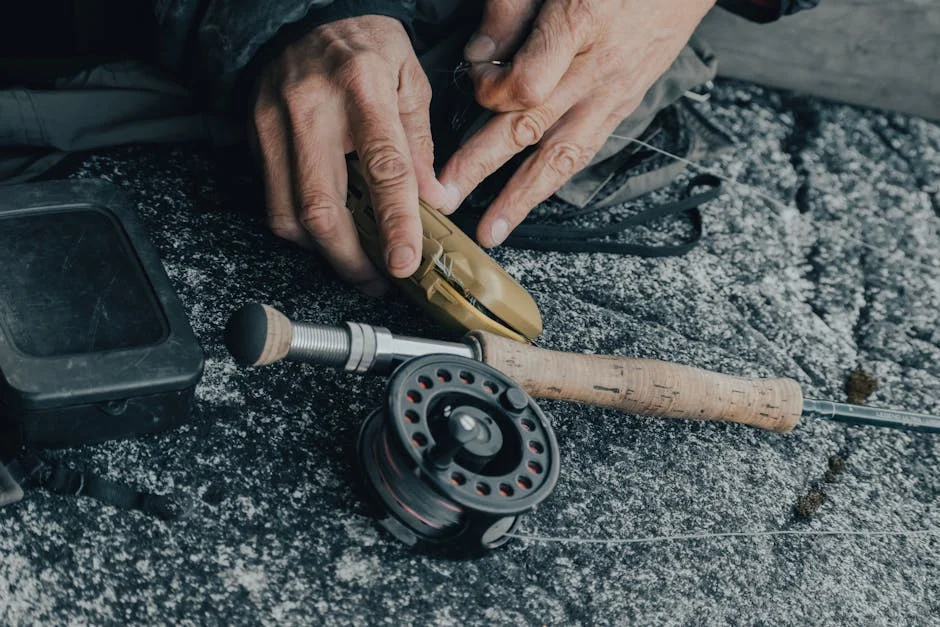
Fly Reel vs Spinning Reel: Which Should You Choose

Affiliate disclosure: Some links on this page are affiliate links. If you buy through them we earn a small commission at no extra cost to you. Recommendations are research-driven; we don't claim personal use of every product reviewed. Product prices and availability are accurate as of the date published and are subject to change. Always check Amazon for current pricing before purchasing. Learn more.
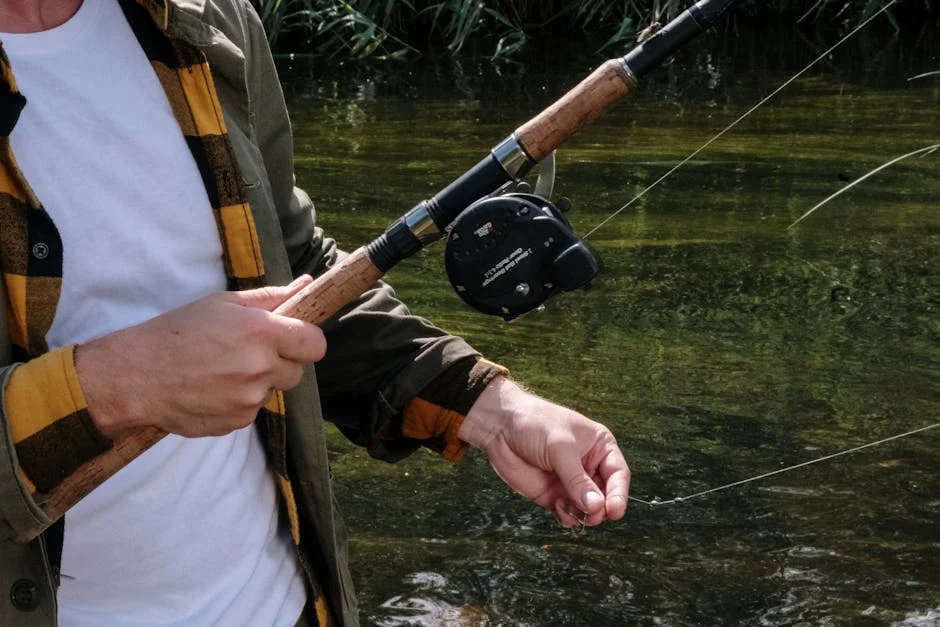
Choosing between a fly reel and a spinning reel is less about which one is “better” and more about which tool matches the fishing you’re actually doing. These are purpose-built instruments with different mechanics, different line management systems, and different situations where each excels. The fly reels category gets complicated fast when marketing language obscures the practical question: what do you actually need?
The brief answer is that a spinning reel excels at casting weighted lures and live bait across a wide range of fish species, while a fly reel’s job is primarily to store line and, in demanding situations, provide drag. Understanding that distinction saves money and prevents mismatched gear.
What to Look For in a Fishing Reel
Drag System Quality
Drag is the mechanism that applies resistance when a fish pulls line. On a spinning reel, the drag stack typically sits in the front or rear of the reel body and applies friction through a series of washers, felt, carbon fiber, or cork. On a fly reel, drag runs from a simple click-pawl (a spring-loaded pawl engaging a toothed gear) to a sophisticated sealed disc drag with cork or carbon fiber components.
The practical difference matters most when a fish runs hard. A stuttering drag doesn’t just feel bad, it creates sudden tension spikes that break tippet. After years on tailwaters where most trout stay under 16 inches, it’s easy to assume drag quality is irrelevant. Then a 22-inch brown hits on the Bighorn and the drag stutters on the first run, and you lose the fish when the tippet breaks at exactly that stuttered point. The drag matters. It matters less on small fish, but the one time it matters, you’ll regret skimping.
For trout fishing in Rocky Mountain rivers, a click-pawl fly reel handles 95% of situations, when a fish does run to the backing, palming the spool is the standard response anyway. Precision disc drag becomes essential for saltwater, steelhead, and large tailwater fish in fast current where you physically cannot follow the fish.
Arbor Size and Line Recovery
Arbor refers to the central spool core around which line is wound. A large-arbor design picks up line faster per revolution and reduces line memory (the coiling that develops when line sits compressed on a small core). On a spinning reel, spool design is largely fixed by the manufacturer and optimized for monofilament or braid.
For fly fishing specifically, large-arbor reels have become the standard at every price point above entry-level. The engineering case is straightforward: faster line recovery means less slack when a fish runs toward you, and less coiling means cleaner line delivery on the cast. Small-arbor click-pawl reels remain genuinely useful for smaller streams and lighter line weights, the simplicity is a feature, not a limitation.
Weight and Balance
A spinning reel hangs below the rod during use. Its weight is less perceptible because the grip positions your hand below the rod’s balance point anyway. A fly reel hangs below the rod as well, but because fly casting is a stroke that moves the rod through a range of angles, reel weight affects fatigue over a full day of casting in ways that differ from spinning.
For most freshwater fly fishing, reel weight matters less than the rod-and-reel balance point. A well-matched fly reel brings the overall setup to a balance point just ahead of the cork grip. Too heavy a reel tips the balance rearward and fatigues the wrist on long casting days.
Material and Durability
Machined aluminum is the standard for quality fly reels and mid-to-upper-range spinning reels. Die-cast aluminum is less expensive to produce and appears at lower price points, it’s heavier per unit of strength than machined aluminum but entirely serviceable for freshwater use. Graphite and plastic-composite bodies appear at the budget end of both categories.
For saltwater use, sealed bearings and corrosion-resistant materials are non-negotiable. Freshwater anglers fishing in grit and silt benefit from sealed drag systems even if they never see a tidal flat. Exploring the full range of fly reel options before settling on a specific configuration is worth the time, the differences between entry-level die-cast and mid-range machined aluminum are significant enough to affect years of use.
Top Picks
Daiwa BG Saltwater Spinning Reel, Black/Gold
The Daiwa BG has earned a strong reputation across the spinning reel market for delivering legitimate build quality at a mid-range price point. The body is machined aluminum, the Digi Gear system uses a digitally designed gear train for smoother engagement, and the ATD (Automatic Tournament Drag) system delivers consistent drag pressure through a fish’s run rather than requiring manual adjustment. Verified buyer reports across saltwater and freshwater applications consistently flag the smoothness of the drag and the durability of the finish.
Where the BG fits in this comparison: it’s the clearest choice if you’re primarily casting lures or live bait, weighted presentations that require the mechanical advantages of a spinning setup. It handles braid well, which matters for anglers using modern high-visibility braid for line control. The large-arbor spool design recovers line quickly, and the bail system is solid. Owner consensus holds up over multiple seasons of use in saltwater environments, which is a meaningful durability signal.
Where it does not fit: fly fishing. A spinning reel cannot manage fly line, the casting mechanics require a fly reel matched to a fly rod, full stop. The BG is an excellent spinning reel evaluated on its own terms, but it occupies a different functional category entirely.
Check current price on Amazon.
Fly Fishing Reel Fishing Wheel
The Fly Fishing Reel Fishing Wheel occupies a crowded entry-to-mid segment, die-cast aluminum body, pre-spooled backing and fly line combo in some configurations, and a simple drag system aimed at the introductory market. Owner reviews suggest it functions adequately for small trout on light lines, which is exactly the use case the entry-level fly reel market serves.
The name and product description create real confusion in the marketplace, the listing blends “fly reel” and “spinning fishing reels” language, which reflects either a translation issue or a deliberate attempt to capture search traffic across both categories. A fly reel is not a spinning reel, and no reel serves both functions. Buyers who arrive at this product via spinning reel searches and purchase it for spinning applications will be disappointed, it does not function as a spinning reel.
For the buyer who genuinely needs a first fly reel to practice with before investing in quality gear, field reports suggest it holds line and the drag, while basic, doesn’t fail catastrophically on small fish. The engineering is unsophisticated, and the finish quality is inconsistent across units based on owner reports. For anything beyond a few seasons of light freshwater use, a mid-range machined aluminum reel is a stronger long-term choice.
Check current price on Amazon.
Pflueger Automatic Fly Fishing Reel
The Pflueger Automatic is a different animal entirely, an automatic fly reel, meaning a spring-loaded mechanism retrieves line when a lever is activated rather than the angler manually stripping or cranking. Pflueger has been making automatic fly reels for decades, and this represents one of the last widely available examples of a format that has largely disappeared from the mainstream market.
The automatic mechanism has a genuine use case: single-handed fishing situations, adaptive fishing where manual line management is difficult, or very small stream fishing where a quick line pickup prevents tangles in tight brush. The spring tension provides limited, fixed drag, there’s no adjustable drag system in the conventional sense. Owner reports confirm the mechanism works as described and holds up over moderate use.
For the overlap audience this article addresses, someone weighing a fly reel against a spinning reel, the Pflueger Automatic is not a direct comparison point. It’s a specialized tool for a narrow use case. Most trout fly fishers who strip line by hand and manage slack through their fingers will find no advantage in the automatic mechanism. The case for it is strong only for very specific situations.
Check current price on Amazon.
Okuma Inspira ISX Spinning Reels
The Okuma Inspira ISX is a lightweight spinning reel built around a carbon fiber body frame, which puts it in an interesting position: competitive weight figures that approach fly-reel territory while retaining all the mechanical advantages of a spinning setup. The multi-disc oiled felt drag system has earned consistent positive owner reports for smoothness across light to medium drag settings, relevant for trout and bass applications where finesse presentations matter.
The Inspira ISX makes the weight comparison explicit. Fly reels at this price band run lighter than spinning reels at comparable quality tiers, but the Okuma’s carbon frame closes that gap meaningfully. For anglers who want spinning-reel versatility, the ability to cast light jigs, spinners, and live bait, without the weight penalty of aluminum-bodied alternatives, the Inspira ISX addresses that tradeoff directly.
Owner consensus points to the bail spring as the one component worth monitoring over time, a standard weak point on spinning reels in this price range across brands. Otherwise, the reel punches above its price band on drag quality and build consistency based on verified buyer data.
Check current price on Amazon.
SF SF-001 Large Arbor Fly Fishing Reel
The SF SF-001 is a die-cast aluminum large-arbor fly reel available pre-loaded with fly line across the 3/4wt, 5/6wt, and 7/8wt configurations. For a buyer stepping into fly fishing for trout who wants a complete reel-and-line combo without separate component purchases, the SF SF-001 occupies a practical position in the market. Owner reviews are broadly positive for the entry-level tier, the drag is simple but consistent, the large-arbor design provides fast line pickup, and the pre-spooled line gets a beginner on the water.
The die-cast construction is the meaningful limitation. Die-cast aluminum is heavier and softer than machined aluminum, over time and under field stress, the finish wears faster and the spool engagement can develop slop that machined tolerances prevent. For a first reel before committing to the sport, or as a backup reel kept rigged with an alternative line, the SF SF-001 is defensible. As a long-term primary reel for an angler fishing more than a handful of days per season, the step up to machined aluminum is worth the investment.
The comparison to spinning reels is instructive here: the SF SF-001 and the Okuma Inspira ISX sit at broadly comparable quality tiers within their respective categories. The functional divide remains absolute, fly casting mechanics and spinning mechanics are incompatible, but at this price band, both reels deliver the core functionality of their format reliably.
Check current price on Amazon.
Buying Guide
Understanding the Functional Divide
A fly reel and a spinning reel perform fundamentally different mechanical jobs. A spinning reel stores monofilament, fluorocarbon, or braid and uses a bail system to lay line evenly across the spool during retrieve. The reel does the casting work, line peels off the spool lip when a weighted lure or bait carries it. A fly reel stores fly line and backing. It does not cast, the weighted fly line itself is the casting medium, and the rod does the work. These are not interchangeable tools.
Buyers who land on this comparison after searching “fly reel vs spinning reel” often want a single reel for multiple purposes. That reel does not exist. The decision is which type of fishing you’re doing, and that determines which reel you need.
When a Spinning Reel Is the Right Choice
Spinning gear covers the widest range of fishing applications: weighted lures, live bait, bobber rigs, soft plastics, and finesse jigs all work well with a spinning setup. For multispecies fishing, bass, walleye, trout with inline spinners, panfish, a quality spinning reel like the Daiwa BG or Okuma Inspira ISX is the practical choice. The learning curve is shallower than fly casting, and spinning tackle handles a broader range of presentation weights.
For freshwater trout specifically, spinning gear is entirely legitimate and effective. The preference for fly gear among dedicated trout anglers comes from the presentations fly fishing makes possible, dry fly imitations, drag-free drifts with nymphs, not from any inherent advantage in fish-catching efficiency on hardware.
When a Fly Reel Is the Right Choice
Fly fishing is the right choice when the presentation requires it: dry flies, nymphs, soft hackles, and streamers on a fly rod deliver presentations that spinning gear cannot replicate. The reel itself is secondary to the rod, line, and casting skill, but a well-matched fly reel matters when fish are large enough and fast enough to test the drag system.
Reviewing the full fly reel market before purchasing is worth the effort. Entry-level die-cast reels like the SF SF-001 serve beginners reliably, but the gap between die-cast and machined aluminum becomes apparent within a few seasons of regular fishing. For Colorado tailwaters and Rocky Mountain freestone rivers where most trout run under 18 inches, even a modest click-pawl reel handles the work. The drag investment matters most for steelhead, saltwater, and large trophy trout fisheries.
Matching Reel to Rod
Every fly reel is weight-rated to balance specific rod line weights. A 3/4wt reel belongs on a 3 or 4wt rod; a 5/6wt reel on a 5 or 6wt. Mismatch in either direction creates balance problems, a reel too heavy for the rod tips the balance rearward, fatiguing the casting wrist over a full day. The SF SF-001 combo approach addresses this by pairing the reel and line to the rated weight, removing one variable for new buyers.
Spinning reel sizing follows rod rating as well, though the balance mechanics differ. Match the reel size to the rod’s rated lure weight and line weight range, manufacturers publish this directly. An undersized spinning reel on a medium-heavy rod creates the same imbalance problem as a mismatched fly setup.
Drag Requirements by Fishery
Not all fishing situations demand the same drag performance. For small stream trout under 14 inches, drag quality is nearly irrelevant, fish that size rarely run far enough to test the system. As target fish size increases, drag smoothness becomes proportionally more important. A fish that surges hard in fast current on light tippet will break off on a stuttering drag that would be inconsequential on calm water with heavier line.
The practical hierarchy: for trout fishing in moderate conditions, a reliable mid-range drag is sufficient. For large tailwater fish, steelhead, or saltwater species, invest in a sealed disc drag with consistent performance through the full range of adjustment. The expensive reel is not always the right reel, it’s the reel whose drag range matches the fish you’re targeting.
Frequently Asked Questions
Can I use a spinning reel for fly fishing?
No. The casting mechanics of fly fishing require a fly reel matched to a fly rod and fly line, a spinning reel cannot manage fly line, and the casting stroke that loads a fly rod requires a completely different line management system. If you want to fish flies, you need fly gear. Spinning tackle and fly tackle are not interchangeable regardless of marketing language that suggests otherwise.
Is a fly reel harder to use than a spinning reel?
The reel itself is not harder, fly reels are mechanically simpler than spinning reels in most configurations. The difficulty in fly fishing comes from casting, not reel operation. A spinning reel automates line lay during retrieve via the bail system; a fly reel requires the angler to manage line manually. Most trout fly fishers strip line by hand and rarely use the reel handle until a fish runs into the backing.
What’s the difference between a click-pawl and a disc drag fly reel?
A click-pawl reel uses a spring-loaded pawl engaging a toothed gear, the drag is light, fixed, and supplemented by palming the spool when a fish runs. A disc drag reel uses a stack of friction materials (cork, carbon fiber, or composite) to apply adjustable, consistent resistance. For small to moderate trout, click-pawl is adequate. For large fish in fast water, steelhead, big tailwater browns, saltwater species, a disc drag with smooth, reliable performance is the right tool.
Between the Daiwa BG and the Okuma Inspira ISX, which spinning reel is better for trout?
For light trout applications, small streams, finesse presentations, light line, the Okuma Inspira ISX has the weight advantage due to its carbon fiber frame. For general-purpose use across trout, bass, and larger fish, the Daiwa BG offers more drag range and durability. Owner consensus on both reels is positive; the decision comes down to whether weight or versatility is the priority.
Is the SF SF-001 a good first fly reel?
For a beginner who wants a complete pre-spooled setup to learn on, the SF SF-001 is a reasonable starting point, the large-arbor design is correct, the line combo removes a sourcing decision, and the drag functions adequately for small trout. The die-cast aluminum construction is the meaningful limitation: plan to upgrade to a machined aluminum reel once you’re fishing regularly. The SF SF-001 is a capable learning tool, not a long-term primary reel.
Where to Buy
Daiwa BG Saltwater Spinning Reel, Black/GoldSee Daiwa BG Saltwater Spinning Reel, Bla… on Amazon