Fly Tying Materials: What Actually Matters for Beginners

Affiliate disclosure: Some links on this page are affiliate links. If you buy through them we earn a small commission at no extra cost to you. Recommendations are research-driven; we don't claim personal use of every product reviewed. Product prices and availability are accurate as of the date published and are subject to change. Always check Amazon for current pricing before purchasing. Learn more.
Quick Picks
XFISHMAN Fly-Tying-Kit-with-Tools-Materials Fly-tieing-Starter-kit for Fly Fishing Lure Building jig Making Set
Buy on AmazonFeathers Fur Thread Crystal Flash Line Hooks Fly Tying Materials Starter Kits
Buy on AmazonPremium Fly Tying Materials Kit - Comprehensive Variety Pack for Fly Fishing, UV Dyed Marabou, Hackle, Peacock Feathers, Synthetic Dubbing, Ideal for Trout Fishing, Beginners & Experts
Buy on Amazon| Product | Price Range | Top Strength | Key Weakness | Buy |
|---|---|---|---|---|
| XFISHMAN Fly-Tying-Kit-with-Tools-Materials Fly-tieing-Starter-kit for Fly Fishing Lure Building jig Making Set also consider | $$ | Buy on Amazon | ||
| Feathers Fur Thread Crystal Flash Line Hooks Fly Tying Materials Starter Kits also consider | $$ | Buy on Amazon | ||
| Premium Fly Tying Materials Kit - Comprehensive Variety Pack for Fly Fishing, UV Dyed Marabou, Hackle, Peacock Feathers, Synthetic Dubbing, Ideal for Trout Fishing, Beginners & Experts also consider | $$ | Buy on Amazon |
Fly tying is one of those skills that rewards patience more than talent. After fifteen years on the Norvise, I can say with confidence that the materials you start with matter far less than most beginners think, and far more than most kit marketing suggests. Getting the right fly tying materials in front of a new tyer is genuinely useful work, which is why I want to break this down carefully.
The honest truth about starter kits is that they can either accelerate your learning or bury you in options before you’ve tied your first clean thread wrap. I made that mistake early on, and I’ll walk you through how to avoid it.
What Fly Tying Materials Actually Do
Before covering specific kits, it helps to understand what each category of material contributes to a finished fly. This isn’t taxonomy for its own sake. When you know why a material is on the hook, you make better choices at the vise. If you’re new to the craft, the Fly Tying hub on this site has a solid orientation to get you started.
Thread
Thread is the foundation of every fly. It holds everything else in place, and your ability to control thread tension determines whether your fly looks intentional or accidental. Most beginner kits include 6/0 or 8/0 thread in black, olive, and tan. That covers the majority of trout patterns. Thread diameter affects bulk, and on small hooks (size 18 and below on tailwaters like Cheesman Canyon), thinner thread prevents a lumpy mess at the head. Don’t skip thread practice. Tie thread-and-hook dummies for your first several sessions until your wraps are consistent and tight.
Feathers and Hackle
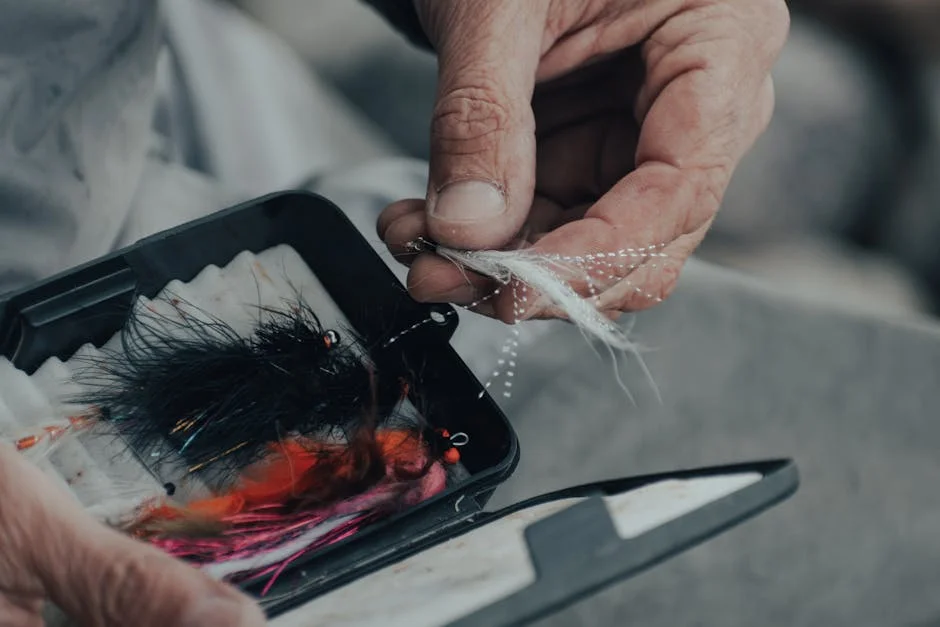
Hackle is the most technically demanding material for new tyers to use well. Dry fly hackle comes from genetic rooster necks; the fiber length relative to the stem diameter determines whether your fly sits on the surface film properly or drowns. Marabou is softer and used for streamer tails and wet fly bodies. It moves in current the way nothing synthetic fully replicates. Peacock herl adds iridescent flash and is used in dozens of classic patterns including the Bead Head Prince and the Zug Bug.
Dubbing and Fur
Dubbing gets twisted onto thread and wound onto the hook shank to form a body. Natural dubbing (hare’s ear, rabbit fur, squirrel) has a texture and translucency that synthetic dubbing approximates but rarely fully matches. For nymph bodies on the South Platte or any clear tailwater, that texture matters because the fish get a long look. Synthetic dubbing is easier to work with as a beginner because it handles more uniformly, and it covers a wider range of colors.
Wire, Flash, and Other Synthetics
Ribbing wire adds segmentation to nymph bodies and also reinforces fragile materials like peacock herl. Crystal Flash and Krystal Flash are thin synthetic strands that reflect light; they’re used in streamer wings and as attractor elements in nymph tails. A little goes a long way. Beginning tyers almost always use too much flash, which turns a subtle attractor pattern into something that only pike would eat.
Hooks
Hook quality is the detail most beginners underweight. A sharp, correctly shaped hook determines whether your fly swims right and whether it holds a fish. The Tiemco 100 for dry flies and the Tiemco 2457 for scud and caddis larva patterns are standards for a reason. Kits that include generic hooks in mixed sizes give you something to practice with, but as you develop your tying, you’ll want to source hooks separately for patterns that matter.
Buying Guide: Choosing Fly Tying Materials
Identify Your Target Flies First
The single most common beginner error is buying materials before knowing what you intend to tie. A kit oriented toward streamer tying is a poor fit for someone who wants to fish Pheasant Tails and Elk Hair Caddis on small freestone streams. Before you spend anything, pick three patterns you’ll actually fish and list the materials for each. The Adams needs dry fly hackle, elk hair, and gray dubbing. The Pheasant Tail needs pheasant tail fibers, copper wire, and a bead. These are short lists, and having a focused material set produces better early results than a sprawling kit.
Most good trout patterns share material categories: thread, hook, dubbing, hackle, and some kind of tail material. A starter kit that covers those five categories in neutral colors (black, olive, tan, gray, brown) gives you access to a large portion of the standard trout fly catalog. If you’re fishing Colorado tailwaters or freestone mountain streams, those neutral tones outperform flashy colors in clear water.
Quality Versus Quantity in Starter Kits
Larger kits often look appealing because the material count is high, but quantity and quality pull in opposite directions at the mid-range price band. A kit with fifty varieties of mediocre hackle is less useful than a kit with ten varieties of decent hackle. For early tying practice, quality matters less than consistency. You need materials that behave predictably enough to isolate your own technique errors from material performance problems.
The Fly Tying basics come down to deliberate repetition. If your hackle is wildly inconsistent in fiber length and stem flexibility, you can’t tell whether your technique or the material is causing the problem. Mid-range kits that prioritize consistent, well-organized materials over sheer volume serve beginners better.
Natural Versus Synthetic Materials
Both have legitimate places in a well-stocked tying bench. Natural materials (real feathers, fur, hair) have movement, translucency, and texture that synthetics haven’t fully replicated. But natural materials also vary in quality, can deteriorate if stored poorly, and sometimes require more skill to handle. Synthetics are consistent, easy to store, and increasingly realistic. For a beginner, a kit that blends both categories gives you exposure to the handling differences without forcing you to commit early.
For nymph patterns specifically, natural dubbing bodies read more realistically in clear water. For attractor patterns and streamers on bigger freestone water, synthetics hold up well and offer color range that natural materials can’t match. On the Arkansas River in higher flows, a synthetic streamer tail survives more abuse per fish than marabou would.
Hook Sizing and Pattern Range
Pay attention to the hook size range a kit covers. A kit that only includes size 10 and 12 hooks severely limits you on technical tailwater fishing, where size 18, 20, and 22 midges and nymphs are standard. Cheesman Canyon, for example, is almost entirely a small-hook fishery. If most of your fishing is on that kind of water, verify that any kit you’re considering includes hooks in the smaller ranges before committing.
Conversely, if you fish the Arkansas River’s freestone sections and want to tie streamers and larger nymphs, a kit biased toward size 6 through 12 makes more sense. Match the hook inventory to your water type and target species.
Organization and Tool Inclusion
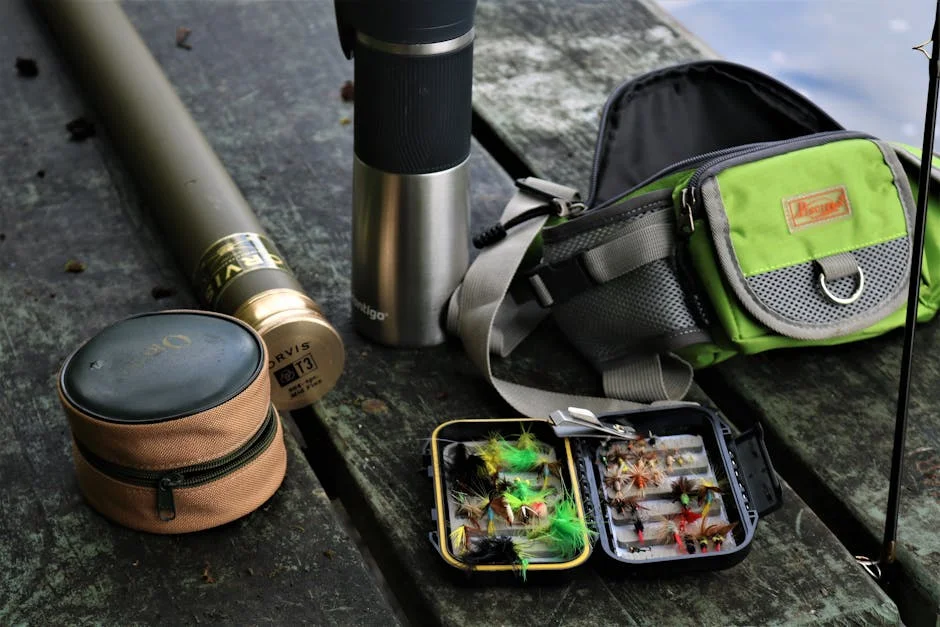
This is practical and undervalued. Materials that arrive in labeled, compartmentalized packaging stay usable longer. Loose materials stuffed into a single bag tangle, shed, and degrade faster. If a kit includes tools (scissors, bobbin, whip finisher, bodkin), evaluate tool quality separately from material quality. Scissors are the most important tool at the vise. Cheap scissors that can’t hold an edge will frustrate you immediately. A good mid-range kit provides tools adequate to learn with, even if you’ll eventually upgrade the scissors and bobbin.
Top Picks for Fly Tying Materials
XFISHMAN Fly-Tying-Kit-with-Tools-Materials
The XFISHMAN Fly-Tying-Kit-with-Tools-Materials Fly-tieing-Starter-kit for Fly Fishing Lure Building jig Making Set is one of the more comprehensive mid-range kits available to new tyers. Verified buyers consistently note that the organization is a genuine strength here. Materials arrive in sorted compartments rather than a jumbled bag, which matters when you’re trying to find copper wire at 7 in the morning before a river trip. Owner reviews indicate the kit covers thread, various feathers, dubbing, tinsel, and hooks in a range of sizes, giving a beginner access to the material categories needed for standard trout nymphs and wet flies.
Field reports from tying communities point to the hook quality as the main variable to watch. Several verified buyers note that the included hooks are adequate for practice but that serious fishing patterns are worth re-tying on name-brand hooks as skills develop. That’s an honest trade-off at this price band, and it’s the right way to think about any entry-level kit. You’re not buying hooks to fish confidently in Eleven Mile Canyon; you’re buying hooks to build your technique.
The tool inclusion is noted positively by owner reviewers, with scissors and bobbin receiving the most mentions. At the mid-range price band, this kit gives new tyers a reasonable starting point without the overwhelming excess of some larger kits.
Check current price on Amazon.
Feathers Fur Thread Crystal Flash Line Hooks Fly Tying Materials Starter Kits
The Feathers Fur Thread Crystal Flash Line Hooks Fly Tying Materials Starter Kits takes a materials-focused approach, which I think is the right frame for how these kits should be evaluated. The name describes the contents accurately: this kit prioritizes the physical tying materials over tool inclusion. Spec data and owner reviews indicate a solid selection of natural feathers, fur materials, thread in multiple colors, Crystal Flash strands, and hooks across several sizes.
Verified buyers who fish trout patterns note that the Crystal Flash and hackle feathers are the standout inclusions. The Crystal Flash in particular gets mentioned as higher quality than expected at this price band, with consistent strand thickness that behaves well on the vise. Owner reviews do mention that the hook range skews toward larger sizes (roughly 8 through 14), which limits utility for very small tailwater patterns but works well for freestone fishing and generic nymph and wet fly patterns.
For a tyer focused on learning mid-size trout patterns before moving into technical small-fly work, this kit represents a reasonable material investment. The fur and feather variety supports Hare’s Ear, Soft Hackle, and basic streamer patterns without major gaps.
Check current price on Amazon.
Premium Fly Tying Materials Kit
The Premium Fly Tying Materials Kit - Comprehensive Variety Pack for Fly Fishing, UV Dyed Marabou, Hackle, Peacock Feathers, Synthetic Dubbing, Ideal for Trout Fishing, Beginners and Experts stands out because of the UV-dyed marabou and peacock feather inclusions, which are materials that most comparable kits either skip or include in minimal quantities. Verified buyers who tie streamer and wet fly patterns specifically cite the marabou quality as above average for the mid-range price band, with good fiber length and consistent dye penetration.
Spec data shows this kit includes synthetic dubbing across a practical color range, hackle in both natural and dyed variants, peacock herl, and UV-treated materials that respond to UV light underwater. Owner reviews from tyers who fish streamer-heavy water (larger rivers, lakes) note that the marabou and hackle combination gives them enough material variety to tie standard patterns like Woolly Buggers and Soft Hackle Hare’s Ears without supplemental purchases.
For a tyer who wants to move beyond basic nymphs early and work toward streamer and wet fly patterns, the material emphasis here is well-matched. Field reports from experienced tyers note that the peacock feathers in particular compare favorably to separately sourced herl at a similar price point per unit. This kit is described by multiple verified buyers as useful beyond the beginner stage, which is a reasonable differentiator from purely entry-level options.
Check current price on Amazon.
A Word About What Tying Actually Teaches You
I want to make something clear that I wish someone had told me before I burned through my first two boxes of starter materials: tying your own flies is not primarily a cost-saving exercise. I hear that pitch constantly at Ark Anglers, and it’s technically true only if you tie in high volume and fish every fly you tie. Most casual tyers don’t. The math rarely works out.
The real value of tying is what it teaches you about fly design. After you’ve tied 200 Pheasant Tails, you understand exactly why the taper of the abdomen affects how the fly sinks. You tie the Adams and learn why hackle fiber length changes how the fly positions itself in the surface film. That knowledge changes how you read a fly box at the shop, how you select patterns for specific conditions, and ultimately how you fish. It’s an education in design and behavior, not a coupon.
If you want to go further with the craft, the Fly Tying section of this site covers techniques, pattern tutorials, and gear reviews in more depth. Start there before committing to a materials purchase, and you’ll have a clearer idea of what you actually need.
Frequently Asked Questions
What fly tying materials should a complete beginner buy first?
Start with a focused material set rather than a large kit. Thread in black, olive, and tan covers most beginner patterns. Add a natural dubbing in hare’s ear or rabbit, a small pack of pheasant tail fibers, copper wire in fine and medium, and hooks in size 12 through 18. That short list lets you tie the Pheasant Tail, Hare’s Ear, and basic soft hackle patterns, which are three of the most productive trout flies in existence.
Are starter fly tying kits worth buying, or is it better to buy materials individually?
For beginners, a starter kit is usually the better entry point because it provides material variety before you know exactly what you’ll use most. Buying individually requires knowing your target patterns in advance, which most new tyers don’t. A mid-range kit gives you working quantities of several material categories and lets you identify what you actually burn through quickly. Once you know your go-to patterns, individual sourcing becomes more economical and gives you access to higher-quality specific materials.
What is the difference between natural and synthetic fly tying materials?
Natural materials (feathers, fur, hair) have movement and translucency in water that synthetics haven’t fully replicated, and they’re standard in classic trout patterns. Synthetic materials are more consistent in quality, easier to handle for beginners, and often more durable. They also offer color ranges that natural materials can’t match. Most experienced tyers use both, choosing based on the pattern and the conditions.
Do I need expensive tools to start fly tying?
No, but scissors quality matters more than anything else in the tool set. A mid-range vise with a consistent jaw is adequate for learning. Cheap scissors that can’t hold an edge will create frustration immediately because clean cuts are fundamental to every step. A basic bobbin, whip finisher, and bodkin complete a functional starter tool set.
How do I store fly tying materials to keep them usable?
Keep natural materials in sealed containers or zip bags to protect against moth damage, which is a real problem with feathers and fur stored in open conditions. Cedar blocks or mothballs in your tying area help deter pests. Thread and synthetic materials need protection from UV light and moisture, which degrade color and material integrity over time. Labeled compartment storage, whether a dedicated box or a modified tackle tray system, keeps materials organized and accessible. Loose storage leads to tangled materials and waste.
<script type="application/ld+json">
{
 "@context": "https://schema.org",
 "@type": "FAQPage",
 "mainEntity": [
 {
 "@type": "Question",
 "name": "What fly tying materials should a complete beginner buy first?",
 "acceptedAnswer": {
 "@type": "Answer",
 "text": "Start with a focused material set rather than a large kit. Thread in black, olive, and tan covers most beginner patterns. Add a natural dubbing in hare's ear or rabbit, a small pack of pheasant tail fibers, copper wire in fine and medium, and hooks in size 12 through 18. That short list lets you tie the Pheasant Tail, Hare's Ear, and basic soft hackle patterns, which are three of the most productive trout flies in existence. Buy more materials after you've tied these consistently."
 }
 },
 {
 "@type": "Question",
 "name": "Are starter fly tying kits worth buying, or is it better to buy materials individually?",
 "acceptedAnswer": {
 "@type": "Answer",
 "text": "For beginners, a starter kit is usually the better entry point because it provides material variety before you know exactly what you'll use most. Buying individually requires knowing your target patterns in advance, which most new tyers don't. A mid-range kit gives you working quantities of several material categories and lets you identify what you actually burn through quickly. Once you know your go-to patterns, individual sourcing becomes more economical and gives you access to higher-quality specific materials."
 }
 },
 {
 "@type": "Question",
 "name": "What is the difference between natural and synthetic fly tying materials?",
 "acceptedAnswer": {
 "@type": "Answer",
 "text": "Natural materials (feathers, fur, hair) have movement and translucency in water that synthetics haven't fully replicated, and they're standard in classic trout patterns. Synthetic materials are more consistent in quality, easier to handle for beginners, and often more durable. They also offer color ranges that natural materials can't match. Most experienced tyers use both, choosing based on the pattern and the conditions. For clear tailwater fishing with educated trout, natural dubbing bodies and real feathers often produce more takes."
 }
 },
 {
 "@type": "Question",
 "name": "Do I need expensive tools to start fly tying?",
 "acceptedAnswer": {
 "@type": "Answer",
 "text": "No, but scissors quality matters more than anything else in the tool set. A mid-range vise with a consistent jaw is adequate for learning. Cheap scissors that can't hold an edge will create frustration immediately because clean cuts are fundamental to every step. A basic bobbin, whip finisher, and bodkin complete a functional starter tool set. Many tyers start with tools included in kit packages and upgrade the scissors first, then the bobbin and vise as their tying volume and pattern complexity increase."
 }
 },
 {
 "@type": "Question",
 "name": "How do I store fly tying materials to keep them usable?",
 "acceptedAnswer": {
 "@type": "Answer",
 "text": "Keep natural materials in sealed containers or zip bags to protect against moth damage, which is a real problem with feathers and fur stored in open conditions. Cedar blocks or mothballs in your tying area help deter pests. Thread and synthetic materials need protection from UV light and moisture, which degrade color and material integrity over time. Labeled compartment storage, whether a dedicated box or a modified tackle tray system, keeps materials organized and accessible. Loose storage leads to tangled materials and waste."
 }
 }
 ]
}
</script>Where to Buy
XFISHMAN Fly-Tying-Kit-with-Tools-Materials Fly-tieing-Starter-kit for Fly Fishing Lure Building jig Making SetSee XFISHMAN Fly-Tying-Kit-with-Tools-Mat… on Amazon