Wet Wading vs Waders: Which Setup Works Best

Affiliate disclosure: Some links on this page are affiliate links. If you buy through them we earn a small commission at no extra cost to you. Recommendations are research-driven; we don't claim personal use of every product reviewed. Product prices and availability are accurate as of the date published and are subject to change. Always check Amazon for current pricing before purchasing. Learn more.
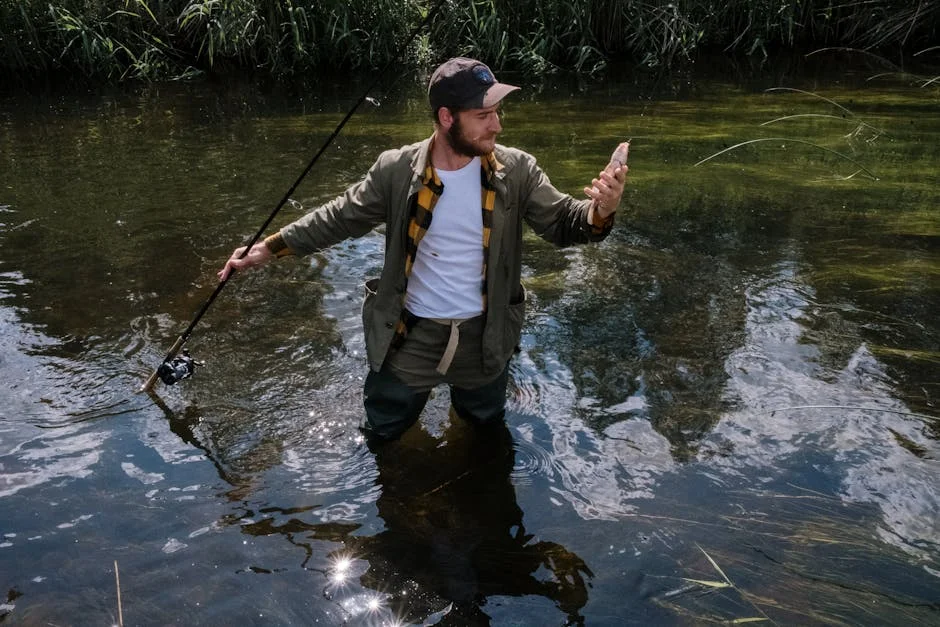
Choosing between wet wading and traditional waders is one of those decisions that looks simple until you’re standing knee-deep in a Colorado tailwater in late September, wishing you’d thought it through. The right setup depends on season, water temperature, and how many days a year you’re actually on the water. For dedicated wading, Waders & Wading Boots covers the full category, this article focuses on where the two approaches diverge and which budget-to-mid-range waders hold up when you commit to going covered.
Budget bootfoot waders have improved enough that the conversation has changed. Not every angler needs a Simms G3 to stay dry and functional. What matters is matching the wader to your fishing volume and conditions, and knowing where these mid-range options earn their keep versus where they fall short.
What to Look For in Chest Waders
Material and Waterproofing Construction
The two dominant materials in this price range are nylon/PVC and neoprene. Nylon/PVC waders use a layered construction, typically 2-ply, where a nylon face fabric bonds to a PVC waterproof membrane. They’re lighter than neoprene and more comfortable in warm conditions. Neoprene waders run thicker, typically 3.5mm to 5mm, and trap body heat against cold water. Neither material breathes meaningfully at this price point.
Seam construction matters more than the fabric itself for long-term waterproofing. Taped seams, where a waterproof tape is heat-bonded over the stitching, outlast unfinished or glued seams by a significant margin. The failure mode on budget waders is almost always seam delamination, not fabric puncture. Check whether the product listing specifies taped seams before you commit.
The ankle gusset and crotch seam are the two highest-stress points. Both experience repeated flexion with every step. After owning two pairs of mid-priced waders that failed at exactly those points, one at the ankle within eighteen months, one at the crotch seam, the lesson is clear: seam quality is the purchase decision, not the headline fabric spec.
Bootfoot vs. Stockingfoot Design
Bootfoot waders attach the boot directly to the wader body. They’re faster to get on, require no separate wading boot purchase, and handle casual fishing applications well. The trade-off is fit precision, a fixed boot size attached to a fixed wader size means the boot can’t be optimized independently, and traction sole options are limited to what the manufacturer installs.
Stockingfoot waders use a neoprene sock and require a separate wading boot. This design allows independent sizing, better fit, and the ability to choose your own sole, including studded rubber setups that work well on algae-slicked tailwater cobble. For high-volume anglers on technical water, stockingfoot is the more flexible system. For occasional use, bootfoot removes one purchasing decision and one piece of gear to manage.
That’s appropriate for the use case they serve: accessible, no-extra-purchase wading for anglers who want to get in the water without building a system around it.
Fit, Sizing, and Mobility
Wader fit problems compound in current. A wader that’s baggy through the hips and thighs catches water pressure, increases drag, and makes precise foot placement harder. On faster water or uneven cobble, sloppy fit is a safety consideration, not just a comfort complaint. Look for sizing charts that include inseam and chest measurements, not just a numeric size.
Adjustable shoulder straps and a built-in wading belt are non-negotiables. The wading belt is the primary safety feature on a chest wader, it traps air in the event of a fall, buying time to self-rescue. Any wader that ships without a belt needs one added before it goes near moving water.
Mobility in the hip flexor and knee matters on uneven stream bottom. Some nylon/PVC waders are cut stiff and restrict stride length. Reading owner feedback specifically about walking in current, not just standing, gives a better picture of how the wader performs where it counts.
Traction and Boot Sole
Bootfoot waders at this price range almost universally ship with rubber lug soles. Plain rubber lug handles moderate to good conditions on gravel and sand. On algae-covered cobble, the defining surface of most tailwaters, plain rubber lug is marginal. Studded rubber or a Korkers-style interchangeable system adds meaningful grip.
If you’re wading anything with consistent algae growth, plan to add screw-in aluminum studs to whatever rubber sole you’re working with. They’re inexpensive, install in minutes, and close most of the grip gap between rubber and felt on wet rock. Felt remains better in some conditions, but the invasive species case for rubber soles on rivers you care about is strong enough to accept the trade.
The best waders and wading boots setups pair traction to the specific river type, cobble, silt, bedrock, not to a single universal recommendation. The products below ship with rubber lug; supplement accordingly.
Top Picks
Fishing Waders for Men & Women, Waterproof 2-Ply Nylon/PVC Chest Wader with Boots
The Fishing Waders for Men & Women, Waterproof 2-Ply Nylon/PVC Chest Wader with Boots for Outdoor, Sizes 4-13 Bootfoot sits in the accessible end of the bootfoot category with 2-ply nylon/PVC construction. The size range, 4 through 13 in bootfoot, covers most adult buyers without requiring custom orders, which matters for a category where sizing is notoriously inconsistent between brands.
Owner reports emphasize the value proposition for casual or occasional use. Verified buyers note the material is stiffer than breathable alternatives, which is expected at this construction tier, but the waterproofing holds across normal wade durations. The stiffness in the lower leg draws some comments about break-in time before the material moves naturally in stride.
For anglers getting into wading for the first time, or fishing fewer than ten days a year in cool water, this wader does what it promises. The 2-ply construction is the baseline for this category, adequate for the use case, not built for high-frequency mechanical stress over multiple seasons.
Check current price on Amazon.
Trudave Chest Waders for Men & Women Waterproof, Fishing Neoprene Waders, Hunting Waders with Boots
Neoprene changes the thermal profile significantly. The Trudave Chest Waders for Men & Women Waterproof, Fishing Neoprene Waders, Hunting Waders with Boots runs in neoprene construction, which makes it the cold-water specialist in this group. Neoprene’s insulating mechanism is passive, the material traps a thin layer of water against the body and warms it, similar in principle to a wetsuit. In water temperatures below 50°F, that matters.
Verified buyers consistently note warmth as the standout characteristic. The neoprene bulk draws some comments about reduced mobility relative to lighter nylon/PVC alternatives, which is accurate, neoprene restricts range of motion more than thin synthetics. For duck hunting, late-season stillwater fishing, or any application where cold water is the primary variable, that trade is usually worth making.
On moving water in shoulder-season conditions, October on Colorado tailwaters, for instance, neoprene’s weight and reduced mobility is more noticeable. If most of your fishing happens in summer and early fall with occasional cold-weather use, a lighter nylon/PVC wader may be the better primary. Neoprene earns its place when warmth is the dominant requirement.
Check current price on Amazon.
TIDEWE Bootfoot Chest Wader, 2-Ply Nylon/PVC Waterproof Fishing Hunting Waders with Boot Hanger for Men Women Green Brown
Among the 2-ply nylon/PVC options here, the TIDEWE Bootfoot Chest Wader, 2-Ply Nylon/PVC Waterproof Fishing Hunting Waders with Boot Hanger for Men Women Green Brown has the longest owner feedback record of the group, it’s been on the market long enough to accumulate multi-season durability reports. That’s not a minor point in this category. A wader with twelve months of owner data tells you something different than one with twelve reviews.
The included boot hanger is a practical storage detail that keeps the boot upright while drying. It’s a small thing, but waders that stay properly hung dry faster and develop fewer mildew problems over a season. Owner consensus on durability is generally positive for light-to-moderate use, seams hold through a season or two of occasional fishing without reports of the early delamination that plagues the cheapest options in this category.
Available in green and brown colorways, which makes it a reasonable dual-use choice for waterfowl hunting and fishing without committing to a camouflage pattern. The 2-ply construction sits in the same tier as the other nylon/PVC options here, capable for the use case, with the TIDEWE’s market tenure providing a more reliable durability signal than newer entrants.
Check current price on Amazon.
Fishing Waders for Men and Women, Wading Pants with Neoprene Stocking Foot, Fishing Waist Waders Pants with Pockets
Waist-height waders fill a specific gap that chest waders don’t: wet wading crossover use in warm water where you want some coverage without the full commitment. The Fishing Waders for Men and Women, Wading Pants with Neoprene Stocking Foot, Fishing Waist Waders Pants with Pockets is the only stockingfoot option in this group, which changes the calculus. Stockingfoot construction requires a separate wading boot, that’s an additional purchase, but it returns independent fit control and sole flexibility.
The neoprene stocking foot is a standard design: it seals around the boot and provides a thermal buffer at the foot. The waist-height cut is appropriate for summer wading in knee-to-thigh-deep runs where chest height would trap heat. Pockets are a practical addition at this coverage level, you lose the chest pocket of a full-height wader, so hip pockets carry more weight.
Owner notes flag that waist waders require careful attention to water depth, there’s no shoulder coverage, and water over the waist line means a wet upper body. For the specific conditions this design suits, warm-season shallow-to-mid-depth wading with a preference for lighter coverage, it’s a reasonable choice. For cold-season or deeper-water applications, chest height is the right call.
Check current price on Amazon.
Foxelli Chest Waders, Waterproof 2-ply Nylon/PVC Camo Hunting Fishing Waders for Men and Women with Boots
The Foxelli Chest Waders, Waterproof 2-ply Nylon/PVC Camo Hunting Fishing Waders for Men and Women with Boots leads with camouflage patterning, which signals the dual-purpose market it’s aimed at. Camo finish doesn’t affect waterproofing performance, but it narrows the aesthetic use case, anglers who don’t need concealment may prefer a solid or subdued color, while waterfowl hunters and turkey hunters will find the pattern functional.
The 2-ply nylon/PVC construction is the same fundamental tier as the other nylon/PVC options in this group. Foxelli has been a consistent mid-range presence long enough that owner feedback across multiple seasons is available. Verified buyers note adequate waterproofing for standard fishing use with some comments about boot sizing running slightly large, a common complaint in bootfoot designs where the boot is attached to the wader size rather than fitted independently.
For the angler who cross-uses gear between late-season bird hunting and shoulder-season fishing, the camo finish makes Foxelli the practical choice in this group. The performance envelope is consistent with other 2-ply bootfoot waders here, durable enough for light seasonal use, with the camo print as the primary differentiator.
Check current price on Amazon.
Buying Guide
Matching Wader Material to Season and Water Temperature
Neoprene and nylon/PVC serve different temperature windows. Neoprene is the cold-water material, it insulates passively and keeps legs warm in water below 50°F. Nylon/PVC is the warm-weather option, lighter, more packable, and less restricting on movement. Fishing a wide temperature range across a season often means owning one of each, or choosing whichever end of the season dominates your fishing calendar.
The practical threshold: if most fishing happens April through October in moderate-climate rivers, nylon/PVC is the right primary material. If duck hunting or late-November tailwater fishing is in the rotation, neoprene earns its place.
Bootfoot vs. Stockingfoot for This Price Range
At the mid-range price band, bootfoot designs offer the cleaner entry point, one purchase, immediate use, no separate boot sizing required. Stockingfoot at this price level still requires a wading boot purchase, which adds cost and a second fit decision. Unless you already own wading boots or plan to invest in interchangeable soles, bootfoot is simpler here.
The trade-off is sole flexibility. Bootfoot waders ship with a fixed sole; you’re committed to what the manufacturer provides. Stockingfoot opens up felt, rubber, and studded sole options depending on the boot you pair. For technical tailwater wading on algae-heavy cobble, that flexibility has real value.
Wading Belt and Safety Fundamentals
Every chest wader in this group should be worn with a snug wading belt at all times in moving water. This is not optional. A wading belt traps air in the legs and body of the wader if you fall, slowing water entry and buying time to self-rescue. Waders without a belt fill in seconds in moving current. Several products here include a belt, confirm before purchase, and add one if it’s absent.
The full waders and boots category covers boot compatibility and belt systems in more depth. At a minimum: cinch the belt before entering moving water, every time.
Fit and Sizing Across Bootfoot Designs
Bootfoot sizing ties boot size to body size, which creates fit compromises for buyers whose proportions don’t match the manufacturer’s assumed ratio. If you’re a 34-inch inseam with a size 10 foot, check whether the wader size that fits your torso ships with the boot size that fits your foot. These rarely align perfectly, and most manufacturers include a sizing chart that maps wader size to boot size, review it before ordering.
Baggy wader fit through the hip and thigh increases current drag and reduces stability on uneven bottom. Owner reviews that mention fit are worth reading for this reason, comfort comments about excess material in the hip translate directly to wading performance in current.
Durability Signals in Product Listings
Seam construction is the most important durability indicator at this price point. Look for “welded seams,” “taped seams,” or “double-stitched and sealed” language in product listings. Plain stitched seams without tape or welding are the failure point. The ankle gusset and crotch seam are the highest-stress locations, they flex with every step and are the first to delaminate under repeated mechanical stress.
Owner review patterns tell the rest of the story. Filter for reviews at the six-month and twelve-month marks. Early reviews often report first impressions; multi-season reviews show where the seams and materials hold up under real use conditions.
Frequently Asked Questions
Is wet wading or wearing waders better for summer fishing?
Wet wading is the comfortable choice for summer fishing in water above 60°F, lighter, cooler, and less restrictive than any wader. Below 60°F, hypothermia risk shifts the calculus toward coverage even in air temperatures that feel warm. Nylon/PVC chest waders handle shoulder-season conditions well without the thermal bulk of neoprene. The right answer depends on water temperature, not air temperature or calendar date.
How long do mid-range bootfoot waders typically last?
Owner feedback on mid-range nylon/PVC bootfoot waders points to one to three seasons of useful life at moderate fishing frequency, roughly ten to twenty days per year. Heavier use accelerates seam wear, particularly at the ankle and crotch. Neoprene waders often outlast nylon/PVC in pure durability terms but degrade in insulation performance as the material compresses over time. Proper storage, hung upright, dried fully, extends functional life regardless of material.
Can I add studs to the rubber soles on bootfoot waders?
Screw-in aluminum studs work on most rubber lug soles and are the most practical traction upgrade for algae-covered cobble. Standard 1/4-inch carbide or aluminum studs install with a screwdriver in under fifteen minutes. Check that your sole has sufficient lug depth to accept the stud length, soles under 8mm of lug are too thin for standard studs. On the Arkansas River freestone with loose cobble, studs can catch between rocks awkwardly; adjust based on the specific bottom type you’re wading.
What’s the difference between 2-ply and 3-ply wader construction?
Ply count refers to the number of bonded layers in the wader fabric. Two-ply construction, a face fabric bonded to a waterproof membrane, is the standard at this price band. Three-ply adds a third backing layer, which increases abrasion resistance and durability under heavier use. The practical difference shows at high fishing frequency; for occasional use, 2-ply performs adequately.
Which wader in this group works best for cold-weather duck hunting?
The Trudave Chest Waders for Men & Women Waterproof, Fishing Neoprene Waders, Hunting Waders with Boots is the cold-weather choice here by material, neoprene’s passive insulation outperforms nylon/PVC in cold water by a significant margin. For waterfowl hunting specifically, the Foxelli Chest Waders adds camouflage patterning alongside chest-height coverage, which suits concealment-sensitive applications. If warmth is the primary requirement, neoprene wins; if dual-use concealment matters, Foxelli’s camo finish is the practical differentiator.
Where to Buy
Fishing Waders for Men & Women, Waterproof 2-Ply Nylon/PVC Chest Wader with Boots for Outdoor, Sizes 4-13 BootfootSee Fishing Waders for Men & Women, Water… on Amazon