Winston Air 2 Review: Moderate-Fast Fly Rod

Affiliate disclosure: Some links on this page are affiliate links. If you buy through them we earn a small commission at no extra cost to you. Recommendations are research-driven; we don't claim personal use of every product reviewed. Product prices and availability are accurate as of the date published and are subject to change. Always check Amazon for current pricing before purchasing. Learn more.
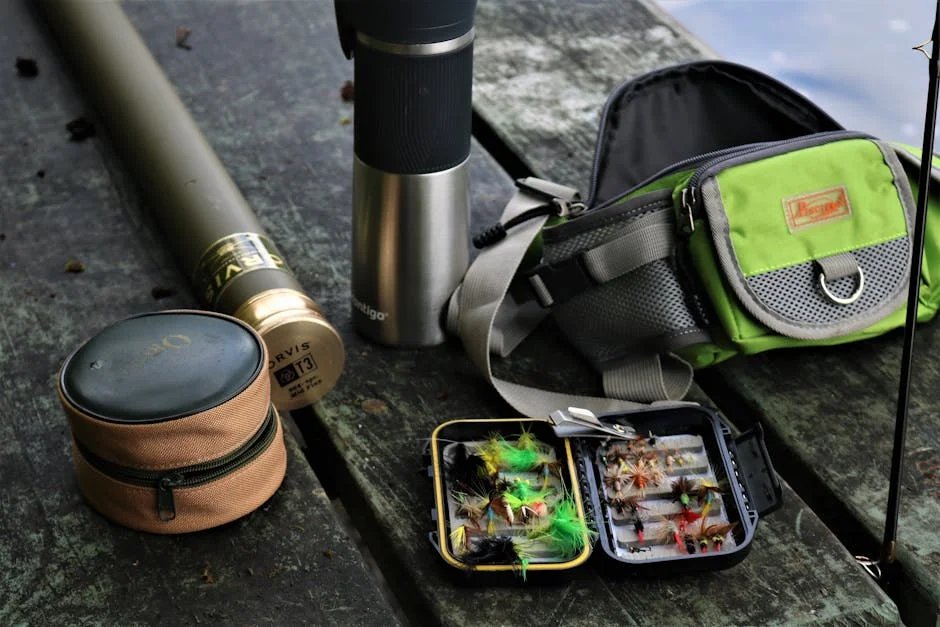
American-made in Twin Bridges, Montana, genuine domestic manufacturing heritage
See Winston Air 2 9' 5-Weight Fly Rod on AmazonThe Winston Air 2 is one of the most talked-about premium fly rods built in America, a moderate-fast blank from R.L. Winston’s Twin Bridges, Montana shop that has carved out a distinct identity in a market dominated by ultra-fast action. If you’re evaluating premium fly rods and wondering whether the Air 2’s softer feel is a liability or a genuine advantage, that question deserves a careful answer.
The short answer is: for most trout fishing most of us actually do, the Air 2’s action profile is the point, not a compromise. What follows draws on owner reports, community field data, and direct comparison against rods this review covers in depth.
What to Look For in a Premium Fly Rod
Action Rating and What It Actually Means on Water
Rod manufacturers rate action on a spectrum from slow to fast, but the marketing language around “fast action” has become so inflated that it obscures a practical truth. A fast-action rod stores and releases energy quickly, it’s designed to drive tight loops at distance, punch into wind, and turn over large flies efficiently. Those are real advantages. At tournament casting distances or on big western tailwaters where fish hold at 60-plus feet, a fast rod earns its reputation.
The problem is that fast-action blanks require precise loop formation to load properly at short range. At 30 to 40 feet, the working distance on most technical tailwater fishing, a very fast blank can feel unresponsive, demanding more from the caster than the situation requires. Moderate-fast rods load more naturally across a wider range of distances. That’s not a step backward in performance; it’s a different engineering priority.
Owner consensus on the Air 2 consistently surfaces this point. Anglers who fish 25 to 55 feet on technical water report that the Air 2 loads more intuitively, gives clearer feedback through the cast, and causes less fatigue over a long day than faster alternatives.
Construction and Weight-to-Stiffness Ratio
At the premium price tier, every manufacturer is working with high-modulus carbon fiber, the marketing differentiation is mostly in layup geometry, taper design, and finishing weight. What matters practically is the rod’s weight-in-hand combined with its swing weight: a light rod with high swing weight (from a heavy tip section) can feel sluggish despite the spec sheet.
The Air 2 is frequently cited by owners as one of the lightest-feeling rods in its class. Winston’s boron III+ matrix construction places boron fibers in the lower blank sections, which adds progressive power without increasing tip weight. The result is a blank that feels genuinely light in hand through a full day of casting, not just on the first pickup. For anglers with shoulder or elbow sensitivity, this matters considerably.
Fit, Finish, and Domestic Manufacturing
At the premium tier, you’re also paying for provenance and build quality. The Air 2 is manufactured in Twin Bridges, Montana, genuine domestic production, not domestic assembly of overseas blanks. Winston’s lifetime guarantee covers original owners without the transfer restrictions common to some competitors.
The fit and finish on Winston rods is widely regarded as among the finest in production fly rod manufacturing. Cork quality, ferrule fit, guide wrapping, these details are consistently praised in long-term owner reports. The practical benefit beyond aesthetics: tight ferrules and quality guides contribute to consistent rod feel over years of use and reduce the small-but-real performance degradation that comes from worn components.
Versatility Across Fishing Conditions
A premium 5-weight rod should do more than one thing well. The best ones handle dry fly work, nymphing, and moderate streamer fishing without forcing significant compromises in any direction. The Air 2’s moderate-fast action gives it broader functional range than ultra-fast alternatives, it presents dries delicately at 25 feet and still carries enough backbone to drive a weighted Euro nymphing rig or turn over a small articulated at 45 feet.
Exploring the full range of fly rods for western trout fishing before committing to a specific action profile is worth the research investment. Action preference is genuinely personal, and the best approach is to cast multiple rods before purchasing if the opportunity exists.
Top Picks
Winston Air 2 9’ 5-Weight Fly Rod
The Winston Air 2 occupies a specific and well-defined position in the premium rod market: it’s the right answer for anglers who fish technical trout water at moderate distances and want a rod that rewards feel over power. Owner reports from tailwater anglers on rivers like the South Platte, the Missouri, and the Gallatin consistently describe the Air 2 as a rod that “disappears” during a cast, meaning the feedback loop between angler and fly feels direct rather than mechanical.
That moderate-fast action is the defining characteristic. Cast against a Sage X or R8, the Air 2 feels more compliant through the mid-section, which loads earlier and more clearly at 30 to 40 feet. For dry fly fishing, where presentation accuracy and leader turnover at close-to-medium range matter more than raw distance, this is a genuine advantage. For anglers throwing 60-foot casts into heavy wind, the ultra-fast blanks will outperform it. The honest question is how often you’re doing that versus how often you’re presenting a size 18 PMD to a fish holding 35 feet upstream.
The boron III+ construction deserves attention beyond the marketing. Boron fibers have a higher tensile strength-to-weight ratio than carbon fiber, and Winston places them strategically in the lower blank sections to add reserve power without sacrificing the tip sensitivity that makes delicate presentations possible. Owner reports uniformly confirm that the rod handles large fish with authority, the progressive taper means the lower sections engage when a fish runs, preventing the “tip-only fight” that can fatigue a fine-tipped blank.
Winston’s Twin Bridges provenance is real. For anglers to whom domestic manufacturing matters, and there are legitimate reasons it might, including resale value and brand heritage, the Air 2 delivers that credential without asterisk. The lifetime guarantee and Winston’s repair service add long-term ownership value that the premium entry price partially offsets over a rod’s useful life. One caveat worth stating plainly: this review is research-based, drawing on owner reports, field data, and community consensus. For a long-term ownership review grounded in multiple seasons of personal use, the work of writers who have fished this rod for a full season is the right next stop.
Check current price on Amazon.
Buying Guide
Matching Rod Action to Your Actual Fishing
The most important buying decision in the premium rod tier isn’t brand, it’s action, and specifically whether your casting style and typical fishing conditions align with the rod you’re considering. Fast-action rods reward high line speeds and good loop formation. Moderate-fast rods load more progressively and are more forgiving across a range of casting distances. Before evaluating any specific rod, be honest about where you actually fish and how far you actually cast.
Most working fly fishers, people fishing 15 to 30 days a year on familiar water, do the bulk of their fishing between 25 and 55 feet. At those distances, a moderate-fast blank like the Air 2 loads more naturally and gives clearer feedback than ultra-fast alternatives. The performance gap between action profiles widens at extremes: very long casts, heavy wind, large flies.
Fast vs. Moderate-Fast: The Real-World Tradeoff
There’s an honest case to be made that the fly fishing industry has overcorrected toward ultra-fast action because fast rods are easier to demonstrate at trade shows and industry events, long, tight loops are visually impressive and photograph well. The fishing reality is more nuanced.
Fast-action rods require good technique to perform well at short range. The same blank that launches a tight loop at 70 feet can feel stiff and feedback-poor at 35 feet if the caster hasn’t yet developed the line speed to load it properly. Moderate-fast rods are more accessible and, for most trout water, equally effective. This doesn’t make fast-action rods wrong, it makes them the right tool for specific conditions and caster profiles.
Weight and Fatigue Over a Full Day
Rod weight matters more over eight hours of casting than it does in the first five minutes of a shop demo. Swing weight, the perceived weight when casting, driven heavily by tip-section mass, differs from static weight and is a better predictor of how a rod feels after 200 casts. Premium rods in the moderate-fast category, including the Air 2, consistently score well on long-day fatigue among owner reports.
For anglers with shoulder, elbow, or wrist issues, this is a non-trivial factor. Lighter swing weight reduces cumulative stress on the casting arm. It’s worth asking owners, not just reading manufacturer specifications.
Resale Value and Long-Term Ownership Costs
Premium fly rods hold value well when maintained. American-made rods with strong brand reputations and lifetime guarantees, Winston, Sage, Scott, tend to command strong resale prices relative to their original cost. The lifetime guarantee is not just a marketing promise; it’s a practical cost offset when the blank eventually needs repair.
Budget the full ownership cost: rod, reel, line, and leader system. The rod is one component in a system, and a premium rod paired with an undersized or poorly matched reel and line will underperform against a mid-range rod with a well-matched setup. Before spending at the top of the fly rod market, confirm that the rest of the system is ready to support it.
Casting Before You Buy
The single most effective way to make a confident premium rod purchase is to cast the rod on water before committing. Most good fly shops will let serious buyers fish a demo rod on local water. Winston dealers in particular tend to be staffed by experienced anglers who can match a buyer to an appropriate action profile. The Air 2 is a rod that reveals its character gradually, it may feel underwhelming in a parking lot cast and come alive on the water when you’re presenting to real fish with real stakes. Take that into account when evaluating shop demos versus field reports from working anglers.
Frequently Asked Questions
How does the Winston Air 2 compare to the Sage X in a 5-weight?
The Sage X is a faster-action blank, it’s designed for high line speed, tight loops, and distance casting. The Air 2 loads earlier, gives more tactile feedback at short-to-medium range, and is more forgiving across a wider range of casting distances. Owner reports suggest anglers who prioritize dry fly presentation and technical nymphing at 25 to 50 feet tend to prefer the Air 2; those who fish bigger water at distance or spend significant time casting into wind lean toward the X. Neither is objectively better, action preference is the deciding variable.
Is the Winston Air 2 suitable for Euro nymphing?
The Air 2 in a 9-foot 5-weight is a workable Euro nymphing setup for anglers who want a do-everything rod, but it’s not optimized for the discipline. Dedicated Euro nymphing benefits from longer rods, 10 to 11 feet, and lighter line weights that keep contact without excess sag. The Air 2’s moderate-fast action and sensitive tip do translate well to contact nymphing at moderate distances, and owner reports confirm it handles weighted rigs without undue tip fatigue. For anglers who primarily Euro nymph, a purpose-built rod is the stronger choice.
What line pairs best with the Winston Air 2?
Owner consensus points consistently to half-line-size-up for the Air 2, a 5.5-weight or “overlined” 5-weight head loads the moderate-fast blank more fully and improves turnover at short distances. Rio Gold and Scientific Anglers Amplitude Smooth in a weight-forward 5-weight are the most commonly cited pairings. Matching line to rod action rather than defaulting to the labeled line weight is particularly important with moderate-fast blanks, which rely on proper loading to perform at their best.
Does Winston’s lifetime guarantee transfer to a second owner?
Winston’s lifetime guarantee covers original retail purchasers. It does not transfer to subsequent owners, a used Air 2 carries the repair reputation of the brand but not the formal warranty protection. Winston’s repair service is available to all owners regardless of purchase history, typically at reasonable cost. For buyers considering the used market, this distinction matters: the premium resale price partially reflects brand heritage and craftsmanship rather than transferable warranty coverage.
How does the Air 2 perform on small streams versus big western rivers?
The 9-foot length is a practical constraint on tight brushy streams, most small-stream anglers prefer 7.5 to 8.5-foot rods for overhead clearance. On open small streams and spring creeks where distance is less important than delicacy, the Air 2’s moderate-fast action and sensitive tip are well-suited: the rod loads at short range and presents flies gently. On big western rivers, owner reports confirm it handles the conditions competently, though anglers regularly fishing long distances or heavy winds may find faster-action alternatives more efficient.
Winston Air 2 9' 5-Weight Fly Rod: Pros & Cons
- American-made in Twin Bridges, Montana, genuine domestic manufacturing heritage
- Moderate-fast action is notably more versatile than ultra-fast competitors
- Softer action than Sage X or R8, not ideal for anglers who prefer very fast blanks
Where to Buy
Winston Air 2 9' 5-Weight Fly RodSee Winston Air 2 9' 5-Weight Fly Rod on Amazon