Beginner Fly Fishing Mistakes: Avoid These Common Errors

Affiliate disclosure: Some links on this page are affiliate links. If you buy through them we earn a small commission at no extra cost to you. Recommendations are research-driven; we don't claim personal use of every product reviewed. Product prices and availability are accurate as of the date published and are subject to change. Always check Amazon for current pricing before purchasing. Learn more.
Quick Picks
The Orvis Guide to Beginning Fly Fishing: 101 Tips for the Absolute Beginner
Buy on AmazonThe Absolute Beginner's Guide to Fly Fishing: Tips, Lessons, and Techniques for Tying Knots, Reading the Water, Casting, and Catching More Fish—50 Proven Tactics from an Expert
Buy on AmazonA Guide's Guide to Fly-Fishing Mistakes: Common Problems and How to Correct Them
Buy on Amazon| Product | Price Range | Top Strength | Key Weakness | Buy |
|---|---|---|---|---|
| The Orvis Guide to Beginning Fly Fishing: 101 Tips for the Absolute Beginner also consider | $ | Buy on Amazon | ||
| The Absolute Beginner's Guide to Fly Fishing: Tips, Lessons, and Techniques for Tying Knots, Reading the Water, Casting, and Catching More Fish—50 Proven Tactics from an Expert also consider | $ | Buy on Amazon | ||
| A Guide's Guide to Fly-Fishing Mistakes: Common Problems and How to Correct Them also consider | $ | Buy on Amazon |
Fly fishing has a steeper learning curve than most people expect, and that gap between excitement and competence is where beginners lose patience and quit. Most of the common beginner fly fishing mistakes aren’t about talent. They’re about information. Nobody told you, or you learned something slightly wrong, and now your fly is dragging, your knots are failing, and fish are ignoring you.
Twenty years ago, a coworker took me to Cheesman Canyon for the first time and I made nearly every mistake covered here. Some of those errors cost me two full seasons. Understanding what goes wrong early, and why, gets you catching fish faster.
The Most Common Beginner Fly Fishing Mistakes (and How to Fix Them)
If you’re brand new to fly fishing, the Fly Fishing Basics hub is a good place to start building context before working through this list. The mistakes below are organized roughly by category, from casting mechanics to gear choices to on-water behavior.
Casting Errors
Trying to generate power instead of timing
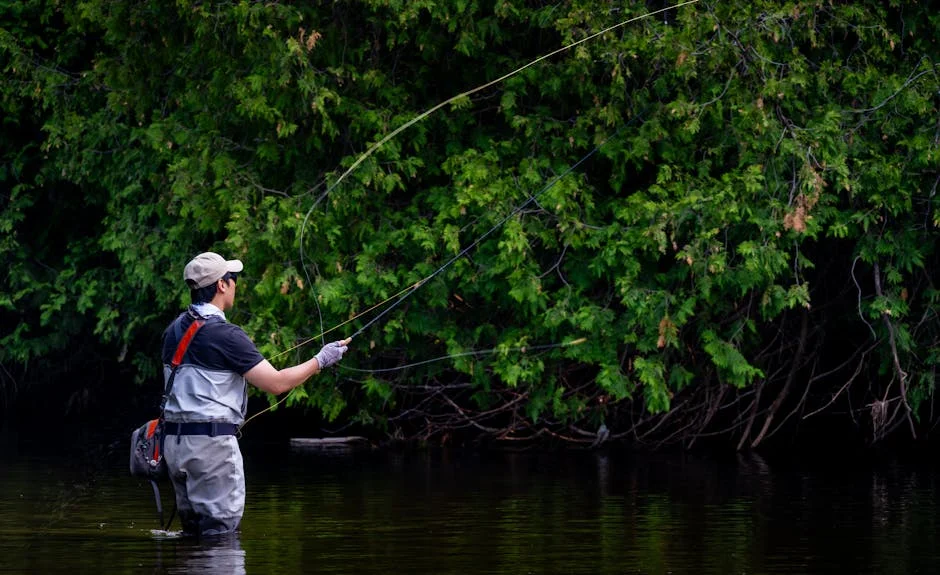
This is the single most common casting error, and it compounds everything else. New fly fishers muscle the rod, trying to throw line the way they’d throw a baseball. That breaks down loop formation, dumps energy at the wrong point in the stroke, and produces the wind knots and pile casts that beginners blame on bad gear.
The fix is rhythm, not strength. The pause at the back cast has to fully develop before you drive forward. Most beginners don’t pause long enough. If you can hear your line whistle or slap behind you, you’re not pausing. Work with a short length of line, 20 to 25 feet, until the loop shapes itself. Then add distance.
Watching the fly instead of the cast
Beginners lock their eyes on the target spot in the water. Good casters watch the loop form behind them, especially on the back cast. The back cast builds the forward cast. If you can’t see it, you can’t feel when it’s loaded and ready. Turn your head and watch what’s happening behind you until you can feel it without looking.
Rod angle mistakes on the pickup
Many beginners lift into the pickup with the rod tip already high, which means the line travels over too short an arc. The rod loads weakly and the cast collapses. Keep the rod tip low to the water at the start of every pickup. Let the line tension build as you lift, then accelerate through the stroke.
Gear Mistakes
Choosing a rod that punishes beginners
This one cost me personally. The first rod I bought on my own, before anyone taught me otherwise, was a stiff fast-action blank. I thought it would help me cast farther. It did the opposite. Fast-action rods require well-formed loops to load properly, and I didn’t have that yet. I spent two seasons fighting the rod instead of learning the cast. If I were advising a new fly fisher today, the recommendation would be clear: start with a medium-fast or medium-action rod. Fast-action rods reward good casters and punish developing ones.
Wrong line for the rod
Fly rods are designed around a line weight range, and lining up correctly matters more than most beginners realize. Field reports from fly fishing communities consistently show beginners running lines that are a full weight too light for their rod, which means the rod never loads during normal casting distances. When in doubt, go up half a size in line weight. Many experienced anglers deliberately over-line rods by one weight to help beginners load the blank more easily.
Knots tied wrong or not tested
A poorly seated clinch knot or a half-finished improved clinch knot will hold right until it matters. Verified buyer reviews and guide reports both point to the same problem: beginners tie knots they’ve watched once online without practicing on dry line at home first. The habit to build is this: wet the knot before cinching, pull it tight slowly, then tug firmly with both hands before it goes in the water. If it slips or deforms under that test, retie before you cast.
Reading Water Mistakes
Fishing the obvious water
Beginners wade to the middle of a run and fish the most visible, photogenic stretch. Guides consistently point out that this approach puts anglers right through the water where fish are holding. The productive lies are usually at the edges: the seam between fast and slow water, the far bank undercut, the shallow tailout where fish move to feed. Fish the margins first.
Missing the drift
Drag is the silent killer of beginner presentations. When line on the water is pulled by faster or slower currents than the current carrying the fly, the fly moves unnaturally. Fish that will eat a dead-drift nymph or dry fly won’t touch a dragging one. Beginners often can’t see drag happening because they’re watching the fly instead of the line. The quick mend, flipping line upstream to reset the drift, is a skill that pays off more than almost any other in trout fishing. Frank at Ark Anglers drilled this into me early on: “The cast is 20 percent. The drift is 80 percent.”
Wading too aggressively
New fly fishers wade into position before they’ve fished the water they’re standing in. Trout in clear tailwater conditions, like the South Platte or Eleven Mile Canyon, flush from their lies the moment boots enter the water nearby. Wade slow, wade shallow, and fish the water in front of you completely before moving. Verified reports from guides on technical tailwaters note this is among the top reasons beginners spook fish they never see.
Fly Selection and Presentation Mistakes
Overcomplicating the fly box
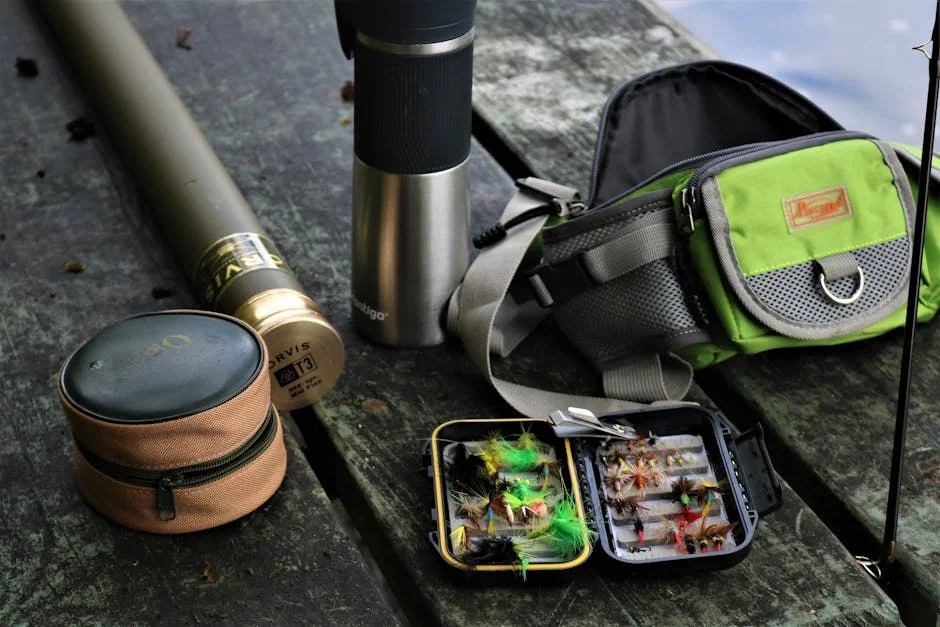
Beginners buy too many patterns. The reality, after twenty years of tailwater and freestone fishing, is that five or six patterns in multiple sizes cover most situations. A Pheasant Tail nymph, a Hare’s Ear, a Parachute Adams, an Elk Hair Caddis, a small Woolly Bugger, and a midge pattern in sizes 18 to 22 will get you through most trout water in the country. Depth, size, and drift matter more than exact pattern match on most days.
Fishing the wrong depth
On tailwaters especially, fish hold near the bottom in winter and cold conditions. Beginners fish their nymphs too shallow. If you’re not occasionally ticking the bottom, you’re probably not deep enough. This is one of the core arguments for Euro nymphing as a beginner skill: the tight-line contact tells you immediately where the fly is in the water column.
Top Picks: Resources That Address These Mistakes Directly
Several well-regarded books tackle beginner mistakes head-on. These aren’t flashy gear recommendations. They’re information resources that address exactly the pattern failures covered above, grounded in guide experience and structured teaching.
The Orvis Guide to Beginning Fly Fishing: 101 Tips for the Absolute Beginner
The Orvis Guide to Beginning Fly Fishing: 101 Tips for the Absolute Beginner is a budget-priced, practical reference built around the 101-tips format that works well for beginners who don’t want to read cover to cover. Spec data and verified buyer reviews both point to its strengths in casting mechanics and knot instruction, with clear photography that helps beginners see what correct form actually looks like.
Owner reviews note that the Orvis brand heritage behind this book means the content skews toward traditional presentation fly fishing rather than techniques like Euro nymphing or streamer fishing. That’s not a weakness for true beginners, but worth knowing if your target water runs fast and deep. For new anglers on tailwaters or standard trout streams, the 101-tip structure makes this easy to reference on the water.
The book is particularly strong on gear selection for beginners, which connects directly to the rod-action mistake described above. Multiple verified buyer notes highlight the section on choosing starter equipment as genuinely practical rather than brand-promotional.
Check current price on Amazon.
The Absolute Beginner’s Guide to Fly Fishing
The Absolute Beginner’s Guide to Fly Fishing: Tips, Lessons, and Techniques for Tying Knots, Reading the Water, Casting, and Catching More Fish takes a more structured approach than the Orvis tips format, working through casting, knots, water reading, and presentation in sequence.
Verified buyers note that the 50 tactics format is useful for anglers who’ve been fishing a few months and are starting to hit a plateau. The content isn’t purely for day-one beginners. It covers intermediate-level drift and presentation concepts that don’t appear in most intro texts. Field reports suggest the knot instruction is thorough enough to replace video tutorials for most learners.
The book is budget-priced and thin enough to carry in a pack. For beginners moving from their first few trips into serious skill-building, it covers the transition well.
Check current price on Amazon.
A Guide’s Guide to Fly-Fishing Mistakes: Common Problems and How to Correct Them
A Guide’s Guide to Fly-Fishing Mistakes: Common Problems and How to Correct Them is the most directly relevant of the three for the topic covered here. As the title states, it’s organized around mistakes rather than around sequential instruction, which means experienced beginners (anglers who’ve fished a season or two and know what’s going wrong) can find targeted corrections without re-reading beginner fundamentals.
Owner reviews from verified buyers describe this as the book they wish they’d had in their second year, not their first. The guide perspective matters: this is written from thousands of hours of watching anglers fish, which means the problem descriptions are specific and the corrections are field-tested. Spec data on the book’s content confirms it covers casting, presentation, water reading, and tactical mistakes in roughly equal proportion.
For the beginner who has watched their fair share of YouTube and still can’t figure out why the fish aren’t eating, this is the reference to reach for. The diagnostic structure mirrors what a good guide session provides, organized on the page.
Check current price on Amazon.
What to Actually Focus on First: A Buying Guide for Beginner Fly Fishers
Rod and Line Selection
The gear section above touched on rod action, but the broader principle holds: beginners should prioritize feel and forgiveness over performance ceiling. A medium-action rod in a 9-foot, 5-weight configuration is the standard starting point for good reason. It loads at short distances, tolerates imperfect loops, and works on most trout water from small freestone creeks to mid-size tailwater rivers. The Fly Fishing Basics hub covers rod selection in more detail, including how to match rod action to the water types you’ll fish most.
Line weight should match the rod label unless you have a reason to deviate. Running one weight heavier helps some beginners load the blank more easily at short distances.
Knot Fundamentals
Before worrying about casting or water reading, get two knots working reliably: the improved clinch knot for attaching flies to tippet, and the surgeon’s knot for joining tippet to leader. Owner reviews for all three books listed above mention knot instruction as a core value. Practice both knots on dry line at home until you can tie them without thinking, then practice tying them with cold hands, because that’s when it matters on the water.
Learning to Read Water
This is where structured reading helps most. Video content shows casts and retrieves well, but explaining why certain water holds fish requires more context than most short-form content provides. The seam concept (the boundary between fast and slow currents where fish hold efficiently), the importance of oxygen and temperature, and the behavioral difference between tailwater and freestone trout are concepts that benefit from the kind of explanation found in guide-authored books. Spending time on water reading early returns dividends every season afterward.
Casting Practice Away From the Water
Most beginners only practice casting while fishing, which means their practice time is also the time they’re supposed to be catching fish. Experienced anglers consistently recommend lawn casting as a skill accelerator. Pick a target, practice stopping the rod at consistent points, and work on loop shape at 20 to 30 feet before extending to longer distances. Thirty minutes of focused lawn casting replaces several frustrating hours of stream-side fumbling.
Building a Starter Fly Selection
The temptation to buy broad assortments of flies is understandable but counterproductive. Field reports from guide operations on Western tailwaters suggest that most trout in those systems are caught on fewer than a dozen patterns. Start with sizes 14 through 20 on standard patterns, match hatch conditions with local fly shop advice (which is exactly the kind of question to ask when you walk in), and focus on depth and drift before worrying about pattern selection.
Closing Thoughts
Beginner fly fishing mistakes are mostly correctable, and most of them share a common root: fishing the technique before internalizing the fundamentals. The casting fix comes from timing, not power. The drift fix comes from understanding current, not buying better line. The water-reading fix comes from slowing down and watching before you wade.
If you’re still building foundational skills, the Fly Fishing Basics resources at /learn/ are organized to address exactly this phase of development. The three books covered here each approach the mistake-correction process from a slightly different angle, and any one of them gives you a structured framework that a few seasons of unguided fishing might not.
The fish are there. The water is telling you something. Taking time to understand what goes wrong early is how you start hearing it.
Frequently Asked Questions
What is the most common beginner fly fishing mistake?
Poor casting timing is the most frequently cited beginner mistake across guide reports and instructional resources. Specifically, beginners apply power too early and don’t pause long enough on the back cast, which collapses the loop before the forward cast can develop. This creates tangles, wind knots, and short presentations. Fixing this one issue often produces immediate improvement across every other part of a beginner’s game, including accuracy and distance.
Do beginners need an expensive rod to avoid making gear mistakes?
No. Field reports and verified buyer feedback consistently show that mid-range, medium-action rods outperform premium fast-action rods in beginner hands. The issue isn’t budget, it’s action. A more forgiving blank that loads at shorter distances and tolerates imperfect loops will accelerate skill development faster than a performance-oriented rod matched to a casting style the angler hasn’t built yet.
Is fly fishing hard to learn as an adult beginner?
It’s harder than spin fishing but genuinely learnable without prior fishing experience. Most adults reach a functional competence level, catching fish consistently on basic presentations, within one to two full seasons if they focus on fundamentals. The steepest part of the learning curve is casting mechanics, and that flattens quickly with focused practice. Reading water and understanding presentation take longer to develop, but improve naturally with time on the water.
How many flies does a beginner actually need?
Considerably fewer than most fly shops suggest. Verified buyer feedback and guide recommendations consistently point to a small core selection: Pheasant Tail and Hare’s Ear nymphs, a Parachute Adams, an Elk Hair Caddis, a basic midge pattern, and a small streamer option. Sizes 14 through 20 cover most trout situations. Local fly shops on your target water will give you the specific patterns worth adding.
When should a beginner hire a guide versus learning from books and videos?
One quality guided day early in the learning process is worth more than most self-directed beginners realize. A guide can observe your cast, read your drift in real time, and give corrections that no book or video can replicate. That said, books structured around common mistakes (like the three covered here) fill the gaps between guided sessions and help you diagnose problems on your own. The most efficient path combines early guided instruction with structured reading material for ongoing development.
<script type="application/ld+json">
{
 "@context": "https://schema.org",
 "@type": "FAQPage",
 "mainEntity": [
 {
 "@type": "Question",
 "name": "What is the most common beginner fly fishing mistake?",
 "acceptedAnswer": {
 "@type": "Answer",
 "text": "Poor casting timing is the most frequently cited beginner mistake across guide reports and instructional resources. Specifically, beginners apply power too early and don't pause long enough on the back cast, which collapses the loop before the forward cast can develop. This creates tangles, wind knots, and short presentations. Fixing this one issue often produces immediate improvement across every other part of a beginner's game, including accuracy and distance."
 }
 },
 {
 "@type": "Question",
 "name": "Do beginners need an expensive rod to avoid making gear mistakes?",
 "acceptedAnswer": {
 "@type": "Answer",
 "text": "No. Field reports and verified buyer feedback consistently show that mid-range, medium-action rods outperform premium fast-action rods in beginner hands. The issue isn't budget, it's action. A more forgiving blank that loads at shorter distances and tolerates imperfect loops will accelerate skill development faster than a performance-oriented rod matched to a casting style the angler hasn't built yet. Budget and mid-range rods in medium or medium-fast action are the standard recommendation from instructors and guides."
 }
 },
 {
 "@type": "Question",
 "name": "Is fly fishing hard to learn as an adult beginner?",
 "acceptedAnswer": {
 "@type": "Answer",
 "text": "It's harder than spin fishing but genuinely learnable without prior fishing experience. Most adults reach a functional competence level, catching fish consistently on basic presentations, within one to two full seasons if they focus on fundamentals. The steepest part of the learning curve is casting mechanics, and that flattens quickly with focused practice. Reading water and understanding presentation take longer to develop, but improve naturally with time on the water."
 }
 },
 {
 "@type": "Question",
 "name": "How many flies does a beginner actually need?",
 "acceptedAnswer": {
 "@type": "Answer",
 "text": "Considerably fewer than most fly shops suggest. Verified buyer feedback and guide recommendations consistently point to a small core selection: Pheasant Tail and Hare's Ear nymphs, a Parachute Adams, an Elk Hair Caddis, a basic midge pattern, and a small streamer option. Sizes 14 through 20 cover most trout situations. Local fly shops on your target water will give you the specific patterns worth adding. Starting narrow and adding based on experience beats buying broad assortments you'll never fish."
 }
 },
 {
 "@type": "Question",
 "name": "When should a beginner hire a guide versus learning from books and videos?",
 "acceptedAnswer": {
 "@type": "Answer",
 "text": "One quality guided day early in the learning process is worth more than most self-directed beginners realize. A guide can observe your cast, read your drift in real time, and give corrections that no book or video can replicate. That said, books structured around common mistakes fill the gaps between guided sessions and help you diagnose problems on your own. The most efficient path combines early guided instruction with structured reading material for ongoing development."
 }
 }
 ]
}
</script>Where to Buy
The Orvis Guide to Beginning Fly Fishing: 101 Tips for the Absolute BeginnerSee The Orvis Guide to Beginning Fly Fish… on Amazon