High Stick Nymphing: Technique Guide for Trout Fishing

Affiliate disclosure: Some links on this page are affiliate links. If you buy through them we earn a small commission at no extra cost to you. Recommendations are research-driven; we don't claim personal use of every product reviewed. Product prices and availability are accurate as of the date published and are subject to change. Always check Amazon for current pricing before purchasing. Learn more.
Quick Picks
Contact Nymphing: Master Euro Nymphing, Tight-Line and the Mono Rig (BLACK AND WHITE EDITION)
Buy on AmazonEuro Nymphing: Tips, Tactics, and Techniques (Stackpole Fly Fishing Essentials)
Buy on Amazon| Product | Price Range | Top Strength | Key Weakness | Buy |
|---|---|---|---|---|
| Dynamic Nymphing: Tactics, Techniques, and Flies from Around the World also consider | $$ | Buy on Amazon | ||
| Contact Nymphing: Master Euro Nymphing, Tight-Line and the Mono Rig (BLACK AND WHITE EDITION) also consider | $$ | Buy on Amazon | ||
| Euro Nymphing: Tips, Tactics, and Techniques (Stackpole Fly Fishing Essentials) also consider | $$ | Buy on Amazon |
High stick nymphing is one of the most effective ways to get a fly into the strike zone on moving water, and it requires almost no specialized gear to start. The core idea is simple: keep your rod tip high, eliminate slack between your fly and your hand, and feel every bump on the bottom.
Most anglers who try it realize quickly that it exposes gaps in their water-reading. That’s not a flaw. It’s the technique working as designed.
What Is High Stick Nymphing?
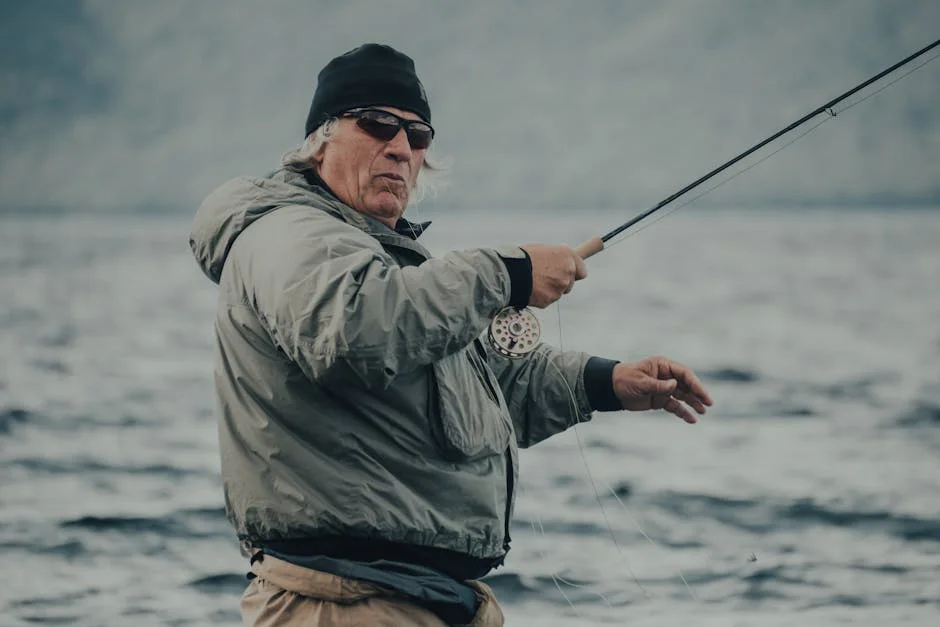
High stick nymphing is a contact-based presentation method built around drift control. You cast upstream or across-and-up, raise your rod tip to lift as much fly line off the water as possible, and follow the fly downstream with your rod tip as it drifts through likely holding water. The connection between you and your fly stays as direct as conditions allow. When a fish takes, you feel it or see a hesitation in your leader before any indicator could register the event.
This technique sits at the heart of a broader family of tight-line and contact nymphing methods that have reshaped how serious trout anglers fish subsurface. High sticking is the oldest version. Euro nymphing, Czech nymphing, and the various mono-rig variations that have emerged over the past two decades all trace their lineage back to the same foundational idea: slack is the enemy.
The difference between high sticking and modern Euro nymphing methods is mostly one of degree. High sticking can be done with a conventional fly line and a standard 9-foot rod. Euro nymphing typically adds a specialized long rod (often 10 to 11 feet), a level monofilament or competition-style running line, and a colored sighter built into the leader. The core principle is identical.
Why High Sticking Works
Fish hold in specific current seams, usually near the bottom where they expend the least energy while waiting for food to come to them. A nymph drifting at the same speed as the current at the bottom of the water column, without drag, looks like natural food. High sticking achieves that drift by keeping your fly line out of conflicting currents that would otherwise pull the fly unnaturally fast or across the grain.
Indicator nymphing works on the same principle but adds a visual reference point on the surface. That visual feedback is genuinely useful, especially for anglers still learning to read the bottom. The cost is that the indicator itself creates drag on the leader and sits in a different current layer than the fly. High sticking removes that surface interference entirely.
Reading Water for High Stick Presentation
Before any casting mechanics matter, you have to be standing in the right place looking at the right water. This is where I spent years making the same mistake, fishing the indicator and wondering why the drift looked perfect but produced nothing. The indicator just made the inactivity visible. Moving to tightline methods forced me to actually read the water because there was nothing visual to watch.
For high sticking, the most productive water is usually 18 inches to four feet deep with moderate current. You want enough flow to drift a weighted fly naturally but not so much that you can’t control slack at all. Classic targets: the seam between fast and slow water on either side of a mid-stream rock, the tail of a pool where current accelerates over a shallow shelf, or the soft water along a cut bank where fish face upstream into the main channel. These are not the only spots that produce, but they are where the technique is most forgiving while you’re learning the feel.
Gear That Helps (and Gear That Isn’t Mandatory)
Here’s a strong opinion, earned over two decades: Euro nymphing gets oversold as a technique requiring specialized equipment. The learning curve is real. The dedicated gear helps. But neither is mandatory to start.
The core principle, eliminate slack between your fly and your hand, can be applied with a standard 9-foot rod and a long mono leader. Start there. If the technique clicks, which it usually does within ten sessions for most anglers, then the investment in a dedicated system starts to make sense.
Standard 9-Foot Rod Setup
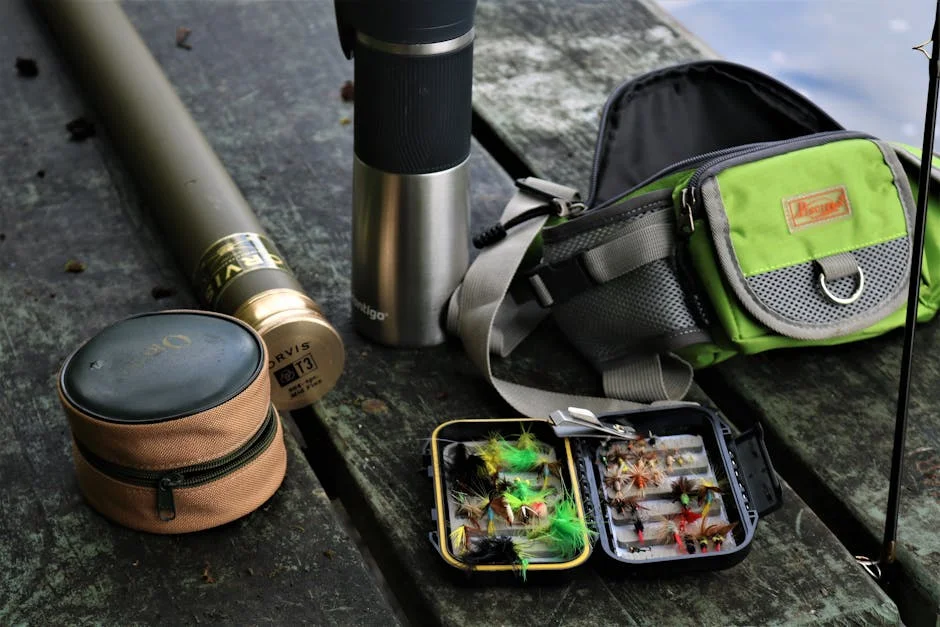
Build a high stick leader starting with 10 to 12 feet of fluorocarbon or monofilament off the fly line tip. Run it as a compound taper: heavier butt section (12- to 15-pound), mid section (8- to 10-pound), and tippet in the 4X to 6X range depending on fly size and water clarity. Use flies heavy enough to get to the bottom in the first third of the drift, usually a tungsten bead nymph or a jig-style hook in size 16 to 10. Keep your cast short, ideally under 30 feet. High sticking is a close-quarters game.
Moving to a Dedicated Euro Nymphing Setup
After enough sessions on a standard rod, the limitations become obvious. The fly line belly sags into current even when you try to mend it off the water. The rod tip is too short to maintain contact through a drift without moving your feet. A dedicated Euro nymphing rod (10 to 11 feet, rated for a 2- or 3-weight line) solves both problems. The extra length keeps more of the system above the water. The softer tip registers subtle takes that a stiffer rod blank would transmit through your hand as background vibration.
The line matters as much as the rod in a Euro nymphing setup. I learned this over a full season when I switched from a conventional fly line to the Cortland Competition Nymph monofilament core system. The point of a competition-style Euro line is zero sag in the system. There is no fly line belly at all. It took me a full season to learn to feel a take through monofilament rather than through a fly line belly. The whole system is designed as a unit, and running a conventional fly line on a Euro nymphing rod defeats most of the advantage.
Top Picks: Books That Actually Teach the Technique
High sticking and Euro nymphing have both benefited from some genuinely excellent instructional literature in the past fifteen years. Three books stand out for anglers who want to move past YouTube clips and understand the underlying mechanics.
Dynamic Nymphing: Tactics, Techniques, and Flies from Around the World
Dynamic Nymphing by George Daniel was the book that finally converted me to Euro nymphing full-time in 2018, though I’ll admit it sat on my shelf for a year before I actually read it. The learning curve after reading it was steeper than I expected. My first twenty sessions felt like I was fishing worse than with an indicator. In hindsight, that was the book working correctly: it exposed what I didn’t know about contact between my hand and the fly.
Owner reviews consistently identify the chapter structure as one of the book’s strongest assets. The progression from basic leader setup through advanced sighter reading to fly selection is logical, and verified buyers note that Daniel’s treatment of fly weight relative to water depth and current speed is the most practical explanation of the topic available in print. Spec data from the publisher confirms the book covers Czech, French, Spanish, and Polish nymphing variations as distinct techniques rather than treating Euro nymphing as a monolithic method. Field reports from fly fishing community forums suggest it rewards re-reading after you have a season of Euro nymphing under your belt.
The book is mid-range priced, which places it alongside other instructional fly fishing titles in this category.
Check current price on Amazon.
Contact Nymphing: Master Euro Nymphing, Tight-Line and the Mono Rig (Black and White Edition)
Contact Nymphing by Gilbert Rowley takes a more systems-oriented approach than Daniel’s work. Based on owner reviews from multiple fly fishing communities, the book is particularly valued for its detailed treatment of the mono rig setup, which extends the contact nymphing concept beyond a dedicated Euro rod into conventional fly fishing setups. Verified buyers note that Rowley is especially clear on the mechanics of indicator placement within mono rig systems, which addresses a gap in most Euro nymphing literature.
Field reports from the fly fishing forums and review aggregators suggest the black and white edition is functionally complete compared to the color edition, with the primary difference being photo reproduction quality rather than content. For anglers focused on the written instruction and leader diagrams rather than fly photography, the black and white edition represents a practical choice. Spec data confirms the book covers both dead-drift and swung presentation applications for the mono rig.
This is a mid-range title and pairs naturally with Daniel’s book for anglers building a reference library on contact techniques.
Check current price on Amazon.
Euro Nymphing: Tips, Tactics, and Techniques (Stackpole Fly Fishing Essentials)
Euro Nymphing: Tips, Tactics, and Techniques from the Stackpole Fly Fishing Essentials series is the most entry-accessible of the three titles. Owner reviews consistently describe it as the book that explains the why behind Euro nymphing decisions rather than just the what. Verified buyers note that the series format keeps chapters short and practical, which suits anglers who want to apply something specific on their next outing rather than work through a comprehensive manual.
Based on field reports from beginner and intermediate fly fishing communities, the book performs well as a first introduction to the technique for anglers coming from indicator nymphing backgrounds. It covers leader construction, sighter adjustment, and reading water for contact presentations without overwhelming readers with advanced variations. For anglers who want to understand Daniel’s Dynamic Nymphing more fully, this Stackpole title functions well as a precursor read. Mid-range pricing puts it in line with the other titles in this section.
Check current price on Amazon.
Buying Guide: What to Know Before Investing in High Stick or Euro Nymphing Gear
Start With What You Already Own
The single most common mistake new Euro nymphing converts make is buying a dedicated rod before they know if they like the technique. A standard 9-foot 5-weight with a long mono leader built off the tip will teach you contact nymphing fundamentals. This matters because the learning curve is real. Your first ten sessions may produce less than your indicator rig, not because the method is flawed, but because you’re learning a new feedback system entirely. Invest in a dedicated setup only after the technique starts to feel natural.
Leader Geometry Matters More Than Most Anglers Expect
High sticking and Euro nymphing depend on the leader doing most of the work. For a standard-rod high stick setup, build your leader long (10 to 14 feet total) with a clear monofilament butt section, a 12- to 18-inch colored sighter, and fluorocarbon tippet. The sighter is the most important component beginners skip. Without it, you’re fishing blind to subtle takes. For dedicated Euro nymphing setups, the line-and-sighter system comes designed as a unit. Running mismatched components undermines the whole contact principle.
Rod Length and Action for Dedicated Euro Nymphing
If you decide to move into a dedicated Euro nymphing setup, rod length and action deserve careful attention. Rods in the 10- to 11-foot range rated for 2- or 3-weight lines are the standard. The extra length keeps fly line off the water during the drift. Softer tip sections register takes that a fast-action blank would transmit as noise. You can review additional technique comparisons and rod selection context in our Techniques & Methods hub, which covers indicator nymphing and streamer presentations alongside Euro methods.
Fly Weight Selection by Water Type
High sticking and Euro nymphing both require flies heavy enough to reach the strike zone in the first third of the drift. On the tailwaters I fish most often, including Cheesman Canyon and Eleven Mile, that means tungsten bead nymphs in size 18 to 22 for the low, clear conditions that dominate fall through winter. On freestone water like the Arkansas, heavier flies in size 14 to 10 cover more situations because the water runs faster and the fish are less pattern-selective. Match fly weight to current speed, not to personal preference.
Confidence in Fewer Patterns
After twenty years of building and rebuilding fly boxes, I’ve settled into a truth that a guide on the Bighorn articulated better than I could have: four patterns fished confidently outperform forty patterns fished with uncertainty. For high stick and Euro nymphing, a short list covers most situations. A tungsten Pheasant Tail in two sizes. An RS2 or similar emerger. A soft hackle wet fly. A small bead-head Hare’s Ear or its regional equivalent. Confidence in the drift and the presentation does more work than pattern selection in most rivers on most days.
Putting It All Together on the Water
High stick nymphing is one of those techniques that sounds simple and fishes hard until it suddenly clicks. The click usually happens not when you change your gear but when you stop watching the water and start feeling the connection between your hand and your fly. That’s a subtle but significant shift in how you process information while fishing.
The three books covered above are all useful references across that learning arc, and they’re worth owning as a set if you’re serious about understanding contact nymphing at a deeper level. Daniel’s Dynamic Nymphing works best once you have some sessions on the water. Rowley’s Contact Nymphing is the practical systems reference once you’re ready to build a mono rig. The Stackpole Euro Nymphing title is where most beginners should start.
For more context on how high stick nymphing fits alongside indicator techniques, dry-dropper rigs, and streamer presentations, the Techniques & Methods hub is a useful reference point as your fishing develops.
Frequently Asked Questions
What is the difference between high stick nymphing and Euro nymphing?
High stick nymphing is a close-quarters contact presentation using any fly rod with a long mono leader, keeping the rod tip elevated to eliminate slack in the drift. Euro nymphing is a more formalized system built around specialized long rods, competition-style monofilament running lines, and colored sighters. Both techniques share the same foundational principle: direct contact between your hand and the fly. Euro nymphing refines and extends that principle with purpose-built equipment.
Do I need a specialized rod to high stick nymph effectively?
No. A standard 9-foot rod in a 4- or 5-weight handles high sticking well in most river situations, especially at the shorter distances the technique favors. The rod’s primary job is keeping fly line off the water during the drift, which any rod of reasonable length can accomplish. Where dedicated Euro nymphing rods earn their place is in longer presentations, more subtle takes, and conditions where every inch of contact sensitivity matters.
What flies work best for high stick nymphing?
Tungsten bead nymphs heavy enough to reach the bottom in the first third of the drift are the foundation of any high stick setup. Pheasant Tail nymphs, Hare’s Ear variants, bead-head soft hackles, and jig-style hook nymphs all produce consistently across different river types. Fly size and weight should be matched to current speed and water depth, not to pattern preference. A guide on the Bighorn once reduced my fly selection to four patterns for an entire trip, and that trip produced more fish than any previous visit.
How long does it take to learn high stick nymphing?
Most anglers find the technique starts to produce reliably within ten to fifteen sessions on the water. The first few sessions typically feel worse than indicator nymphing because the visual reference point is gone and the feel-based feedback system is unfamiliar. The learning curve is real but not as steep as technique evangelists sometimes claim. The technique tends to click faster on moderate-depth freestone water than on flat, technical tailwaters where takes are subtler and fish are more cautious.
Can high stick nymphing be used on tailwaters as well as freestone streams?
Yes, with some adjustments. Tailwaters reward precision: smaller flies, lighter tippet, slower and more deliberate presentations, and pattern specificity that matches consistent hatches. Freestone streams reward mobility, heavier flies, and reading water quickly across varied structure. High sticking works on both but requires a mental framework shift between water types. Anglers who fish exclusively tailwaters sometimes struggle on freestone because they over-focus on pattern matching when an attractor nymph in the right current lane would produce more.
<script type="application/ld+json">
{
 "@context": "https://schema.org",
 "@type": "FAQPage",
 "mainEntity": [
 {
 "@type": "Question",
 "name": "What is the difference between high stick nymphing and Euro nymphing?",
 "acceptedAnswer": {
 "@type": "Answer",
 "text": "High stick nymphing is a close-quarters contact presentation using any fly rod with a long mono leader, keeping the rod tip elevated to eliminate slack in the drift. Euro nymphing is a more formalized system built around specialized long rods, competition-style monofilament running lines, and colored sighters. Both techniques share the same foundational principle: direct contact between your hand and the fly. Euro nymphing refines and extends that principle with purpose-built equipment."
 }
 },
 {
 "@type": "Question",
 "name": "Do I need a specialized rod to high stick nymph effectively?",
 "acceptedAnswer": {
 "@type": "Answer",
 "text": "No. A standard 9-foot rod in a 4- or 5-weight handles high sticking well in most river situations, especially at the shorter distances the technique favors. The rod's primary job is keeping fly line off the water during the drift, which any rod of reasonable length can accomplish. Where dedicated Euro nymphing rods earn their place is in longer presentations, more subtle takes, and conditions where every inch of contact sensitivity matters."
 }
 },
 {
 "@type": "Question",
 "name": "What flies work best for high stick nymphing?",
 "acceptedAnswer": {
 "@type": "Answer",
 "text": "Tungsten bead nymphs heavy enough to reach the bottom in the first third of the drift are the foundation of any high stick setup. Pheasant Tail nymphs, Hare's Ear variants, bead-head soft hackles, and jig-style hook nymphs all produce consistently across different river types. Fly size and weight should be matched to current speed and water depth, not to pattern preference. A guide on the Bighorn once reduced my fly selection to four patterns for an entire trip, and that trip produced more fish than any previous visit."
 }
 },
 {
 "@type": "Question",
 "name": "How long does it take to learn high stick nymphing?",
 "acceptedAnswer": {
 "@type": "Answer",
 "text": "Most anglers find the technique starts to produce reliably within ten to fifteen sessions on the water. The first few sessions typically feel worse than indicator nymphing because the visual reference point is gone and the feel-based feedback system is unfamiliar. The learning curve is real but not as steep as technique evangelists sometimes claim. The technique tends to click faster on moderate-depth freestone water than on flat, technical tailwaters where takes are subtler and fish are more cautious."
 }
 },
 {
 "@type": "Question",
 "name": "Can high stick nymphing be used on tailwaters as well as freestone streams?",
 "acceptedAnswer": {
 "@type": "Answer",
 "text": "Yes, with some adjustments. Tailwaters reward precision: smaller flies, lighter tippet, slower and more deliberate presentations, and pattern specificity that matches consistent hatches. Freestone streams reward mobility, heavier flies, and reading water quickly across varied structure. High sticking works on both but requires a mental framework shift between water types. Anglers who fish exclusively tailwaters sometimes struggle on freestone because they over-focus on pattern matching when an attractor nymph in the right current lane would produce more."
 }
 }
 ]
}
</script>Where to Buy
Dynamic Nymphing: Tactics, Techniques, and Flies from Around the WorldSee Dynamic Nymphing: Tactics, Techniques… on Amazon