How to Fish Dry Flies: Presentation and Technique Guide

Affiliate disclosure: Some links on this page are affiliate links. If you buy through them we earn a small commission at no extra cost to you. Recommendations are research-driven; we don't claim personal use of every product reviewed. Product prices and availability are accurate as of the date published and are subject to change. Always check Amazon for current pricing before purchasing. Learn more.
Quick Picks
Dry fly fishing sits at the top of most anglers’ wish list for a reason. There is something about watching a trout rise to a fly on the surface that never gets old, even after twenty years of doing it. The technique looks simple from the bank. Cast the fly, let it float, wait for the eat. The reality involves presentation, drag, pattern selection, and reading water in ways that take a full season just to begin understanding.
That gap between “looks simple” and “actually works” is exactly what this article addresses.
What Dry Fly Fishing Actually Requires
Before covering tactics, it is worth being honest about what makes dry fly fishing harder than it appears. For a broader look at how dry flies fit alongside nymphing and streamer work, the Techniques & Methods hub is a good starting point. The three core challenges in dry fly fishing are drag, timing, and pattern confidence, and most missed fish trace back to one of those three.
Drag: The One Thing That Kills More Dry Fly Presentations Than Anything Else
Drag happens when the current pulls your fly line faster or slower than the current carrying your fly. The result is a dry fly that skates across the surface in a way that no real insect moves. Trout in pressured water, tailwaters especially, refuse a dragging fly almost every time. In freestone streams with choppy water and less-selective fish, a little drag sometimes triggers a strike, but that is the exception.
The fix is upstream reach casts, slack-line casts, and mending. A reach cast puts slack in the system before the fly lands. A pile cast dumps extra slack directly above the fly’s drift lane. Mending, picking up the fly line belly and repositioning it upstream without disturbing the fly, buys additional drag-free drift. Learning to mend without lifting your fly is a skill that takes deliberate practice, not just repetition.
On tailwaters like Cheesman Canyon or the South Platte near Spinney, fish are accustomed to perfect drag-free presentations because every angler they see throws them. A fly that moves even slightly unnaturally on that water gets refused. On freestone Arkansas River runs, the same fish are more forgiving, but the principle still holds: longer drag-free drifts produce more eat opportunities.
Timing: When to Fish Dries and When to Stop
One of the more common errors newer anglers make is fishing dry flies when no trout are looking up. Dry fly fishing is most productive during hatches, when fish are actively feeding on the surface, or during spinner falls and late-evening caddis activity. Outside those windows, most trout are holding in the water column feeding subsurface.
The tell is rising fish. If you are not seeing consistent rises, or at minimum occasional boils or nose-tips breaking the surface, the fish are probably not in dry fly mode. This does not mean you can never catch a trout on a dry fly outside a hatch, attractor patterns and foam beetles in the summer are reliable mid-day producers, but it does mean that blind-casting dries over flat water with no activity is a low-percentage approach.
I spent a lot of early seasons ignoring this reality. My fly box was loaded with beautiful dry flies, and I fished them whether fish were looking up or not. The guide who fixed my thinking on the Bighorn told me to fish four patterns for the whole trip and trust the guide’s read on when to go dry versus subsurface. That trip produced more fish than any previous Bighorn trip. The lesson about confidence in a small number of patterns has stayed with me since.
Pattern Selection: Fewer Patterns, More Confidence
There is a version of dry fly fishing where you carry 400 patterns and spend your streamside time cycling through them trying to figure out exactly what the fish are eating. I lived in that version for years. It is not a good use of time.
After twenty years of building and rebuilding fly boxes, the honest truth is that a small selection of proven dry flies covers the overwhelming majority of hatch situations most anglers encounter. A parachute Adams in sizes 14 through 20, a few elk hair caddis, an Elk Hair PMD or pale morning dun imitation, a size 22 to 24 midge cluster pattern, and a terrestrial selection handles most Colorado hatches and most standard trout stream situations.
Pattern specificity matters most on heavily pressured tailwaters during specific hatches. When Baetis are coming off at Cheesman in October, fish that have seen thousands of slightly-wrong presentations will often key on a specific size and profile. On a less-pressured freestone reach, an attractor in roughly the right color family will frequently work. Knowing which type of water you are fishing changes how much time you should spend on pattern matching versus presentation.
How to Present a Dry Fly Correctly
Presentation is where dry fly fishing lives or dies. A mediocre pattern thrown with a good presentation outperforms a perfect pattern thrown with a mediocre presentation almost every time. The mechanics break down into approach, cast, and drift.
Approach and Positioning
Trout face upstream. They have a cone of vision that widens as distance increases, and they can see objects above the waterline through that cone, which narrows based on the refraction angle. Getting into position means understanding where the fish’s blind spot is, which is directly behind and below it, and using that to get close.
Wade slowly. Every vibration you send through the water column reaches fish before you do. On small streams especially, an angled upstream approach, staying low, and stopping well short of casting range before presenting is the difference between spooking every fish in the run and actually getting a shot.
On bigger tailwaters, the approach is less about stealth and more about angle. A 45-degree upstream angle to the fish gives you the best combination of drag-free drift and visibility. Casting directly upstream forces you to retrieve line at the same speed the fly is floating toward you, which sounds clean but creates its own complications. Casting directly across creates a massive belly in the line that produces drag almost immediately.
The Cast
For standard dry fly fishing, a relaxed, open loop is generally more useful than a tight power loop. You are placing a lightweight fly on the water without splash or disturbance, not punching a weighted nymph rig into a headwind. Slow down the casting stroke. Let the loop unroll.
The reach cast should become automatic. As the forward cast unrolls, move the rod tip upstream before the line lands. This deposits the fly first, with the fly line landing upstream of the fly’s position, giving you immediate upstream slack. On runs with complex currents between you and the fish, this is often the most important tool you have.
Accuracy matters more than distance. Most dry fly presentations to trout happen inside 40 feet. Getting the fly to land within a few inches of the fish’s feeding lane is more important than being able to cast 60 feet. Practice close-range accuracy more than distance.
The Drift and the Strike
Once the fly is on the water, your job is to manage the drift. Watch your fly line and leader, not just the fly, because drag usually shows up in the line before it reaches the fly. When you see the belly start to form, mend immediately, lifting the line with a gentle upstream roll that doesn’t disturb the fly’s position.
Strike timing on rising fish is something that takes time to calibrate. The reflex is to strike the moment you see the rise, but fish often move up to intercept a dry fly and then turn back down before closing their mouths. Setting too early pulls the fly away from a committed fish. The common advice is to say a word or count silently, “fish,” or “one-one-thousand,” before lifting. It sounds artificial, but it works.
On smaller fish and attractor patterns with foam or deer hair, faster strikes are more appropriate. On large tailwater fish eating tiny midges or small baetis, slower, more deliberate hook sets produce better results.
Dry Fly Fishing by Water Type
As mentioned above, I fish both tailwaters and freestone rivers, and they require different thinking. The full framework for matching your approach to different water types is covered in more depth across the fly fishing techniques hub, but here is the dry fly-specific version.
Tailwaters
Consistent temperature and consistent flows produce consistent hatches. Tailwaters below Colorado’s reservoirs, the South Platte below Spinney, the upper sections of the Arkansas, the Frying Pan below Ruedi, tend to fish best with size-specific imitations during specific windows. Midge hatches in the mornings, Baetis during overcast afternoons, PMDs in early summer. The fish are educated and see a lot of pressure. Presentation precision matters more here than anywhere else.
Small flies, long fine tippet (6X or 7X for midges), and absolute drag-free drifts are the standard tools on tailwaters. Fluorocarbon tippet is worth using here specifically because it sinks slightly and becomes less visible under the surface film.
Freestone Streams
Freestone rivers and streams have variable temperatures, variable flows, and opportunistic fish that are more inclined to eat attractor patterns. On the upper Arkansas above Salida or smaller tributary streams in the area, a size 14 elk hair caddis or parachute Adams will take fish all day during summer. The key skill on freestone is reading water quickly and covering water efficiently.
Move more, cast to more fish, and focus on finding where fish are holding rather than dissecting one perfect piece of water. Pocket water, seams behind boulders, and the foam line collecting drift are your primary targets. Fish that hold in those spots are looking for food and are less selective about pattern specificity.
Gear That Supports Dry Fly Fishing
Good dry fly fishing does not require expensive gear, but a few equipment choices make a real difference. A 9-foot 4-weight or 5-weight rod with a medium-flex action gives you the delicacy for small flies and the control for longer casts. The Orvis Helios 3D in the 8-foot-6-inch 4-weight is the rod I reach for on small streams specifically because the shorter length and softer tip handles light flies without the shock that a stiff 5-weight can cause.
Line choice matters. A weight-forward floating line with a long front taper, the Rio Gold trout is the line I’ve fished on the South Platte for years, delivers light flies without the hard turnover that a short-taper shooting line produces. Match your tippet diameter to the fly size, not just the general “match the hatch” advice. A size 18 PMD on 5X tippet often fishes better than the same fly on 4X, because the heavier tippet creates subtle movement that an experienced tailwater fish reads as drag.
Top Picks for Dry Fly Anglers
101 favorite Dry Flies: History, Tying Tips, and Fishing Strategies
101 favorite Dry Flies: History, Tying Tips, and Fishing Strategies sits in the mid-range price band and targets anglers who want to understand not just what to fish but why specific patterns were developed and how to fish them in context. Rather than presenting a simple catalog of recipes, the book pairs each pattern with the history behind its development, which is useful for understanding what the fly is designed to imitate and under what conditions it was originally intended to perform.
Verified buyers note that the tying tips are accessible for intermediate tiers without being watered down. Owner reviews frequently mention returning to the book as a reference between tying sessions rather than treating it as a one-time read. The structure makes it easy to look up a specific pattern by name or by the hatch it addresses, which is more practical for streamside decisions than a book organized purely by region or season.
Spec data and field reports from the tying community indicate the book covers classic attractor patterns alongside technical hatch-specific imitations, which reflects how most anglers actually fish: a combination of confidence patterns and situation-specific choices. The guide on the Bighorn who straightened out my over-complicated fly box essentially described the philosophy this book takes, fewer patterns understood deeply, rather than hundreds of patterns understood superficially.
For tiers who want to build a dry fly box based on historical effectiveness rather than trend chasing, owner reviews suggest this book provides exactly that foundation. It is a reference worth keeping on the bench rather than on a shelf.
Check current price on Amazon.
Dry Fly Buying Guide
Rod Action and Line Weight for Dry Fly Work
Rod action is the first real decision in building a dry fly setup. A medium or medium-fast action rod, sometimes called a “full flex” or “moderate tip,” loads more easily on shorter casts and has a softer tip that reduces the shock transmitted to a lightweight fly at turnover. This is why a 4-weight rod often outperforms a 5-weight on small streams and gentle tailwater presentations, even if you are comfortable casting the heavier rod. For a broader look at how rod choices interact with different techniques, the Techniques & Methods section covers several related decisions in depth.
Line weight should follow fly size. Larger attractor dries on bigger water can handle a 5-weight without difficulty. Midge presentations on flat tailwater surfaces benefit from the lighter delivery that a 3-weight or 4-weight provides.
Tippet and Leader Selection
Long leaders and light tippet are the standard setup for dry fly fishing, but the specific choices depend on water type. Tailwaters with educated fish benefit from 12-foot to 14-foot leaders with a long, fine tippet section of 6X or 7X fluorocarbon. Freestone streams and attractor fishing work fine with 9-foot leaders and 4X or 5X tippet. The goal is to keep the tippet and leader from landing ahead of the fly in a way that alarms fish.
Fluorocarbon sinks slightly and is less visible under the surface film, which is useful on flat-water tailwaters. Monofilament floats higher and is more visible, which can help you track a tiny midge pattern in difficult light.
Fly Box Organization for Dry Flies
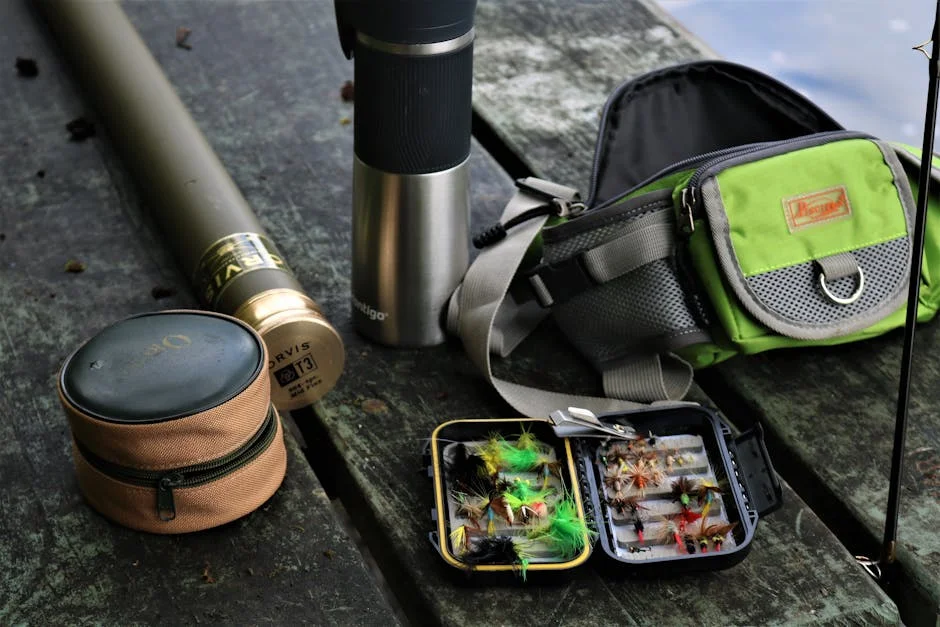
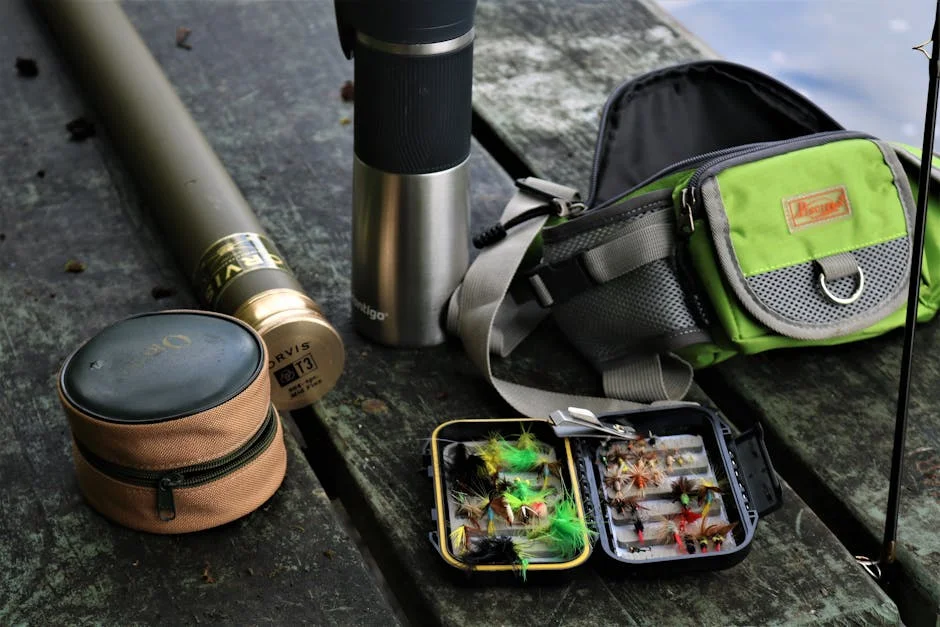
The failure mode I described earlier, a 400-pattern box that creates more confusion than confidence, is a product of poor fly box organization as much as poor fly selection. A useful dry fly box for most anglers contains three to five patterns per hatch category (mayflies, caddis, midges, terrestrials, attractors) in a range of sizes, organized so you can find what you need without digging.
Segmented foam boxes work better than wool-panel boxes for dry flies because they keep hackle fibers from compressing during transport. Keep size ranges together rather than separating by pattern name.
Accessories That Actually Matter
A good pair of polarized sunglasses is the single most undervalued accessory in dry fly fishing. Reading rises, tracking your fly in complex currents, and spotting fish before you are close enough to spook them all depend on eliminating surface glare. Costa or Smith lenses in copper or amber tint work well in Colorado’s variable light conditions.
Floatant is the other essential. Dry-Shake or a silicone paste applied before the fly hits the water, rather than after it starts to sink, keeps flies riding correctly for longer. A small amadou patch or synthetic drying patch dries and resets a waterlogged dry fly faster than blowing on it.
When to Switch Away from Dries
Knowing when dry fly fishing is not the right approach is as important as knowing how to fish dries correctly. If you are not seeing rising fish, if the hatch has not started, or if fish are clearly bulging subsurface (eating emergers just under the film rather than on top), switching to a subsurface approach is the higher-percentage choice.
A dry-dropper rig, a dry fly with a small nymph suspended 12 to 18 inches below it on tippet attached to the dry fly hook, is a useful transition setup. You get the visual take indicator of the dry fly while the nymph covers fish feeding just below the surface.
Frequently Asked Questions
What is the best dry fly for beginners?
The parachute Adams is the most broadly recommended starting point for beginners, and owner experience backs this up consistently. It imitates a wide range of mayfly species without being tied to one specific hatch, which gives it confidence-pattern utility across multiple water types. Carry it in sizes 14, 16, and 18 to cover most situations you will encounter on trout streams. For Colorado specifically, add a size 18 to 20 parachute BWO (blue-winged olive) for fall tailwater fishing.
How do I know when to fish dry flies?
The clearest signal is rising fish, trout visibly breaking the surface to take insects. Secondary signals include visible hatching activity (adults on the water or emerging from the surface film), swallows and other birds feeding low over the water, and the time of day (early morning and late evening tend to produce more surface activity). Blind-casting dries over flat water with no visible activity is possible but a lower-percentage approach compared to targeting actively rising fish.
What tippet size should I use for dry flies?
Match tippet size to fly size rather than just water conditions. A general guide: size 10 to 14 flies work on 4X tippet, size 16 to 18 flies work on 5X, size 18 to 22 on 6X, and smaller midges on 7X. On heavily pressured tailwaters, going one size finer than you think you need often produces better results. On freestone streams with faster, broken water, you can usually fish heavier tippet than tailwater conditions require.
How do I stop my dry fly from dragging?
Drag prevention starts before the fly lands. Use a reach cast to place slack between the fly line and the fly immediately at presentation. Mend aggressively as soon as you see a belly forming in the fly line, before that belly tension reaches the fly. Positioning at a 45-degree upstream angle to your target gives you better drift management than a straight-across cast.
Is a specialized rod necessary for dry fly fishing?
No. A standard 9-foot 4-weight or 5-weight medium-action rod handles the overwhelming majority of dry fly situations. Where specialization helps is on very small streams, where a shorter 7-foot-6-inch to 8-foot rod in a 2-weight or 3-weight gives you better line control in tight quarters, and on large spring creeks or flat tailwaters, where a rod with a softer tip helps deliver lightweight flies without disturbing calm water. Start with what you have and identify specific gaps through experience before investing in a specialized rod.
<script type="application/ld+json">
{
 "@context": "https://schema.org",
 "@type": "FAQPage",
 "mainEntity": [
 {
 "@type": "Question",
 "name": "What is the best dry fly for beginners?",
 "acceptedAnswer": {
 "@type": "Answer",
 "text": "The parachute Adams is the most broadly recommended starting point for beginners, and owner experience backs this up consistently. It imitates a wide range of mayfly species without being tied to one specific hatch, which gives it confidence-pattern utility across multiple water types. Carry it in sizes 14, 16, and 18 to cover most situations you will encounter on trout streams. For Colorado specifically, add a size 18 to 20 parachute BWO (blue-winged olive) for fall tailwater fishing."
 }
 },
 {
 "@type": "Question",
 "name": "How do I know when to fish dry flies?",
 "acceptedAnswer": {
 "@type": "Answer",
 "text": "The clearest signal is rising fish, trout visibly breaking the surface to take insects. Secondary signals include visible hatching activity (adults on the water or emerging from the surface film), swallows and other birds feeding low over the water, and the time of day (early morning and late evening tend to produce more surface activity). Blind-casting dries over flat water with no visible activity is possible but a lower-percentage approach compared to targeting actively rising fish."
 }
 },
 {
 "@type": "Question",
 "name": "What tippet size should I use for dry flies?",
 "acceptedAnswer": {
 "@type": "Answer",
 "text": "Match tippet size to fly size rather than just water conditions. A general guide: size 10 to 14 flies work on 4X tippet, size 16 to 18 flies work on 5X, size 18 to 22 on 6X, and smaller midges on 7X. On heavily pressured tailwaters, going one size finer than you think you need often produces better results. On freestone streams with faster, broken water, you can usually fish heavier tippet than tailwater conditions require."
 }
 },
 {
 "@type": "Question",
 "name": "How do I stop my dry fly from dragging?",
 "acceptedAnswer": {
 "@type": "Answer",
 "text": "Drag prevention starts before the fly lands. Use a reach cast to place slack between the fly line and the fly immediately at presentation. Mend aggressively as soon as you see a belly forming in the fly line, before that belly tension reaches the fly. Positioning at a 45-degree upstream angle to your target gives you better drift management than a straight-across cast. Shorter casts are also better, closer presentations give you more control over the drift than longer casts across multiple current seams."
 }
 },
 {
 "@type": "Question",
 "name": "Is a specialized rod necessary for dry fly fishing?",
 "acceptedAnswer": {
 "@type": "Answer",
 "text": "No. A standard 9-foot 4-weight or 5-weight medium-action rod handles the overwhelming majority of dry fly situations. Where specialization helps is on very small streams, where a shorter 7-foot-6-inch to 8-foot rod in a 2-weight or 3-weight gives you better line control in tight quarters, and on large spring creeks or flat tailwaters, where a rod with a softer tip helps deliver lightweight flies without disturbing calm water. Start with what you have and identify specific gaps through experience before investing in a specialized rod."
 }
 }
 ]
}
</script>Where to Buy
101 Favorite Dry Flies: History, Tying Tips, and Fishing StrategiesSee 101 Favorite Dry Flies: History, Tyin… on Amazon