How to Fit Waders: Sizing Guide to Avoid Seam Failures

Affiliate disclosure: Some links on this page are affiliate links. If you buy through them we earn a small commission at no extra cost to you. Recommendations are research-driven; we don't claim personal use of every product reviewed. Product prices and availability are accurate as of the date published and are subject to change. Always check Amazon for current pricing before purchasing. Learn more.
Quick Picks
TIDEWE Bootfoot Chest Wader, 2-Ply Nylon/PVC Waterproof Fishing Hunting Waders with Boot Hanger for Men Women Green Brown
Buy on AmazonFISHINGSIR Fishing Waders for Men, 2-Ply Nylon/PVC Waterproof Women Chest Wader with Boots, Bootfoot Hunting Waders
Buy on AmazonFROGG TOGGS Rana II Waterproof PVC Fishing Bootfoot Hip Wader for Fishing, Brown Felt, 10
Buy on Amazon| Product | Price Range | Top Strength | Key Weakness | Buy |
|---|---|---|---|---|
| TIDEWE Bootfoot Chest Wader, 2-Ply Nylon/PVC Waterproof Fishing Hunting Waders with Boot Hanger for Men Women Green Brown also consider | $$ | Buy on Amazon | ||
| FISHINGSIR Fishing Waders for Men, 2-Ply Nylon/PVC Waterproof Women Chest Wader with Boots, Bootfoot Hunting Waders also consider | $$ | Buy on Amazon | ||
| FROGG TOGGS Rana II Waterproof PVC Fishing Bootfoot Hip Wader for Fishing, Brown Felt, 10 also consider | $$ | Buy on Amazon |
Getting wader fit wrong costs you more than comfort. It costs you fishable days, failed seams, and eventually the price of a second pair. After burning through two mid-range waders that failed at the ankles and crotch before I finally sized into a proper-fitting pair of Simms, I can tell you the fit conversation is the one most buyers skip entirely.
Whether you’re picking up your first pair or replacing something that let you down, wader sizing follows a different logic than clothing. Hip room, inseam, boot sizing, and layering clearance all interact in ways that aren’t obvious until you’re standing in a river.
What Wader Fit Actually Means
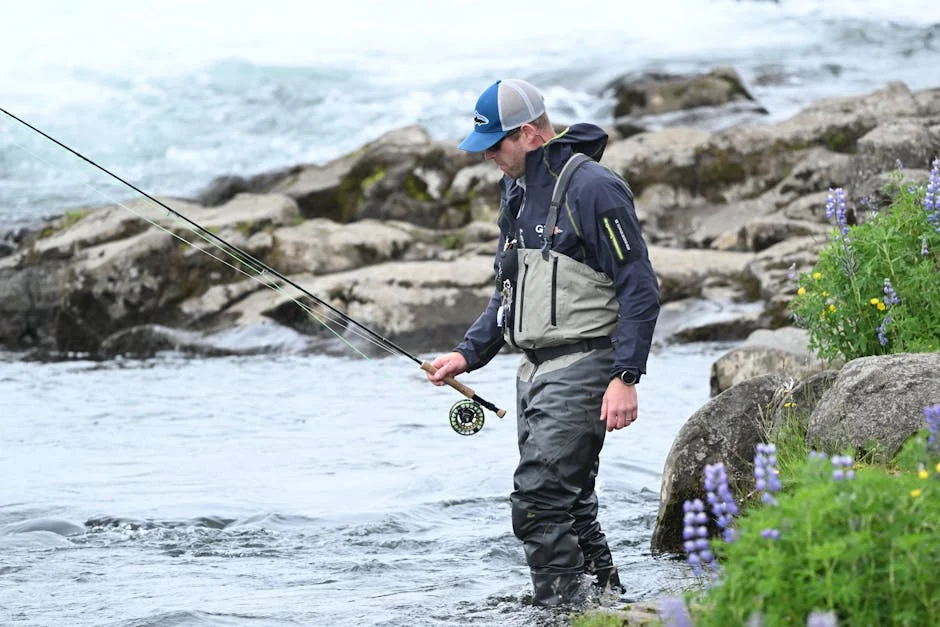
Good wader fit is not the same as good clothing fit. A wader that fits your waist perfectly in a store dressing room can still bind at the hip when you’re stepping over cobble, bunch at the crotch when you’re wading thigh-deep, or gap at the chest when you reach forward to net a fish. Waders function as a system: they need to move with your body, accommodate whatever you’re layering underneath, and stay out of the way of the current. That last point matters more than most beginners expect.
When I was fishing Cheesman Canyon in baggier waders early on, I could feel the current catching excess material in the hip panel and pulling me off balance on every cross-current step. Trim fit is not just aesthetics. On tailwater currents, a properly fitted wader reduces the surface area the water pushes against. On a big freestone day on the Arkansas, it can make the difference between a confident wade and a white-knuckle crossing.
If you want a deeper look at the broader wader category before getting into fit specifics, the Waders & Wading Boots hub covers materials, sole types, and style comparisons in more detail.
How to Measure for Waders
The Key Measurements
Manufacturers differ on which measurements they prioritize, but most sizing charts use some combination of chest, waist, hip, inseam, and boot size. Take all of them before you shop.
For chest measurement: wrap a tape around the fullest part of your chest, arms relaxed at your sides. For waist: measure at your natural waistline, not where you wear your pants. For hips: measure at the widest point, usually about seven to eight inches below your waistline. Inseam runs from the base of your crotch to the floor. Write these down and compare them to the manufacturer’s chart, not to your normal clothing sizes.
Adjusting for Layering
The single biggest sizing mistake new buyers make is fitting waders to their body alone. You will almost always fish with something underneath: a base layer, fleece pants, or in colder conditions, heavyweight wool or synthetic insulation. Those layers take up room.
A rule of thumb that has served me well: if you fish primarily in warmer conditions with a thin base layer, fit to your normal measurements. If you fish in fall or winter with heavier insulation underneath, go up one size in the chest and waist dimension while keeping the inseam and boot size accurate. Waders that are snug without layers will be genuinely uncomfortable with them, and that discomfort turns into fatigue and restricted movement on a long day.
Boot Sizing in Bootfoot Waders
Bootfoot waders attach the boot directly to the wader leg, which means boot sizing is built into the purchase. Most manufacturers size the attached boot to run slightly large. Verified buyers across multiple bootfoot wader brands consistently note that sizing down half a size from your street shoe size produces a better fit, particularly when wearing a light to medium wool sock.
If you wear a thick wool sock in cold water, stick with your true street size. What you want to avoid is a boot that has excessive volume around the heel, which causes the foot to shift on every step. That heel slip creates blisters fast, and on rocky substrate it contributes to ankle instability.
The Buying Guide: What to Know Before You Order
Bootfoot vs. Stockingfoot Fit Differences
Bootfoot and stockingfoot waders fit differently, and that distinction affects sizing strategy. Stockingfoot waders are sized purely by body measurements and require a separate wading boot, which gives you independent control over both fits. Bootfoot waders package the boot into the sizing decision, which simplifies the purchase but limits your ability to dial in each independently.
For buyers who are between sizes, stockingfoot waders are generally the more forgiving option because boot fit and wader fit can be optimized separately. Bootfoot waders tend to work best when your body measurements land clearly within a standard size range. Most issues owner reviewers report with bootfoot wader fit trace back to the boot volume rather than the wader itself.
Body Type Considerations
Standard wader sizing charts are built around average body proportions, and they don’t always account for the range of real body shapes. If you carry more volume in the hips relative to your waist, or if you have a longer torso and shorter inseam than average, you’ll often find standard sizing leaves something to be desired in one dimension.
Some manufacturers offer short, regular, and tall inseam variants. Where that option exists, use it. A wader with the right chest and hip measurement but a two-inch-too-long inseam will bunch at the crotch and restrict your stride. Some brands also offer women’s-specific cuts that address hip-to-waist ratios more accurately than unisex sizing. Check the specific brand’s chart carefully before defaulting to your clothing size.
Material and Construction Context for Fit
Material affects how a wader drapes and moves, which has real implications for fit feel. Nylon/PVC waders (the construction used in most mid-range bootfoot models) are stiffer than breathable fabrics. They don’t conform to your body the way a thin GORE-TEX or similar membrane wader will. This stiffness means fit tolerances matter more with PVC/nylon construction. A slightly oversized breathable wader will drape and move acceptably; a slightly oversized PVC wader will fold and bunch in ways that are genuinely restrictive.
For buyers looking at the broader wader and boot landscape, including sole choices and boot construction, the wading gear section is worth a look before committing to a specific setup.
Seam Location and Fit Longevity
Wader seams are the failure point. After losing two pairs to seam failures (one ankle gusset, one crotch seam), I pay attention to where seams fall relative to high-stress areas. A wader that fits correctly puts less mechanical stress on its seams. A wader that’s too small across the hips or inseam transfers that tension directly to the seam lines every time you take a big step or climb a steep bank.
When evaluating fit, pay specific attention to how the wader feels at the hip panel and crotch gusset when you take a full-stride step. If you feel resistance or tightness at those points, the wader will eventually fail there. Field reports from buyers across multiple wader brands confirm that crotch seam failures are nearly always preceded by waders that fit slightly too snug through the hip and thigh.
When to Size Up vs. Size Down
General guidance: size up when you’re between sizes on any primary measurement (chest, hip, or inseam). Size down on boot sizing in bootfoot waders. The wader body has adjustment options (suspender length, belt cinch) that can compensate for minor oversize. The boot attached to a bootfoot wader has no adjustment. Getting the boot right matters more on a bootfoot purchase than getting the wader body perfectly sized.
Top Picks
TIDEWE Bootfoot Chest Wader, 2-Ply Nylon/PVC Waterproof
The TIDEWE Bootfoot Chest Wader is a mid-range bootfoot chest wader built from 2-ply nylon/PVC construction. Spec data shows a full chest wader design with integrated boot, available in a green/brown colorway suited to both fishing and hunting use. The boot hanger detail is a practical addition for storage and drying.
Owner reviews note that sizing runs on the generous side through the chest and hip. Verified buyers consistently recommend sizing down one step from your normal clothing size for the wader body, while keeping boot size at your true street size or sizing up half if you wear thick socks. The 2-ply nylon/PVC construction is stiffer than breathable alternatives, which is expected at this price point. That stiffness means fit matters more here than with softer fabrics. Buyers who get the size right report good durability for the price band. Buyers who size too large report the excess material folds at the knee and hip during wading, which is consistent with how PVC construction behaves when there’s excess volume.
The boot construction in owner feedback trends toward adequate for calm to moderate wading conditions. Field reports indicate the felt sole option provides grip on slick rock, though local regulations around felt soles vary by watershed. Confirm your water’s rules before purchasing a felt-soled wader. The TIDEWE bootfoot is a reasonable mid-range entry point for buyers who want full chest coverage without premium pricing, provided they take the sizing chart seriously before ordering.
Check current price on Amazon.
FISHINGSIR Fishing Waders for Men, 2-Ply Nylon/PVC Waterproof Women Chest Wader with Boots
The FISHINGSIR Fishing Waders follow a similar construction approach: 2-ply nylon/PVC material in a bootfoot chest wader format, with the boots integrated. The listing covers both men’s and women’s sizing, which is worth noting. Verified buyers in the women’s sizing report that the cut addresses hip-to-waist proportions somewhat better than standard unisex sizing, though it’s not a purpose-built women’s-specific pattern.
Sizing feedback from owner reviews aligns with the TIDEWE: the wader body tends to run slightly large, and the boot tends to run slightly large as well. Multiple verified buyers recommend sizing down half a size on the boot from your street shoe. The nylon/PVC 2-ply build shares the same stiffness characteristics described above. Buyers on the taller end of the inseam spectrum note that the cut can run short, which is a real limitation for anyone above average height. If you’re 6’1” or taller, check the inseam spec carefully before ordering.
Field reports indicate the FISHINGSIR waders perform adequately for still-water and slow-current applications. Buyers using them in faster currents note the excess material in the hip and thigh (when slightly oversized) catches current noticeably, which maps to what I observed with my own early ill-fitting waders on Cheesman. The practical lesson: size this one carefully, and don’t go one size up “just in case.” Get the measurements right before ordering.
Check current price on Amazon.
FROGG TOGGS Rana II Waterproof PVC Fishing Bootfoot Hip Wader
The FROGG TOGGS Rana II is a different form factor from the two chest waders above. This is a hip wader, which changes both the fit conversation and the use case significantly. Hip waders cover from foot to hip, leaving the upper body in regular clothing. They’re appropriate for small streams, beaver ponds, or any water where you won’t be wading past thigh depth.
Frogg Toggs is an established brand in the wading category, and their sizing tends to be more consistent than some generic alternatives. The felt sole on the size 10 variant is the noted specification. Owner reviews describe the fit as true-to-size on the boot, which is a meaningful positive for a bootfoot product. The PVC construction is stiffer than breathable options, consistent with this material class. Verified buyers note that the hip wader format is noticeably more comfortable in warm conditions than chest waders, since the lower coverage reduces heat buildup.
Fit considerations for hip waders differ from chest waders. There’s no chest or waist panel to contend with. The primary fit points are boot size and the thigh strap adjustment, which secures the wader to your belt. Field reports indicate the Rana II’s thigh strap is adjustable enough to accommodate a range of hip sizes without the wader sliding down. For buyers who need coverage primarily in smaller water and want a simpler, lower-coverage option in a mid-range price band, the Rana II is a practical choice.
Check current price on Amazon.
Frequently Asked Questions
How do I know if my waders fit correctly before I get in the water?
Put the waders on with the same layers you plan to fish in, not barefoot in a store. Take a full stride, crouch down as if kneeling on a streambank, and raise both arms as if netting a fish. If you feel resistance at the crotch, hips, or shoulders during any of these movements, the fit is too snug in that area. Waders that bind during these test movements will put mechanical stress on seam lines and restrict your wading mobility.
Should I size up in waders to account for layering?
For cold-weather fishing with heavier insulation underneath, yes, sizing up one step in the chest and waist is generally the right call. For warm-season fishing with a thin base layer, fit to your body measurements rather than going up preemptively. The key is to try on (or order based on measurements) with the actual layers you plan to wear. Oversized waders that bunch in the hip and thigh catch current and create instability in moving water, so don’t size up more than the layering actually requires.
What is the difference in fit between bootfoot and stockingfoot waders?
Stockingfoot waders cover your body to the ankle, and you add a separate wading boot on top. This lets you size the wader body and the boot independently, which is a real advantage if your proportions don’t fit neatly into one size. Bootfoot waders attach the boot directly, so you’re making one sizing decision that covers both. Bootfoot waders tend to be simpler for beginners and adequate when your measurements land cleanly within a standard size.
Do waders stretch over time, and should I account for that when sizing?
Nylon/PVC waders have minimal stretch and do not break in meaningfully the way fabric clothing does. Breathable fabrics have slightly more give but are still not expected to stretch into a better fit. Do not buy waders that feel snug with the expectation that they’ll loosen up. Size for comfort now, accounting for layers.
How do I measure my inseam correctly for wader sizing?
Stand barefoot on a hard floor and have someone measure from your crotch seam (at the base of your inner thigh) to the floor. Do not use your jeans inseam as a proxy, since jeans are cut differently and sit at a different position than a wader’s crotch gusset. Compare this measurement directly to the wader manufacturer’s inseam spec for each size. A wader with a too-long inseam will bunch at the crotch and restrict your stride, while a too-short inseam puts constant tension on the crotch seam during normal wading movement.
<script type="application/ld+json">
{
 "@context": "https://schema.org",
 "@type": "FAQPage",
 "mainEntity": [
 {
 "@type": "Question",
 "name": "How do I know if my waders fit correctly before I get in the water?",
 "acceptedAnswer": {
 "@type": "Answer",
 "text": "Put the waders on with the same layers you plan to fish in, not barefoot in a store. Take a full stride, crouch down as if kneeling on a streambank, and raise both arms as if netting a fish. If you feel resistance at the crotch, hips, or shoulders during any of these movements, the fit is too snug in that area. Waders that bind during these test movements will put mechanical stress on seam lines and restrict your wading mobility. A correctly fitting wader should allow all three movements without meaningful restriction."
 }
 },
 {
 "@type": "Question",
 "name": "Should I size up in waders to account for layering?",
 "acceptedAnswer": {
 "@type": "Answer",
 "text": "For cold-weather fishing with heavier insulation underneath, yes, sizing up one step in the chest and waist is generally the right call. For warm-season fishing with a thin base layer, fit to your body measurements rather than going up preemptively. The key is to try on (or order based on measurements) with the actual layers you plan to wear. Oversized waders that bunch in the hip and thigh catch current and create instability in moving water, so don't size up more than the layering actually requires."
 }
 },
 {
 "@type": "Question",
 "name": "What is the difference in fit between bootfoot and stockingfoot waders?",
 "acceptedAnswer": {
 "@type": "Answer",
 "text": "Stockingfoot waders cover your body to the ankle, and you add a separate wading boot on top. This lets you size the wader body and the boot independently, which is a real advantage if your proportions don't fit neatly into one size. Bootfoot waders attach the boot directly, so you're making one sizing decision that covers both. Bootfoot waders tend to be simpler for beginners and adequate when your measurements land cleanly within a standard size. For anyone between sizes or with proportions that don't match standard charts, stockingfoot offers more control."
 }
 },
 {
 "@type": "Question",
 "name": "Do waders stretch over time, and should I account for that when sizing?",
 "acceptedAnswer": {
 "@type": "Answer",
 "text": "Nylon/PVC waders have minimal stretch and do not break in meaningfully the way fabric clothing does. Breathable fabrics have slightly more give but are still not expected to stretch into a better fit. Do not buy waders that feel snug with the expectation that they'll loosen up. Size for comfort now, accounting for layers. Waders that are consistently too tight through high-stress areas will fail at the seams faster, which is exactly the failure mode most common in verified buyer complaints about early seam separation."
 }
 },
 {
 "@type": "Question",
 "name": "How do I measure my inseam correctly for wader sizing?",
 "acceptedAnswer": {
 "@type": "Answer",
 "text": "Stand barefoot on a hard floor and have someone measure from your crotch seam (at the base of your inner thigh) to the floor. Do not use your jeans inseam as a proxy, since jeans are cut differently and sit at a different position than a wader's crotch gusset. Compare this measurement directly to the wader manufacturer's inseam spec for each size. A wader with a too-long inseam will bunch at the crotch and restrict your stride, while a too-short inseam puts constant tension on the crotch seam during normal wading movement."
 }
 }
 ]
}
</script>Where to Buy
TIDEWE Bootfoot Chest Wader, 2-Ply Nylon/PVC Waterproof Fishing Hunting Waders with Boot Hanger for Men Women Green BrownSee TIDEWE Bootfoot Chest Wader, 2-Ply Ny… on Amazon