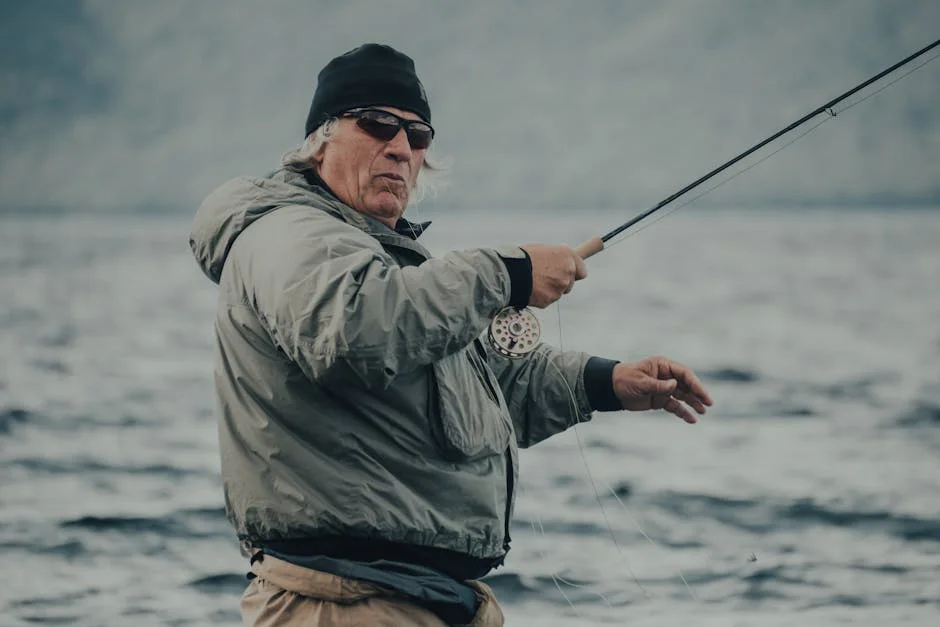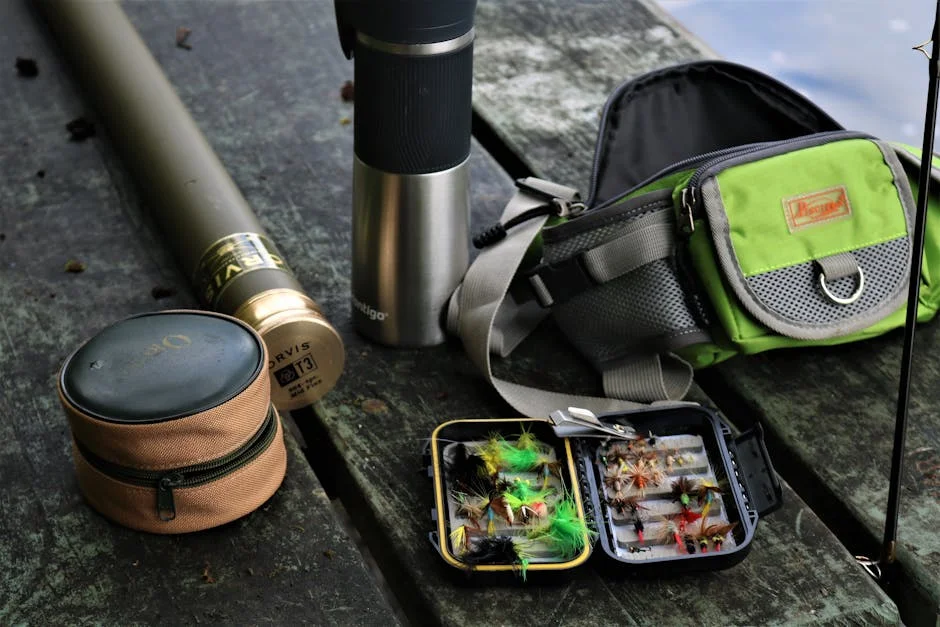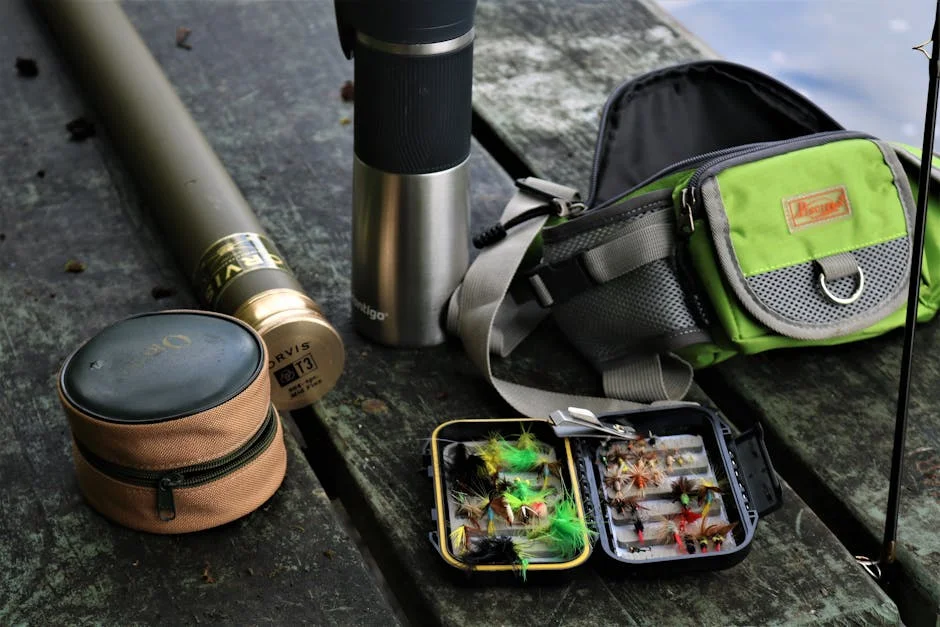
How to Fish Streamers: Techniques for Aggressive Trout Fishing

Affiliate disclosure: Some links on this page are affiliate links. If you buy through them we earn a small commission at no extra cost to you. Recommendations are research-driven; we don't claim personal use of every product reviewed. Product prices and availability are accurate as of the date published and are subject to change. Always check Amazon for current pricing before purchasing. Learn more.
Quick Picks
The Total Fishing Manual (Paperback Edition): 318 Essential Fishing Skills (Field & Stream)
Buy on AmazonThe Orvis Streamside Guide to Approach and Presentation: Riffles, Runs, Pocket Water, and Much More (Orvis Guides)
Buy on AmazonFly Fishing: A Beginner's Guide to Mastering Fly Fishing for Beginners in 1 Day or Less! (Fly Fishing - Fly Fishing for Beginners - Fishing - How to ... - Trout Fishing for Beginners - Fishing Tips)
Buy on Amazon| Product | Price Range | Top Strength | Key Weakness | Buy |
|---|---|---|---|---|
| The Total Fishing Manual (Paperback Edition): 318 Essential Fishing Skills (Field & Stream) also consider | $$ | Buy on Amazon | ||
| The Orvis Streamside Guide to Approach and Presentation: Riffles, Runs, Pocket Water, and Much More (Orvis Guides) also consider | $$ | Buy on Amazon | ||
| Fly Fishing: A Beginner's Guide to Mastering Fly Fishing for Beginners in 1 Day or Less! (Fly Fishing - Fly Fishing for Beginners - Fishing - How to ... - Trout Fishing for Beginners - Fishing Tips) also consider | $$ | Buy on Amazon |
Streamer fishing rewards anglers who commit to movement, aggression, and reading water from a predator’s perspective rather than a prey’s. It’s the technique most likely to produce the largest trout in any given water, and the least likely to produce consistent action if you’re treating it as an afterthought. Twenty years in, I still consider it the discipline I’ve practiced longest and understood least.
This is a technique that punishes passive fishing more than any other method in the trout angler’s toolkit. If you want to understand the full range of fly fishing approaches, the Techniques & Methods hub is a good place to get oriented. What follows covers the mechanics, the mindset, and the resources that can accelerate your learning curve on streamers.
What Streamers Actually Imitate
Streamers are subsurface flies tied to represent larger food items, primarily baitfish, leeches, crayfish, and large aquatic invertebrates. Most productive streamer fishing targets the opportunistic aggression of large trout rather than matching any specific hatch. A big brown trout holding behind a boulder in the lower Arkansas isn’t waiting for the evening caddis. It’s looking for a meal worth the energy expenditure.
That distinction matters because it changes everything about how you fish. You’re not trying to fool a fish into thinking your fly is exactly like what it has been eating. You’re triggering a territorial response, a predatory strike, or a reaction to sudden movement. The difference in mental framing produces very different presentations.
Reading Water for Streamer Fishing
Where Big Trout Hold
Big fish are lazy fish. They hold in positions that maximize food delivery while minimizing the energy required to stay there. On the Arkansas near Salida, that means the seam between fast and slow water just downstream of any significant structure, the inside bend where current slows but still carries food, and deep slots adjacent to shallower riffles.
Tailwaters add a layer of complexity because consistent flows mean fish patterns are more predictable but also more pressured. On Cheesman Canyon, I’ve watched large browns set up in almost the same holding lie year after year. Freestone streams are different. A runoff year that moves the streambed moves the fish. Learning to read freestone water for streamers requires resetting your mental map after every significant weather event.
Depth and the Productive Strike Zone
Most streamer strikes happen during or immediately after a change in the fly’s depth or direction. The fly dropping toward the bottom, the strip that pulls it upward, the swing that carries it across the current and then brings it broadside to a holding fish. These transition moments are when fish commit.
I spent years fishing streamers too shallow because I was focused on watching the fly rather than putting it in the right zone. A guide I fished with on the Missouri pointed this out bluntly: he said most wade fishermen are fishing streamers six inches deep in water where the fish are at three feet. Getting the fly down is not a secondary concern.
Current Speed and Streamer Movement
Current speed dictates your retrieve speed more than most instruction acknowledges. In fast water, the current itself animates a well-tied streamer, and stripping too aggressively overdrives the natural action. In slow pools, you need to generate all the movement yourself through varied strip cadences.
A short pause between strips is often the trigger. Verified buyers of quality streamer resources consistently report that learning to pause is the hardest habit to develop, because pause feels like dead time. It’s not. The pause is when the fly sinks and turns, producing exactly the vulnerable moment that a large predatory trout cannot resist.
Tackle Considerations for Streamer Fishing
Rod and Line
Streamer fishing with a 5wt works. A 6wt works better for most applications. The Scott Centric 9’ 6wt I run for bigger water and streamers on the Arkansas handles larger flies without the casting fatigue that accumulates on a full day of heavy stripping. Spec data on faster-action blanks generally shows they’re better suited to the weight-forward, sink-tip lines most streamer fishing requires.
Line choice matters significantly. A standard floating line with a long leader handles lightly weighted streamers in shallow riffles. A sink-tip line or full-sink line is necessary to reach fish in deep tailwater pools. The Scientific Anglers Amplitude Smooth I run for streamers has a more aggressive front taper than the Rio Gold, which helps turn over larger flies in wind.
Leader Setup
Streamer leaders are shorter and heavier than nymphing or dry fly leaders. A 6-7 foot, 1x to 3x leader is standard. You’re not trying to achieve the delicate presentation of a dry fly. You’re trying to turn over a weighted fly efficiently and maintain direct connection to the fly throughout the retrieve.
Long, tapered leaders designed for dry fly fishing actively work against streamer presentation. If you’re using a 12-foot tapered leader for streamers and wondering why your fly isn’t getting down, the leader is part of the problem.
Fly Selection
Keep it simpler than you think you need to. The lesson the Bighorn guide taught me about nymph selection applies to streamers just as strongly. A size 4 Woolly Bugger in black, a Sculpin pattern, a Clouser Minnow in a color appropriate to your local baitfish, and a cone-head streamer in olive or natural covers most situations.
Streamer bins at fly shops are full of patterns designed to sell, not necessarily to fish. Talk to local guides and shop staff about what’s actually moving fish in your specific water before filling a new box.
Presentation Techniques
The Classic Strip Retrieve
Cast across or slightly downstream, let the fly sink for a moment, and begin a varied strip retrieve back toward you. Mix short, quick strips with longer, slower pulls. The variation in cadence, combined with the pause, is what gives the fly an erratic, vulnerable action.
Don’t muscle through the retrieve without paying attention to what’s happening in the water. Every pool, run, and seam has a current speed that suggests an optimal retrieve pace. Develop the habit of making two or three casts to the same target with different cadences before moving on.
The Swing
The swing is the oldest and most underused technique in streamer fishing. Angle your cast downstream, mend to control the swing speed, and let the current arc the fly across the river. At the completion of the swing, let the fly hang in the current for a count of five before stripping back.
I’ve watched very competent anglers lift out of the hang-down before completing the beat. That five-second hang produces a meaningful percentage of total strikes on a swing-fished streamer. Don’t shortchange it.
Jigging and Lift-Strip in Deep Water
For deep slots and pools, a vertical or near-vertical presentation often outperforms any horizontal retrieve. Cast upstream, get the fly to the bottom as it drifts down to your position, and then strip it upward in sharp, short bursts. Let it fall back. Repeat.
This is essentially Euro nymphing logic applied to a large fly. Keep contact with the fly throughout. The strike in slow, deep water is often subtle, a slight weight or resistance rather than the violent take you get in faster current. Direct contact makes the difference between feeling that strike and missing it entirely.
Resources for Streamer Fishers
The technical literature on streamer fishing is thinner than the nymphing and dry fly libraries. These three books cover different parts of the learning spectrum and are worth adding to a fly fishing reference shelf.
The Total Fishing Manual (Paperback Edition): 318 Essential Fishing Skills (Field & Stream)
The Total Fishing Manual is an omnibus reference that covers conventional and fly fishing across freshwater and saltwater species. It’s not a streamer-specific resource, but the breadth of the coverage makes it a practical reference for anglers who want a single-volume answer to a wide range of technique questions. Spec data confirms it covers 318 individual skills with illustrated instruction.
Verified buyers note that the format, heavy on visuals and short entries, makes it accessible for quick reference rather than deep reading. It sits in the mid price band and delivers good value as a broad reference rather than a deep-dive technique manual. Field reports from angling communities suggest it’s particularly useful for newer anglers who want a single starting point.
Check current price on Amazon.
The Orvis Streamside Guide to Approach and Presentation: Riffles, Runs, Pocket Water, and Much More (Orvis Guides)
The Orvis Streamside Guide to Approach and Presentation focuses specifically on the water-reading and approach skills that underlie every fly fishing technique, including streamer fishing. Spec data shows coverage of riffles, runs, pocket water, and still water presentations, which maps well to the variety of conditions streamer fishers encounter on tailwaters and freestone streams.
Owner reviews describe the writing as practical and field-oriented rather than academic. The water-reading sections are consistently cited as the strongest material in the book. For anglers who have the casting mechanics in place and are struggling with where to fish and how to approach fish without spooking them, verified buyers report this is a particularly well-suited resource.
Check current price on Amazon.
Fly Fishing: A Beginner’s Guide to Mastering Fly Fishing for Beginners in 1 Day or Less!
Fly Fishing: A Beginner’s Guide is a compact entry-level text aimed at anglers who are still building foundational knowledge. It covers basic casting, equipment selection, and technique overview at a level appropriate for someone who hasn’t yet committed to the sport. Spec data indicates it’s formatted for quick consumption rather than reference depth.
Field reports from beginner communities suggest it works well as a low-friction starting point before progressing to more technique-specific resources. Owner reviews note that experienced anglers will find the content too basic, but as a first-exposure resource for someone who wants to understand whether fly fishing is worth pursuing further, it earns its place at the mid price band.
Check current price on Amazon.
Buying Guide: What to Consider Before Investing in Streamer Gear and Resources
Match Your Water Type First
The single most important variable in any streamer fishing decision is water type. Tailwaters and freestone rivers are different enough that gear optimized for one can actively underperform on the other. Tailwaters with consistent flows and known forage species reward specific fly selection and precise depth control. Freestone streams reward mobility and pattern variety.
Before buying a specialized sink-tip line or a box of articulated streamers, be clear about where you’re primarily fishing. A mid-weight floating line and a selection of weighted Woolly Buggers handles a lot of freestone streamer fishing. It’s more resource-efficient to start general and specialize once you know your waters.
Rods: Fast Action vs. Moderate for Streamers
Streamer fishing favors faster-action blanks for most situations. The casting stroke for heavy, wind-resistant flies requires more power application in a shorter arc, and a fast-action blank delivers that energy efficiently. Engineering data on carbon fiber rod layup generally supports faster tip recovery for moving large fly mass.
That said, moderate-action rods produce a more natural action on lighter streamers in slow water where you want the fly to breathe and pulse on a slower retrieve. Consider what percentage of your streamer fishing is in fast, heavy water versus slow pools before defaulting to the fastest blank available. Many resources covering the full range of Techniques & Methods will emphasize matching rod action to application rather than chasing maximum speed.
Reading Resources vs. On-Water Instruction
Books and online resources are excellent for building the conceptual framework around streamer fishing. They do not replace time on the water with an experienced guide or instructor. The gap between reading about the swing and executing it correctly in varying current speeds is substantial.
If you have access to guide services on your target water, one half-day streamer session with a quality guide will accelerate your development faster than several seasons of self-directed fishing. Most experienced guides, including the staff at shops like Ark Anglers, can show you in an hour what would take many trips to work out independently.
Fly Selection: Depth Before Breadth
Streamer pattern selection is an area where less is genuinely more. Confidence in a small number of proven patterns beats a large box of untested options. The same paralysis that affects nymph anglers, 400+ patterns and consistently choosing the wrong ones, applies equally to streamers.
Start with three or four patterns that are proven in your specific water. Talk to local shop staff and guides about regional preferences. Pattern knowledge at that level of specificity is not in any book. It comes from people who fish the water regularly.
Technique Resources: Building a Useful Library
The three resources reviewed above cover different parts of the skill development arc, from beginner orientation to water-reading and approach to broad technique reference. A useful fly fishing library doesn’t require depth in every category. For streamer-focused development, prioritize water-reading content over pattern encyclopedias.
The most productive thing a beginning to intermediate streamer fisher can do with reference material is focus on understanding why fish are where they are, and what triggers strikes. The pattern details and line specifications matter less than those fundamentals at every stage of development.
Frequently Asked Questions
What rod weight is best for streamer fishing?
A 6wt is the most practical general-purpose streamer rod for trout in most North American rivers. It turns over heavier flies without the fatigue that accumulates over a full day of stripping on a 5wt, and handles most sink-tip line configurations efficiently. A 5wt works for smaller flies and lighter presentations, particularly on smaller water. Fast-action blanks handle large, air-resistant flies more comfortably than moderate-action rods.
How deep should I fish streamers for trout?
Most productive streamer fishing happens within a foot or two of the bottom in the zones adjacent to holding structure. In deep pools, getting the fly to three or four feet of depth is often necessary to reach fish. In shallower runs, a lightly weighted pattern fished a foot off the bottom can be highly effective. The key variable is matching fly weight and line sink rate to current speed and pool depth in your specific water.
What time of day is best for streamer fishing?
Low light periods, early morning and late afternoon, consistently produce more streamer action than midday. Large predatory trout are more active and less wary in reduced light conditions. That said, overcast days can produce excellent streamer fishing throughout the day because cloud cover reduces the light differential. Cold water temperatures in early season also push large fish into more active feeding windows at any hour.
How fast should I strip when fishing streamers?
Strip speed should vary throughout each retrieve rather than stay constant. A mix of short, quick strips and longer, slower pulls produces a more erratic, vulnerable action than a mechanical constant cadence. The pause between strips is often the most important component. Current speed in your specific water determines the baseline, with faster currents requiring a slower retrieve because the current itself provides fly animation.
Can I fish streamers with a standard 9-foot 5wt setup?
Yes. A standard 9-foot 5wt with a weight-forward floating line handles a wide range of streamer presentations effectively, particularly for lightly weighted flies in riffles and shallow runs. The limitations appear with larger articulated flies, heavy sink-tip lines, and conditions requiring significant depth. If you’re exploring streamer fishing for the first time, starting with your existing 5wt and a selection of Woolly Buggers is a sound approach before investing in a dedicated streamer outfit.
<script type="application/ld+json">
{
 "@context": "https://schema.org",
 "@type": "FAQPage",
 "mainEntity": [
 {
 "@type": "Question",
 "name": "What rod weight is best for streamer fishing?",
 "acceptedAnswer": {
 "@type": "Answer",
 "text": "A 6wt is the most practical general-purpose streamer rod for trout in most North American rivers. It turns over heavier flies without the fatigue that accumulates over a full day of stripping on a 5wt, and handles most sink-tip line configurations efficiently. A 5wt works for smaller flies and lighter presentations, particularly on smaller water. Fast-action blanks handle large, air-resistant flies more comfortably than moderate-action rods."
 }
 },
 {
 "@type": "Question",
 "name": "How deep should I fish streamers for trout?",
 "acceptedAnswer": {
 "@type": "Answer",
 "text": "Most productive streamer fishing happens within a foot or two of the bottom in the zones adjacent to holding structure. In deep pools, getting the fly to three or four feet of depth is often necessary to reach fish. In shallower runs, a lightly weighted pattern fished a foot off the bottom can be highly effective. The key variable is matching fly weight and line sink rate to current speed and pool depth in your specific water."
 }
 },
 {
 "@type": "Question",
 "name": "What time of day is best for streamer fishing?",
 "acceptedAnswer": {
 "@type": "Answer",
 "text": "Low light periods, early morning and late afternoon, consistently produce more streamer action than midday. Large predatory trout are more active and less wary in reduced light conditions. That said, overcast days can produce excellent streamer fishing throughout the day because cloud cover reduces the light differential. Cold water temperatures in early season also push large fish into more active feeding windows at any hour."
 }
 },
 {
 "@type": "Question",
 "name": "How fast should I strip when fishing streamers?",
 "acceptedAnswer": {
 "@type": "Answer",
 "text": "Strip speed should vary throughout each retrieve rather than stay constant. A mix of short, quick strips and longer, slower pulls produces a more erratic, vulnerable action than a mechanical constant cadence. The pause between strips is often the most important component. Current speed in your specific water determines the baseline, with faster currents requiring a slower retrieve because the current itself provides fly animation."
 }
 },
 {
 "@type": "Question",
 "name": "Can I fish streamers with a standard 9-foot 5wt setup?",
 "acceptedAnswer": {
 "@type": "Answer",
 "text": "Yes. A standard 9-foot 5wt with a weight-forward floating line handles a wide range of streamer presentations effectively, particularly for lightly weighted flies in riffles and shallow runs. The limitations appear with larger articulated flies, heavy sink-tip lines, and conditions requiring significant depth. If you're exploring streamer fishing for the first time, starting with your existing 5wt and a selection of Woolly Buggers is a sound approach before investing in a dedicated streamer outfit."
 }
 }
 ]
}
</script>Where to Buy
The Total Fishing Manual (Paperback Edition): 318 Essential Fishing Skills (Field & Stream)See The Total Fishing Manual (Paperback E… on Amazon