Clouser Minnow Fly Pattern: Design and Fishing Guide

Affiliate disclosure: Some links on this page are affiliate links. If you buy through them we earn a small commission at no extra cost to you. Recommendations are research-driven; we don't claim personal use of every product reviewed. Product prices and availability are accurate as of the date published and are subject to change. Always check Amazon for current pricing before purchasing. Learn more.
Quick Picks
Clouser Minnow Fishing Flies - Chartreuse - Mustad Signature Duratin Fly Hooks - 6 Pack (Hook #6)
Buy on AmazonDr.Fish 6 Pack Clouser Minnow Fishing Flies Streamer Hand Tied Bass Fly Fishing Lure Artificial Baitfish Smallmouth Saltwater Freshwater Striper Flounder Lures
Buy on Amazon| Product | Price Range | Top Strength | Key Weakness | Buy |
|---|---|---|---|---|
| Clouser Minnow Fishing Flies - Chartreuse - Mustad Signature Duratin Fly Hooks - 6 Pack (Hook #6) also consider | $$ | Buy on Amazon | ||
| Dr.Fish 6 Pack Clouser Minnow Fishing Flies Streamer Hand Tied Bass Fly Fishing Lure Artificial Baitfish Smallmouth Saltwater Freshwater Striper Flounder Lures also consider | $$ | Buy on Amazon |
The Clouser Minnow is one of those flies that earns its reputation every season, on water types you wouldn’t expect. Originally designed by Bob Clouser for smallmouth bass on the Susquehanna River, it has crossed over into nearly every fly fishing context imaginable: trout streamers, saltwater flats, Great Lakes steelhead, striped bass, and everything in between. The dumbbell eyes, bucktail, and sparse flash construction aren’t accidental. They solve specific problems.
What makes the Clouser worth understanding, whether you’re buying them or tying them yourself, is the physics behind the pattern. That inverted hook ride and weighted head aren’t decorative choices.
What Is the Clouser Minnow
Bob Clouser developed this pattern in the late 1980s, and the design has held up without meaningful modification for nearly four decades. That kind of longevity in fly fishing isn’t common. Most patterns drift in and out of favor; the Clouser just keeps producing fish.
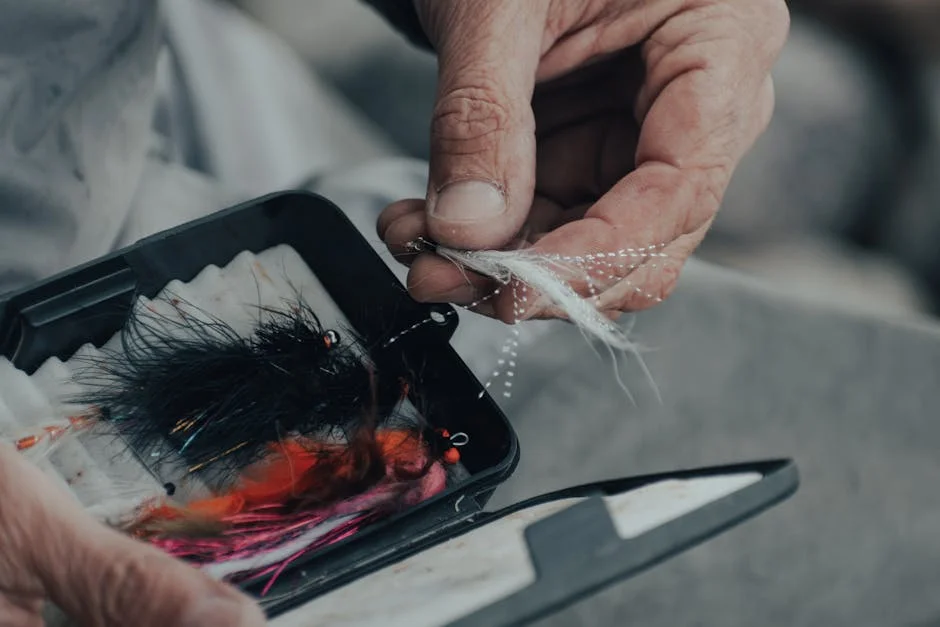
The core construction is three elements: dumbbell eyes tied on top of the hook shank (which causes the hook to ride point-up), a sparse bucktail wing below and above the shank, and a few strands of Krystal Flash or similar material between the wing layers. The hook-point-up orientation is the key functional feature. It dramatically reduces snag rate on rocky or weedy bottoms, which is exactly the kind of structure where baitfish live and predators hunt.
If you’re interested in the broader world of streamer design and understanding why certain materials and proportions matter, our Fly Tying hub covers the underlying mechanics of pattern design in much more detail.
The Mechanics That Make It Work
Weight Placement and Sink Rate
The dumbbell eyes are the defining design decision. By placing the weight at the hook eye and tying the wings to invert the hook, Clouser created a fly that jigging action comes naturally to. Strip it and pause, and the dumbbell nose dips toward the bottom while the bucktail breathes and flares upward. That movement imitates a fleeing or injured baitfish with minimal effort from the angler.
Dumbbell eye size controls sink rate and depth in the water column. Larger dumbbells get you down faster and hold depth on a tight line. Smaller dumbbells fish higher in the water column and work better in shallower water or when you need a slower drop on the pause. Most experienced Clouser fishers carry multiple sizes tied on the same hook size, specifically to adjust depth without changing fly box.
Material Choice and Proportion
Bucktail is the traditional wing material, and it remains the standard for good reason. The hollow hair structure traps air bubbles, gives the fly a breathing quality on the pause, and holds its profile without waterlogging. Other materials work, including craft fur, synthetic fibers, and EP-style brush, but bucktail remains the baseline because of how it behaves when wet.
Proportion matters more in this pattern than people give it credit for. A wing that’s too thick kills the action. A wing that’s too long creates leverage that twists the fly on the strip. The sweet spot for most sizes is a wing that extends roughly one to one-and-a-half hook shank lengths past the bend, sparse enough that you can see light through it when wet. This is one of those things you learn by tying a hundred of them, not by reading about it.
Color Selection and Water Conditions
Chartreuse-and-white is the classic combination, and there’s a reason it’s still the top seller in fly shops. In stained water, off-color conditions, or lower light, that chartreuse gives predators a target. White-and-olive fishes well in clear water conditions and matches smaller baitfish profiles. All-white is a consistent producer in saltwater. Tan-and-brown can match specific regional forage like crawfish-eating smallmouth situations.
On the Arkansas River, where I spend most of my streamer fishing time, I’ve seen chartreuse-and-white produce in the faster freestone stretches when nothing more subtle was getting interest. Water color, light angle, and local forage should drive color selection more than personal preference.
Buying Clouser Minnows vs. Tying Your Own
I’ve been tying my own flies for fifteen years on a Norvise, and the honest answer about whether to buy or tie Clousers specifically is: it depends on volume. The Clouser is one of the faster patterns to tie once you understand thread management and proper wing proportion, but there’s a learning curve.
The real value of tying your own Clousers isn’t cost. It’s the education. When you’ve tied fifty of them and started adjusting wing density and dumbbell size intentionally, you understand why a fly fishes the way it does. That knowledge changes how you fish the bought version too.
That said, I made the classic beginner mistake of buying a massive materials kit before I could lay a consistent thread wrap. If you’re new to tying flies, don’t start with a full bench of materials. Start with thread-and-hook exercises until your wraps are smooth, then add one material at a time. The Clouser requires clean thread management to tie the dumbbell eyes securely without the thread cutting through the bucktail. That’s not a beginner skill, but it’s absolutely learnable.
For anglers who want quality Clousers without the bench time, the pre-tied options covered in the next section offer good value.
Top Picks
Clouser Minnow Fishing Flies - Chartreuse - Mustad Signature Duratin Fly Hooks - 6 Pack (Hook #6)
The Clouser Minnow Fishing Flies - Chartreuse - Mustad Signature Duratin Fly Hooks - 6 Pack covers the most important variable first: the hook. Mustad Signature Duratin hooks are a consistent, widely trusted hook platform that holds up to saltwater exposure and resists corrosion. For a pattern that spends its life near structure and rocks, hook quality matters more than people expect.
The chartreuse color choice is the right starting point for most North American fishing situations. Verified buyers note that the wing proportion on these is consistent across the six-pack, which speaks to quality control in the tying process. Inconsistent wing density is the most common complaint about bulk pre-tied streamers, so consistency matters here. Owner reviews from smallmouth bass anglers on eastern rivers report good durability through multiple fish, and the Duratin hook finish specifically gets positive mentions for holding up in hard-use conditions.
At a mid-range price point for a six-pack, these sit in a reasonable value position for anglers who fish Clousers regularly and want confidence in the hook platform. A size 6 is a versatile choice that covers bass, larger trout, redfish in shallow water, and most general streamer applications. Field reports from verified buyers indicate these fish well both in freshwater and in lighter saltwater conditions like backwater redfish or juvenile stripers.
Check current price on Amazon.
Dr.Fish 6 Pack Clouser Minnow Fishing Flies Streamer Hand Tied Bass Fly Fishing Lure Artificial Baitfish Smallmouth Saltwater Freshwater Striper Flounder Lures
The Dr.Fish 6 Pack Clouser Minnow Fishing Flies positions itself explicitly for the multi-species angler, and the product name reflects that intent directly. Smallmouth, striper, and flounder in the same description is an honest summary of what the Clouser does in practice: it crosses contexts without redesign.
Owner reviews and field reports from verified buyers highlight these as a solid mid-range pick for anglers who want variety in their Clouser selection without committing to premium single-pattern boxes. The hand-tied description is notable because machine production tends to over-tie the wing (too thick, too stiff) which kills the action on a stripping retrieve. Verified buyers fishing these on smallmouth report the action behaves correctly on a strip-and-pause, which suggests reasonable wing density management in the tying process.
Spec data and buyer feedback indicate these work across both freshwater and saltwater light applications. Striper and flounder buyers specifically note positive experiences on tidal water, where the chartreuse-and-white pattern produces in low-light or stained estuary conditions. For anglers building a first Clouser selection or restocking after a productive season, this six-pack offers range at a mid-range price.
Check current price on Amazon.
Buying Guide: Choosing Clouser Minnows
Hook Size and Intended Species
Hook size is the first decision, and it should be driven by your target species and the forage you’re imitating. Size 2 and size 1/0 patterns cover larger bass, pike, and most saltwater applications. Size 4 and size 6 are the versatile middle ground for smallmouth, larger trout, and lighter saltwater work. Sizes 8 and 10 fish well for trout streamers in smaller freestone water, where a big hook looks wrong next to the actual baitfish in the stream. Match the hook size to the forage first, then adjust the wing length to fine-tune the profile.
Dumbbell Eye Weight and Water Depth
This is the most overlooked variable when buying pre-tied Clousers. Heavier dumbbells sink faster and hold depth on a tight line, which matters on deep river channels or when fishing structure at depth. Lighter or bead-chain eyes fish the upper water column and work better in shallow water under two feet, or when you want a slower drop on the pause to imitate a wounded baitfish. Most buyers default to one size, but carrying both weighted and lightly-weighted versions in the same color lets you cover significantly more water. Understanding how weight placement affects fly action is one of the core lessons covered in our Fly Tying resources.
Color Selection for Your Water
Chartreuse-and-white is the starting point for most anglers because it produces across conditions: stained water, low light, and warmwater situations where visibility is the challenge. White-and-olive covers clearer water and matches the small shad and alewife profiles common in many bass fisheries. All-white and all-chartreuse are specialty choices for specific saltwater contexts. If you’re fishing one water type regularly, research the local forage first. On tailwaters with heavy shad populations, a white-and-silver pattern often outperforms chartreuse. On warmwater rivers with perch or crawfish, brown-and-orange combinations have their advocates.
Pre-Tied Quality Indicators
When evaluating pre-tied Clousers, three things matter: hook quality, thread head security, and wing density. Hook quality is easiest to evaluate by brand reputation. Thread head security matters because the dumbbell eyes are tied against significant leverage from the bucktail, and a loose head fails early in the first fish. Wing density is the hardest to assess without fishing the fly, but a wing you can see through when held up to light is a good sign. Over-tied wings kill the action on the pause, which is the moment most strikes happen.
Freshwater vs. Saltwater Considerations
For saltwater applications, hook corrosion resistance becomes a primary factor. Look for hooks with saltwater-rated finishes, and rinse all flies thoroughly after use in salt water. The fly itself will handle the exposure well since bucktail and thread resist salt better than feather-heavy patterns. For freshwater use, standard bronze or black nickel hooks are fine and often sharper out of the box than saltwater-specific hooks. The pattern itself doesn’t change between applications; the hook platform and maintenance protocol do.
Frequently Asked Questions
What size Clouser Minnow is most versatile for a beginner?
Size 6 covers the most situations for anglers who haven’t specialized yet. It fishes well for smallmouth bass, larger trout, and lighter inshore saltwater species. The wing profile at this size matches a wide range of common baitfish forage. Most experienced Clouser anglers recommend building a selection around a size 6 chartreuse-and-white first, then expanding from there based on the specific species and water you fish most.
Can I fish a Clouser Minnow on a 5-weight trout rod?
Yes, a 5-weight handles lighter Clousers reasonably well, especially sizes 6 and smaller with lighter bead-chain eyes. Heavier dumbbell eyes create enough wind resistance that a 6-weight or 7-weight is more comfortable and delivers the fly more accurately. The Scott Centric 6-weight I use for bigger Arkansas River water handles weighted streamers far better than my 5-weight does. For dedicated Clouser fishing on larger water or saltwater flats, an 8-weight is the standard platform.
How do I fish a Clouser Minnow correctly?
The standard retrieve is a strip-and-pause with enough pause to let the dumbbell nose dip toward the bottom. That dipping action on the pause triggers more strikes than the strip itself in most situations. Strip length and pause duration vary by species: aggressive bass often respond to fast, short strips, while trout and permit frequently respond better to slower strips with longer pauses. Let the fly settle after the cast before beginning the retrieve.
Are pre-tied Clousers worth buying, or should I tie my own?
Both approaches have merit depending on your situation. Pre-tied flies make sense for anglers who fish occasionally or who are still building tying skills. Tying your own becomes valuable once you fish enough volume to justify the bench time and once you want to adjust proportions intentionally. The real advantage of tying your own isn’t cost savings; it’s the understanding of why the fly works.
What’s the difference between a Clouser and a standard streamer?
The defining difference is the inverted hook ride created by the dumbbell eyes tied on top of the hook shank. Standard streamers ride hook-point-down and snag structure frequently. The Clouser’s hook-point-up orientation lets it work through rocky and weedy structure that would destroy other patterns. The jig-style action it produces is also distinct: that nose-down dip on the pause doesn’t happen in conventional straight-shank streamers without additional weight modification.
<script type="application/ld+json">
{
 "@context": "https://schema.org",
 "@type": "FAQPage",
 "mainEntity": [
 {
 "@type": "Question",
 "name": "What size Clouser Minnow is most versatile for a beginner?",
 "acceptedAnswer": {
 "@type": "Answer",
 "text": "Size 6 covers the most situations for anglers who haven't specialized yet. It fishes well for smallmouth bass, larger trout, and lighter inshore saltwater species. The wing profile at this size matches a wide range of common baitfish forage. Most experienced Clouser anglers recommend building a selection around a size 6 chartreuse-and-white first, then expanding from there based on the specific species and water you fish most."
 }
 },
 {
 "@type": "Question",
 "name": "Can I fish a Clouser Minnow on a 5-weight trout rod?",
 "acceptedAnswer": {
 "@type": "Answer",
 "text": "Yes, a 5-weight handles lighter Clousers reasonably well, especially sizes 6 and smaller with lighter bead-chain eyes. Heavier dumbbell eyes create enough wind resistance that a 6-weight or 7-weight is more comfortable and delivers the fly more accurately. For dedicated Clouser fishing on larger water or saltwater flats, an 8-weight is the standard platform."
 }
 },
 {
 "@type": "Question",
 "name": "How do I fish a Clouser Minnow correctly?",
 "acceptedAnswer": {
 "@type": "Answer",
 "text": "The standard retrieve is a strip-and-pause with enough pause to let the dumbbell nose dip toward the bottom. That dipping action on the pause triggers more strikes than the strip itself in most situations. Strip length and pause duration vary by species: aggressive bass often respond to fast, short strips, while trout and permit frequently respond better to slower strips with longer pauses. Let the fly settle after the cast before beginning the retrieve."
 }
 },
 {
 "@type": "Question",
 "name": "Are pre-tied Clousers worth buying, or should I tie my own?",
 "acceptedAnswer": {
 "@type": "Answer",
 "text": "Both approaches have merit depending on your situation. Pre-tied flies make sense for anglers who fish occasionally or who are still building tying skills. Tying your own becomes valuable once you fish enough volume to justify the bench time and once you want to adjust proportions intentionally. The real advantage of tying your own isn't cost savings; it's the understanding of why the fly works."
 }
 },
 {
 "@type": "Question",
 "name": "What's the difference between a Clouser and a standard streamer?",
 "acceptedAnswer": {
 "@type": "Answer",
 "text": "The defining difference is the inverted hook ride created by the dumbbell eyes tied on top of the hook shank. Standard streamers ride hook-point-down and snag structure frequently. The Clouser's hook-point-up orientation lets it work through rocky and weedy structure that would destroy other patterns. The jig-style action it produces is also distinct: that nose-down dip on the pause doesn't happen in conventional straight-shank streamers without additional weight modification."
 }
 }
 ]
}
</script>Where to Buy
Clouser Minnow Fishing Flies - Chartreuse - Mustad Signature Duratin Fly Hooks - 6 Pack (Hook #6)See Clouser Minnow Fishing Flies - Chartr… on Amazon