Trout Fly Fishing: Reading Water, Insects, and Technique

Affiliate disclosure: Some links on this page are affiliate links. If you buy through them we earn a small commission at no extra cost to you. Recommendations are research-driven; we don't claim personal use of every product reviewed. Product prices and availability are accurate as of the date published and are subject to change. Always check Amazon for current pricing before purchasing. Learn more.
Trout fly fishing sits at a particular intersection of reading water, understanding insects, and presenting a fly with enough precision that a fish holding in moving current chooses to eat it. That combination is what pulled me in during the summer of 2004 at Cheesman Canyon, and twenty years later it still has my full attention. The learning curve is real, and there’s no shortcut past it.
This is a species-level overview, not a product review. If you’re looking for gear-specific breakdowns by species and water type, the Species Guides hub is a good place to start. What follows is a practical look at how trout fly fishing actually works: where fish live, how to approach them, and what you need to know before you waste a trip.
Understanding Trout and Their Environment
Trout are cold-water fish, and that fact drives nearly every decision you’ll make on the water. In Colorado, that means the South Platte tailwaters below Cheesman Canyon hold consistent populations year-round because reservoir releases keep temperatures in range even in August. Freestone rivers like the Arkansas are a different story. Temperatures fluctuate with weather, snowmelt, and elevation, which means trout behavior shifts seasonally in ways that tailwater fish don’t fully replicate.
Understanding where trout hold requires understanding what they’re doing at any given moment. They’re balancing energy expenditure against food intake. A trout sitting in a feeding lie is positioned where current delivers food without requiring the fish to fight heavy water. Classic examples: the seam between fast and slow current, the cushion of water directly upstream of a boulder, the tail-out of a pool where water shallows and concentrates insects. These are not random positions. They’re calculated placements, and once you start seeing the logic, reading water becomes much less mysterious.
Water Temperature and Activity
Trout feed most aggressively when water temperatures sit between roughly 50 and 65 degrees Fahrenheit. Below that range, metabolisms slow and fish become lethargic. Above it (especially above 68 degrees), fish become stressed and catch-and-release ethics matter more, not less. I carry a thermometer. It’s not optional gear on summer freestone rivers.
On the Arkansas in July, I’ve walked off the water at noon and come back at 5pm. That’s not stubbornness, it’s arithmetic. Stressed fish in warm water plus a long fight equals a bad outcome. Water temperature is the first variable that shapes every tactical decision downstream from it.
Reading Current Structure
The ability to identify productive holding water is probably the most underrated skill in trout fly fishing. Most beginners cast to the middle of the pool because that’s where the water looks “fishy.” Experienced anglers are casting to the edges, the seams, the banks, and the soft pockets behind structure. In Cheesman Canyon, the most productive water is often the thin stuff along the banks where size 24 midge clusters collect.
Current speed determines both where fish hold and how quickly your fly must be presented before drag corrupts the drift. On technical tailwaters, drag-free drift is non-negotiable. A fly moving at a different speed than the surrounding current looks wrong to a trout that sees thousands of natural insects per day. Getting a clean drift in multiple current lanes simultaneously is what makes technical water hard.
Seasonal Patterns and Hatches
Trout are opportunists, but they’re also creatures of pattern. Understanding hatch cycles dramatically improves your results. On Colorado waters, you’re looking at midges through winter, Blue-Winged Olives (BWOs) in spring and fall, caddis from late spring through summer, and Pale Morning Duns in summer on many tailwaters. The Eleven Mile Canyon stretch of the South Platte sees good PMD activity in July that rewards attention to detail on pattern and size.
Learning to match the hatch is not about owning every fly ever tied. It’s about observation first. What size are the naturals? What color? Are they emerging, diving, or spent? Veteran guide Frank Smethurst, who works out of Ark Anglers in Salida, has told me many times that the angler who watches the water for ten minutes before making a cast catches more fish than the one who starts throwing immediately. After twenty years, I believe that completely.
The Core Techniques
Trout fly fishing breaks down into a handful of core presentations, and each fits certain water and certain conditions. None of them is universally superior. The angler who can only nymph is going to leave fish on the table during a hatch. The dry fly purist is going to struggle on most winter days. Versatility is what the fish reward.
Dry Fly Fishing
Dry fly fishing is what most people picture when they think of trout fly fishing: a floating fly, a visible take, and a tight line. The appeal is obvious. The execution is harder than it looks. Presentation angle, line management, fly selection, and leader length all interact in ways that either produce a drag-free drift or don’t.
On freestone rivers with broken surface, you can get away with more. A size 14 elk hair caddis on riffled water in June is forgiving. Technical tailwaters are less charitable. I’ve spent entire mornings on Cheesman Canyon throwing size 22 BWO emergers into precise seams with only modest success because the fish were keyed on a slightly different stage of the hatch than I was matching.
Leader design matters a lot in dry fly fishing. Long, fine leaders (12 to 15 feet with a 5x or 6x tippet on technical water) are the norm on flat, slow pools. Shorter, stouter setups work on broken water where a long leader becomes impossible to control.
Nymph Fishing
Roughly 80 percent of a trout’s diet is consumed below the surface, which makes nymphing the highest-percentage technique in most conditions. The challenge is detection. You’re trying to feel or see a take that happens in moving water, often on a tiny fly, in a fraction of a second.
I’ve been fishing Euro nymph methods since 2018, and the technique changed how I think about subsurface fishing. Traditional indicator nymphing uses a strike indicator (essentially a bobber) to suspend flies at depth and signal strikes. Euro nymphing (Czech, Polish, French, and tight-line methods are related variations) relies on direct line contact between the angler and the flies, removing the indicator entirely and using a highly sensitive leader system to detect takes by feel and line movement. On the competitive scene and on technical water, it’s become the dominant approach for good reason.
On the Arkansas, Euro nymphing through pocket water with heavier flies (size 12 to 14 Pat’s Rubber Legs, tungsten beadhead Hare’s Ears) consistently outperforms indicator rigs in my experience. On slower, flatter tailwater, indicator nymphing often has the edge because it allows flies to suspend at precise depth without the angler needing to hold the rod high over complex current.
Streamer Fishing
Streamers imitate baitfish, crayfish, leeches, and large aquatic creatures rather than insects. The presentations and retrieves are active rather than drift-based, which makes streamer fishing feel more like conventional fishing to many beginners. The tradeoff is that the fish it targets tend to be aggressive, larger trout rather than the typical feeding fish you’d work with a dry or nymph.
On bigger Colorado water (think the lower Arkansas or larger Wyoming rivers), streamer fishing with a sink-tip line and a weighted fly produces the kind of takes that recalibrate your expectations about how hard a brown trout can hit. I fish a 6wt on streamers for that reason. The extra line weight turns over larger flies and handles heavier sinking lines without the casting strain a 5wt would generate.
Tackle Overview for Trout Fly Fishing
You don’t need a massive arsenal to fish trout effectively, but your gear should match the water you’re fishing. This section covers the key categories and what actually matters when making choices.
Rods: Matching Action to Application
The standard trout fly rod is a 9-foot 5-weight, and that reputation is earned. It handles a broad range of fly sizes, casts comfortably in most conditions, and manages fish from creek-sized rainbows to heavier river browns without being outgunned or over-gunned. If you’re fishing one rod on one river, this is almost certainly the right choice.
Shorter, lighter rods (8 to 8.5 feet, 3 to 4 weight) are better tools for small, brushy streams where casting distance is short and delicacy matters more than power. Heavier rods (6 to 7 weight) earn their place on big water, throwing streamers, or fishing in wind.
Rod action (how the blank flexes and recovers) matters more than most beginners expect. A fast-action rod loads at the tip and delivers tight loops with authority. Medium-fast and moderate actions flex deeper into the blank, which slows casting tempo and improves feedback for newer casters. After twenty years, I’ve stopped buying fast-action rods for delicate small-stream work. On Cheesman Creek or similar tight technical water, a slower rod is simply more pleasant to fish.
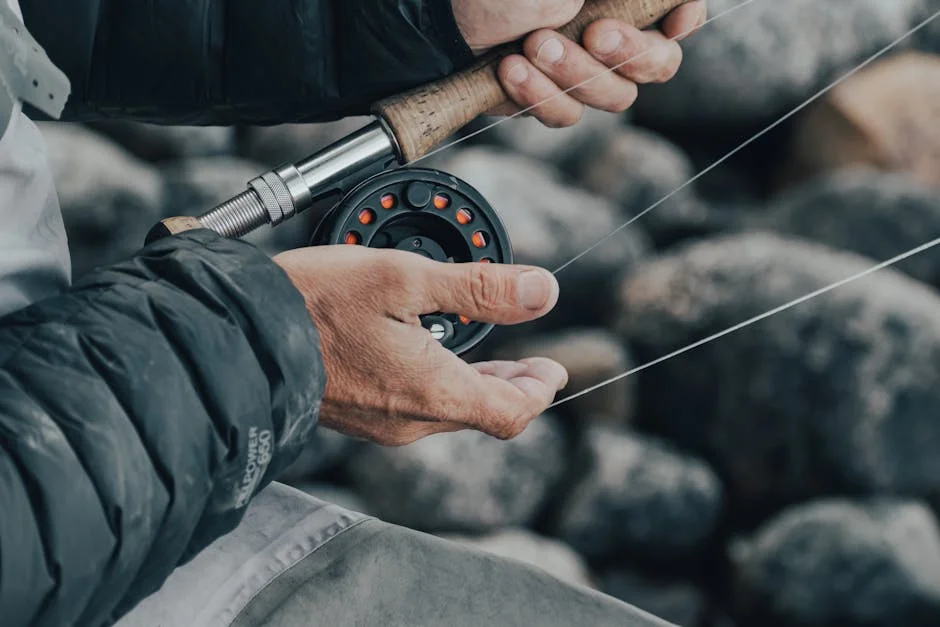
Reels and Drag Systems
For most trout fishing, the reel serves primarily as line storage and a counterweight to the rod. The drag system matters, but trout (with exceptions for large fish in fast water) don’t require the kind of drag performance that saltwater species demand. I learned this comparison the hard way on my 2014 Belize bonefish trip, where my trout-tuned setup and expectations were completely inadequate for the fish’s speed. Trout fishing and saltwater fishing are different disciplines, full stop.
For trout, a smooth, consistent drag that you can set lightly is what you want. Cork drag and carbon fiber stack systems are both common, and both work. The difference becomes noticeable with very large fish making long runs. For typical trout scenarios, a mid-range reel with a reliable drag is entirely sufficient.
Lines and Leaders
Fly line choice matters more than most beginners realize because the line is what carries the fly. A weight-forward floating line in an appropriate weight for your rod is the starting point for most trout applications. From there, the specifics of the taper profile affect casting behavior and presentation.
For Euro nymphing, you’re not casting conventional fly line at all. The setup uses a long, specialized leader (often 25 to 30 feet total) built from monofilament and fluorocarbon, with a colored sighter section for strike detection. The flies provide essentially all the weight. The entire system is lighter and more sensitive than a conventional indicator rig, which is exactly the point.
Leaders and tippet are the final connection to the fly. Fluorocarbon tippet is less visible underwater and sinks, making it a better choice for nymphing. Monofilament floats more readily and is preferred by some anglers for dry fly fishing. Tippet diameter (measured in the X system, where larger numbers mean finer diameter) must match fly size. Using too-heavy tippet on small flies produces drag and kills the presentation.
Buying Guide: What to Look for in Trout Fly Fishing Gear
Choosing gear for trout fly fishing doesn’t require the biggest budget. It requires matching tools to specific water types and techniques. The species-specific guides at /species/ can help narrow your choices further by species and region.
Prioritize Rod Action Over Brand Name
The rod blank is the single most important piece of gear in your kit, and action should drive the decision more than brand loyalty. Fast-action rods suit anglers who have developed efficient casting mechanics and fish large, open water where distance and wind penetration matter. Moderate and medium-fast actions are more forgiving at short distances and suit beginners or small-stream applications better.
Material matters too. Higher-modulus carbon fiber blanks are stiffer and lighter, which improves sensitivity but can feel harsh on smaller fish. Lower-modulus materials are heavier but produce a more progressive feel. Most current premium rods use high-modulus carbon in specific percentages, blending characteristics deliberately.
Match Your Reel to Your Technique
Trout reels are simpler than their saltwater counterparts, but size and weight still matter. A reel that’s too heavy throws off rod balance and fatigues your arm over a long day. A reel that’s too light may be undersized for the amount of backing you’d want on larger rivers where fish run.
Large arbor reels retrieve line faster per revolution than narrow arbor designs, which matters when a fish runs toward you and you need to take up slack quickly. For standard trout applications, any large arbor reel with a smooth, adjustable drag performs adequately. Spending premium money on reel drag for small-stream fishing is a misallocation.
Line Weight and Taper Selection
Floating weight-forward lines are the default for trout fly fishing, and for good reason. They handle dry flies, nymph rigs, and light streamers without requiring a rod change. The taper profile within the weight-forward design determines how the line handles. Shorter, aggressive tapers turn over heavy flies easily but can feel loud on delicate presentations. Longer, softer tapers are the opposite.
For technical tailwater fishing, a textured line designed for low-stretch and improved mending capability is worth the premium. The ability to mend (reposition) line on the water without moving the fly is a fundamental skill in trout fishing, and a line that holds its shape on the surface makes mending more efficient.
Waders and Boots: Fit Before Features
Waders are your comfort system for hours of cold-water fishing. Breathable, stockingfoot waders are the current standard for most trout fishing applications. Neoprene still has a place in very cold conditions, but breathable materials handle a wider range of conditions without overheating.
Boot fit matters more than any single feature on the boot itself. A boot that fits poorly causes blisters and fatigue and becomes a safety issue on slick riverbeds. Felt soles are banned in some states due to invasive species concerns; Vibram rubber with carbide studs is the legal and often equally effective alternative for most freestone fishing. Studs on rubber are a meaningful safety upgrade on slick, algae-covered rocks typical of many tailwaters.
Terminal Tackle: Flies and Tippet
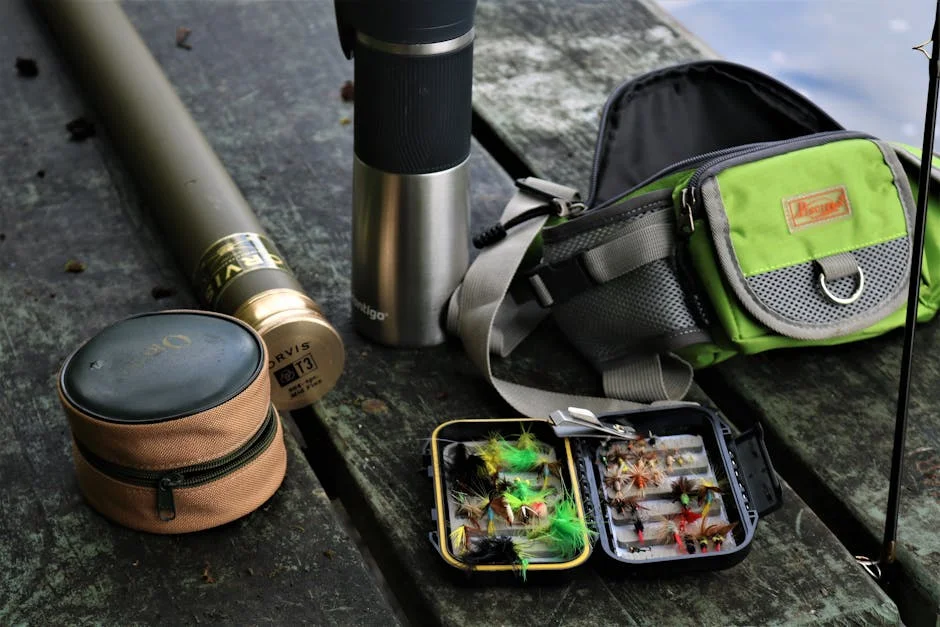
You can fish trout with a simple set of proven patterns without owning every fly in the catalog. A well-chosen selection covering basic hatch stages (emerger, dry, nymph, soft hackle) in the right sizes for your local water is more useful than hundreds of patterns you’ll never tie on. Tying your own flies eventually changes the economics and the connection to the process, but that’s a separate conversation.
Tippet selection is a practical decision. Match tippet diameter to fly size (a size 22 midge on 4x tippet is the wrong answer), and choose fluorocarbon or monofilament based on whether the fly needs to sink or float. Keeping a range of tippet spools from 3x through 6x covers most trout scenarios across water types.
Frequently Asked Questions
What fly rod weight is best for trout fly fishing?
A 9-foot 5-weight is the standard starting point for trout fly fishing, and it earns that reputation by handling most conditions competently. If your primary fishing is small, brushy streams with short casts, a 3 or 4 weight in 7.5 to 8.5 feet suits the water better. If you’re throwing streamers or fishing big, wind-exposed rivers, a 6 weight gives you more authority. Most experienced trout anglers eventually own more than one rod because no single weight covers every scenario perfectly.
What is the difference between dry fly fishing and nymphing?
Dry fly fishing presents a floating fly on the surface, targeting fish that are actively rising or that can be induced to look up. Nymphing presents subsurface flies (imitating aquatic insect larvae and pupae) through the water column where trout feed most of the time. Dry fly fishing produces the most visually exciting strikes, but nymphing is higher-percentage in most conditions because the majority of a trout’s diet is consumed underwater. Skilled trout anglers use both techniques based on what the fish are doing.
How do I know what flies to use for trout?
Start with local knowledge, which means talking to whoever runs the nearest fly shop. Hatch charts exist for most productive trout fisheries and give you a starting framework by month and water type. On the water, observe what’s hatching before you start casting. Look at the surface for rising fish, check the rocks for shucks, and watch the air for adult insects.
Do I need a fishing license for trout fly fishing?
Yes. Every state requires a valid fishing license for trout fishing, and many states add a separate trout stamp or habitat stamp on top of the base license. Regulations vary significantly by water: some stretches are catch-and-release only, some have slot limits on size, and some restrict tackle type. Before fishing any new water, read the current regulations for that specific stretch.
Is Euro nymphing significantly harder to learn than indicator nymphing?
Euro nymphing has a real learning curve, particularly around leader construction and strike detection by feel rather than by watching an indicator. Most anglers with existing fly casting experience find they can produce functional Euro nymph drifts within a day or two, but fishing the method well takes considerably longer. Indicator nymphing is arguably more accessible for beginners because the visual component of watching a strike indicator is intuitive. Starting with indicator methods and adding Euro techniques later is a reasonable progression for most trout anglers.