How to Tie a Wooly Bugger: Master the Fundamentals

Affiliate disclosure: Some links on this page are affiliate links. If you buy through them we earn a small commission at no extra cost to you. Recommendations are research-driven; we don't claim personal use of every product reviewed. Product prices and availability are accurate as of the date published and are subject to change. Always check Amazon for current pricing before purchasing. Learn more.
Quick Picks
BBTO 12 Pieces Fly Tying Chenille Fly Tying Materials 65.64 Yards Chenille DIY Fly Tying Thread Craft Fly Tying Tinsel for Streamers Wooly Buggers Nymph Flex Hackle
Buy on AmazonChenille Fly Tying Materials 16-Color Kit Fly Tying Supplies for Crappie Jigs, Wooly Buggers, Streamers
Buy on Amazon| Product | Price Range | Top Strength | Key Weakness | Buy |
|---|---|---|---|---|
| BBTO 12 Pieces Fly Tying Chenille Fly Tying Materials 65.64 Yards Chenille DIY Fly Tying Thread Craft Fly Tying Tinsel for Streamers Wooly Buggers Nymph Flex Hackle also consider | $$ | Buy on Amazon | ||
| Chenille Fly Tying Materials 16-Color Kit Fly Tying Supplies for Crappie Jigs, Wooly Buggers, Streamers also consider | $$ | Buy on Amazon | ||
| Bugger Pack by Whiting also consider | $$ | Buy on Amazon |
The Wooly Bugger is one of those flies that earns its reputation every single season. It catches trout, bass, panfish, and pike. It works dead-drifted, stripped, or swung on a downstream loop. On the Arkansas here in Salida and down in Cheesman Canyon, it pulls fish when nothing else will.
Learning wooly bugger tying connects you to the underlying logic of how streamer flies work. After fifteen years on the Norvise, I’ve watched dozens of beginning tyers try to shortcut the fundamentals, and the Bugger always reveals the gaps. Get comfortable with the basic Fly Tying process first, then the Wooly Bugger will teach you the rest.
What the Wooly Bugger Actually Is
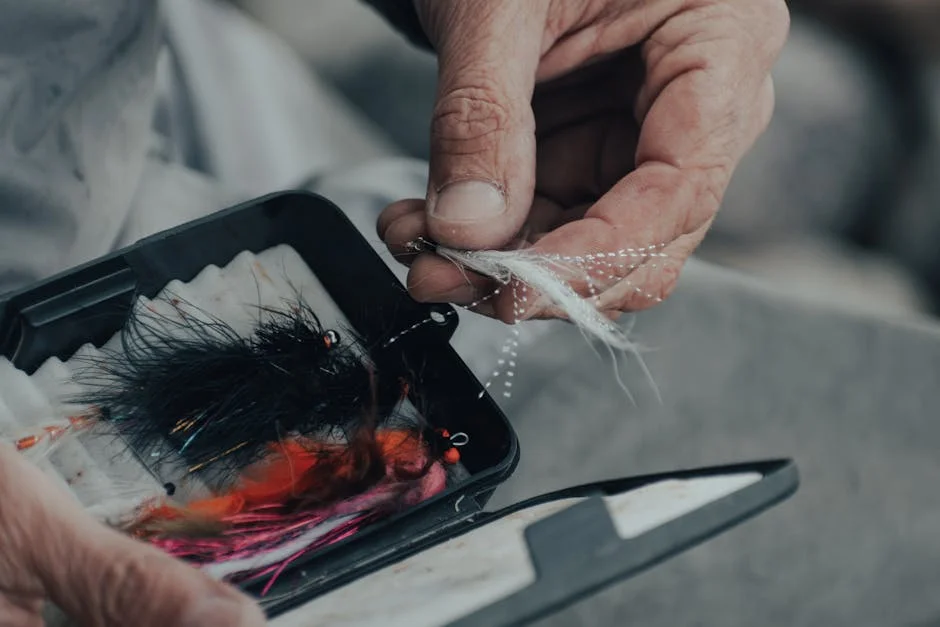
The Wooly Bugger is a streamer pattern developed from the Wooly Worm, credited to Pennsylvania tier Russell Blessing in the 1960s. At its core, it’s three main components: a marabou tail, a chenille body, and a palmered hackle wrapped forward over that body. That simplicity is deceptive. Each component has real structural purpose, and the proportions between them determine whether the fly pulses naturally in the water or lies stiff and lifeless in your box.
The marabou tail is the heartbeat of the fly. Wet marabou fibers breathe and move with the slightest current or strip, imitating the undulation of a baitfish, leech, or large nymph. Too short and you lose that movement. Too long and the tail wraps around the hook bend on the cast, which produces a “short-striking” problem that frustrates anglers who don’t realize the fly is fouled. A tail length equal to the hook shank is a reasonable starting point, though many tyers run it slightly longer.
The chenille body adds bulk and color, and creates the segmented look that suggests a living invertebrate or small baitfish. The palmered hackle (typically a soft, webby saddle or hen hackle) creates lateral movement and catches water pressure so the fly pulses during a strip. Hackle fiber length matters here. Too long and the fly looks bushy and doesn’t push water efficiently. Too short and you lose the breathing action that makes the fly effective.
Tying the Wooly Bugger: Step-by-Step
Hook and Thread Setup
Hook selection is foundational. Most standard Wooly Bugger recipes call for a 3XL or 4XL streamer hook in sizes 2 through 10. The longer shank gives the body sufficient real estate to palmer the hackle in an even, open spiral. A size 6 or 8 is a good starting point for most trout water.
Start your thread behind the hook eye, lay down a smooth thread base back to the bend, and stop where the tail will tie in. Thread tension consistency matters here. I spent too many early sessions fighting thread pile-up because I hadn’t built a level underbody first. Before you ever tie in a marabou feather, your thread wraps should be flat, even, and tight.
Tail: Marabou Selection and Tie-In
Select a marabou feather with good fiber density. Strip away the lower fluffy fibers until you have a section where the fibers are full and even. Pinch the tail between your thumb and finger at the correct length, transfer it to the hook bend, and use a pinch wrap to secure it without rolling the material around the shank.
One of the most common beginner errors is tying in marabou without checking for fouling. After tying in, give the tail a quick bend around the hook point. If it wraps and stays there, trim it shorter. This small check before you advance to the body saves frustration on the water.
Body: Chenille Tie-In and Wrap
Tie in your chenille at the rear of the shank before advancing your thread to a point a few eye-widths behind the hook eye. Leave room for the hackle wrap-down and head. Strip the first quarter-inch of chenille fuzz from the core thread so you’re tying in a clean thread anchor, not a fuzzy bump that builds unwanted head bulk.
Wrap the chenille forward in touching, even turns. On the Norvise, the rotary feature genuinely speeds this step. You turn the vise head and the fly rotates under tension, which is a real improvement over wrapping around a fixed hook. Tie off the chenille with several tight thread wraps and clip the excess.
Hackle: Palmering Technique
Select a soft, webby hackle feather. Whiting Bugger Pack feathers are a common choice for this step because the fiber length is consistent across the stem, which produces an even palmer spiral. Strip the base fibers, tie in the hackle by its tip (or base, depending on your preferred method), and palmer it forward in an open spiral over the chenille body.
Each wrap of hackle should be spaced far enough apart that the fibers can splay outward without overlapping. Too tight and the hackle mats down. Hold the hackle at tension as you rotate it forward, and when you reach the eye end, tie it down firmly with several wraps and clip the excess. Build a clean thread head, whip finish, and apply cement or UV resin.
Variations Worth Knowing
The basic olive, black, and brown Wooly Buggers cover most trout situations. But the pattern has hundreds of documented variations: bead-head versions add weight and a focal point, which is useful on deeper tailwater runs like the South Platte through Cheesman Canyon where you need the fly down fast. Crystal or flash chenille bodies change the light-catching profile. Rubber legs add lateral movement for bass or warmwater species. The core palmered structure stays the same across all of these, which is why learning the base pattern first is worth the investment.
Buying Guide: Wooly Bugger Tying Materials
Chenille: What to Look For
Chenille quality varies more than most beginners expect. The core twist tension affects how the fuzz wraps over the underbody. Loosely twisted chenille sheds fibers under the hackle palmer and creates an uneven body profile. The fiber length of the chenille pile also matters. Medium-pile chenille works for most trout-sized Buggers in sizes 6 through 10. Larger sizes (2 through 4) benefit from large-pile or Estaz-style chenille that fills the shank without excessive wraps.
Color range is a practical concern. Most tyers use black, olive, brown, and rust most frequently on trout water, but if you’re tying for warmwater species or matching regional forage, broader palettes matter. Kits covering 12 to 16 colors give you enough range to experiment without forcing you to buy individual spools before you know what you actually use.
Hackle: The Component That Makes or Breaks the Fly
Hackle quality is arguably the most important variable in Wooly Bugger tying. The hackle has to be soft enough to move in the water but stiff enough to retain its shape during the forward palmer wrap. Overly soft hen neck hackle mats too easily. Overly stiff dry-fly hackle produces a wiry, mechanical look that doesn’t breathe. Saddle hackle from a reputable supplier, sized to produce fiber length roughly equal to the hook gap, is the standard recommendation.
Whiting Farms is the name that comes up consistently in experienced tying circles for feather quality, and their Bugger Pack is specifically designed for this application. Pre-packaged saddle hackle packs remove some of the guesswork around fiber length and density for newer tyers.
Thread and Underbody Considerations
The fly tying thread you choose affects head profile and durability. UTC 140 or Danville 6/0 are common Wooly Bugger thread choices. Heavier thread fills the underbody faster but requires more control to keep wraps flat. A weighted underbody (lead-free wire or bead chain) is common on sinking Buggers fished in tailwater channels where depth matters.
One thing I tell beginning tyers: build your thread base before you tie in a single material. A poorly laid thread foundation causes every material to roll, bunch, or separate later in the fly. Twenty sessions of thread practice sounds tedious, but it compresses years of troubleshooting.
Material Kits vs. Single Components
Multi-material kits appeal to new tyers because of convenience and lower initial cost. The tradeoff is that kit quality is uneven. Typically the chenille in a beginner kit is serviceable, but the hackle is where quality tends to drop. Verified buyers of several bundled kits note that feather consistency is the weak point.
For someone tying Wooly Buggers exclusively or primarily, buying quality hackle separately (Whiting or equivalent) and pairing it with a mid-range chenille kit is a better approach than relying entirely on an all-in-one kit. This separates the critical variable from the less critical ones.
Top Picks for Wooly Bugger Tying
BBTO 12 Pieces Fly Tying Chenille
The BBTO 12 Pieces Fly Tying Chenille Fly Tying Materials 65.64 Yards Chenille DIY Fly Tying Thread Craft Fly Tying Tinsel for Streamers Wooly Buggers Nymph Flex Hackle includes 12 colors with chenille, tinsel, and some flex hackle material across roughly 65 yards of total product. At a mid-range price point, it’s positioned as a starter or supplemental kit for tyers who want variety across material types.
Verified buyers generally report that the chenille quality is adequate for Wooly Buggers and nymph bodies, with color retention being solid after wetting. The tinsel adds useful flash material for bead-head and flashback variants. Buyer feedback suggests the flex hackle material included is thinner than standalone saddle hackle, which is worth noting if you’re relying on it for the palmer spiral.
The 12-color range covers the core Wooly Bugger colors (black, olive, brown) as well as some warmwater and panfish colors. For a beginning tyer building out a materials base, the variety makes sense. More experienced tyers will likely use this kit to supplement existing stock rather than as a primary source. The tinsel and chenille components get more positive feedback than the hackle-adjacent materials.
Check current price on Amazon.
Chenille Fly Tying Materials 16-Color Kit
The Chenille Fly Tying Materials 16-Color Kit Fly Tying Supplies for Crappie Jigs, Wooly Buggers, Streamers is a chenille-focused kit at the mid-range price level, covering 16 colors with the explicit target of Wooly Bugger and streamer tying. The broader color range compared to 12-color kits gives more flexibility for warmwater and coldwater patterns in the same materials base.
Owner reviews highlight that the chenille pile density is consistent across the spools, which is a meaningful quality indicator for bodies that need to wrap evenly. Several verified buyers note using this kit specifically for crappie jig dressing as well as trout streamers, which reflects the versatility the color range offers. A few reviews mention that some of the more vibrant colors (chartreuse, pink) photograph differently from what’s shown, which is common across chenille kits.
For tyers who are focused on building streamer and Wooly Bugger patterns specifically, this kit’s focus on chenille rather than mixed-material bundles means you’re buying more of what you’ll actually use most. Pair it with a separate quality hackle source and you have the bulk of the Wooly Bugger recipe covered.
Check current price on Amazon.
Bugger Pack by Whiting
The Bugger Pack by Whiting is a Whiting Farms saddle hackle pack designed specifically for Wooly Bugger tying. Whiting Farms is the most consistently cited name in American dry fly and streamer hackle, and their Bugger Pack reflects the same genetic breeding program that produces their well-regarded dry fly capes, applied to the softer, webby saddle profiles needed for palmered streamers.
Spec data and verified buyer reports consistently point to fiber length consistency as the primary advantage here. The feathers in this pack are selected and matched for Bugger-scale fiber length (typically suited for hook sizes 2 through 10), which removes the guesswork a new tyer faces when pulling individual feathers from a full saddle cape. Tyers with access to local fly shop feedback will often hear Whiting mentioned first for serious streamer and Wooly Bugger work.
Field reports from experienced tyers note that the pack typically provides enough hackle for a substantial number of flies at a mid-range price, which works out favorably in per-fly cost compared to budget hackle that produces inconsistent palmer results. If the chenille is the body and the tail is the movement, the hackle is what makes a Wooly Bugger fish. This is not the place to compromise on quality.
Check current price on Amazon.
The Real Reason to Tie Your Own Buggers
There’s a persistent myth in tying circles that tying your own flies is primarily a cost-saving exercise. My honest take after fifteen years: the math almost never works in your favor unless you’re tying in serious volume and actually fishing all of them. Most tyers, especially early on, tie far more than they fish.
The real value is education. When you tie 200 Wooly Buggers, you understand why marabou selection changes the tail movement. You learn that hackle fiber length is not an aesthetic choice but a functional one. You understand why two flies that look the same from five feet away fish completely differently. No amount of reading produces that understanding the way the tying desk does.
If you’re building out your tying skills more broadly, the Fly Tying hub has pattern breakdowns, material guides, and technique write-ups that connect the Wooly Bugger to the wider spectrum of fly design. The Bugger is a great entry point because it’s three core techniques (tail tie-in, body wrap, hackle palmer) that show up again in dozens of other patterns.
Frequently Asked Questions
What size hook should I use for Wooly Bugger tying?
A 3XL or 4XL streamer hook in sizes 6 or 8 is the most common starting point for general trout fishing. Smaller sizes (10, 12) work for pressured tailwater fish on the South Platte and similar technical water where profile matters. Larger sizes (2, 4) are appropriate for warmwater species, pike, or high, stained water conditions where you want maximum profile and movement.
Do I need a rotary vise for tying Wooly Buggers?
A rotary vise is not required, but verified users of rotary systems (including Norvise and Renzetti models) consistently report that it speeds up the chenille body wrap and hackle palmer steps. A fixed vise with a quality jaw system will produce excellent Wooly Buggers. The rotary function becomes a genuine efficiency tool after you’ve learned to wrap and palmer manually so you understand what the rotation is doing.
What is the difference between saddle hackle and hen hackle for Wooly Buggers?
Saddle hackle from a quality genetic source (such as Whiting) provides consistent fiber length across the stem and adequate stiffness to hold the palmer spiral under current. Hen hackle is softer and floppier, which increases water movement but makes the forward wrap harder to control. Most experienced Wooly Bugger tyers prefer saddle hackle for the body palmer, sometimes adding a front collar of hen hackle for extra movement.
Can I use a Wooly Bugger on a 5-weight setup for trout?
Yes, and most Colorado trout tyers do exactly that. A lightly weighted or unweighted size 8 Bugger casts cleanly on a 9-foot 5-weight with a floating line and 3X tippet. Heavier bead-head versions or larger size 4 patterns may cast more comfortably on a 6-weight. On the Arkansas through Salida, a size 6 black bead-head Bugger on a 5-weight is a standard early-season setup when runoff colors the water.
How many materials do I actually need to tie a basic Wooly Bugger?
Three core materials plus thread and hooks: marabou (tail), chenille (body), and hackle (palmer). That is the complete recipe for the original pattern. Beads, wire ribbing, flash, and rubber legs are all additions. Beginning tyers are well served by mastering the three-material base fly before adding components. A clean, well-proportioned basic Bugger will outfish a complicated variant that was tied poorly because the tyer was managing too many materials at once.
<script type="application/ld+json">
{
 "@context": "https://schema.org",
 "@type": "FAQPage",
 "mainEntity": [
 {
 "@type": "Question",
 "name": "What size hook should I use for Wooly Bugger tying?",
 "acceptedAnswer": {
 "@type": "Answer",
 "text": "A 3XL or 4XL streamer hook in sizes 6 or 8 is the most common starting point for general trout fishing. Smaller sizes (10, 12) work for pressured tailwater fish on the South Platte and similar technical water where profile matters. Larger sizes (2, 4) are appropriate for warmwater species, pike, or high, stained water conditions where you want maximum profile and movement."
 }
 },
 {
 "@type": "Question",
 "name": "Do I need a rotary vise for tying Wooly Buggers?",
 "acceptedAnswer": {
 "@type": "Answer",
 "text": "A rotary vise is not required, but verified users of rotary systems (including Norvise and Renzetti models) consistently report that it speeds up the chenille body wrap and hackle palmer steps. A fixed vise with a quality jaw system will produce excellent Wooly Buggers. The rotary function becomes a genuine efficiency tool after you've learned to wrap and palmer manually so you understand what the rotation is doing."
 }
 },
 {
 "@type": "Question",
 "name": "What is the difference between saddle hackle and hen hackle for Wooly Buggers?",
 "acceptedAnswer": {
 "@type": "Answer",
 "text": "Saddle hackle from a quality genetic source (such as Whiting) provides consistent fiber length across the stem and adequate stiffness to hold the palmer spiral under current. Hen hackle is softer and floppier, which increases water movement but makes the forward wrap harder to control. Most experienced Wooly Bugger tyers prefer saddle hackle for the body palmer, sometimes adding a front collar of hen hackle for extra movement."
 }
 },
 {
 "@type": "Question",
 "name": "Can I use a Wooly Bugger on a 5-weight setup for trout?",
 "acceptedAnswer": {
 "@type": "Answer",
 "text": "Yes, and most Colorado trout tyers do exactly that. A lightly weighted or unweighted size 8 Bugger casts cleanly on a 9-foot 5-weight with a floating line and 3X tippet. Heavier bead-head versions or larger size 4 patterns may cast more comfortably on a 6-weight. On the Arkansas through Salida, a size 6 black bead-head Bugger on a 5-weight is a standard early-season setup when runoff colors the water."
 }
 },
 {
 "@type": "Question",
 "name": "How many materials do I actually need to tie a basic Wooly Bugger?",
 "acceptedAnswer": {
 "@type": "Answer",
 "text": "Three core materials plus thread and hooks: marabou (tail), chenille (body), and hackle (palmer). That is the complete recipe for the original pattern. Beads, wire ribbing, flash, and rubber legs are all additions. Beginning tyers are well served by mastering the three-material base fly before adding components. A clean, well-proportioned basic Bugger will outfish a complicated variant that was tied poorly because the tyer was managing too many materials at once."
 }
 }
 ]
}
</script>Where to Buy
BBTO 12 Pieces Fly Tying Chenille Fly Tying Materials 65.64 Yards Chenille DIY Fly Tying Thread Craft Fly Tying Tinsel for Streamers Wooly Buggers Nymph Flex HackleSee BBTO 12 Pieces Fly Tying Chenille Fly… on Amazon