Amplitude Smooth Review: Scientific Anglers Trout Line

Affiliate disclosure: Some links on this page are affiliate links. If you buy through them we earn a small commission at no extra cost to you. Recommendations are research-driven; we don't claim personal use of every product reviewed. Product prices and availability are accurate as of the date published and are subject to change. Always check Amazon for current pricing before purchasing. Learn more.
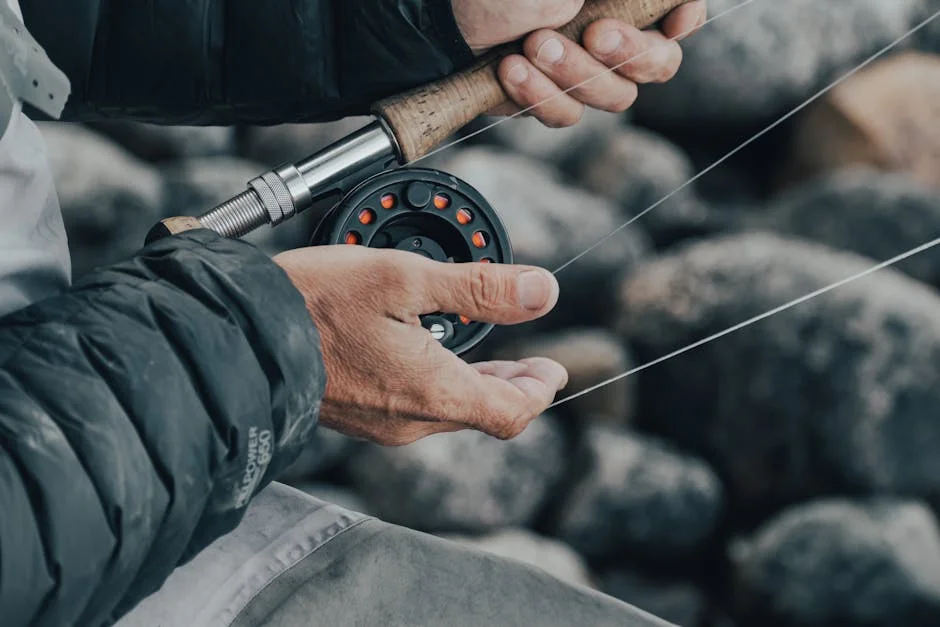
Greg's backup to Rio Gold, he's fished it on the Arkansas and Frying Pan
See Scientific Anglers Amplitude Smooth F… on AmazonScientific Anglers has been making fly lines since 1945, and the Amplitude Smooth sits near the top of their current trout lineup. For anglers fishing the Lines, Leaders & Tippet category seriously, it competes directly with Rio’s Gold and Grand for the title of best all-around Western trout line.
The Amplitude Smooth earns that comparison. Owner consensus and field reports from technical tailwater anglers point to a line that shoots cleanly, presents quietly, and holds up reasonably well across a full season. What follows is an honest look at where it excels and where the trade-offs show.
What to Look For in a Trout Fly Line
Taper Design and Presentation Quality
Taper profile is the single most consequential spec on a trout fly line, and it’s the one most buyers skip over in favor of coating discussions. The front taper, the section transitioning from the belly to the tip, determines how a fly turns over at the end of a cast. A short, aggressive front taper loads energy quickly and turns over large flies and weighted rigs without complaint. A longer, more gradual front taper bleeds that energy more slowly, laying the leader down with less disturbance on the water surface.
On pressured tailwater, that distinction matters. Fish on flat, slow glides that see hundreds of casts per week become conditioned to the slap of a heavy front taper. A guide once watched a cast at Cheesman Canyon and pointed out exactly that problem, a standard WF5F was hitting the water with an audible slap on the final turnover. Switching to a presentation-oriented taper ended the problem. If you fish technical water with any regularity, taper profile deserves at least as much attention as coating slickness.
Coating Slickness and Shoot-Through Performance
Coating technology has advanced significantly over the past decade, and the gap between a quality line and a budget line is now most visible in how well a line shoots through guides. High-end coatings, Scientific Anglers’ AST Plus, Rio’s SureFire treatment, reduce friction against guide rings measurably. The practical effect is distance on shooting casts and line speed recovery on shorter presentations.
Slickness also affects how a line handles in cold weather. A coating that stays supple at 40°F shoots and mends without fighting you. Lines that stiffen in cold water create memory coils that reduce casting accuracy and feel miserable to handle. If you fish spring creeks or tailwaters in early season, water temperatures in the high 30s and low 40s are common on Colorado rivers in March and April, cold-weather suppleness is a real criterion, not a marketing claim.
Line Weight Accuracy and Manufacturer Tolerances
Rod manufacturers tune their blanks to cast lines within a specific grain-weight window. AFFTA standards define what a “5-weight” line should weigh through the first 30 feet, but manufacturers vary in how closely they adhere to those standards. Some high-end lines run slightly heavy, which loads a fast-action rod more easily at short distances. Others run light, which can make a stiff rod feel dead at 30 feet but excellent at 60.
Understanding where a specific line falls in that range helps match it to a specific rod. For a Sage X or similarly fast-action blank, a line that loads the rod efficiently at 35, 45 feet is more useful on most trout water than one optimized for 60-foot shooting. Read manufacturer grain weight charts, not just the line weight designation. Exploring the full range of fly lines, leaders, and tippet options before committing is worth the time, the right combination of rod and line changes what technical water feels like.
Top Picks
Scientific Anglers Amplitude Smooth
The Scientific Anglers Amplitude Smooth occupies a specific and well-defined position in the premium trout line market: it’s built for technical presentation on flat, slow water where every element of the cast matters. The taper profile, SA calls it their “Smooth” taper, uses a longer front section that bleeds turnover energy gradually, laying a dry fly down without the slap characteristic of more aggressive weight-forward designs. Owner reviews from tailwater-focused anglers consistently cite presentation quality as the standout characteristic, particularly on spring creek-style water where fish are feeding selectively in glassy current.
The AST Plus coating is the other part of the story. AST Plus is SA’s highest-tier slickness treatment, and the measurable difference from their standard AST coating shows up in how the line shoots through guides and how it handles in cold water. Field reports from anglers fishing sub-45°F water note that the Amplitude Smooth stays noticeably more supple than comparable lines without the treatment, it coils less, mends more responsively, and doesn’t require the same warmup routine that older-generation coatings demand. For early-season Colorado fishing, where river temperatures don’t climb until May, that cold-weather performance is genuinely useful.
As a backup to the Rio Gold DT5F on the Arkansas and Frying Pan, the Amplitude Smooth holds its own in direct comparison. The Rio Gold DT5F has a slight edge on durability, the coating on the Amplitude Smooth shows wear at the head-to-running-line transition faster under repeated use. It’s not a dramatic difference, but over a full season fishing technical water several days per week, it accumulates. The performance gap on the water is narrower still. The choice between these two lines comes down to personal preference and minor differences in how each one feels on a specific rod. For a Sage X 5wt with a crisp fast action, both lines load well at 35, 45 feet, the casting distance most relevant to Cheesman Canyon-style fishing. The Amplitude Smooth casts with a marginally smoother transfer of energy through the loop, which experienced casters will notice and beginning anglers probably won’t.
The honest assessment: this line belongs in the hands of intermediate-to-advanced anglers fishing technical water with a matched rod. It’s a mid-range-priced premium line that earns its price point through genuine performance differences, not marketing. If the Rio Gold is your first choice and you want to understand what else is at the top of the market, this is the line worth comparing.
Check current price on Amazon.
Buying Guide
Matching Line to Rod Action
A premium fly line performs best when paired with a rod whose action aligns with the line’s intended loading window. Fast-action blanks, the Sage X, Orvis Helios, Scott Radian, load most efficiently with lines that put grain weight through the guides quickly at 35, 50 feet. The Amplitude Smooth’s taper is designed for exactly this range. On a medium-action rod, the Smooth taper may feel slightly loose at short distances, though it recovers well as casting distance increases.
The takeaway: if you’re running a fast-action 5wt and fishing primarily at 25, 50 feet, the Amplitude Smooth’s taper profile is well-suited to your rod and distance. If you’re on a slower rod or regularly need 60+ foot presentations, a different taper configuration may serve better.
Weight-Forward vs. Double-Taper for Technical Water
The Amplitude Smooth is available in both weight-forward and double-taper configurations. For most buyers, the weight-forward version is the correct choice, it casts further, performs better in wind, and handles heavier rigs. The double-taper makes a narrower but compelling case for anglers fishing the same technical runs repeatedly.
Weight-forward lines are sold as the default for all trout fishing, and for most situations they’re correct. But on technical tailwater with pressured fish at 30, 40 feet, double-taper lines present with less disturbance, the longer, softer front taper turns over more quietly. The tradeoff is real: WF is noticeably better past 50 feet and in wind. If you fish a 200-yard section of pressured river twenty times a year and rarely cast past 45 feet, the DT configuration deserves serious consideration.
Line Care and Coating Longevity
The AST Plus coating on the Amplitude Smooth stays effective longer with basic maintenance. A cleaning cloth and line conditioner applied every three to four fishing days removes the silica and mineral deposits that degrade coating performance over time. Verified buyer reports consistently note that lines cleaned regularly maintain their slickness rating well past the 100-hour mark where neglected lines start to feel sticky.
The coating wear at the head-to-running-line transition is the first place degradation appears. This section takes the most stress from hauling and guide contact. Monitoring that section and applying line dressing when tactile friction increases extends coating life meaningfully.
Tippet Diameter and Leader Matching
The Amplitude Smooth’s longer front taper pairs best with leaders in the 9, 12 foot range built for technical dry fly work. A standard 9-foot, 5X or 6X leader turns over cleanly with the Smooth taper at typical tailwater distances. Heavier leaders, 4X and above, work fine but give back some of the presentation advantage the taper profile provides. If you’re fishing technical dry fly water for which the Amplitude Smooth is primarily designed, a fluorocarbon tippet section of 5X or 6X completes the system correctly.
For subsurface fishing, the Amplitude Smooth’s design is a less obvious fit. Euro nymphing uses a level monofilament running line with zero fly line belly, the Amplitude Smooth isn’t the right tool for that system. For indicator nymphing at depth, a line with a heavier front taper and more energy transfer may outperform the Smooth’s gradual turnover profile. Matching the line to the intended technique is as important as matching it to the rod. A thorough review of line options by technique in the Lines, Leaders & Tippet section clarifies which configurations make sense for each approach.
Budget Tier vs. Premium Line Performance
The Amplitude Smooth sits in the premium tier, the same category as Rio Gold, Rio Grand, and Orvis Hydros. Budget and mid-range lines in this market are genuinely adequate for most trout fishing, and the argument for spending more is real only for anglers where the performance differences are detectable. If you’re fishing technical tailwater with regularity, casting to spooky fish on flat water, and already have your technique in order, a premium line’s taper precision and coating quality will make a measurable difference. If you’re fishing freestone rivers primarily, with less selective fish and more varied current, a mid-range line will perform the same function at lower cost.
Frequently Asked Questions
How does the Amplitude Smooth compare to the Rio Gold?
Both lines occupy the same tier and perform similarly on technical trout water. The Rio Gold runs as a double-taper DT5F in many anglers’ setups, which gives it a slight presentation edge on flat water at short distance. The Amplitude Smooth has a marginally more supple coating in cold weather due to AST Plus treatment. Durability over a full season gives a slight edge to the Rio Gold, the Amplitude Smooth’s coating shows wear slightly earlier at the head-to-running-line junction.
Is the Amplitude Smooth appropriate for beginner fly fishers?
It’s a capable line for any skill level, but the performance advantages it offers, precise taper presentation, cold-weather coating suppleness, are most detectable by anglers with enough casting foundation to notice the difference. A beginner will cast the Amplitude Smooth without issue, but the premium price point is harder to justify until casting technique is developed enough to feel what the taper is doing. Most instructors recommend mid-range lines for the first one to two seasons.
Which rod weights does the Amplitude Smooth come in?
Scientific Anglers offers the Amplitude Smooth across multiple line weights, from 3wt through 8wt depending on configuration and taper style. For Western trout fishing, the 4wt and 5wt weight-forward and double-taper configurations are the most commonly used. The 3wt is worth considering for small stream dry fly work where delicate presentation is the primary goal.
Does the Amplitude Smooth work for streamer fishing?
The Smooth taper is optimized for dry fly and nymphing presentations, its gradual front taper bleeds energy quietly, which is the opposite of what most streamer fishing demands. Streamer fishing benefits from lines with aggressive tapers that turn over weighted flies with authority and allow quick line pickup for repeated short casts. Scientific Anglers’ own Amplitude Infinity Streamer is better suited for that application. The Amplitude Smooth will cast streamers competently but isn’t the right tool for dedicated streamer work.
How often should the Amplitude Smooth be cleaned?
Field reports and verified buyer feedback consistently recommend cleaning every three to four fishing days under normal use. The AST Plus coating responds well to a basic cleaning routine, a damp cloth followed by a light application of line dressing. In heavy-use seasons or after fishing water with high mineral content or algae, cleaning more frequently maintains the slickness that distinguishes the coating. Neglecting cleaning for a full month of regular fishing measurably degrades shoot-through performance.
Scientific Anglers Amplitude Smooth Fly Line: Pros & Cons
- Greg's backup to Rio Gold, he's fished it on the Arkansas and Frying Pan
- AST Plus slickness additive shoots through guides with minimal friction
- Slightly less durable coating than Rio Gold in Greg's experience
Where to Buy
Scientific Anglers Amplitude Smooth Fly LineSee Scientific Anglers Amplitude Smooth F… on Amazon