Roll Cast Fly Fishing: Master This Essential Technique

Affiliate disclosure: Some links on this page are affiliate links. If you buy through them we earn a small commission at no extra cost to you. Recommendations are research-driven; we don't claim personal use of every product reviewed. Product prices and availability are accurate as of the date published and are subject to change. Always check Amazon for current pricing before purchasing. Learn more.
Quick Picks
SF Pre-Tied Loop Fly Fishing Tapered Leader Nylon Clear Trout Freshwater Saltwater Bonefish Permit Bass Salmon Steelhead 7.5FT 9FT 10FT 12FT 15FT 0X 1X 2X 3X 4X 5X 6X 7X
Buy on AmazonPLUSINNO Fly Fishing Rod and Reel Combo, 4 Piece Lightweight Ultra-Portable Graphite Fly Rod 5/6 Complete Starter Package with Carrier Bag
Buy on AmazonBASSDASH Fly Fishing Assorted Flies Kit, Pack of 64 pcs Including Dry and Wet Flies, Nymphs, Streamers, Terrestrials, Leeches and More, with Magnetic Fly Box
Buy on Amazon| Product | Price Range | Top Strength | Key Weakness | Buy |
|---|---|---|---|---|
| SF Pre-Tied Loop Fly Fishing Tapered Leader Nylon Clear Trout Freshwater Saltwater Bonefish Permit Bass Salmon Steelhead 7.5FT 9FT 10FT 12FT 15FT 0X 1X 2X 3X 4X 5X 6X 7X also consider | $ | Buy on Amazon | ||
| PLUSINNO Fly Fishing Rod and Reel Combo, 4 Piece Lightweight Ultra-Portable Graphite Fly Rod 5/6 Complete Starter Package with Carrier Bag also consider | $ | Buy on Amazon | ||
| BASSDASH Fly Fishing Assorted Flies Kit, Pack of 64 pcs Including Dry and Wet Flies, Nymphs, Streamers, Terrestrials, Leeches and More, with Magnetic Fly Box also consider | $ | Buy on Amazon |
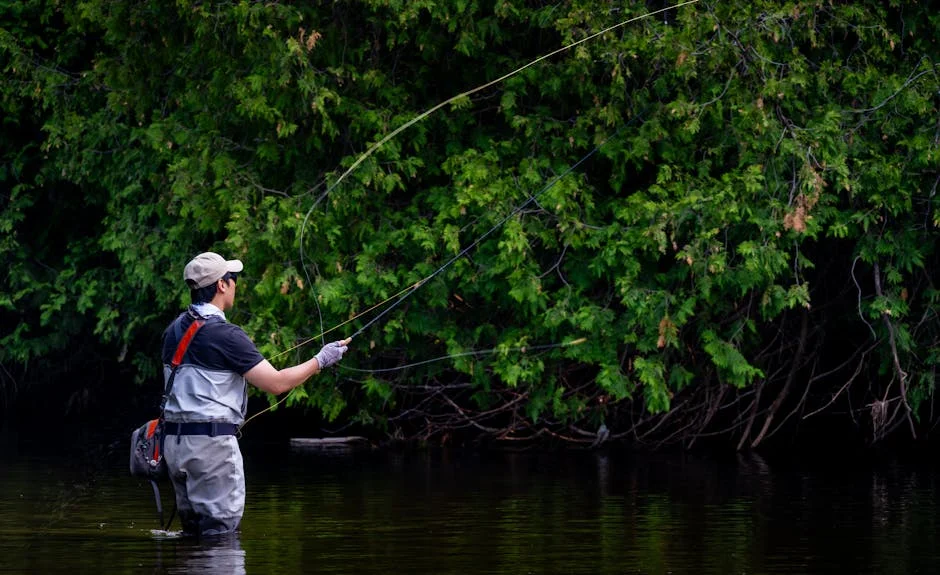
The roll cast is one of those skills that quietly separates functional fly fishers from frustrated ones. Trees behind you, a steep bank at your back, a tight run that demands a presentation right now with no room for a backcast, that’s where the roll cast earns its keep. It’s also, frankly, one of the least-taught fundamentals in beginner fly fishing instruction.
Learning the roll cast early saves you from a lot of bank-side cursing. If you’re just getting started, the broader collection of foundational skills lives over at Fly Fishing Basics and is worth bookmarking as a companion reference.
What Is a Roll Cast and Why It Matters
The roll cast is a single-plane cast that loads the rod using surface tension between the fly line and the water, rather than relying on a traditional backcast loop in the air behind you. You’re using the water itself as an anchor point. The D-loop (a curved section of line hanging behind and beside your rod) stores the energy that your forward stroke then releases.
In practical terms, it means you can fish spots that would be completely unfishable with a standard overhead cast. Tight freestone streams lined with willows and cottonwoods, like the stretches of the Arkansas above Salida, are full of those spots. So are the canyon walls along Cheesman and Eleven Mile. Roll casting isn’t a workaround, it’s a primary tool.
It’s also the foundation for spey casting and switch rod techniques, though that’s well outside the scope of what we’re covering here.
The Physics Behind the Cast (Without the Engineering Lecture)
Here’s the short version. A standard overhead cast loads the rod by sending line backward through the air, forming a tight loop, then redirecting that energy forward. A roll cast can’t do that because there’s no room. Instead, you use the drag created by line laying on the water’s surface. That drag acts as a fixed anchor point.
When you lift your rod slowly to the “D-loop” position, you’re peeling line off the water progressively rather than ripping it. The surface tension is doing work for you. Your forward stroke then converts that stored energy into a rolling loop that pushes the leader and fly out in front of you.
This is why the speed of your lift matters so much. Lift too fast, and you pull line off the water before the D-loop forms properly. Lift too slow, and the line sinks and kills the anchor. There’s a tempo to it.
Rod action plays into this more than most new casters realize. A medium or medium-fast action rod loads through a wider arc, which helps feel the load building in the D-loop phase. Fast-action blanks load in a tighter arc and require more precise timing and loop formation to work efficiently. That was one of my own early mistakes, actually. The first rod I bought on my own was a stiff fast-action blank, because I figured stiffer meant I’d cast farther. It did the opposite. I spent two full seasons fighting that rod’s action instead of developing any real feel for what the line was doing. If you’re earlier in the learning curve, a medium or medium-fast rod is going to teach you more, faster.
Step-by-Step: The Basic Roll Cast Technique
1. Start Position and Line Setup
Begin with your fly line laid out on the water in front of you, roughly 20 to 30 feet. This is important: you need water tension on the line to anchor the cast. If you’re practicing on grass, it works, but it won’t feel exactly the same as on water because grass creates less surface drag.
Stand facing your target, rod tip low, pointing roughly toward your fly.
2. The Slow Lift
Raise your rod tip slowly and smoothly, drawing your casting elbow back and up. Your goal is to slide the line across the water, not rip it off. As the rod rises, the line nearest you should peel off the surface gradually, forming a curve of line hanging in the air just behind and beside your rod tip. This is the D-loop. Pause when your rod hand is roughly at ear height and your rod tip is angled slightly behind vertical.
The common mistake here is rushing. Slow down the lift more than feels natural.
3. The Forward Stroke
From the D-loop position, drive the rod forward with a crisp stop. Think about throwing a dart rather than sweeping a paintbrush. The stop is what loads the rod tip and kicks the rolling loop out forward. Your casting arc should be relatively tight and in a single vertical plane aimed at your target.
The loop rolls out over the water, and leader and fly follow.
4. Follow-Through and Line Control
Let the rod tip drop smoothly toward the water after the stop. Keep a little slack management in your non-casting hand so you can feed line or strip as needed once the fly lands.
If your fly is landing in a pile, the forward stroke is probably not stopping cleanly. If your loop is collapsing before it unfurls, the D-loop wasn’t loaded enough, usually because the lift was too fast.
Common Mistakes and How to Fix Them
Ripping the line off the water. This is the most common error. The lift phase needs to be slow and deliberate. A fast lift breaks the surface tension anchor before the D-loop forms, and you end up with no load. Slower than you think.
Rod tip angled too far behind vertical. Some anglers overdo the backswing trying to build more D-loop. If the rod tip dips well behind your head, you lose the cocked position needed for a clean forward stroke. Keep the rod slightly past vertical, not dramatically behind it.
Casting in the wrong plane. A roll cast works best in a consistent vertical plane. If your elbow wanders sideways during the lift, the D-loop drifts off to the side and you lose efficiency. Pick a target, keep the stroke in a line pointed at it.
Not enough line out. Short line roll casts are harder, not easier. With only 10 feet of line on the water, there isn’t enough drag to anchor properly. Start with at least 20 feet.
Too much line out. On the other end, trying to roll cast 50+ feet with a 5wt requires significantly more technique and line speed than most beginners have. Build range gradually.
Roll Casting Applications on Real Water
On tailwaters like Cheesman Canyon, roll casts are especially useful for presenting flies in tight seams when the bank behind you makes a backcast impossible. The water is flat, the takes are subtle, and a clean presentation matters more than distance. You’re often fishing 25 to 40 feet with a dead drift, which is well within comfortable roll cast range once you’ve put in some practice.
On the Arkansas freestone sections, especially in the tighter canyon stretches between Salida and Cañon City, roll casting is something you’ll use on nearly every outing because the willows along the bank are constant. The water is louder, the fish are less selective, and presentation doesn’t need to be surgical, but you still need to get the fly in the water.
For euro nymphing setups, roll casting looks a little different because you’re typically not carrying much fly line outside the rod tip anyway. The concept still applies when repositioning or when you need to push a longer leader out to a distant seam, but most euro nymphing involves less traditional casting mechanics overall.
Gear Considerations for Learning the Roll Cast
The roll cast doesn’t require specialized gear, but some setups make the learning curve gentler.
Line choice matters. A weight-forward floating line helps because the heavier front taper gives you more to load against the surface tension anchor. Running line and thin-diameter shooting heads are harder to feel for beginners. A standard weight-forward trout line is ideal for learning.
Rod length helps. A 9-foot rod gives you leverage to form a good D-loop without crowding yourself. Shorter rods (under 8 feet) work, but you get less arc for the lift. This is one reason that classic 9-foot 5wt setup is such a durable standard.
Leader length. Long leaders (12 feet or more) can make roll casting trickier until you have consistent loop formation, because the leader needs to turn over cleanly. For beginners, a 7.5-foot or 9-foot tapered leader in a mid-range tippet size is easier to manage.
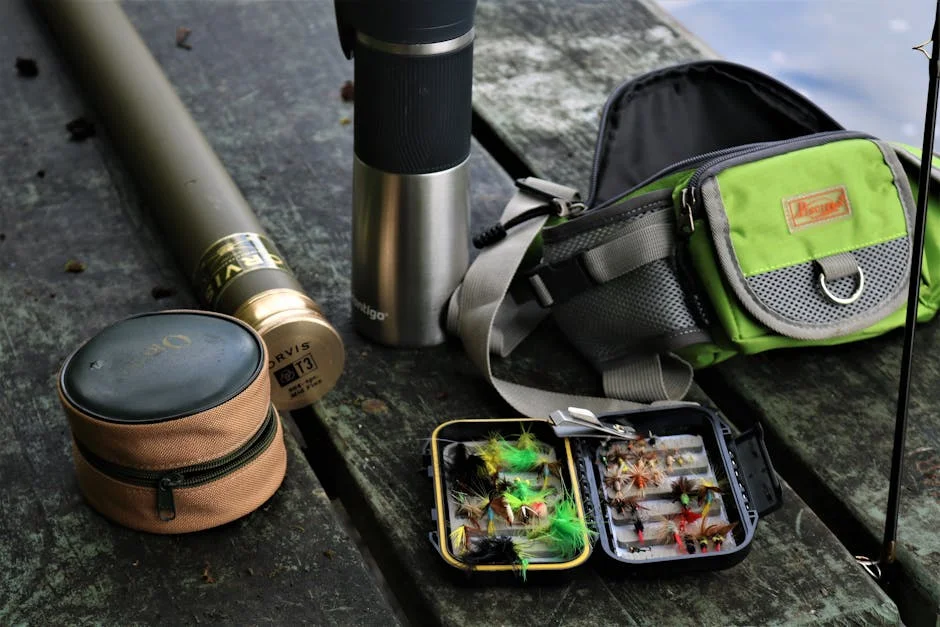
Gear to Get You Started
The gear section below includes options that pair naturally with learning fundamentals like the roll cast. None of these are premium or specialty items, they’re approachable starting points.
Top Picks
SF Pre-Tied Loop Fly Fishing Tapered Leader Nylon Clear
The SF Pre-Tied Loop Fly Fishing Tapered Leader covers a wide range of freshwater applications with lengths from 7.5 feet to 15 feet and tippet sizes from 0X down to 7X. For roll casting practice, the 7.5-foot and 9-foot options in 3X or 4X are sensible starting choices because they turn over reliably without requiring the extra line speed that longer leaders demand.
Verified buyers note that the nylon construction holds up well for standard trout fishing conditions and that the pre-tied loop makes leader-to-line connections quick in the field. The clear finish hasn’t drawn complaints for spooking fish in typical freshwater conditions. For a budget-tier leader option, spec data shows a standard knotless tapered construction that’s consistent with what you’d find at a mid-range price from other brands.
The broader tippet size range makes this pack useful well beyond beginner stages, covering bass, salmon, and light saltwater work if you’re curious about the 0X end of the spectrum.
Check current price on Amazon.
PLUSINNO Fly Fishing Rod and Reel Combo
The PLUSINNO Fly Fishing Rod and Reel Combo is a four-piece, 5/6 weight graphite rod packaged with a reel, pre-spooled line, and a carrying bag. As a starter package, it puts all the functional pieces in one box at a budget price point. Field reports from beginner-focused communities consistently mention the portability of the four-piece breakdown as a genuine practical advantage for new anglers who are still figuring out how and where they want to fish.
Spec data shows a medium-action graphite blank, which is actually a reasonable choice for learning fundamental casts including the roll cast. Medium-action rods load through a wider arc and give you more feedback about where the rod is bending, which helps develop feel earlier. Owner reviews note that the included reel and line are functional for learning purposes, though most buyers eventually upgrade the line first once they’ve been fishing for a season or two.
This is the kind of setup worth considering if someone in your circle is brand new and wants to try the sport before committing to premium gear. It covers the basics without a large financial commitment.
Check current price on Amazon.
BASSDASH Fly Fishing Assorted Flies Kit
The BASSDASH Fly Fishing Assorted Flies Kit packages 64 flies across dry flies, wet flies, nymphs, streamers, terrestrials, and leeches in a magnetic fly box. For someone learning to roll cast on various water types, having a broad fly selection lets you practice presentation with different fly weights without committing to a specific hatch-matching approach while you’re still building casting mechanics.
Owner reviews consistently highlight the magnetic box as a practical bonus, particularly for beginners who are still developing the fine-motor skills for fly box management in moving water. Verified buyers note that fly quality is consistent enough for early-season learning and for fishing situations where fly loss is more likely, which describes almost everyone’s experience in the first couple years.
The mix of fly types in this kit also makes it a reasonable reference collection to help you start recognizing what categories of flies exist before you start tying your own or buying specific patterns for specific waters.
Check current price on Amazon.
Buying Guide: Putting Together a Roll Cast-Ready Setup
Choosing gear specifically with roll casting in mind isn’t dramatically different from general trout setup decisions, but a few factors are worth thinking through if you know you’ll be fishing tight, tree-lined water regularly.
Rod Action and Length
For roll casting, medium and medium-fast action rods perform more forgivingly than fast-action sticks. The wider loading arc makes it easier to feel when the D-loop is loaded, which is the feedback you need when you’re learning the timing of the cast. A 9-foot rod gives you leverage and helps form a clean D-loop without awkward elbow mechanics.
Fast-action rods aren’t impossible to roll cast with, but they demand tighter technique and cleaner loops to load properly. If you’re earlier in the learning curve, start with a more moderate action and graduate to faster blanks once your mechanics are consistent. The Fly Fishing Basics hub at /learn/ covers rod action in more depth if you want context on how action affects other casts as well.
Line Weight and Taper Profile
A weight-forward floating line is the standard choice for roll casting. The heavier front taper provides the surface tension anchor you need during the lift phase. Lines with aggressive front tapers and short heads can actually make roll casting a little easier in some conditions because there’s more mass up front to work with.
Avoid light running lines or thin-diameter shooting heads when you’re learning. They feel like nothing on the water and don’t give you the tactile anchor feedback that helps you time the forward stroke. Match line weight to your rod’s rated weight and use a standard WF floating taper to start.
Leader Selection for Tighter Conditions
Leader length affects roll cast efficiency more than most beginners expect. A 7.5-foot or 9-foot knotless tapered leader in 3X to 5X is forgiving for learning. Longer leaders (12 to 15 feet) are useful for technical tailwater presentations but require more line speed and cleaner loops to turn over properly on a roll cast.
In tight stream conditions, where you’re likely using the roll cast most anyway, shorter leaders often make sense for presentation reasons too. The fish are closer, the water is faster, and a 7.5-foot leader lands you right in the productive range without over-engineering the setup.
Wader and Boot Traction for Tight Quarters
Roll casting often puts you in tight spots, which means you’re wading into awkward positions to get around bankside cover. Felt soles still have traction advantages in slick-rock freestone streams, though they’re banned on some Colorado waters and in several other states. Rubber lug soles with metal studs handle most Colorado river conditions and give you grip on the loose cobble that’s common in the Arkansas drainage.
Stability matters because you’re often planting your feet and pivoting to reposition for the next cast in confined spaces. Good ankle support in your wading boots makes a real difference after a few hours of that kind of wading.
Practicing Off-Water
You don’t need moving water to build roll cast mechanics. A lawn or park grass works as a practice surface, and the mechanics transfer reasonably well. Grass creates less drag than water, so the anchor feels a little different, but the timing of the lift and forward stroke is close enough that off-water practice builds genuine muscle memory.
Use yarn instead of a fly when practicing on grass. Mark out target distances with sticks or cones. Twenty-five feet is a realistic starting goal for a clean, consistent presentation cast.
Closing Thoughts
The roll cast is worth committing to seriously, not just as a backup when the backcast isn’t available. After twenty years of fishing mostly western waters, I’d estimate that a meaningful percentage of my actual trout-catching presentations on tight freestone water involve roll casts or roll cast variations. It’s not a specialty skill, it’s a fundamental.
If you’re working through the rest of the foundational cast inventory, the full set of beginner and intermediate resources is at Fly Fishing Basics on /learn/. Build the roll cast early, and a lot of water that used to frustrate you will start opening up.
Frequently Asked Questions
Can you roll cast on still water or do you need current?
You can roll cast on still water, but it requires a floating fly line and enough line on the surface to create drag. Still water works because the surface tension anchor is about line contact with the water, not about current. The cast mechanics are identical to moving water. Many anglers practice roll casting on ponds or lakes specifically because there’s no current complicating their footing or drifts while they focus on cast timing.
What rod weight is best for learning the roll cast?
A 5-weight rod is the most practical starting point for most trout fishing situations, and it handles roll casting well across a wide range of conditions. Heavier rods (6-weight and up) are easier to feel loading on the D-loop but are heavier to manage for all-day fishing. Lighter rods (3-weight and 4-weight) work beautifully on small streams but are less forgiving for beginners still developing timing. The 5-weight standard exists for good reasons.
How far can you realistically roll cast?
Most anglers with solid mechanics can consistently roll cast 40 to 50 feet with a standard 9-foot 5-weight setup. Beyond that, efficiency drops off significantly without spey or switch rod techniques. The practical sweet spot for trout fishing is 25 to 40 feet, which covers the vast majority of roll cast situations you’ll encounter on freestone streams and tight tailwater runs. Distance beyond 50 feet generally requires a different tool.
Does fly weight affect roll cast performance?
Heavier flies create more air resistance and require more line speed and a cleaner loop to turn over properly. Weighted streamers and heavy nymph rigs can make roll casting noticeably harder. For learning, a lightly weighted or unweighted fly on a 9-foot leader is significantly more forgiving. Once mechanics are consistent, you can work toward turning over heavier flies by building more load in the D-loop phase before the forward stroke.
Is the roll cast the same as a water haul?
They are related but not identical. A water haul uses the surface tension of water on the fly line to load the rod for a forward cast, similar in concept to the roll cast anchor. The difference is primarily in execution and intent. A roll cast forms a deliberate D-loop and sends a rolling loop forward.
Where to Buy
SF Pre-Tied Loop Fly Fishing Tapered Leader Nylon Clear Trout Freshwater Saltwater Bonefish Permit Bass Salmon Steelhead 7.5FT 9FT 10FT 12FT 15FT 0X 1X 2X 3X 4X 5X 6X 7XSee SF Pre-Tied Loop Fly Fishing Tapered … on Amazon