Simms vs Patagonia Waders: Premium vs Value Compared

Affiliate disclosure: Some links on this page are affiliate links. If you buy through them we earn a small commission at no extra cost to you. Recommendations are research-driven; we don't claim personal use of every product reviewed. Product prices and availability are accurate as of the date published and are subject to change. Always check Amazon for current pricing before purchasing. Learn more.
Breathable waders are the piece of fly fishing gear most buyers underestimate until they buy wrong and pay for it twice. The decision between Simms G3 Guide Stockingfoot Waders and Patagonia Rio Gallegos Waders is a real one, premium construction versus mid-range value, an American wader brand with decades of guide-channel credibility versus a company whose conservation reputation carries genuine weight with a specific kind of angler. Both deserve a straight look. For the full context on wader categories and sole systems, the Waders & Wading Boots hub is the right starting point.
The short version: the G3 is the wader for anglers who fish thirty or more days a year and want to stop thinking about their waders. The Rio Gallegos is worth considering if Patagonia’s environmental commitments matter to your purchasing decisions and your days on the water are fewer. The longer version requires understanding what the quality gap in breathable waders actually means.
What to Look For in Breathable Waders
Membrane Construction and Breathability
The membrane is the core of any breathable wader, it’s what keeps water out while letting heat and moisture vapor escape. The gap between entry-level and premium construction here is larger than in almost any other fly fishing gear category. Budget waders typically use a two-layer laminate: waterproof membrane bonded to a single face fabric. The seams are taped, but the tape adhesion quality and the membrane’s own moisture-vapor transmission rate (MVTR) vary enormously.
Premium four-layer construction, as found in the G3, sandwiches the membrane between two fabric layers. That structure protects the membrane from abrasion and significantly extends the garment’s effective life. More practically, a higher-MVTR membrane means you arrive at the end of a summer afternoon wade without feeling like you’ve been inside a trash bag. Serious anglers fishing high-effort mountain terrain or long summer days on Western tailwaters notice this difference acutely.
Mid-tier waders use proprietary waterproof-breathable technologies that perform well out of the box. The honest question is how that performance holds at season three and season five, under real field stress. Owner consensus suggests the premium membranes hold their ratings longer.
Seam Construction and Long-Term Reliability
Seam failure is the number one reason breathable waders are retired early. Ankle gussets and crotch seams carry the most mechanical stress, flexion, abrasion from gravel and cobble, and compression load. A wader that holds water cleanly for eighteen months and then leaks at the ankle has failed the only test that matters.
Fully welded and critically taped seams are the industry standard at premium price bands. What varies is the tape quality, the width of the tape overlap, and whether the seam construction is reinforced at high-stress points. Look for double-stitched and taped seams in the crotch and ankle areas specifically, manufacturers who cut corners often start there.
The failure pattern in entry-level waders is almost always at those same seam locations. Owner reviews across years of forum posts and retail feedback point to the same two places: ankle gusset and crotch seam, typically within one to two seasons of regular use.
Fit, Trim, and Current Resistance
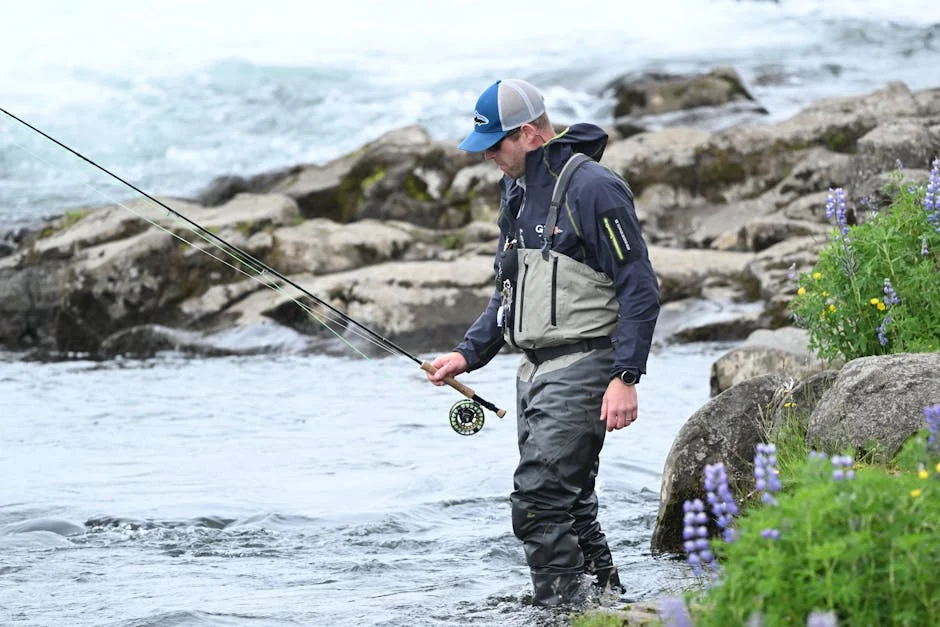
Wader fit affects fishing performance in ways that aren’t immediately obvious. A wader with excess material in the hips and thighs catches current when you’re mid-stream. That adds drag to every step, increases fatigue on long wading days, and can affect stability in faster water. A trim fit that follows the body’s natural line reduces that drag significantly.
Simms sizing has historically run narrow, which means a trim fit for anglers whose body proportions match it, and a difficult fit for others. Patagonia waders tend toward a more accommodating cut. Neither approach is inherently better; the right answer depends on your body and your typical water type.
The practical test is to try waders in-store if possible, or order from a retailer with a no-hassle return policy. Fit is one of the few wader variables that no amount of spec-sheet reading resolves. The Waders & Wading Boots resource covers fit guidance by brand across the current major manufacturers.
Sole Systems and Traction
Colorado banned felt soles on most waters years ago, and the invasive species case for that ban is sound. What it means practically is that rubber sole selection matters more than it ever did when felt was the default. The traction gap between good rubber and bad rubber is real.
Studded rubber, specifically aluminum studs on a quality Vibram or OmniTrax compound, closes most of the gap with felt on algae-slicked bedrock in moderate current. On dry rock, quality rubber actually outperforms felt. The remaining weakness is sustained fast water over smooth bedrock, where felt’s conforming surface still has an edge. For most anglers fishing Colorado tailwaters and freestone rivers, studded rubber is sufficient and legal. Buy the best wading boot you can afford and choose the stud pattern for your water type.
Top Picks
Simms G3 Guide Stockingfoot Waders
The Simms G3 Guide Stockingfoot Waders are the wader I should have bought on the first purchase instead of the third. Two previous pairs, both in the mid-range segment, failed at the ankle gusset and crotch seam respectively, the first within eighteen months of regular use. By the time the replacement costs were totaled across three pairs, the math no longer favored the cheaper options. The G3 is built around a four-layer Gore-Tex Pro construction that outperforms anything else currently available in breathable wader membranes. The difference on a long summer day on the South Platte is not subtle, the G3 breathes materially better than what Simms uses in the Freestone, and the gap between the G3 and non-Gore-Tex constructions is wider still.
Fit is the other thing. At a 34-inch waist, the Freestones were always baggy in the hips, that excess fabric catches current on every wading step in moderate water. The G3’s trim cut follows the body properly. The difference in mid-stream fatigue over a full day of wade fishing is real. The gravel guard system integrates with Simms wading boots and works correctly, no debris intrusion during multi-day Colorado river access, which matters on Arkansas River freestone where cobble migration into gaiters is a consistent problem with other brands.
The pocket and organization layout is the best in the category. Chest pockets, hand-warmer pockets, and attachment points are placed where they’re actually useful, not where they look useful in a catalog photo. This is the kind of detail that becomes apparent after three seasons of daily use, not on the first day.
The price is genuinely hard to justify if you fish fewer than twenty days a year. That’s the honest threshold. Below that number, a mid-range wader amortizes better even accounting for a shorter service life. Above it, the G3’s durability and performance case becomes clear. Owner consensus among guide-level anglers and experienced walk-and-wade fishers is consistently that the G3 is the best-available breathable wader without qualification.
Check current price on Amazon.
Patagonia Rio Gallegos Waders
The Patagonia Rio Gallegos Waders sit in a different market position, mid-tier construction, mid-range price band, and a brand identity that carries specific weight for conservation-minded anglers. Patagonia’s environmental credibility is earned rather than marketed, and for a buyer who ties their purchasing decisions to a company’s ecological commitments, the Rio Gallegos deserves genuine consideration. Patagonia’s H2No waterproofing technology performs competently at the mid-tier level. Field reports from verified buyers describe satisfactory waterproofing and reasonable breathability under moderate-use conditions.
The honest limitation here is that this review is research-based, a comparison of specifications, construction details, and owner field reports rather than direct personal experience. What owner consensus suggests is that the Rio Gallegos performs to specification for anglers fishing moderate days per season, and that Patagonia’s construction standards are consistent enough that the wader delivers what it promises. The qualification is the same one that applies to all mid-tier breathable waders: the performance picture at season three and beyond is less established than for premium constructions with longer and more extensive owner review histories.
The comparison that matters most for serious anglers isn’t G3 versus Rio Gallegos, it’s Rio Gallegos versus the Simms Freestone, which occupies a similar price band with more extensive multi-season field data and Simms’ repair and service infrastructure behind it. For a buyer whose primary consideration is Patagonia’s conservation standing rather than pure wader performance optimization, that calculus shifts. The Rio Gallegos is not a weak product. It’s a product with a specific audience, and being clear about who that audience is serves buyers better than hedging.
Check current price on Amazon.
Buying Guide
How Many Days Per Year Determines the Right Tier
The single most useful heuristic for wader buying is annual fishing days. A wader that costs significantly more but lasts three times as long and performs better across that service life is a straightforward value proposition for an angler fishing thirty or more days per year. The math inverts below roughly twenty days annually, mid-range construction amortizes better at lower use rates even accounting for a shorter service life.
This isn’t a comfortable conclusion because it requires honest self-assessment. Anglers tend to overestimate future fishing days. The practical advice is to look at the last two seasons, not the next two.
Understanding What “Breathable” Actually Means Under Field Conditions
Breathable wader marketing is aggressive and the terminology is inconsistent. Moisture-vapor transmission rate, the measure of how quickly a membrane passes heat and moisture vapor, varies significantly between constructions, and manufacturers don’t always publish comparable numbers. What that means in practice: two waders both marketed as “breathable” can feel dramatically different on a warm July afternoon after six hours of wade fishing.
The field-test question to ask is how the wader performs on the warmest day you’d reasonably fish it. A wader that breathes adequately on a 55-degree October morning in Colorado is not the same as one that remains comfortable on a high-elevation August afternoon. Owner reviews written across full seasonal use rather than initial impression reviews are the most reliable signal.
Simms Sizing Runs Narrow, This Matters
Simms waders fit well for anglers whose body proportions align with the brand’s cut, trim through the hips and thighs, designed to reduce current drag. For anglers outside that range, Simms sizing creates a genuine challenge. The advice to try before buying is not boilerplate, it’s the single most useful instruction for anyone considering the G3 at premium prices.
The Patagonia cut is more accommodating for a broader range of body types. If fit is a consistent problem with Simms sizing, that’s a meaningful differentiator rather than a minor inconvenience.
Felt vs. Rubber Soles and Legal Compliance
Felt soles are banned on most Colorado and many Western tailwaters for documented invasive species transmission reasons. The ban is warranted. What it means practically is that rubber sole quality now carries more weight in the purchasing decision than it did when felt was legal and default.
Studded rubber on a quality sole compound, Vibram or Korkers OmniTrax, closes most of the traction gap with felt on the waters most Western trout anglers fish. The remaining gap shows on sustained fast water over smooth algae-covered bedrock. For anglers fishing high-pressure tailwaters where felt is prohibited, studded rubber is the correct choice, not a compromise. Verify your specific water’s regulations before purchase, sole requirements vary by watershed. The waders and wading boots resource covers current sole regulations by region.
Service, Repair, and Long-Term Support
Simms has established repair infrastructure, their wader repair program covers seam failures and membrane issues, and the G3 comes with warranty support that experienced owners describe as responsive. For a premium-priced wader, that service backing is part of what you’re paying for.
Patagonia offers an Ironclad Guarantee that covers manufacturing defects and, by policy, aims to repair, replace, or refund products that fail. The program’s reputation for environmental commitment is strong. What’s less clear is whether the wader-specific repair infrastructure matches what Simms provides for their guide-tier product. For buyers in remote locations where wader failure mid-season has real costs, the service network behind a wader matters nearly as much as the wader itself.
Frequently Asked Questions
Which waders are better for fishing Colorado tailwaters specifically?
For Colorado tailwaters, the South Platte, Arkansas, Frying Pan, the Simms G3 Guide Stockingfoot Waders are the stronger choice for anglers fishing regularly. The four-layer Gore-Tex Pro construction handles the temperature swings between high-elevation morning and afternoon conditions better than mid-tier membranes. The trim fit reduces drag in the moderate currents characteristic of most Colorado tailwater runs, and the integrated gravel guard system performs well on the cobble substrate common to Arkansas freestone access.
Are Patagonia Rio Gallegos waders worth it for someone who fishes occasionally?
For anglers fishing fewer than twenty days per year, the Rio Gallegos presents a reasonable mid-range option, particularly if Patagonia’s conservation commitments carry weight in the purchasing decision. The H2No construction performs competently under moderate use. The honest comparison at this price band is with the Simms Freestone, which occupies similar territory with more extensive multi-season field data behind it. Neither is the wrong answer for an occasional fisher; the Patagonia choice is partly a values-based decision.
How does Gore-Tex Pro compare to Patagonia’s H2No waterproofing?
Gore-Tex Pro is a four-layer construction with one of the highest moisture-vapor transmission rates available in breathable waterproof membranes, the industry benchmark at the premium tier. Patagonia’s H2No is a proprietary waterproof-breathable technology that performs competently at the mid-range level. The gap between them is most apparent under sustained exertion in warm conditions, where the G3’s breathability advantage is tangible. For cold-weather fishing at low exertion levels, the performance difference narrows considerably.
Do Simms G3 waders run true to size?
Simms waders run narrow through the hips and thighs relative to standard sizing. For anglers with a trim build, the fit is excellent and the current-resistance benefit is real. For anglers with wider hips or thighs, Simms sizing creates a genuine problem, the wader may be too tight through the lower body even at a correctly sized waist. The practical advice is to try the G3 in-store before purchasing, or order from a retailer with a clear return policy.
What sole system should I pair with breathable waders for Western trout rivers?
For most Western trout rivers, particularly those with felt bans, studded rubber is the right choice. Aluminum studs on a quality rubber compound such as Vibram or Korkers OmniTrax provide reliable traction on algae-slicked cobble and outperform plain rubber on wet rock. On dry rock, quality rubber outperforms felt. The remaining weakness is sustained fast water over smooth bedrock, where felt historically had an advantage.
Where to Buy
Simms G3 Guide Stockingfoot WadersCheck availability at Simms →