Fly Fishing Travel Checklist: What to Pack Before You Go

Affiliate disclosure: Some links on this page are affiliate links. If you buy through them we earn a small commission at no extra cost to you. Recommendations are research-driven; we don't claim personal use of every product reviewed. Product prices and availability are accurate as of the date published and are subject to change. Always check Amazon for current pricing before purchasing. Learn more.
Quick Picks
Fifty More Places to Fly Fish Before You Die: Fly-fishing Experts Share More of the World's Greatest Destinations (Fifty Places)
Buy on Amazon| Product | Price Range | Top Strength | Key Weakness | Buy |
|---|---|---|---|---|
| Fifty More Places to Fly Fish Before You Die: Fly-fishing Experts Share More of the World's Greatest Destinations (Fifty Places) also consider | $$ | Buy on Amazon | ||
| Fly Fishing for Dummies also consider | $$ | Buy on Amazon | ||
| Smallmouth: Modern Fly-Fishing Methods, Tactics, and Techniques also consider | $$ | Buy on Amazon |
A well-packed bag and a clear plan are what separate a frustrating trip from one you’ll talk about for years. Whether you’re heading to the Bighorn in Montana, the flats of Belize, or a tailwater canyon two hours from home, the same principle applies: if you forget it at the house, you’re either fishing without it or spending half a day tracking it down at a fly shop in a town you’ve never been to.
This fly fishing travel checklist is built around real-world packing logic, not a theoretical gear closet. It covers what to bring, what to read before you go, and a few things most checklists miss entirely.
Why a Checklist Actually Matters
After twenty years of trips, I still use a written checklist. Not because I’m forgetful, but because I know exactly how I get when I’m excited about a trip. I start moving fast and I skip things. The checklist slows me down. The engineer in me also appreciates that a checklist is a repeatable system. You build it once, refine it after every trip, and eventually it becomes nearly bulletproof.
For everything from gear reviews to destination prep, the Guides & Resources section at /guides/ has resources worth bookmarking before you start packing.
The Full Fly Fishing Travel Checklist
Breaking this down by category makes packing faster and also makes it easier to identify gaps specific to your destination. A tailwater trip to Cheesman Canyon and a steelhead run on the Deschutes have almost nothing in common from a gear standpoint, but the organizational logic is the same.
Rods, Reels, and Lines
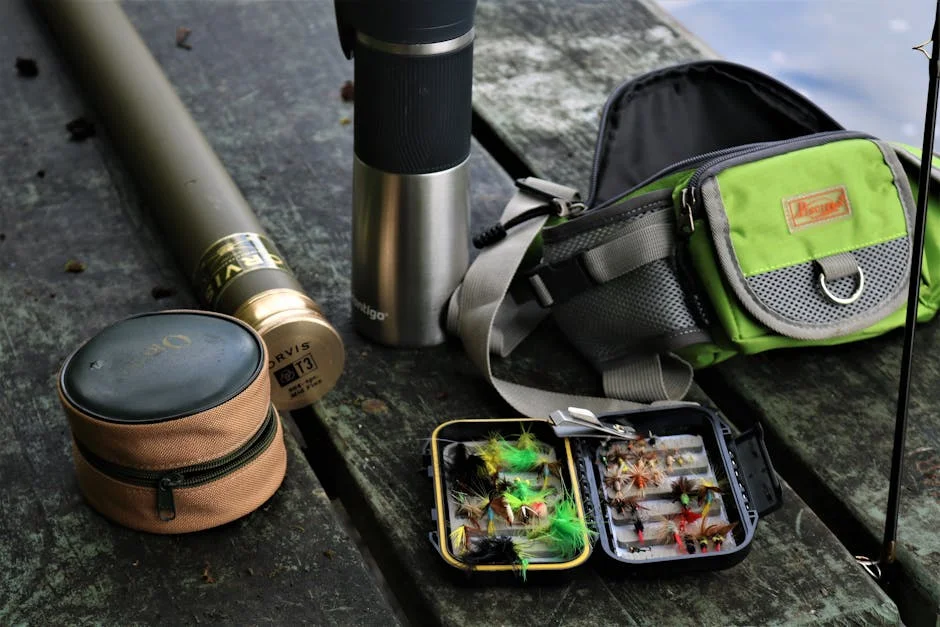
This is the category most people get right and also the one where the mistakes are the most expensive. Bring a backup rod for any trip longer than two days. I travel with my Sage X 9’ 5wt as my primary and usually throw the Z-Axis as a backup. On the Scott Centric for bigger water situations, I pack the Scientific Anglers Amplitude Smooth for streamer work.
Checklist items:
- Primary rod and backup rod (travel rods in protective tube)
- Primary reel with line already rigged
- Spare spool with alternate line (dry line and nymph line minimum)
- Rod tube with airline-friendly labeling
- Reel case or pouch for loose reels
Check the destination before you assume your 5wt is enough. Bigger water like the Bighorn in high flows, or the Missouri on a windy day, will punish an underpowered setup.
Fly Selection and Tying Materials
This is where destination research does the most work. Showing up to a spring creek in the middle of a PMD hatch with nothing but Woolly Buggers is a rough afternoon. Before any trip, I try to contact the local fly shop, read recent hatch reports, and cross-reference with whatever guide contacts I have in the area.
Checklist items:
- A selection of the destination’s known producers (shop-confirmed, not guessed)
- Midges and small nymphs in sizes 18, 22 for tailwater situations
- Dry flies organized by size in a separate waterproof box
- Streamers if targeting larger fish or low-light conditions
- Tippet in 4X, 5X, 6X minimum (add 7X for technical tailwaters)
- Leader wallet with pre-built leaders
- Floatant (gel and liquid), split shot assortment, strike indicators
If you tie your own flies, consider whether it’s worth bringing a partial travel kit for a week-long trip. I’ve done it on longer Montana trips and tied in the evenings. It’s genuinely useful when you’re running low on a pattern that’s working.
Wading Gear and Apparel
Wader failure mid-trip is one of the worst outcomes. Field-patching a pinhole leak with AquaSeal at 10pm the night before a full day on the water is not how anyone wants to spend an evening.
Checklist items:
- Primary waders (inspected for leaks before packing)
- Wading boots with appropriate sole for the destination (studs vs. rubber vs. felt where legal)
- Wading belt (non-negotiable for safety)
- Wading staff if the water is technical or unfamiliar
- Wool or synthetic base layers (temperature-appropriate)
- Rain jacket that actually breathes
- Sun hoody for warm-weather destinations
- Hat with full brim (not a ball cap for all-day sun)
- Buff or neck gaiter
- Wool socks (two pairs per day minimum)
On wader soles, check the destination state’s regulations. Several states have banned felt soles to prevent invasive species spread. Colorado currently allows felt, but if you’re crossing into Wyoming or Montana, verify before you go.
Pack, Tools, and Accessories
This is the checklist category that grows every year and never shrinks. Something always gets added after a trip.
Checklist items:
- Chest pack or sling (organized and weight-distributed before leaving)
- Forceps (two pairs, one as backup)
- Nippers
- Knot-tying tool
- Headlamp with fresh batteries (or charged if rechargeable)
- Polarized sunglasses (I fish Costa Tuna Alley, bring a backup pair on any significant trip)
- Net appropriate for destination (rubber mesh for catch-and-release)
- Hand towel or fishing bandana
- Dry bag or waterproof phone case
- Lip balm with SPF
- First aid kit, including moleskin for boot rub
- Spare car key in a waterproof pouch (not in your wader pocket)
Licensing, Regulations, and Documentation
This is the checklist section most people treat as an afterthought and then panic about in the parking lot.
Checklist items:
- Fishing license for destination state (purchased in advance, downloaded to phone)
- Regulation booklet or screenshot of relevant sections
- Tribal permit if applicable (Bighorn on the Crow Reservation, for example)
- Conservation license if required by the state
- CPR/first aid card if you carry one
- Emergency contacts written down and stored separately from your phone
On licensing: buy it before you leave home. In Colorado, Wyoming, and Montana, you can purchase online and have it on your phone. Regulation details matter, especially on tailwaters with special restrictions on fly type, hook size, or catch-and-release rules. Don’t assume last year’s rules still apply.
Travel Logistics Checklist
This category applies specifically to out-of-state or destination trips.
Checklist items:
- Accommodations confirmed with fishing access logistics in mind
- Vehicle gear organized for early-morning departure without digging
- Local fly shop contacts saved (and plan to stop in on arrival)
- Guide contact and time confirmed, with meeting location verified
- Weather forecast checked for the specific watershed, not just the nearest town
- Backup plan for blown-out water conditions (high flows or heavy rain events)
- Cooler and food if fishing remote access points
On the guide point: one of the strongest opinions I hold after twenty years is that hiring a guide when you already think you know what you’re doing is one of the best investments in fly fishing you can make. Not your first trip out. Later. The guide I fished with on the Bighorn in 2009 corrected three things I’d been doing wrong for five years. One day on the water with someone who knows what they’re watching for will do more for your fishing than any gear purchase. It’s worth building into the budget for any destination trip.
Top Picks: Books for Fly Fishing Travel Prep
Gear gets you on the water. Reading gets you prepared before you ever leave home. These three books cover destination research, technique, and specialty fishing in ways that directly support trip planning.
Fifty More Places to Fly Fish Before You Die
Fifty More Places to Fly Fish Before You Die is a destination research book, not a how-to manual. It covers fifty fisheries around the world as described by guides, outfitters, and experienced anglers who know those specific waters. Verified buyers consistently note that the writing is specific enough to be genuinely useful for trip planning, not just coffee table browsing. If you’re building a list of destination trips or trying to prioritize where to go next, this is a legitimate reference. The format pairs a written overview of each destination with practical context about timing, species, and conditions. It won’t replace a call to a local fly shop, but it gives you the vocabulary to ask the right questions when you make that call. For destination anglers building a bucket list with real logistical weight behind it, this belongs on the shelf.
Check current price on Amazon.
Fly Fishing for Dummies
The title undersells it. Fly Fishing for Dummies is a comprehensive foundational reference covering casting mechanics, knots, gear selection, reading water, and basic entomology. Owner reviews from verified buyers consistently describe it as one of the most practical introductions to the sport available in print. It’s organized clearly enough that you can use it as a reference rather than reading it cover to cover, which makes it useful at different stages of the learning curve. If you’re newer to fly fishing and preparing for your first destination trip, the sections on reading water and basic presentations will be directly applicable on the water. Even experienced anglers occasionally find value in returning to foundational material, particularly when fishing a new type of water or targeting a new species.
Check current price on Amazon.
Smallmouth: Modern Fly-Fishing Methods, Tactics, and Techniques
Smallmouth: Modern Fly-Fishing Methods, Tactics, and Techniques is a specialist reference for anglers targeting smallmouth bass on the fly. If your travel plans include warmwater rivers, this is one of the more technically detailed resources available on the subject. Field reports from fly fishing communities note that the book goes well beyond basic coverage, addressing seasonal behavior, specific presentation techniques, and fly selection with enough detail to be genuinely instructive. It’s not a general-purpose travel book, but if smallmouth are part of your target list, rivers like the New, the James, or countless Midwest river systems offer outstanding fly fishing that most trout anglers overlook entirely. The mid-range price point makes it an easy addition to the pre-trip reading stack.
Check current price on Amazon.
Buying Guide: What to Prioritize When Preparing for a Fly Fishing Trip
Match Your Gear to the Water, Not the Other Way Around
The most common packing mistake is bringing what you already own without questioning whether it fits the destination. A 5wt rigged for South Platte tailwater nymphing is not ideal for the streamer fishing you might do on the Madison in October. Before you pull gear off the rack, research the target water type, expected fish size, dominant techniques used on that water, and conditions for your travel window. This is where a pre-trip call to the local fly shop pays dividends. Ask what’s working, what size tippet guides are running, and what fly patterns have been consistent.
Organize by Retrieval Speed, Not by Category
Most fly fishers pack by category, which makes sense at home but creates problems on the water. Once you arrive, you want to retrieve gear in the order you need it, not in the order it made sense to pack. The fly boxes you’ll use most should be in an outer pocket of your pack. Waders go on last but need to come out of the bag early. Organize your vehicle the same way. Fishing gear in the cab or top of the truck bed, waders and boots accessible without unpacking everything. A pre-trip run through the Guides & Resources section can help you think through organization systems if you’re building a new packing approach.
Don’t Skip the Backup Category
Every serious trip needs backups in three areas at minimum: tippet material, forceps, and polarized glasses. These are the three items most likely to fail or get lost mid-trip with no easy replacement. Tippet runs out faster than you expect when you’re retying in good fishing conditions. Forceps get dropped in the water. Glasses get sat on or left at the campsite. A backup pair of sunglasses doesn’t need to be premium. It needs to be polarized and in your bag.
Pre-Trip Research Is Part of the Checklist
Reading destination-specific material before you go changes what you notice on the water. Hatch timing, typical water temperatures, access considerations, and species behavior all vary by location. Books like the Fifty More Places series exist precisely because experienced anglers on unfamiliar water need context that general gear guides can’t provide. Build reading time into your prep, even if it’s just a few evenings before departure. A guide can fill in gaps once you’re there, but arriving with baseline knowledge makes that day far more productive.
Budget for a Guide on Destination Trips
This is less about money management and more about how to get the most out of an unfamiliar fishery. Guides on destination waters know where fish hold, what presentations are working right now, and what mistakes visiting anglers typically make on that specific water. After twenty years of fishing, the single most impactful learning experiences I’ve had on the water have come from hiring guides on unfamiliar water, not from buying better equipment. Build it into your trip budget before you finalize gear purchases.
Closing Thoughts
A fly fishing travel checklist is only useful if you actually use it every time, not just on the big trips. Some of the best adjustments I’ve made to my packing system came after a short overnight trip where something small went wrong. The checklist gets updated, and the next trip goes a little smoother.
For more preparation resources, gear breakdowns by water type, and technique guides, the Guides & Resources hub is the best place to start before any trip.
Frequently Asked Questions
What should I do first when planning a fly fishing destination trip?
Start with the water, not the gear. Identify the target fishery, research the seasonal conditions for your travel window, and contact a local fly shop before you finalize any packing decisions. Shops in the area know what’s currently working, what licenses or permits are required, and whether there are access considerations you’d otherwise miss. Arriving with that baseline knowledge makes every other part of the trip more productive.
How far in advance should I buy my fishing license for an out-of-state trip?
Buy it at least a week before departure so you have time to resolve any issues with the purchase. Most states offer online purchasing with a digital license valid on your phone. Screenshot the license and save it offline in case you lose cell service in the field. Also check whether the destination state requires a separate conservation license, as some do, and whether any special permits apply to the specific water you’re fishing.
Is it worth hiring a guide on a destination fly fishing trip?
Yes, particularly if it’s your first time on that water or if you’re targeting a species you haven’t fished for before. Guides on familiar waters know current conditions, specific holding lies, and the presentation subtleties that visiting anglers miss. The value isn’t just catching more fish. It’s compressing years of trial-and-error on unfamiliar water into a single day.
What fly fishing books are most useful for destination trip prep?
Books that cover specific destinations or target species give you context you can’t get from gear reviews. The Fifty More Places series is useful for identifying and researching bucket-list fisheries. Species-specific books like the Smallmouth volume are worth reading if your trip targets warmwater species outside your usual experience. General technique references like Fly Fishing for Dummies remain useful across skill levels as reference material, not just beginner reading.
What are the most commonly forgotten items on a fly fishing trip?
Based on what experienced anglers report most frequently, the top forgotten items are: spare tippet in small sizes, a backup pair of forceps, the fishing license confirmation or screenshot, wading belt, and a headlamp. Most of these are small items that don’t make it onto informal mental checklists. A written checklist reviewed the night before departure catches most of them. The wading belt is the one with real safety implications, so it deserves its own line on any checklist.
Where to Buy
Fifty More Places to Fly Fish Before You Die: Fly-fishing Experts Share More of the World's Greatest Destinations (Fifty Places)See Fifty More Places to Fly Fish Before … on Amazon