Low Water Fly Fishing: Techniques for Tough Conditions

Affiliate disclosure: Some links on this page are affiliate links. If you buy through them we earn a small commission at no extra cost to you. Recommendations are research-driven; we don't claim personal use of every product reviewed. Product prices and availability are accurate as of the date published and are subject to change. Always check Amazon for current pricing before purchasing. Learn more.
Quick Picks
Wild Water Standard Fly Fishing Combo Starter Kit, 3 or 4 Weight 7 Foot Fly Rod, 4-Piece Graphite Rod with Cork Handle, Accessories, Die Cast Aluminum Reel, Carrying Case, Fly Box Case & Fishing Flies
Buy on AmazonBionic Fly Fishing Bait, Flies Fishing Lures Kit Trout Jigs Swimbaits Dry Flies Fly Fishing Lures Fish Attractant Fly Fishing Hook for Saltwater Freshwater Bass Panfish 15mm
Buy on Amazon| Product | Price Range | Top Strength | Key Weakness | Buy |
|---|---|---|---|---|
| Wild Water Standard Fly Fishing Combo Starter Kit, 3 or 4 Weight 7 Foot Fly Rod, 4-Piece Graphite Rod with Cork Handle, Accessories, Die Cast Aluminum Reel, Carrying Case, Fly Box Case & Fishing Flies also consider | $$ | Buy on Amazon | ||
| Bionic Fly Fishing Bait, Flies Fishing Lures Kit Trout Jigs Swimbaits Dry Flies Fly Fishing Lures Fish Attractant Fly Fishing Hook for Saltwater Freshwater Bass Panfish 15mm also consider | $$ | Buy on Amazon |
Low water fly fishing is one of the more humbling conditions you’ll face on a trout stream. Fish that were eating aggressively at normal flows suddenly seem to disappear, and approaches that worked two weeks ago stop producing entirely. Reduced water column, increased clarity, and spooked fish demand a different mental framework than high-water fishing.
The good news: low water rewards patience and precision more than brute-force technique. Anglers willing to slow down, scale down, and read water carefully will consistently out-fish the crowd. The Techniques & Methods hub has broader coverage of trout water reading if you want to build that foundation alongside this piece.
Why Low Water Changes Everything
Summer drawdowns, late-season conditions, and drought years create low water across Colorado’s Front Range tailwaters and freestone streams alike. The South Platte through Cheesman Canyon can drop to flows where you’re looking down at fish holding in pools that feel almost too shallow to hold anything. The Arkansas through Salida goes from a brawling freestone river to something you can wade across in knee-high waders without much drama.
What changes most is fish behavior, not fish location. Trout don’t disappear in low water. They consolidate. They move to the deepest available holding water, often abandoning the riffle and run structure that makes freestone rivers productive at normal flows. On tailwaters, where the flow is regulated and the temperature stays consistent, fish may stack in specific pools and become almost impossible to approach without spooking.
The other major change is light penetration. Low, clear water means the fish can see everything, including you. Shadows, vibration from wading, a sloppy cast landing too close: all of these matter more in low water than in any other condition. This is the condition that separates anglers who genuinely understand approach from those who rely on volume to produce fish.
Adjusting Your Approach for Low Water
Slow Down and Read Before You Fish
This sounds obvious until you watch most anglers wade straight to the bank they want to fish and start casting. In low water, that first approach matters enormously. Before you put a fly on the water, stand back and watch the pool. Look for subtle current seams, areas where the bottom changes texture, any structure that creates a break in current. In gin-clear low water, you can often see fish holding. If you can see them, they can see you.
On freestone rivers, I’ve made the mistake of fishing runs that looked productive at higher flows and finding nothing. The fish had moved. In low water on the Arkansas, the fish are almost always in the deepest slots, the undercut banks near boulders, or the tail of pools just above shallow riffles. On tailwaters like Cheesman, they may be stacked in a very specific seam that’s only a foot wide. Read before you cast.
Scale Down Across the Board
Low water is not a situation for heavy tippet, large flies, or aggressive presentation. The rule most experienced anglers operate by is to drop at least one tippet size from your normal selection. If you’re fishing 5X on normal flows, you’re probably fishing 6X in low water. On heavily pressured tailwaters, 7X is not unreasonable for midges.
Fly size scales down proportionally. Low water fish on the South Platte are often keying on midges in sizes 22 through 26. The guide on the Bighorn who straightened me out on pattern selection years ago made a point that applies in every low water situation: confidence in four proven small patterns beats carrying a box with 400 patterns you can’t decide between. Pheasant Tail nymph, RS2, small Parachute Adams, Black Beauty midge. That combination handles most low water situations on any Colorado tailwater.
Presentation Precision Over Distance
Long casts are not your friend in low water. Every additional foot of line on the water creates another opportunity for drag, and drag is lethal in low, clear conditions. Shorter, more precise presentations consistently out-fish distance casts in these conditions.
This is where tight-line nymphing earns its reputation. Eliminating slack between the fly and your hand gives you both better drift control and better strike detection. You don’t need a dedicated Euro nymphing rod to apply this principle. A standard 9-foot rod with a long monofilament leader can approximate the same system well enough to learn whether tight-line methods work for you before investing in specialized gear. The core principle, eliminate slack, can be applied with gear you already own.
Use the Techniques & Methods Framework
Low water fishing is a convergence of skills: water reading, approach discipline, fly selection, and presentation. The fly fishing techniques hub at /techniques/ covers each of these components in more depth. If low water is exposing gaps in your reading water fundamentals, that’s the place to address them.
Wading and Approach Discipline in Low Water
Approach discipline deserves its own section because it’s where most anglers give up fish before the first cast. Low water wading means wading less. Every step you take in a low water pool sends vibrations that educated trout detect. Felt-soled boots (where legal) or rubber soles with good grip let you move slowly and quietly, but the real discipline is choosing not to wade at all when you can reach fish from the bank.
Casting angle matters too. In low water, downstream presentations with slack built into the leader often out-fish standard upstream nymphing because the fly reaches the fish before the leader. This is a presentation shift that takes practice but pays off when fish are spooky and the water is skinny.
Polarized sunglasses are not optional in low water. Costa Tuna Alleys are what I reach for, and verified buyer feedback on similar high-quality polarized options consistently notes that lens quality directly affects your ability to spot fish in low clear water. Once you can see fish, you can cast to specific targets instead of fishing blind.
Fly Selection for Low Water Trout
Pattern selection in low water is not about matching every hatch in exhaustive detail. It’s about fishing small, natural-looking patterns with confidence. Midge clusters and RS2s cover most South Platte situations. On freestone rivers like the upper Arkansas, small soft hackles and beadhead Pheasant Tails fished in the film or just below it work well when the water is low and the fish are tight to structure.
Dry fly fishing in low water can be exceptional when timing is right. Clear, slow pools where fish are visibly rising reward a perfectly presented small dry, often a Parachute Adams in size 16 to 18 or a CDC caddis. The challenge is presentation, not pattern. A dragging dry fly in clear low water will spook more fish than it catches.
One important note on attractor patterns: on freestone rivers, fish are generally less educated than on tailwaters and will take attractors more readily. Anglers who fish primarily tailwaters sometimes undershoot attractor patterns on freestone streams because they’re calibrated to matching hatches precisely. In low water on a freestone stream, a Stimulator or a Chubby Chernobyl presented in the right lane will often outperform a carefully matched emerger.
Buying Guide: Gear for Low Water Conditions
Gear selection for low water fishing is about subtlety more than performance. You’re not fighting heavy flows or fishing large flies. The gear decisions that matter most are tippet fineness, rod length and sensitivity, and fly pattern selection.
Rod Length and Action
Longer rods improve presentation options in low water because they keep more fly line off the water and allow more reach for precise placement. A 9-foot rod is a solid baseline, but a 10-foot or 10.5-foot rod used for tight-line nymphing gives you substantially more drift control in clear, low pools.
Tip sensitivity matters in low water because takes are often subtle. Educated tailwater fish in skinny water don’t slam a fly. They inspect it and make small, quick movements. A softer tip section telegraphs those soft takes better than a fast-action tip designed for distance casting. The action discussion is relevant to Techniques & Methods covered elsewhere on this site.
Tippet and Leader Selection
In low water, tippet is the gear decision with the highest fish-catching impact per dollar spent. Fluorocarbon tippet in finer diameters is less visible in clear water and sinks faster for subsurface presentations. Owner reviews on fluorocarbon tippets consistently note that diameter accuracy matters, and budget-priced fluorocarbon sometimes runs oversized compared to labeled diameter.
Monofilament still has a place in low water dry fly fishing because it floats better and is easier to mend. Field reports from experienced tailwater anglers suggest keeping both materials in your pack and selecting by presentation type, not by habit.
Fly Box Strategy
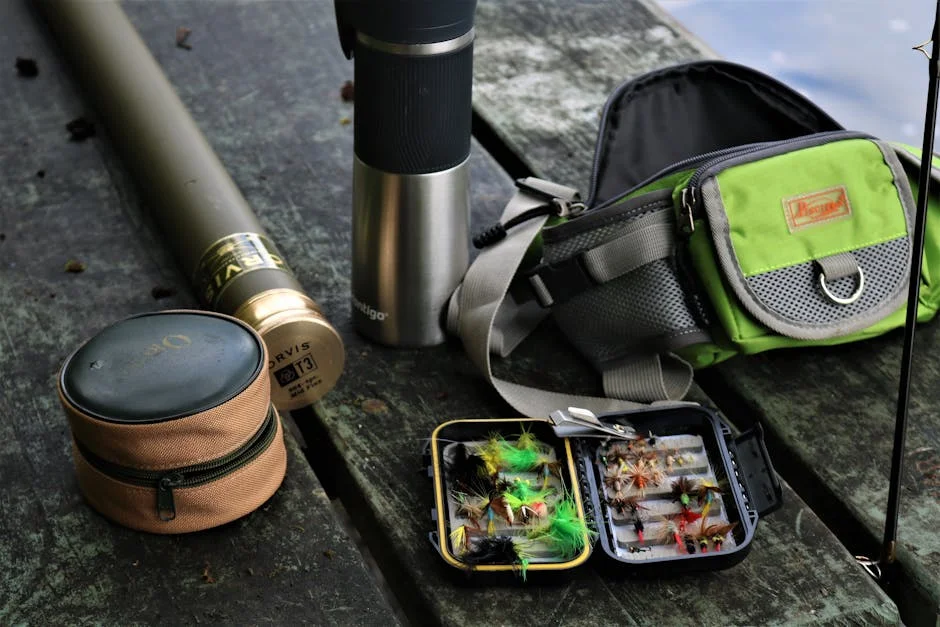
Low water is not the situation to carry a 400-fly box. It’s the situation to carry a focused selection of proven patterns in small sizes. A dedicated low water box with midges in sizes 20 to 26, a few RS2 variants, a Pheasant Tail in sizes 16 to 20, and a small dry fly selection covers most tailwater situations you’ll encounter.
On freestone water, add a small attractor selection in sizes 10 to 14 and a few small soft hackles. The lesson from years of overcomplicating fly selection is that confidence in a small number of patterns outperforms a massive inventory fished with uncertainty. Pick patterns you’ve caught fish on before and fish them with precision.
Stealth Gear and Accessories
Polarized glasses, muted-color wading gear, and a low-profile approach posture matter more in low water than in any other condition. Earth tones and gray wading gear blend better than bright-colored layers. Verified buyers of polarized fishing glasses consistently note that higher-quality lenses reduce eye fatigue and improve contrast in bright, clear conditions, exactly the conditions low water produces.
A lighter, lower-profile chest pack or sling pack reduces your silhouette at the water’s edge. The Fishpond Westfork or a comparable sling-style pack sits closer to the body and creates less visual bulk than a traditional vest when you’re trying to stay low and quiet on a small pool.
Top Picks for Low Water Fly Fishing
Wild Water Standard Fly Fishing Combo Starter Kit
The Wild Water Standard Fly Fishing Combo Starter Kit is a 7-foot, 4-piece graphite rod available in 3 or 4-weight, and those two features make it relevant to a low water discussion. Short rods and light line weights are well-suited to the tight quarters and spooky conditions that low water creates.
The kit includes a die-cast aluminum reel, carrying case, fly box, and flies. For an angler just learning to fish low water conditions or exploring small streams where low flows are standard through summer months, spec data confirms this is a mid-priced, complete system that doesn’t require additional purchases to get on the water.
Owner reviews on this kit are generally positive for beginners and budget-conscious anglers targeting small streams. Verified buyers note the rod blank quality is appropriate for short-distance presentations on small water, which aligns with exactly the low water scenario where short, precise casts outperform distance.
The 7-foot length deserves specific attention here. On small freestone streams where low water pushes fish under overhanging banks and into tight corners, a 7-foot rod mends line with less interference from bankside vegetation than a standard 9-foot setup. That’s a functional advantage in tight quarters that longer rods can’t replicate.
The trade-off is distance and line control on larger water. If your low water fishing happens primarily on bigger tailwaters like the South Platte or the Bighorn at typical flows, a 7-foot rod is a specialized tool, not a general solution. Spec data shows the rod is optimized for close-range, small-stream situations.
Check current price on Amazon.
Bionic Fly Fishing Bait, Flies Fishing Lures Kit
The Bionic Fly Fishing Bait, Flies Fishing Lures Kit is a 15mm fly fishing lure designed for use in both saltwater and freshwater, targeting bass, panfish, and trout. The kit includes multiple patterns described as trout jigs, swimbaits, and dry flies.
In a low water fly fishing context, the relevant application is clear water where fish are keying on small presentations. Field reports from bass and panfish anglers suggest these bionic-style attractors produce well in still or slow-moving water, conditions that overlap with the flat, slow pools that characterize low water trout streams. Verified buyers note the visual attractiveness of the patterns in clear water situations.
The 15mm size is worth noting. Low water trout often key on smaller presentations, and a 15mm profile is in the range where inspection pressure from educated fish is likely. How these patterns hold up to that inspection on heavily pressured tailwater trout is less documented in owner reviews, which tend to focus on warm-water species and less technical freshwater situations.
For anglers targeting bass or panfish in low, clear water conditions, owner feedback is generally positive about the action and visual appeal. For technical trout applications on low-flow tailwaters, field reports suggest these patterns are better suited to opportunistic feeding situations than to the precise hatch-matching presentations that low water tailwater fish often require.
Check current price on Amazon.
Frequently Asked Questions
What tippet size should I use for low water fly fishing?
Drop at least one tippet size from your normal selection when water is low and clear. On pressured tailwaters, 6X fluorocarbon is a reasonable starting point, and 7X is not unusual for small midges on heavily fished Colorado rivers. Fluorocarbon is preferred in low water because its refractive index is closer to water than monofilament, making it less visible to trout. Match your tippet diameter to your fly size to maintain natural drift.
Do I need specialized gear for low water fly fishing?
Specialized gear helps but is not required. A standard 9-foot 5-weight rod with fine tippet and a scaled-down fly selection handles most low water situations. Longer rods improve tight-line drift control, and lighter line weights improve presentation delicacy, but the most important adjustments are behavioral: slow your approach, scale down your flies, and fish with more patience. Gear refinements are incremental improvements on top of those fundamentals.
How do I approach trout in low, clear water without spooking them?
Keep your profile low and move slowly along the bank before entering the water at all. Vibration from wading travels far in low, clear pools and will put fish down before your first cast. Polarized glasses let you spot fish and cast to targets rather than fishing blind. Approach from downstream when possible, use vegetation and bankside cover, and limit your wading to water you absolutely must enter to reach your target.
What fly patterns work best in low water?
Small, natural patterns consistently outperform large attractors on pressured low water streams. A focused selection of midges in sizes 20 to 26, Pheasant Tail nymphs in sizes 16 to 20, RS2s, and a small Parachute Adams covers most tailwater situations. On freestone streams, add a small attractor or soft hackle. Confidence in a short list of proven patterns outperforms a large inventory fished with uncertainty, a lesson most experienced anglers learn the hard way.
Is Euro nymphing or indicator nymphing better in low water?
Tight-line and Euro nymphing methods generally outperform indicator nymphing in low, clear water for two reasons: there’s no indicator landing on the surface to spook fish, and drift control is more precise. Short, accurate drifts in a narrow feeding lane are easier to execute when you’re managing slack directly. That said, a well-placed indicator rig with light tippet and a small fly can still produce. The method matters less than the cast placement and the drift quality.
<script type="application/ld+json">
{
 "@context": "https://schema.org",
 "@type": "FAQPage",
 "mainEntity": [
 {
 "@type": "Question",
 "name": "What tippet size should I use for low water fly fishing?",
 "acceptedAnswer": {
 "@type": "Answer",
 "text": "Drop at least one tippet size from your normal selection when water is low and clear. On pressured tailwaters, 6X fluorocarbon is a reasonable starting point, and 7X is not unusual for small midges on heavily fished Colorado rivers. Fluorocarbon is preferred in low water because its refractive index is closer to water than monofilament, making it less visible to trout. Match your tippet diameter to your fly size to maintain natural drift."
 }
 },
 {
 "@type": "Question",
 "name": "Do I need specialized gear for low water fly fishing?",
 "acceptedAnswer": {
 "@type": "Answer",
 "text": "Specialized gear helps but is not required. A standard 9-foot 5-weight rod with fine tippet and a scaled-down fly selection handles most low water situations. Longer rods improve tight-line drift control, and lighter line weights improve presentation delicacy, but the most important adjustments are behavioral: slow your approach, scale down your flies, and fish with more patience. Gear refinements are incremental improvements on top of those fundamentals."
 }
 },
 {
 "@type": "Question",
 "name": "How do I approach trout in low, clear water without spooking them?",
 "acceptedAnswer": {
 "@type": "Answer",
 "text": "Keep your profile low and move slowly along the bank before entering the water at all. Vibration from wading travels far in low, clear pools and will put fish down before your first cast. Polarized glasses let you spot fish and cast to targets rather than fishing blind. Approach from downstream when possible, use vegetation and bankside cover, and limit your wading to water you absolutely must enter to reach your target."
 }
 },
 {
 "@type": "Question",
 "name": "What fly patterns work best in low water?",
 "acceptedAnswer": {
 "@type": "Answer",
 "text": "Small, natural patterns consistently outperform large attractors on pressured low water streams. A focused selection of midges in sizes 20 to 26, Pheasant Tail nymphs in sizes 16 to 20, RS2s, and a small Parachute Adams covers most tailwater situations. On freestone streams, add a small attractor or soft hackle. Confidence in a short list of proven patterns outperforms a large inventory fished with uncertainty, a lesson most experienced anglers learn the hard way."
 }
 },
 {
 "@type": "Question",
 "name": "Is Euro nymphing or indicator nymphing better in low water?",
 "acceptedAnswer": {
 "@type": "Answer",
 "text": "Tight-line and Euro nymphing methods generally outperform indicator nymphing in low, clear water for two reasons: there's no indicator landing on the surface to spook fish, and drift control is more precise. Short, accurate drifts in a narrow feeding lane are easier to execute when you're managing slack directly. That said, a well-placed indicator rig with light tippet and a small fly can still produce. The method matters less than the cast placement and the drift quality."
 }
 }
 ]
}
</script>Where to Buy
Wild Water Standard Fly Fishing Combo Starter Kit, 3 or 4 Weight 7 Foot Fly Rod, 4-Piece Graphite Rod with Cork Handle, Accessories, Die Cast Aluminum Reel, Carrying Case, Fly Box Case & Fishing FliesSee Wild Water Standard Fly Fishing Combo… on Amazon