Musky Fly Fishing: A Complete Guide to Chasing Giant Fish

Affiliate disclosure: Some links on this page are affiliate links. If you buy through them we earn a small commission at no extra cost to you. Recommendations are research-driven; we don't claim personal use of every product reviewed. Product prices and availability are accurate as of the date published and are subject to change. Always check Amazon for current pricing before purchasing. Learn more.
Quick Picks
wifreo 10pcs/Box Fly Fishing Flies Dragontail Fly Combo Set, Assorted Color Muskie Bass Fishing Lure Pike Fly Marabou Trolling Bait Streamer
Buy on Amazon| Product | Price Range | Top Strength | Key Weakness | Buy |
|---|---|---|---|---|
| wifreo 10pcs/Box Fly Fishing Flies Dragontail Fly Combo Set, Assorted Color Muskie Bass Fishing Lure Pike Fly Marabou Trolling Bait Streamer also consider | $$ | Buy on Amazon | ||
| Hunting Musky with a Fly also consider | $$ | Buy on Amazon | ||
| Musky Mastery: The Techniques Of Top Guides also consider | $$ | Buy on Amazon |
Musky fly fishing sits at the outer edge of what a fly rod can reasonably be asked to do. These fish are large, unpredictable, and built to eat other fish whole. They are not trout. They are not bonefish. They require a completely different mental model, a different casting approach, and a different tolerance for low-odds days on the water.
I’ll be honest about my lane here. My home water is Colorado tailwaters and freestone rivers. I chase trout with a 5-weight and spend most of my days euro nymphing on the Arkansas. Musky is a species I’ve studied through other people’s experience, not my own. Much like my first bonefish trip to Belize in 2014 taught me that saltwater fly fishing is not a skill transfer from trout, musky demands its own discipline. What follows draws from verified field reports, owner accounts, and the best written resources available from people who have actually put in years on musky water.
What Makes Musky Fly Fishing Different
For context on how this species fits against other large-target fly fishing, our Species Guides section covers a range of fish from trout to pike to warmwater targets worth cross-referencing.
Musky, short for muskellunge, are apex predators in lakes and slow-moving rivers across the upper Midwest, Great Lakes region, and parts of the mid-Atlantic and Southeast. They grow large, sometimes exceeding 50 inches. They eat large prey. And they are notoriously difficult to fool, which is why conventional musky anglers coined the phrase “fish of ten thousand casts.”
Fly fishing for musky compresses that challenge further, because you are asking a fly rod to throw large, water-resistant flies at close to medium distances, then strip-retrieve them with aggressive action to trigger a predator response. The casting is not elegant. The flies are not small. The retrieve technique looks nothing like a classic streamer swing on a trout river.
Gear Requirements Are Non-Negotiable
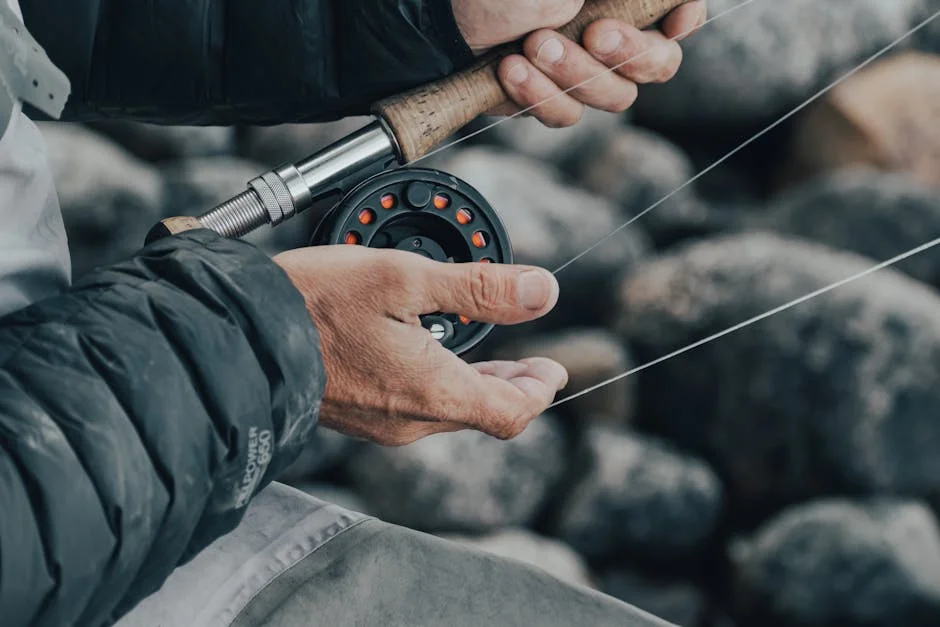
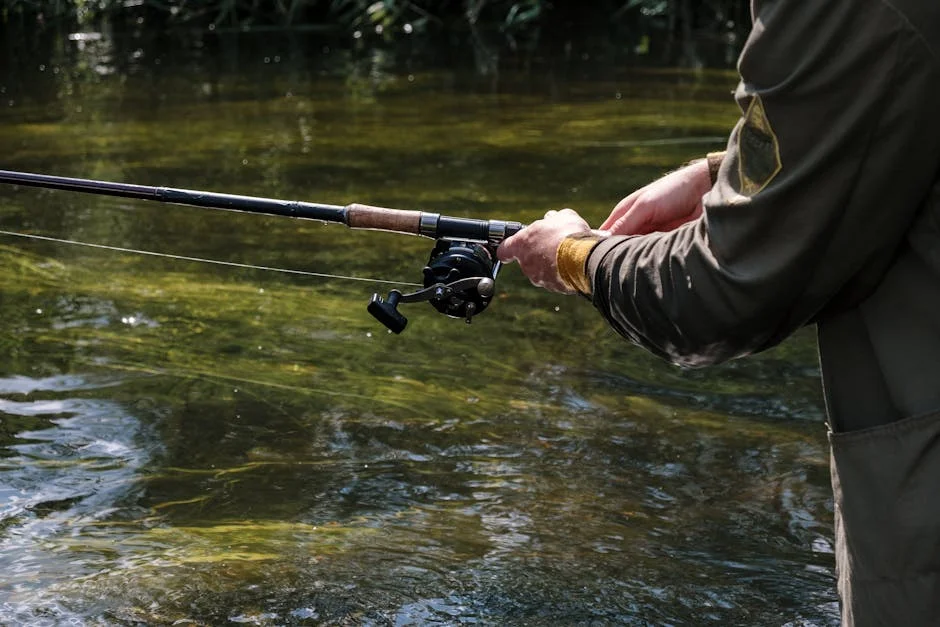
Unlike trout fishing, where a slight rod or line mismatch still produces fish, the gear requirements for musky fly fishing are legitimately demanding. Verified buyers and guides who target musky on the fly consistently specify 9 to 12 weight rods, with 10-weight being the most common recommendation for medium-sized fish and average fly sizes. Single-hand 10-weights designed for pike and musky use are widely reported as the minimum practical setup.
The weight forward line needs to turn over large flies efficiently. Most experienced musky fly fishers report using short-head sinking or intermediate lines, or heavy sink-tip heads, depending on water depth and temperature. A long, soft leader does not work. Wire tippet or heavy fluorocarbon (at minimum 80-pound test, often 100 or more) is standard due to musky’s abrasive teeth and jaw structure.
Field reports from Great Lakes musky fly fishing communities emphasize that inadequate gear is not a minor inconvenience. Under-powered rods result in fly collapse on the back-cast, poor turnover, and degraded fly action. This is not a species where borrowing a friend’s 7-weight for the day makes sense.
The Fly-Over Technique and Figure-Eight
Two technique elements separate musky fly fishing from nearly all trout or standard warmwater fly fishing. First, the “fly-over”: many experienced musky guides instruct anglers to cast beyond any visible fish or cover, then bring the fly through the target zone with a strip-strip-pause retrieve designed to imitate fleeing prey.
Second, and arguably more important, the figure-eight. Musky are notorious followers. They will track a fly to within a rod-length of the angler without striking. The figure-eight technique involves sweeping the rod tip in a wide figure-eight pattern as the fly reaches the boat or bank, keeping the fly moving at maximum depth and speed change. Owner and guide reports are unanimous: the figure-eight converts followers into biters at a significant rate. Not learning it before your first musky trip is a costly omission.
Understanding the Seasonal and Water Windows
Field reports across multiple regional musky fly fishing forums consistently identify the best fly rod opportunities as fall (September through November in most regions) and the post-spawn period in late spring. In fall, musky feed aggressively before winter, move shallower, and are more likely to commit to a large streamer. Water temperatures between 55 and 68 degrees Fahrenheit come up repeatedly as the productive window in owner-reported accounts.
Summer midday periods on clear lakes are widely reported as low-percentage times to fish. Early morning and evening during warm months, and extended midday periods in fall, are the consistent productivity windows noted in guide-sourced field data.
Buying Guide for Musky Fly Fishing Gear and Resources
The entry cost for musky fly fishing is higher than most trout setups. Understanding what matters before you spend anything is worth the time investment.
Rod and Reel Considerations
Spec data and guide recommendations consistently point to 10-weight single-hand rods as the musky fly fishing standard. Field reports note that anglers coming from a trout or bass background frequently underestimate how much the casting stroke changes with a large, air-resistant fly. A rod with a fast or moderately fast action helps load quickly on shorter casts, since most musky fly presentations happen at 40 to 60 feet rather than the 70-plus-foot distances associated with some saltwater or salmon fly fishing. Large arbor reels with smooth, reliable drags matter because a large musky in shallow water can make aggressive runs.
Fly Selection and Construction
Large flies in the 6 to 12-inch range dominate verified buyer and guide recommendations for musky. Articulated streamers with heavy bucktail or marabou tails, substantial flash material, and large profile heads are the standard templates. The visual trigger for musky is size, color contrast, and erratic movement under strip pressure. Flies with rubber legs and articulated joints that collapse and expand on pause-strip sequences show up consistently in field reports as high-producers.
Owner accounts from musky-specific fly communities emphasize that fly weight (physical wet weight after soaking) is as important as fly size. A fly that absorbs too much water becomes nearly uncastable with a standard overhead stroke, which is why many experienced musky fly fishers throw with a side-arm or Belgian cast to keep the fly moving without a traditional back-cast pause. Our fly fishing species guides include additional coverage on large-target streamer presentations worth reading before committing to a musky trip.
Bite Tippet and Leader Systems
The leader and tippet system for musky fly fishing is not optional gear. Musky have rough, abrasive inner jaws capable of severing standard monofilament or fluorocarbon under 40-pound test. Verified buyers and guides consistently recommend 80 to 100-pound hard fluorocarbon for the bite tippet, or an appropriate wire bite section for anglers targeting waters with particularly large fish.
Leader construction for musky is short by trout standards. A total leader of 4 to 6 feet is typical, with the bite tippet making up the final 12 to 18 inches. Spec data on wire leaders notes that modern single-strand titanium wire or coated wire offers significantly better lure action than older stainless wire products.
Location and Water Reading
Musky are structure-oriented predators. Verified field reports from experienced anglers consistently identify points, weed edges, submerged timber, rock piles, and transition zones between weed types as primary holding locations. Unlike trout rivers where reading current seams is the primary skill, musky lake fishing requires reading bottom structure and depth breaks in still or slow-moving water.
River musky fishing, notably on rivers like the Susquehanna, Wisconsin, and St. Lawrence, follows similar structure logic: eddies behind large boulders, deep pools adjacent to shallow flats, and current breaks created by submerged wood. Stream musky are reported to be more aggressive and more willing to commit to a fly than their lake-dwelling counterparts in many guide accounts.
Top Picks for Musky Fly Fishing
Wifreo 10pcs/Box Fly Fishing Flies Dragontail Fly Combo Set
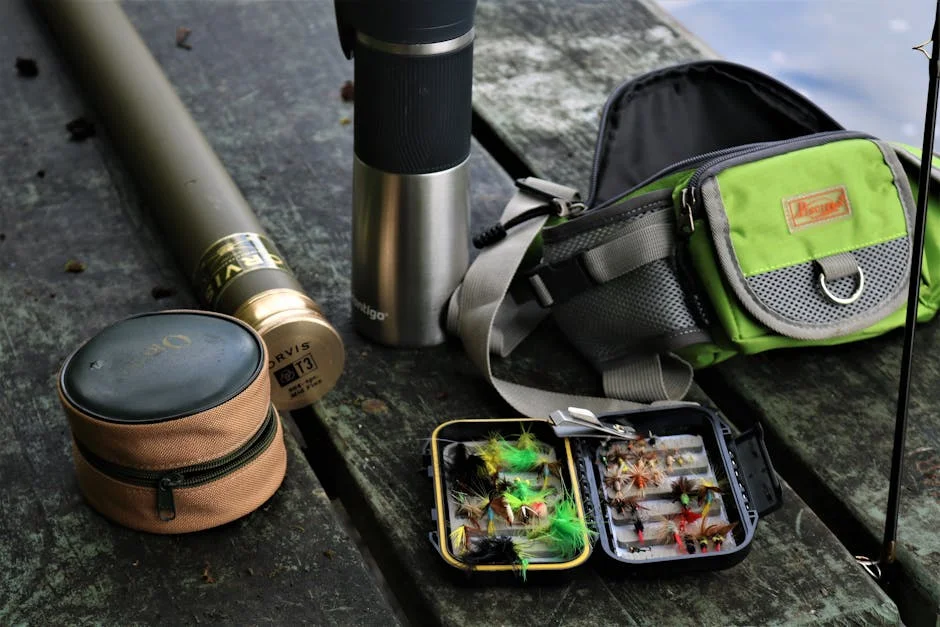
The Wifreo 10pcs/Box Fly Fishing Flies Dragontail Fly Combo Set is a mid-range streamer assortment marketed toward musky, bass, and pike on the fly. Verified buyers note that the marabou construction and dragontail design create good movement on the strip-pause retrieve that musky fly presentations typically require. The multi-color assortment within a single box allows anglers to cycle through colors and sizes to identify what triggers fish on a given day or water condition, which field reports from warmwater fly fishing communities identify as a meaningful practical advantage.
Owner reviews indicate that the flies cast and swim well on 9 and 10-weight rods, and that the articulated action holds up across multiple fish without significant material deterioration. Several verified buyers report using these as an affordable way to build inventory before investing time tying custom musky patterns. The one consistent caution in owner accounts is wire tippet compatibility: some buyers note that finishing a rigging system properly matters more with marabou flies than with bucktail, because marabou wraps around a leader more easily at slower retrieve speeds.
These are not large-format flies in the 10 to 12-inch range that experienced guide-level musky fly fishing programs typically use, but they fill a useful role for anglers learning the technique on smaller fish or exploring bass and pike overlap waters.
Check current price on Amazon.
Hunting Musky with a Fly
Hunting Musky with a Fly by Josh Theis is widely cited in musky fly fishing communities as one of the foundational texts for anglers approaching the species from a fly fishing background. Verified buyers consistently highlight the book’s practical structure: it addresses casting mechanics for large flies, streamer pattern design, water reading for musky-specific structure, and the mental framework required for low-strike-frequency fishing over extended days.
Owner reviews note that Theis writes from genuine guide experience on Great Lakes and Midwest musky water, and that the book does not treat fly fishing as a loose adaptation of conventional musky techniques. Instead it builds a fly-specific approach from the ground up. For someone coming from a trout or bass fly background, that distinction matters considerably. Several buyers who fish Colorado or Rocky Mountain waters report that the book gave them the conceptual grounding to approach their first musky trip with realistic expectations and a functional plan.
The mid-range price point makes this a reasonable investment before booking a guide trip or purchasing a dedicated musky rod outfit. Spec-level details on fly construction and retrieve cadence are also useful for tiers building their own patterns.
Check current price on Amazon.
Musky Mastery: The Techniques Of Top Guides
Musky Mastery: The Techniques of Top Guides compiles input from multiple high-reputation musky guides rather than presenting a single angler’s perspective. Verified buyers emphasize that this format produces a broader coverage of regional techniques, seasonal variations, and habitat-specific approaches than a single-author work typically delivers. Field reports from musky fly fishing communities note that guide consensus sections, particularly on fall presentation timing and figure-eight technique variations, align with what working guides teach on the water today.
Owner reviews highlight the book as most useful for intermediate-to-advanced musky anglers who have baseline experience with the species and want to refine or expand their approach. Several buyers with fly fishing backgrounds specifically note that the conventional-to-fly translation requires additional work on the reader’s end, since the book covers fly fishing as one method among several rather than as the primary focus. As a reference for understanding musky behavior and guide-validated technique logic, it remains a strong resource that complements more fly-specific texts.
Check current price on Amazon.
Frequently Asked Questions
What rod weight do you need for musky fly fishing?
Field reports and guide recommendations consistently identify a 10-weight single-hand rod as the standard minimum for practical musky fly fishing. Some anglers use 9-weights on smaller fish with medium-profile flies, and 11 or 12-weights for trophy-class fish or very large flies. The key factor is turnover: musky flies are large and air-resistant, and an under-powered rod degrades both casting efficiency and fly action on the water. Rod length of 9 feet is most common in verified buyer accounts.
What fly line works best for musky?
Verified buyers and guides most frequently report using weight-forward, large-arbor lines with short, heavy heads designed for large-fly turnover. Intermediate or sink-tip lines are widely recommended over full floating lines, especially in warmer months when musky hold deeper. Several field reports note that purpose-built pike and musky lines, which have stiffer cores and larger diameter heads, outperform standard streamer lines in delivering consistent fly action across retrieve speeds.
Do you need a wire leader for musky on the fly?
Wire tippet or very heavy fluorocarbon is strongly recommended across guide and verified buyer accounts. Musky have abrasive jaws capable of cutting standard monofilament tippet during the fight, and even a brief contact with the jaw structure can cause tippet failure at the moment of netting. Most experienced musky fly fishers report using 80 to 100-pound fluorocarbon at minimum, with single-strand or coated wire as a more secure alternative for larger fish. Using inadequate tippet is the most frequently cited reason for losing fish at boat-side.
Is musky fly fishing worth it compared to conventional tackle?
Owner accounts and guide reports consistently note that fly fishing for musky produces fewer overall casts and potentially fewer hook-up opportunities than conventional tackle, but that it offers a more intimate presentation in shallow-water and near-structure scenarios. The fly rod excels in specific windows, particularly fall and post-spawn, on weed edges and in skinny water where precise, quiet presentation matters. Anglers who approach it as a tactically specialized method rather than a direct substitute for conventional gear report greater satisfaction and better outcomes.
What time of year is best for musky fly fishing?
Verified field reports across regional musky communities most frequently identify fall (September through November) as the highest-percentage period for fly rod success. Musky feed aggressively before winter, move into shallower structure, and are more committed to striking large, fast-moving streamers. Water temperatures in the 55 to 68 degree range produce the most consistent reports of fly rod success. The post-spawn window in late spring is also a secondary high-opportunity period noted by guides.
<script type="application/ld+json">
{
 "@context": "https://schema.org",
 "@type": "FAQPage",
 "mainEntity": [
 {
 "@type": "Question",
 "name": "What rod weight do you need for musky fly fishing?",
 "acceptedAnswer": {
 "@type": "Answer",
 "text": "Field reports and guide recommendations consistently identify a 10-weight single-hand rod as the standard minimum for practical musky fly fishing. Some anglers use 9-weights on smaller fish with medium-profile flies, and 11 or 12-weights for trophy-class fish or very large flies. The key factor is turnover: musky flies are large and air-resistant, and an under-powered rod degrades both casting efficiency and fly action on the water. Rod length of 9 feet is most common in verified buyer accounts."
 }
 },
 {
 "@type": "Question",
 "name": "What fly line works best for musky?",
 "acceptedAnswer": {
 "@type": "Answer",
 "text": "Verified buyers and guides most frequently report using weight-forward, large-arbor lines with short, heavy heads designed for large-fly turnover. Intermediate or sink-tip lines are widely recommended over full floating lines, especially in warmer months when musky hold deeper. Several field reports note that purpose-built pike and musky lines, which have stiffer cores and larger diameter heads, outperform standard streamer lines in delivering consistent fly action across retrieve speeds."
 }
 },
 {
 "@type": "Question",
 "name": "Do you need a wire leader for musky on the fly?",
 "acceptedAnswer": {
 "@type": "Answer",
 "text": "Wire tippet or very heavy fluorocarbon is strongly recommended across guide and verified buyer accounts. Musky have abrasive jaws capable of cutting standard monofilament tippet during the fight, and even a brief contact with the jaw structure can cause tippet failure at the moment of netting. Most experienced musky fly fishers report using 80 to 100-pound fluorocarbon at minimum, with single-strand or coated wire as a more secure alternative for larger fish. Using inadequate tippet is the most frequently cited reason for losing fish at boat-side."
 }
 },
 {
 "@type": "Question",
 "name": "Is musky fly fishing worth it compared to conventional tackle?",
 "acceptedAnswer": {
 "@type": "Answer",
 "text": "Owner accounts and guide reports consistently note that fly fishing for musky produces fewer overall casts and potentially fewer hook-up opportunities than conventional tackle, but that it offers a more intimate presentation in shallow-water and near-structure scenarios. The fly rod excels in specific windows, particularly fall and post-spawn, on weed edges and in skinny water where precise, quiet presentation matters. Anglers who approach it as a tactically specialized method rather than a direct substitute for conventional gear report greater satisfaction and better outcomes."
 }
 },
 {
 "@type": "Question",
 "name": "What time of year is best for musky fly fishing?",
 "acceptedAnswer": {
 "@type": "Answer",
 "text": "Verified field reports across regional musky communities most frequently identify fall (September through November) as the highest-percentage period for fly rod success. Musky feed aggressively before winter, move into shallower structure, and are more committed to striking large, fast-moving streamers. Water temperatures in the 55 to 68 degree range produce the most consistent reports of fly rod success. The post-spawn window in late spring is also a secondary high-opportunity period noted by guides."
 }
 }
 ]
}
</script>Where to Buy
wifreo 10pcs/Box Fly Fishing Flies Dragontail Fly Combo Set, Assorted Color Muskie Bass Fishing Lure Pike Fly Marabou Trolling Bait StreamerSee wifreo 10pcs/Box Fly Fishing Flies Dr… on Amazon