Reach Cast Technique: Master Drag-Free Drift in Fly Fishing

Affiliate disclosure: Some links on this page are affiliate links. If you buy through them we earn a small commission at no extra cost to you. Recommendations are research-driven; we don't claim personal use of every product reviewed. Product prices and availability are accurate as of the date published and are subject to change. Always check Amazon for current pricing before purchasing. Learn more.
Quick Picks
Blue Jay 30 Inch Reacher Grabber Tool with Rubber Suction Cups, Lightweight Long Arm Trash Picker Upper, Multipurpose Extending Reach Assist Stick, Mobility Aid for Seniors and Adults
Buy on AmazonRMS 2-Pack 32 Inch Extra Long Grabber Reacher with Rotating Jaw - Mobility Aid Reaching Assist Tool (Blue)
Buy on AmazonRMS 2-Pack 21 Inch Grabber Reacher with Rotating Jaw - Mobility Aid Reaching Assist Tool
Buy on Amazon| Product | Price Range | Top Strength | Key Weakness | Buy |
|---|---|---|---|---|
| Blue Jay 30 Inch Reacher Grabber Tool with Rubber Suction Cups, Lightweight Long Arm Trash Picker Upper, Multipurpose Extending Reach Assist Stick, Mobility Aid for Seniors and Adults also consider | $$ | Buy on Amazon | ||
| RMS 2-Pack 32 Inch Extra Long Grabber Reacher with Rotating Jaw - Mobility Aid Reaching Assist Tool (Blue) also consider | $$ | Buy on Amazon | ||
| RMS 2-Pack 21 Inch Grabber Reacher with Rotating Jaw - Mobility Aid Reaching Assist Tool also consider | $$ | Buy on Amazon |
The reach cast is one of those techniques that looks simple from the bank but has real mechanical logic behind it. Throw a standard upstream cast and your fly line lands in a straight line, drag sets in almost immediately, and you’re picking up before the fly ever settles into the feeding lane. Add a reach, and you buy seconds of drag-free drift that change the entire equation.
Twenty years in, the reach cast still earns its place in my rotation on every piece of water I fish. Tailwaters like Cheesman Canyon demand it on tricky cross-current presentations. Freestone runs on the Arkansas reward it when fish are tucked behind structure. Learn the mechanics once, and it pays off everywhere.
What the Reach Cast Actually Does
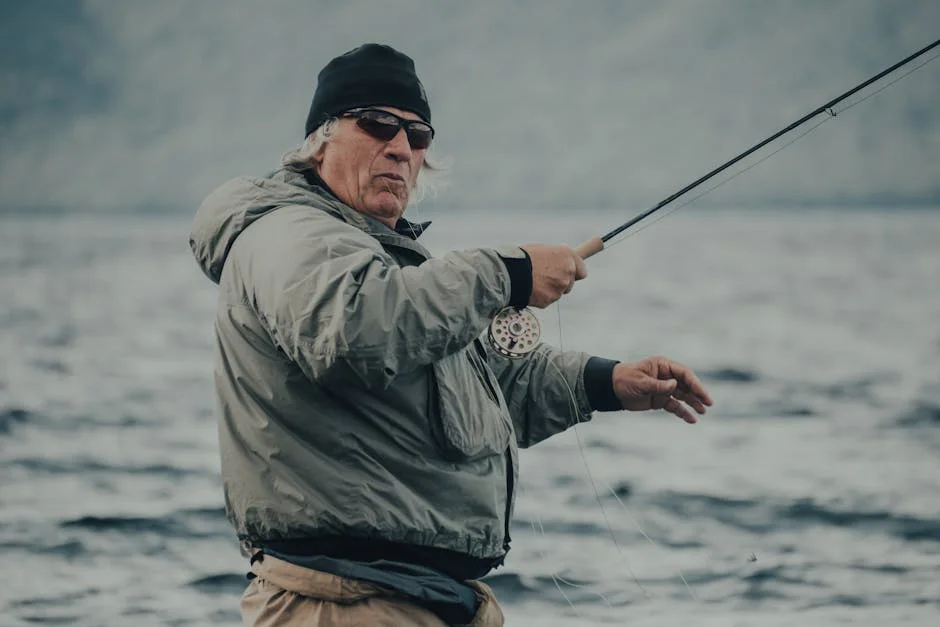
The reach cast is not a separate cast. It is a modification you apply at the end of a standard forward cast, before the fly line settles onto the water. The mechanics are straightforward: you complete your forward casting stroke, then move the rod tip upstream (or across) while the line is still in the air. The line follows the rod tip. When everything lands, your fly line is already angled upstream of where your fly is going to land, giving the current something to push against before it can start pulling the fly out of its natural drift.
What you are doing, in engineering terms, is pre-loading slack into the system in a controlled direction. A pile cast dumps slack randomly. A reach cast places slack upstream, intentionally, so that as the current takes up that slack, the fly has already moved downstream naturally for a meaningful distance before drag sets in.
That distinction matters most on tailwaters with complex, multi-speed currents. At Cheesman Canyon, where you might be standing in slow water casting to a fish holding in a faster seam ten feet closer to the far bank, a reach cast can be the difference between a refusal and a take. The fly needs to arrive before the line. The reach cast makes that happen.
For a broader look at presentation casts and other technique fundamentals, the Techniques & Methods hub is a solid starting point.
How to Execute the Reach Cast
The Basic Mechanics
Make your normal forward cast. Focus on a good loop, good stop. The modification starts at the moment of the forward stop, while the line is still unrolling in the air.
Immediately after the stop, move your rod tip upstream along the bank, parallel to the water, without hauling or adding power. Your arm extends out to the side in the direction you want the line to go. The line in the air follows the rod tip. When the line settles, it lands with an upstream angle built in.
Keep your reach low to the water. A high reach lifts the line above the current instead of across it, which defeats the purpose. You want the belly of the line touching or nearly touching the surface, positioned so the current has to travel upstream to pull the fly before drag can set in.
The Downstream Reach Variation
Most instructors teach the upstream reach first because it solves the most common drag problem, but there is a downstream version that has its own applications.
On a downstream reach, you complete the forward cast and move the rod tip downstream instead of up. This positions the fly upstream of the line. As the current takes the line, the fly swings gradually rather than snapping into an immediate drag-driven arc. It is useful for presenting soft-hackles and wet flies at a controlled swing speed, and it works well when you are positioned above a pod of rising fish and need the fly to lead the line into the feeding zone.
I use the downstream reach fairly often on the South Platte when fish are rising in the film just below me and a pure upstream cast would put line over them before the fly arrives.
Mending vs. the Reach Cast
Mending corrects drag after the line lands. The reach cast prevents drag before the line lands. Both are useful, but they are not interchangeable.
The problem with mending on spooky tailwater fish is that the rod movement and the disturbance on the water surface can put fish down. On the other hand, the reach cast is nearly invisible from the fish’s perspective because everything happens in the air before anything touches the water.
After years of fishing indicator nymphing and watching my indicator sit motionless over water I thought held fish, I came to realize that a lot of what I was calling “bad days” was really just bad presentation. Drag was setting in before the fly reached the zone. The reach cast, combined with learning to read current speed across a seam, was a bigger fix than switching patterns ever was.
When to Use the Reach Cast
Cross-Current Presentations
The reach cast earns its keep most when you are casting across currents of different speeds. Any time you have slow water between you and a faster seam, or fast water in front of you and slower water beyond it, the line and the fly are going to move at different speeds the instant they land. The reach cast pre-positions the line so those speed differences are working in your favor instead of against you.
At Eleven Mile Canyon, the Arkansas, and especially on the Bighorn, I see this situation constantly. You are wading the inside edge of a bend, the fast thread is in the middle, and the trout are rising on the far bank in the slow water beyond. A straight-line cast lands everything simultaneously in different currents. A reach cast with a good upstream angle lets the fly arrive clean.
Dry Fly Fishing to Rising Fish
The reach cast belongs in the dry fly toolbox more than almost any other presentation cast. Rising fish are the most unforgiving audience you will encounter. They are keyed into a specific food item in a specific location, and they are watching the drift carefully enough to refuse patterns tied one size too large. Drag, even micro-drag the angler cannot see, will get a refusal from a quality fish almost every time.
The standard approach: cast two to three feet upstream of the rising fish, apply the reach as the line unrolls, and let the fly come down the lane with zero tension. The fish does not see the line before the fly arrives. By the time any drag starts to set in, the fly has already passed through the strike zone.
Euro Nymphing and the Reach Concept
If you have spent any time with tight-line nymphing, you already understand the principle behind the reach cast even if you have never applied the term to it. Euro nymphing is built on the same core idea: eliminate slack between your hand and your fly, but also eliminate drag by keeping the contact light and following the fly’s natural drift with the rod tip.
I converted to Euro nymphing full-time for subsurface work in 2018 after finally reading George Daniel’s “Dynamic Nymphing.” The learning curve was steeper than I expected. My first twenty sessions felt like I was fishing worse than with an indicator. What I had to learn was to follow the fly with the rod, which is essentially a continuous reach adjustment through the drift. The rod tip tracks the fly’s speed through the current. When the fly slows because of bottom contact or a take, you feel it because the system has no slack to absorb the signal.
The reach cast applied to dry fly fishing operates on similar logic: you are managing the relationship between the line and the drift so the fly behaves naturally. The method is different. The principle is the same.
Buying Guide: Tools That Support Reach Cast Practice and Stream Access
This section addresses a specific and practical problem that comes up frequently in the fly fishing community, particularly among anglers with mobility considerations or those fishing in areas where gear retrieval and bank access present real challenges. Grabber and reacher tools have genuine utility on the water, from retrieving flies snagged in bankside brush without wading to assisting anglers with limited range of motion who still want to fish productively. The stream fishing techniques hub covers related access and presentation topics in more depth.
Length and Reach Capacity
The first number to consider is tool length. Grabber reachers intended for outdoor and streamside use generally fall into short (21 inches or under), standard (30 to 32 inches), or extended categories. Shorter tools work well for close-range tasks but offer limited utility in riparian environments where snagged fly boxes, dropped net handles, or brushy retrieval situations require an arm extension beyond what standard tools provide.
For most wading applications, a 30 to 32-inch tool covers the majority of situations without becoming unwieldy in a chest pack or vest. Longer tools sacrifice portability. Shorter tools sacrifice reach. The 30-to-32-inch range is the practical sweet spot for streamside carry based on what verified buyers consistently report across extended outdoor use.
Jaw Design and Grip Reliability
Jaw mechanism design determines whether a grabber tool is genuinely useful on irregular surfaces outdoors or only works on flat indoor floors. Fixed jaws work on uniform objects. Rotating jaws handle irregular angles, which matters when you are trying to grip a net handle wedged under a rock or a fly box lodged in bankside vegetation at an odd angle.
Suction cup jaw faces add grip on smooth objects like bottles and glasses but lose effectiveness on rough, wet, or irregular surfaces. Rubber-edged jaws without suction cups often perform more reliably in wet outdoor conditions. Owner reviews from anglers and outdoor users consistently note that the jaw design matters more than overall build weight for practical field reliability.
Weight and Packability for Wading
A tool that lives in the car does not need to meet strict weight standards. A tool you want to carry in a chest pack while fishing does. The difference between a 4-ounce tool and a 12-ounce tool sounds trivial until it is hanging off your pack for six hours on the Arkansas or the South Platte.
Aluminum-shaft reachers generally hit a better weight-to-rigidity ratio than plastic-shaft equivalents for outdoor carry. Collapsible designs that telescope down compress well in larger packs. Fixed-length tools are typically more rigid but harder to stow. For wading applications, owner reports favor lightweight fixed-length tools in the 30-to-32-inch range over collapsible tools that develop play in the joints after extended outdoor use.
If you are still refining your approach to streamside gear selection and river access, the broader Techniques & Methods hub covers wading strategy and water reading in context.
Durability for Outdoor and Wet Environments
Most grabber reachers are designed for indoor home use. That is not a disqualification for streamside carry, but it means the original design intent did not account for repeated exposure to water, sand, and UV. Buyers who use these tools outdoors consistently note that rust on any steel components (trigger springs, jaw screws) is the primary failure point for tools not rated for wet environments.
When selecting a tool for outdoor use near water, look for aluminum shaft construction, non-steel trigger components, and rubber grip surfaces that do not degrade quickly in sunlight. Owner reviews noting “used this for years outdoors” versus “rusted after a few months” are the most useful signal for durability in wet environments.
Top Picks
Blue Jay 30 Inch Reacher Grabber Tool
The Blue Jay 30 Inch Reacher Grabber Tool with Rubber Suction Cups lands in the 30-inch standard range that works well for most streamside retrieval tasks without excess bulk. The rubber suction cup jaw design is the functional center of this tool. Suction cups grip smooth objects well but perform less reliably on rough, wet surfaces common in outdoor environments.
Verified buyers describe the trigger mechanism as light and consistent, which matters for anglers with hand fatigue or reduced grip strength. The aluminum shaft keeps weight reasonable for pack carry. Owner reviews note the suction cups work well for household objects but offer less grip on irregular shapes. For streamside applications involving rough or wet items, the suction cup face may require a secondary grip strategy.
Overall, field reports suggest this is a solid mid-range tool for anglers who need a lightweight 30-inch option primarily for occasional outdoor use and want the additional functionality of a suction cup jaw for smooth-surface tasks.
Check current price on Amazon.
RMS 2-Pack 32 Inch Extra Long Grabber Reacher with Rotating Jaw
The RMS 2-Pack 32 Inch Extra Long Grabber Reacher with Rotating Jaw addresses two of the most practical considerations for outdoor buyers: extra reach and jaw rotation. The 32-inch length gives two additional inches over standard 30-inch tools, which is meaningful when reaching into bankside brush or retrieving gear at an awkward angle from the water’s edge.
The rotating jaw is the primary reason verified buyers consistently prefer this model for outdoor applications. Fixed jaws require the user to position their body to match the jaw angle to the object. A rotating jaw adjusts to the object’s orientation, which reduces the body maneuvering required in tight or uneven terrain. Owner reports across multiple purchase cohorts note the rotating jaw as the single most frequently praised feature, with particular appreciation from users who need to grip irregularly positioned objects.
The two-pack format offers backup and replacement without additional purchases, which is practical for high-use environments where occasional tool loss or damage is realistic. According to owner reviews, this is one of the more popular options at the mid-range price band for anglers wanting reliable outdoor carry.
Check current price on Amazon.
RMS 2-Pack 21 Inch Grabber Reacher with Rotating Jaw
The RMS 2-Pack 21 Inch Grabber Reacher with Rotating Jaw is the compact version in the RMS line. At 21 inches, it is better suited to close-range tasks than extended outdoor retrieval situations. The rotating jaw remains the same functional design as the 32-inch model, which means the grip reliability on irregular surfaces carries over.
For anglers specifically, the 21-inch length fits more easily in smaller chest packs and sling packs without protruding. If your primary use case is close-range assistance, net handling, or tasks within arm’s reach plus a short extension, the shorter format is genuinely more manageable than carrying 32 inches of tool all day. Owner reviews note the compact size as its strongest attribute, with some buyers purchasing both lengths for different applications.
The trade-off is straightforward: you give up 11 inches of reach for significantly easier pack storage. For anglers who want a streamside tool that stays out of the way until needed, this is the practical pick in the RMS line.
Check current price on Amazon.
Frequently Asked Questions
What is a reach cast in fly fishing and why does it matter?
A reach cast is a forward cast modification where you move the rod tip upstream or downstream while the line is still in the air, landing the fly line at an angle rather than straight. The purpose is to create drag-free drift by positioning the line so the current must travel to pull the fly before drag can set in. It is most valuable on cross-current presentations where multiple current speeds separate the angler from the target fish. On tailwaters with educated trout, it often matters more than pattern selection.
Is the reach cast difficult to learn for beginning fly fishers?
The reach cast is one of the more accessible presentation casts because it requires no additional casting mechanics, only a rod tip movement at the end of a forward cast you already know. Most anglers can execute a functional reach cast within a single session once they understand the timing. Refinement takes longer, particularly learning how much reach angle to apply for different current speed differentials. Starting on a simple single-seam situation before moving to complex multi-current presentations is the practical approach.
When should I mend instead of using a reach cast?
Mending corrects drag after the line is already on the water. The reach cast prevents drag before the line lands. If you are fishing to spooky rising fish, the reach cast is preferable because mending disturbs the surface and can put fish down. Mending is the better tool when the current situation is unclear before the cast, or when you need to extend a drift already in progress.
Can the reach cast be applied to nymphing presentations?
Yes, particularly with indicator nymphing on cross-current setups. You cast the rig across the seam, reach upstream, and the indicator lands with the line already angled correctly for a clean drift down the target lane. In tight-line Euro nymphing, the reach concept applies continuously through the drift as the rod tip tracks the fly’s speed. The basic principle of positioning the line so the current cannot pull the fly is the same regardless of whether you are fishing a dry fly or a nymph.
Do I need a specialized rod to learn the reach cast?
No. A standard 9-foot 5-weight with a properly matched floating line is all you need to learn and use the reach cast effectively. Rod length helps, with longer rods giving more reach angle when arm extension reaches its limit, but it is not a prerequisite. The technique works on any fly rod. If you want to develop reach casting skills, practice on water you know well so you can focus on the mechanics rather than reading the water simultaneously.
<script type="application/ld+json">
{
 "@context": "https://schema.org",
 "@type": "FAQPage",
 "mainEntity": [
 {
 "@type": "Question",
 "name": "What is a reach cast in fly fishing and why does it matter?",
 "acceptedAnswer": {
 "@type": "Answer",
 "text": "A reach cast is a forward cast modification where you move the rod tip upstream or downstream while the line is still in the air, landing the fly line at an angle rather than straight. The purpose is to create drag-free drift by positioning the line so the current must travel to pull the fly before drag can set in. It is most valuable on cross-current presentations where multiple current speeds separate the angler from the target fish. On tailwaters with educated trout, it often matters more than pattern selection."
 }
 },
 {
 "@type": "Question",
 "name": "Is the reach cast difficult to learn for beginning fly fishers?",
 "acceptedAnswer": {
 "@type": "Answer",
 "text": "The reach cast is one of the more accessible presentation casts because it requires no additional casting mechanics, only a rod tip movement at the end of a forward cast you already know. Most anglers can execute a functional reach cast within a single session once they understand the timing. Refinement takes longer, particularly learning how much reach angle to apply for different current speed differentials. Starting on a simple single-seam situation before moving to complex multi-current presentations is the practical approach."
 }
 },
 {
 "@type": "Question",
 "name": "When should I mend instead of using a reach cast?",
 "acceptedAnswer": {
 "@type": "Answer",
 "text": "Mending corrects drag after the line is already on the water. The reach cast prevents drag before the line lands. If you are fishing to spooky rising fish, the reach cast is preferable because mending disturbs the surface and can put fish down. Mending is the better tool when the current situation is unclear before the cast, or when you need to extend a drift already in progress. In most tailwater dry fly situations, the reach cast plus a follow mend covers the majority of drag problems."
 }
 },
 {
 "@type": "Question",
 "name": "Can the reach cast be applied to nymphing presentations?",
 "acceptedAnswer": {
 "@type": "Answer",
 "text": "Yes, particularly with indicator nymphing on cross-current setups. You cast the rig across the seam, reach upstream, and the indicator lands with the line already angled correctly for a clean drift down the target lane. In tight-line Euro nymphing, the reach concept applies continuously through the drift as the rod tip tracks the fly's speed. The basic principle of positioning the line so the current cannot pull the fly is the same regardless of whether you are fishing a dry fly or a nymph."
 }
 },
 {
 "@type": "Question",
 "name": "Do I need a specialized rod to learn the reach cast?",
 "acceptedAnswer": {
 "@type": "Answer",
 "text": "No. A standard 9-foot 5-weight with a properly matched floating line is all you need to learn and use the reach cast effectively. Rod length helps, with longer rods giving more reach angle when arm extension reaches its limit, but it is not a prerequisite. The technique works on any fly rod. If you want to develop reach casting skills, practice on water you know well so you can focus on the mechanics rather than reading the water simultaneously."
 }
 }
 ]
}
</script>Where to Buy
Blue Jay 30 Inch Reacher Grabber Tool with Rubber Suction Cups, Lightweight Long Arm Trash Picker Upper, Multipurpose Extending Reach Assist Stick, Mobility Aid for Seniors and AdultsSee Blue Jay 30 Inch Reacher Grabber Tool… on Amazon