Reading Water for Fly Fishing: Master This Essential Skill

Affiliate disclosure: Some links on this page are affiliate links. If you buy through them we earn a small commission at no extra cost to you. Recommendations are research-driven; we don't claim personal use of every product reviewed. Product prices and availability are accurate as of the date published and are subject to change. Always check Amazon for current pricing before purchasing. Learn more.
Quick Picks
fishpond Riverkeeper Digital Thermometer | Fly Fishing Water Temperature Stream Thermometer | Lake Water Temperature Guage
Buy on Amazon| Product | Price Range | Top Strength | Key Weakness | Buy |
|---|---|---|---|---|
| Reading Trout Water also consider | $ | Buy on Amazon | ||
| The Orvis Guide to Small Stream Fly Fishing also consider | $ | Buy on Amazon | ||
| fishpond Riverkeeper Digital Thermometer | Fly Fishing Water Temperature Stream Thermometer | Lake Water Temperature Guage also consider | $ | Buy on Amazon |
Reading water is the skill that separates consistently productive fly fishers from those who spend most of a day covering water without much to show for it. It is also the skill that takes the longest to develop, because it requires you to slow down, observe, and think before you ever make a cast.
Twenty years in, I still miss it sometimes. I’ll wade past a seam that a better angler would have worked for twenty minutes, or I’ll spend too long on a flat that looked good from the bank but had nothing holding. Learning to read water is less a destination than a practice.
If you are newer to the sport, the Fly Fishing Basics hub is a good place to start building context for what follows here.
What “Reading Water” Actually Means
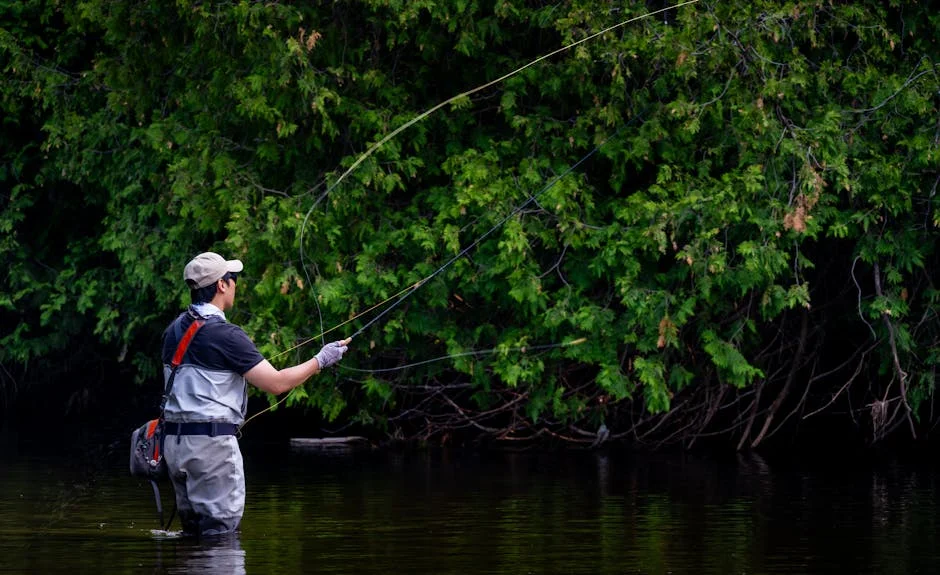
Reading water is the process of looking at a body of moving water and identifying where trout are likely to be holding, feeding, or resting at any given moment. It sounds simple. It is not. Trout location shifts with season, water temperature, time of day, insect activity, barometric pressure, and flow rate. A pool that holds a dozen fish in October may hold none in July when water temperatures climb. A riffle that looks empty in low-flow conditions becomes a feeding lane during a good hatch.
The foundational idea is this: trout need three things, and they want all three as close together as possible.
- Food (delivered by current)
- Cover (protection from predators and overhead light)
- Comfort (water temperature and oxygen levels they can tolerate)
Every piece of structure or water type you will learn to recognize is just a variation on how trout solve that three-part equation with whatever the river gives them.
The Core Water Types You Need to Recognize
Riffles
Riffles are shallow, broken water running over cobble or gravel. The surface looks choppy. Depth is usually ankle to knee-deep, sometimes less. New fly fishers often skip riffles because they don’t look like “trout water.” That is a mistake.
Riffles are oxygen-rich, insect-productive environments. Caddis, mayflies, and stoneflies use riffles heavily as larval habitat. Trout will move into riffles to feed, especially in low-light conditions and during hatches. On the Arkansas below Salida, I have watched large brown trout work riffle edges during caddis emergence in a way that looked impossible given how shallow the water was. The broken surface also provides significant visual cover from above.
Work the seam where a riffle transitions to deeper water. That edge is often where the fish actually hold while feeding into the current delivering food from above.
Runs
A run is deeper, more uniform water with a defined current lane. Think of it as a riffle that has slowed slightly and deepened. Runs are the workhorses of most trout rivers. Depth provides cover. Current delivers food. Substrate is often mixed gravel and larger rock.
On tailwaters like Cheesman Canyon, long runs are where I spend most of my time euro nymphing. The depth and current pace suit a tight-line presentation well, and fish hold predictably in the mid-column or near the bottom, especially when no surface activity is visible. The challenge with runs is that they can look uniform from the bank but hold surprisingly specific micro-structure: a single submerged boulder, a slight depth change, a current deflection. Polarized sunglasses (I use Costa Tuna Alleys and would not fish without them) help you see into the column well enough to identify that structure.
Pools
Pools are the classic “trout hole” mental image: deep, slow, often forming at the outside of a bend or below a falls or ledge. Pools do hold fish, often large ones, but they are also the most pressured water on most rivers because they are obvious.
The most productive water in a pool is usually not the deepest, slowest center. Look at the head of the pool, where incoming current begins to slow and deepen. That transition zone delivers food and offers depth. The tail of the pool, where water shallows and speeds up again before the next riffle, is another feeding position, especially during hatches. Mid-day, fish in pools often drop to the deepest water and rest. Early morning and evening they move to the edges.
Pocket Water
Pocket water is what you get in high-gradient, boulder-strewn freestone streams. Large rocks interrupt current and create pockets of slower water directly upstream and downstream of each obstruction. Fish stack in those pockets because the boulder does all the work of deflecting current while still positioning them near feeding lanes.
Pocket water rewards short, accurate presentations. Distance casting is irrelevant here. You are dropping a fly into a two-foot window, sometimes with a rod length of line past the tip. This is where my Orvis Helios 3D in 8’6” 4wt earns its keep on smaller Colorado freestoners. The presentation challenge is managing drag across conflicting current threads between you and the target.
Seams and Edges
If I had to pick one concept to hand to every new fly fisher before anything else, it would be seams. A seam is the interface between fast water and slow water. Anywhere current speed changes abruptly, you have a seam. That boundary is where trout post up: they let the fast water carry food to them while they hold in the adjacent slower current and expend minimal energy.
Seams exist everywhere: along the edges of boulders, where a tributary enters the main current, where a riffle drops into a run, along cut banks. Identifying seams becomes intuitive after enough time on the water, but it takes deliberate practice at first. Slow down and watch the current for thirty seconds before you make your first cast to any new piece of water. Watch for the line where the surface foam or debris changes speed. That is your seam.
Why Water Temperature Changes Everything
I did not pay enough attention to water temperature in my first several years of fly fishing. I focused on structure and ignored temperature almost entirely. That was a significant gap.
Trout are cold-blooded. Their metabolism, feeding behavior, and holding position all track water temperature closely. The general guidance (and it is guidance, not a rule) is that trout feed most actively between roughly 52 and 65 degrees Fahrenheit. Below that range they become lethargic and feed less aggressively. Above 68 degrees, many species, especially brown and rainbow trout, experience thermal stress. Above 72, fishing for trout is genuinely harmful to the fish and should stop.
Temperature determines which water types hold fish at different times of year. On the Arkansas in late July, fish push into spring-fed tributaries and shaded deep runs during midday. On Cheesman in February, they stack in slower, deeper water where the temperature is marginally more stable. If you do not know the water temperature, you are guessing.
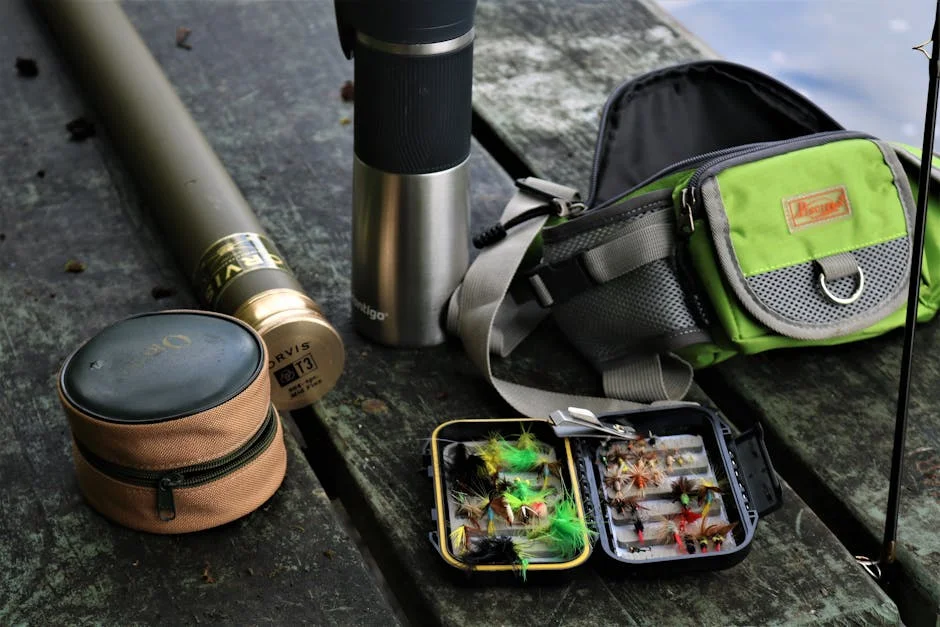
The Fishpond Riverkeeper Digital Thermometer is worth keeping in a vest pocket or chest pack. Checking temperature at the put-in and again at midday costs thirty seconds and can completely change how you approach a given stretch.
How Tailwaters Differ from Freestone Streams
This distinction matters for how you apply everything above. I fish both, and they require different thinking.
A tailwater is a river below a dam. The dam moderates temperature and flow. Insects stratify differently. Fish can be extremely selective because food is abundant and consistent. Cheesman Canyon is a textbook tailwater: specific hatches at specific times, technical presentations, spooky fish in clear water. Structure matters, but you also have to match timing and presentation to an unusual degree.
A freestone stream is rain and snowmelt fed, with variable flow and temperature. The Arkansas above and below Salida is a freestone (with some tailwater influence near Pueblo). Freestone fish are often less selective but more opportunistic and position-dependent. Structure reading is arguably more critical on freestone water because there are no guaranteed feeding windows, and fish location shifts with every weather event and flow change.
On freestone water, I weight my attention more toward finding the right structure and less toward matching the hatch. On tailwaters, both matter about equally.
Buying Guide: Resources for Learning to Read Water
Reading water is learned on the water, but good resources accelerate the process significantly. Below are some considerations if you are looking to supplement time on stream with useful reference material.
Books vs. Videos
There is no shortage of fly fishing content on video, and it has genuine value for visualizing current behavior and fish positioning. However, books remain the most organized way to build systematic understanding. A well-written book on reading water will give you a framework to apply across every river you fish, not just instructional content tied to one guide’s home water. Field reports from fly fishing communities consistently note that anglers who pair book study with on-water practice develop reading skills faster than those who rely on either alone.
Most books on this subject are in the budget price band, which removes any meaningful barrier to picking one up. You will spend more on a single box of flies. The Fly Fishing Basics hub links to other foundational resources worth reviewing alongside any book purchase.
What to Look for in a Reading Water Resource
The best resources on reading water share a few characteristics. They should explain the physics of current, not just describe where fish are. Understanding why a seam forms the way it does helps you identify equivalent features in water you have never seen before. They should also address multiple water types including tailwaters, freestone streams, and small streams, since reading skills do not transfer automatically between very different environments.
Verified buyers of most fly fishing books note that resources covering insect behavior alongside water reading are more useful than those treating the two subjects in isolation. Where a fish holds and what it is eating are related questions on any given day.
The Role of a Stream Thermometer
A Fishpond Riverkeeper Digital Thermometer belongs in the discussion of reading water because temperature is as much a part of fish location as structure. Budget-priced and reliable based on owner reviews, it is a simple tool that many experienced anglers consider non-negotiable. Spec data shows digital models give faster and more accurate readings than dial thermometers, which matters when you are checking a spring creek side channel to see if it is cooling the mainstem.
Check temperature at the access point, mid-section, and at any tributary confluence. Those three readings can tell you more about likely fish holding than thirty minutes of blind wading.
Small Stream Applications
Reading small streams is its own skill set. Smaller water is faster, shallower, and more structurally complex per unit of surface area. Cover takes on greater weight in the equation because fish in small streams have less depth to rely on. Undercut banks, overhanging vegetation, and submerged logs become the primary holding features.
Owner reviews of small-stream-focused fly fishing books often note that the instruction is more directly actionable for beginners than general trout fishing books, because the water is less complex to read visually. If you are starting on local creeks, a resource specific to small streams will serve you well before moving to bigger water.
Using What You Read on Real Water
The gap between reading about water and reading actual water is real. One practice that helps: before wading into a new piece of water, stand on the bank and spend five minutes identifying every seam, depth change, and obstruction you can see. Then make a plan: which features will you fish first, in what order, and why? This deliberate pre-fishing observation builds the habit of looking before casting. Experienced anglers do this automatically. New anglers almost never do it, and it is why they often spook the fish they were about to cast to.
If you are still in the early stages of building your foundation, return to the core skills covered in Fly Fishing Basics before advancing to more technical water-reading topics like reading flat water for sipping fish or reading large tailwater channels.
Top Picks
Reading Trout Water
Reading Trout Water by Dave Hughes is one of the most-referenced books on this subject in fly fishing communities, and for good reason based on verified buyer feedback. Owner reviews consistently note that the book explains current structure and fish behavior in clear, systematic terms that hold up across different river types, from Pacific Northwest freestoners to Rocky Mountain tailwaters.
Field reports from serious readers suggest the section on riffle and run structure is the most immediately applicable, particularly for anglers moving from one or two familiar rivers to fishing unfamiliar water. The writing is practical rather than poetic, which suits the subject matter well. It is a budget-priced resource that owner reviews rate favorably against significantly more expensive courses and guided instruction for pure water-reading knowledge.
Spec data on the book itself is less relevant than what it covers: the relationship between gradient, substrate, current velocity, and trout positioning across all major stream types. If you want one foundational text on reading moving water for trout, verified buyers point to this one repeatedly.
Check current price on Amazon.
The Orvis Guide to Small Stream Fly Fishing
The Orvis Guide to Small Stream Fly Fishing by Tom Rosenbauer addresses a water type that many general fly fishing books handle poorly. Small streams have a different visual logic than large rivers, and the reading skills do not transfer automatically. Verified buyers note that this book does a particularly good job explaining how cover and shade function differently on water where depth is rarely the primary holding factor.
Owner reviews suggest the book is most useful for anglers fishing small mountain streams and headwater creeks where structure is close, presentations are short, and fish are spooky in a different way than tailwater trout. The guidance on approach and positioning is more detailed than most general texts because on small water, how you get to the fish without spooking it matters as much as where you cast. Budget priced and regularly cited by small-stream anglers as a practical field guide rather than a coffee-table book.
Check current price on Amazon.
Fishpond Riverkeeper Digital Thermometer
The Fishpond Riverkeeper Digital Thermometer comes up consistently in owner reviews as a simple, reliable, budget-priced tool that experienced anglers wonder how they fished without. Spec data shows digital thermometers in this format provide fast readings, which matters in practical fishing situations where you want temperature data quickly without stopping to stand in one spot for a minute.
Field reports from anglers across Colorado, Montana, and Wyoming tailwaters note that carrying a thermometer changes decision-making in measurable ways. When mid-July Arkansas temperatures climb above the comfort threshold by noon, knowing the exact reading is the difference between stopping and being uncertain. Fishpond’s build quality on their accessories is consistently noted as solid in owner reviews, with the Riverkeeper design being compact enough to clip to a chest pack and forget until needed.
Check current price on Amazon.
Frequently Asked Questions
What is the most important thing to look for when reading water fly fishing?
Seams are the single most important feature to identify. A seam is the boundary between fast and slow current, and it is where trout can hold in easy water while intercepting food carried by the fast lane next to them. Seams exist at every scale, from the edge of a boulder to the full-width transition between a riffle and a run. Learning to spot seams visually and habitually will improve your catch rate faster than any other single skill.
Does reading water change between tailwaters and freestone streams?
Yes, meaningfully so. On tailwaters, fish hold predictably in well-oxygenated runs and feeding lanes because flow and temperature are regulated. On freestone streams, water temperature swings and flow variability move fish more frequently, and cover takes on greater weight in where fish choose to hold. The same seam-reading and structure-identification skills apply, but the priority you assign to temperature, depth, and feeding activity shifts depending on water type.
How does water temperature affect where trout are holding?
Water temperature directly drives trout metabolism and activity level. In cold water below comfortable ranges, trout slow down and hold in deeper, slower water where energy expenditure is minimal. In warm water above stress thresholds, trout seek the coolest available water, often near spring seeps, tributary confluences, or shaded deep runs. Checking temperature with a tool like the Fishpond Riverkeeper Digital Thermometer before and during a day gives you the information to target the right water types rather than guessing.
Can beginners learn to read water from books, or do they need guided time on the water?
Both accelerate learning, and they work better together than either does alone. Books like Reading Trout Water provide the conceptual framework that makes guided time more productive because you know what you are looking at. Guided time shows you what the concepts look like in real conditions. If you can only do one, time on the water with an attentive guide or experienced angler will teach you faster in the short term.
Is pocket water harder to read than runs and pools?
In some ways yes, because the structure is more complex and the current is more chaotic visually. However, pocket water is in another sense easier to read because the fish-holding positions are more obvious: directly upstream and downstream of each boulder, in the slack water adjacent to current deflections. The reading challenge in pocket water is less about identifying where fish hold and more about figuring out how to present a fly to those spots without lining fish in adjacent pockets or managing severe cross-current drag.
{
 "@context": "https://schema.org",
 "@type": "FAQPage",
 "mainEntity": [
 {
 "@type": "Question",
 "name": "What is the most important thing to look for when reading water fly fishing?",
 "acceptedAnswer": {
 "@type": "Answer",
"text": "Seams are the single most important feature to identify. A seam is the boundary between fast and slow current, and it is where trout can hold in easy water while intercepting food carried by the fast lane next to them.Where to Buy
Reading Trout WaterSee Reading Trout Water on Amazon