Dry Fly vs Nymph Fishing: When to Use Each Technique

Affiliate disclosure: Some links on this page are affiliate links. If you buy through them we earn a small commission at no extra cost to you. Recommendations are research-driven; we don't claim personal use of every product reviewed. Product prices and availability are accurate as of the date published and are subject to change. Always check Amazon for current pricing before purchasing. Learn more.
Quick Picks
Outdoor Planet 12 Pieces Top Rating Dry/Nymph/Streamer Fly Fishing Flies Trout Fly Assortment
Buy on AmazonGoture Fly Fishing Flies Kit,25pcs/30pcs/100pcs Fly Fishing Lures,Dry Flies Wet Flies Streamers Nymphs Flies, Fly Fishing Assortment Kit for Bass Trout Salmon Fishing
Buy on AmazonBASSDASH Fly Fishing Assorted Flies Kit, Pack of 64 pcs Including Dry and Wet Flies, Nymphs, Streamers, Terrestrials, Leeches and More, with Magnetic Fly Box
Buy on Amazon| Product | Price Range | Top Strength | Key Weakness | Buy |
|---|---|---|---|---|
| Outdoor Planet 12 Pieces Top Rating Dry/Nymph/Streamer Fly Fishing Flies Trout Fly Assortment also consider | $ | Buy on Amazon | ||
| Goture Fly Fishing Flies Kit,25pcs/30pcs/100pcs Fly Fishing Lures,Dry Flies Wet Flies Streamers Nymphs Flies, Fly Fishing Assortment Kit for Bass Trout Salmon Fishing also consider | $ | Buy on Amazon | ||
| BASSDASH Fly Fishing Assorted Flies Kit, Pack of 64 pcs Including Dry and Wet Flies, Nymphs, Streamers, Terrestrials, Leeches and More, with Magnetic Fly Box also consider | $ | Buy on Amazon |
Most fly fishers hit the same wall early on: you know trout eat flies, but you’re not sure whether to fish on the surface or below it. Dry fly vs nymph is one of the first real decisions the sport asks you to make, and the answer isn’t fixed. It shifts with the season, the water type, the time of day, and what the fish are actually doing.
Twenty years in, I still work through this question on every stretch of river I wade. Understanding both approaches, and when to favor each, will do more for your catch rate than almost any gear upgrade.
What Dry Fly Fishing Actually Means
A dry fly is designed to float on the water’s surface film. It imitates adult aquatic insects, terrestrials (think ants, beetles, grasshoppers), or spent spinners resting on top after mating. The fish has to come up to eat it, which is why dry fly fishing is so visually satisfying and, honestly, a little addictive once you’ve seen a trout nose up through clear water and sip a size 18 parachute adams.
If you’re still building your foundation as an angler, the Fly Fishing Basics hub has good context on how fish feeding behavior connects to fly selection. It’s worth reading alongside this.
What Makes a Good Dry Fly Presentation
Surface presentation requires a drag-free drift. That means your fly moves at the same speed as the current, without the line pulling it sideways or accelerating it unnaturally. Fish holding in calm water, particularly on tailwaters like Cheesman Canyon or Eleven Mile, are extremely sensitive to drag. They see it constantly and they refuse anything that doesn’t look right.
Reach casts, mends, and slack-line presentations become your core toolkit when dry fly fishing over selective fish. This is where rod action genuinely matters. A medium-fast rod gives you more feedback on your loop and more control over line placement than a stiff fast-action blank. I made that mistake myself early on, buying a fast-action rod thinking it would help me cast farther. It punished my imprecise loops and I spent two seasons fighting the rod. If you’re newer to the sport, a medium-fast or medium action rod will teach you more.
When Dry Fly Fishing Makes Sense
Dry fly fishing shines during hatches, those windows when aquatic insects emerge and trout key on the surface. Mayfly, caddis, and PMD hatches on Colorado’s tailwaters can produce surface feeding frenzies that are obvious from fifty feet away. Rising fish, rings spreading across slower seams, and visible takes are your signal.
Terrestrial fishing works differently. From mid-July through September on freestone rivers like the Arkansas, hoppers and ants become legitimate food sources for bank-feeding trout. You don’t need a hatch. You just need warm weather and fish holding near the grassy banks.
What Nymph Fishing Actually Means
Nymphs imitate the underwater larval stages of aquatic insects. Before a mayfly or caddis fly reaches the surface, it spends months or years living on the riverbed as a nymph. Trout eat subsurface insects far more often than they eat adults on top. Most credible estimates put it somewhere between 80 and 90 percent of a trout’s diet, though that ratio shifts during active hatches.
Nymph fishing means getting your fly down to the fish’s feeding depth. On a fast-water freestone river, that might be 3 to 5 feet. On a slow tailwater pool, the fish might be holding in 2 feet of water but suspended just off the bottom.
Traditional Indicator Nymphing vs Euro Nymphing
Traditional nymphing uses a strike indicator (essentially a float) above your flies, with split shot on the leader to get the flies down. It’s approachable for beginners and works across a wide range of water types.
Euro nymphing, which I’ve been fishing since 2018, is a tight-line technique that removes the indicator and uses weighted flies, a long specialized rod, and a thin colored sighter in the leader to detect strikes. The direct connection to the flies gives you far better sensitivity. I can feel strikes that would be invisible on an indicator rig. On a tailwater like the South Platte system, where fish eat softly and the takes are subtle, that sensitivity matters enormously.
If you want to learn more about the technical side of these techniques, the fundamentals section at /learn/ covers nymphing setups in more detail.
When Nymphing Makes Sense
Nymphing is productive almost any time fish aren’t visibly rising. Early morning in March on a Colorado tailwater, before the midges start coming off, fish are almost certainly on or near the bottom eating midge larvae. There’s no hatch. There’s no surface activity. Throwing a dry fly in those conditions is a low-percentage move.
High water conditions favor nymphs too. After runoff or rain events on the Arkansas, the river runs turbid and fast. Fish hold in slower water near the bottom or tucked behind structure. A heavily weighted rig, two flies, gets down into the strike zone far more reliably than anything floating.
Dry Fly vs Nymph: Reading the Water
The honest answer to which is better is neither, until you read the conditions. Here’s how I think through it.
If fish are rising, match the hatch and fish dry. Start by identifying what’s emerging. Flip a few rocks upstream to see what nymphs are present. Look at the size and silhouette of the insects flying near the surface. Match the size first, then the shape, then the color.
If fish aren’t rising, start with nymphs. Fish the likely holding lies (deeper seams, behind boulders, soft water adjacent to fast water) with a presentation that gets your fly to the bottom. Watch your indicator or sighter for any hesitation, twitch, or upstream movement.
The middle ground is the emerger. During a hatch, many fish feed just below the surface or in the film on nymphs and emergers rather than fully adult dries. If you see fish rising but refusing your dry, drop down to a soft hackle or an emerger pattern before you give up on the surface game.
A Note on Water Type
Tailwaters and freestone rivers fish differently in ways that affect this whole decision. Tailwaters like Cheesman Canyon run cold and clear year-round with consistent flows. Hatches are more predictable. Fish are heavily pressured and selective. Dry fly fishing on a tailwater during a hatch is precise work.
Freestone rivers like the upper Arkansas run warmer, have seasonal flows tied to snowpack and runoff, and support different insect communities. Hatches happen but the fish are often less selective. Terrestrial fishing and attractor dries (patterns that suggest food without imitating one specific insect) are more viable here than on most tailwaters.
Knowing your water type before you choose your approach is half the battle.
Flies for Each Approach: A Starting Point
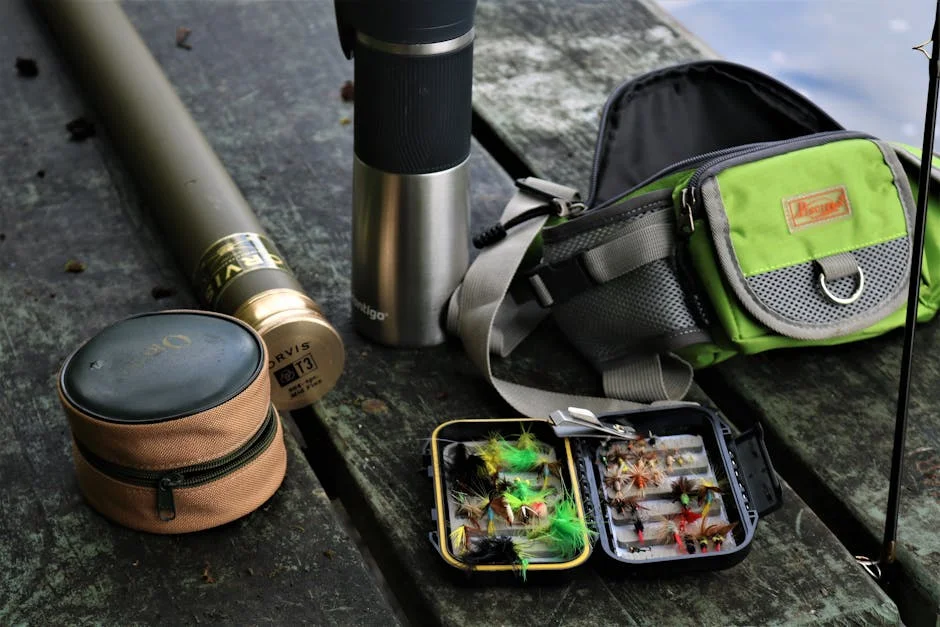
Getting into either technique means having flies that actually work for each style. Assortment kits can be a sensible starting point for newer anglers building a first box, though seasoned fly fishers generally move toward tying their own or buying from local shops where the staff know what’s actually hatching.
Top Picks
Outdoor Planet 12 Pieces Top Rating Dry/Nymph/Streamer Fly Fishing Flies Trout Fly Assortment
The Outdoor Planet 12 Pieces Top Rating Dry/Nymph/Streamer Fly Fishing Flies Trout Fly Assortment is a compact sampler that touches all three fly categories in a single purchase. Verified buyers note the flies are tied on reasonably sharp hooks and that the assortment gives a new angler something in each technique category, dry, nymph, and streamer, without requiring three separate purchases.
At a budget price point, this isn’t the kit to stock a serious angler’s box for a big trip. But as an illustrative example of what a basic assortment looks like, and for a new fisher who just wants to see what dry flies and nymphs look like side by side, it serves the educational purpose well. Owner reviews mention the flies photograph well and match the product description accurately for the most part.
Check current price on Amazon.
Goture Fly Fishing Flies Kit
The Goture Fly Fishing Flies Kit is available in 25, 30, and 100-piece configurations and covers the same major categories: dry flies, wet flies, nymphs, and streamers. Field reports from verified buyers indicate the 100-piece version gives a new fly fisher a reasonable variety to experiment with across technique types without a major financial commitment.
The value of a kit like this, from an educational standpoint, is that it lets you physically compare a dry fly to a nymph in your hand. You can see the differences in hook weight, materials, and design intent before you get to the water. Budget assortments at this tier vary in quality control, and owner reviews reflect that: some pieces are well-tied, others are inconsistent. For learning purposes rather than serious fishing, that tradeoff is reasonable.
Check current price on Amazon.
BASSDASH Fly Fishing Assorted Flies Kit
The BASSDASH Fly Fishing Assorted Flies Kit stands out among budget assortments for including a magnetic fly box with its 64-piece pack. The kit covers dry and wet flies, nymphs, streamers, terrestrials, and leeches, which is a broader category range than most comparable kits. Verified buyers note the magnetic box is a practical addition that holds flies securely and is actually usable in the field.
From an educational standpoint, having terrestrials and leeches in the same kit alongside conventional nymphs and dries gives a new angler a broader picture of what subsurface and surface imitation looks like across pattern types. Owner reviews describe the fly quality as consistent for the price band, with the hooks holding up adequately for general trout fishing.
Check current price on Amazon.
Buying Guide: Choosing Flies for Dry and Nymph Fishing
Match Your Local Hatch First
The single most important buying criterion isn’t brand or kit size. It’s whether the flies in a given assortment match the insects present in your local water. Before buying anything, check with your closest fly shop, or look up hatch charts for your specific river. On the Arkansas, a good PMD or caddis pattern matters. On a spring creek in Vermont, it might be blue-winged olives. Generic assortments cover common patterns, but they aren’t calibrated to any specific river system. The Fly Fishing Basics section at /learn/ has context on reading hatch charts if that’s a new concept.
Hook Size and Wire Gauge
Dry flies need to float. That means they’re tied on lighter wire hooks so the hook itself doesn’t pull the fly through the surface film. Nymphs are tied on heavier wire hooks and are often weighted with a bead head or wire wraps to help them sink. When you’re looking at an assortment, check whether the manufacturer specifies hook sizes. A dry fly in size 14 or 16 is broadly useful. A nymph in size 16 to 18 covers midge and small mayfly nymph territory that shows up on most tailwaters.
Kit Size vs. Quality Tradeoff
Budget assortments make a tradeoff: more flies for less money per fly, but with variable quality control. Verified buyer feedback across budget fly kits consistently notes the same pattern: most flies are fishable, a handful in any given kit have finishing issues (loose head cement, slightly bent hooks, sparse hackle). For a beginning fly fisher building a practice box, that’s acceptable. For a trip to selective tailwater fish, you’ll want locally tied or premium patterns that have been tied with consistent quality.
Fly Box Organization
How you store and organize your flies affects how fast you can adapt on the water. If you’re building a first setup, consider keeping your dries and nymphs in separate compartments or separate boxes. Mixed storage makes quick technique changes slower when fish start rising or stop rising unexpectedly. Compartmented foam boxes work well for dries (the hook stays sharp when it’s not dragging across metal). Slit foam or magnetic surfaces work for nymphs where hook point protection is slightly less critical.
When to Graduate Beyond Assortments
Assortment kits are a starting point, not a long-term strategy. After a season or two, most fly fishers develop a short list of patterns that work reliably on their home water and start buying or tying those patterns specifically. On my home water around Salida, I know which midge larva and pupa sizes work on the South Platte system and which hopper profiles move fish on the Arkansas in August. That specific knowledge makes a targeted handful of patterns worth more than a hundred generic ones.
Frequently Asked Questions
Is dry fly fishing harder than nymph fishing?
Dry fly fishing tends to have a higher visual skill ceiling because presentation drag is immediately visible and refusals are obvious. Nymph fishing has its own complexity, particularly in strike detection and depth management. Verified buyers of beginner fly fishing resources consistently note that nymphing produces more fish early on because it keeps the fly in the feeding zone longer. Neither technique is objectively easier once you factor in all variables.
Do I need different gear for dry fly vs nymph fishing?
For most beginners, a standard 9-foot 5-weight rod handles both reasonably well. Euro nymphing uses longer, lighter specialized rods, but that’s an intermediate technique you can explore later. Owner feedback on beginner setups consistently confirms that a single versatile rod is the right starting point. Line choice matters more than most beginners expect: a floating line is used for both techniques, but nymphing benefits from a more supple, thinner running line.
What fly size should I start with for dry fly fishing?
Sizes 14 through 18 cover the most common surface feeding situations across North American trout waters. A size 16 parachute adams or elk hair caddis gives you a starting point that works on a wide range of water types. Field reports from beginner fly fishers indicate that going too small (size 20 and smaller) makes fly handling and tying on difficult before your dexterity is trained. Start in the middle of the size range and adjust based on what you observe on the water.
Can I use nymphs as a dropper below a dry fly?
Yes, and it’s one of the most productive setups for mixed conditions. A dry fly serves as both a surface attractor and a visual indicator while a nymph hangs below it. Verified buyers of fly fishing learning materials describe this as a confidence-building setup because you’re covering two depth zones simultaneously. The typical setup uses 12 to 24 inches of tippet between the dry and the nymph, adjusted for water depth and clarity.
How do I know when trout are feeding on the surface vs below?
Visible rises, rings spreading across the surface, and fish silhouettes near the top are your clearest signals for surface feeding. No visible surface activity during daylight hours generally indicates subsurface feeding. Owner reviews of instructional fly fishing content note that flat light conditions (overcast mornings and evenings) make rising fish easier to spot than direct sunlight. When in doubt, ask at your local fly shop. Staff who fish that water daily will know exactly what the fish are eating.
<script type="application/ld+json">
{
 "@context": "https://schema.org",
 "@type": "FAQPage",
 "mainEntity": [
 {
 "@type": "Question",
 "name": "Is dry fly fishing harder than nymph fishing?",
 "acceptedAnswer": {
 "@type": "Answer",
 "text": "Dry fly fishing tends to have a higher visual skill ceiling because presentation drag is immediately visible and refusals are obvious. Nymph fishing has its own complexity, particularly in strike detection and depth management. Verified buyers of beginner fly fishing resources consistently note that nymphing produces more fish early on because it keeps the fly in the feeding zone longer. Neither technique is objectively easier once you factor in all variables."
 }
 },
 {
 "@type": "Question",
 "name": "Do I need different gear for dry fly vs nymph fishing?",
 "acceptedAnswer": {
 "@type": "Answer",
 "text": "For most beginners, a standard 9-foot 5-weight rod handles both reasonably well. Euro nymphing uses longer, lighter specialized rods, but that's an intermediate technique you can explore later. Owner feedback on beginner setups consistently confirms that a single versatile rod is the right starting point. Line choice matters more than most beginners expect: a floating line is used for both techniques, but nymphing benefits from a more supple, thinner running line."
 }
 },
 {
 "@type": "Question",
 "name": "What fly size should I start with for dry fly fishing?",
 "acceptedAnswer": {
 "@type": "Answer",
 "text": "Sizes 14 through 18 cover the most common surface feeding situations across North American trout waters. A size 16 parachute adams or elk hair caddis gives you a starting point that works on a wide range of water types. Field reports from beginner fly fishers indicate that going too small (size 20 and smaller) makes fly handling and tying on difficult before your dexterity is trained. Start in the middle of the size range and adjust based on what you observe on the water."
 }
 },
 {
 "@type": "Question",
 "name": "Can I use nymphs as a dropper below a dry fly?",
 "acceptedAnswer": {
 "@type": "Answer",
 "text": "Yes, and it's one of the most productive setups for mixed conditions. A dry fly serves as both a surface attractor and a visual indicator while a nymph hangs below it. Verified buyers of fly fishing learning materials describe this as a confidence-building setup because you're covering two depth zones simultaneously. The typical setup uses 12 to 24 inches of tippet between the dry and the nymph, adjusted for water depth and clarity."
 }
 },
 {
 "@type": "Question",
 "name": "How do I know when trout are feeding on the surface vs below?",
 "acceptedAnswer": {
 "@type": "Answer",
 "text": "Visible rises, rings spreading across the surface, and fish silhouettes near the top are your clearest signals for surface feeding. No visible surface activity during daylight hours generally indicates subsurface feeding. Owner reviews of instructional fly fishing content note that flat light conditions (overcast mornings and evenings) make rising fish easier to spot than direct sunlight. When in doubt, ask at your local fly shop. Staff who fish that water daily will know exactly what the fish are eating."
 }
 }
 ]
}
</script>Where to Buy
Outdoor Planet 12 Pieces Top Rating Dry/Nymph/Streamer Fly Fishing Flies Trout Fly AssortmentSee Outdoor Planet 12 Pieces Top Rating D… on Amazon