Overlining a Fly Rod: When and How to Load Heavier Line

Affiliate disclosure: Some links on this page are affiliate links. If you buy through them we earn a small commission at no extra cost to you. Recommendations are research-driven; we don't claim personal use of every product reviewed. Product prices and availability are accurate as of the date published and are subject to change. Always check Amazon for current pricing before purchasing. Learn more.
Quick Picks
Gonex Fly Fishing Rod and Reel Combo Starter Kit, Fly Rod 4-Piece Carbon Fiber, Aluminum Fly Reel, 12Pcs Fly Flies, Fishing Line, Scissors, Premium Travel Case Portable Lightweight
Buy on AmazonTOPFORT Fly Fishing Rod and Reel Combo, 4-Piece Fly Rod Kit with Complete Fly Fishing Gear: Fly Rod, Pre-Spooled Fly Fishing Reel, Fishing Flies, Leader, Forceps, Nipper and Carrying Case
Buy on Amazon| Product | Price Range | Top Strength | Key Weakness | Buy |
|---|---|---|---|---|
| Gonex Fly Fishing Rod and Reel Combo Starter Kit, Fly Rod 4-Piece Carbon Fiber, Aluminum Fly Reel, 12Pcs Fly Flies, Fishing Line, Scissors, Premium Travel Case Portable Lightweight also consider | $$ | Buy on Amazon | ||
| TOPFORT Fly Fishing Rod and Reel Combo, 4-Piece Fly Rod Kit with Complete Fly Fishing Gear: Fly Rod, Pre-Spooled Fly Fishing Reel, Fishing Flies, Leader, Forceps, Nipper and Carrying Case also consider | $$ | Buy on Amazon |
Overlining a fly rod means loading the rod with a line one or two weights heavier than its labeled rating. The technique has legitimate uses, and understanding when it helps versus hurts can change how your setup performs on the water.
This isn’t a topic most combo kit buyers think about on day one, but it surfaces fast. Whether you’re casting a packaged combo or building out a more serious rig, knowing how line weight interacts with rod action shapes every presentation you make.
For a broader look at how all these components fit together, the Lines, Leaders & Tippet hub covers taper profiles, leader construction, and line selection in much more detail.
What Overlining a Fly Rod Actually Does
The physics here are straightforward, and the engineer in me finds it easier to explain once you have a clear mental model of how a fly rod loads.
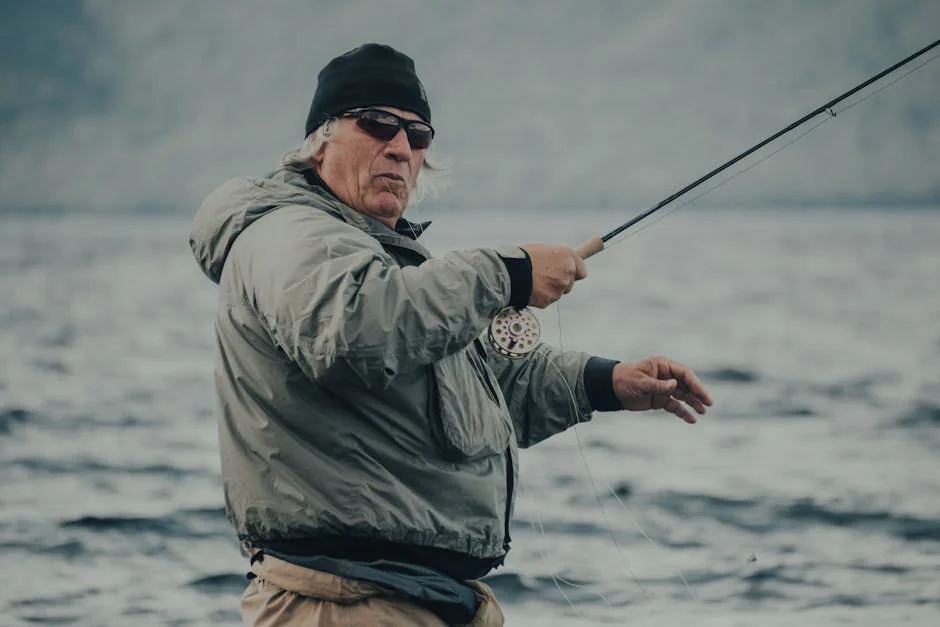
A fly rod flexes, or loads, in response to the weight of fly line in the air during a cast. Manufacturers rate rods to load optimally with the corresponding AFTMA line weight, meaning a rod labeled 5wt is designed to bend correctly with a 5wt line under normal casting conditions. Overlining means you’re putting more mass on that rod, which causes it to flex deeper in the blank earlier in the casting stroke.
For a fast-action rod, which loads primarily in the upper third of the blank, overlining shifts that flex zone down toward the mid-section. The result is a rod that feels softer and more forgiving, particularly at short distances where there isn’t enough line in the air to properly load a stiff tip. For a moderate-action rod, the effect is amplified further.
When It Helps and When It Hurts
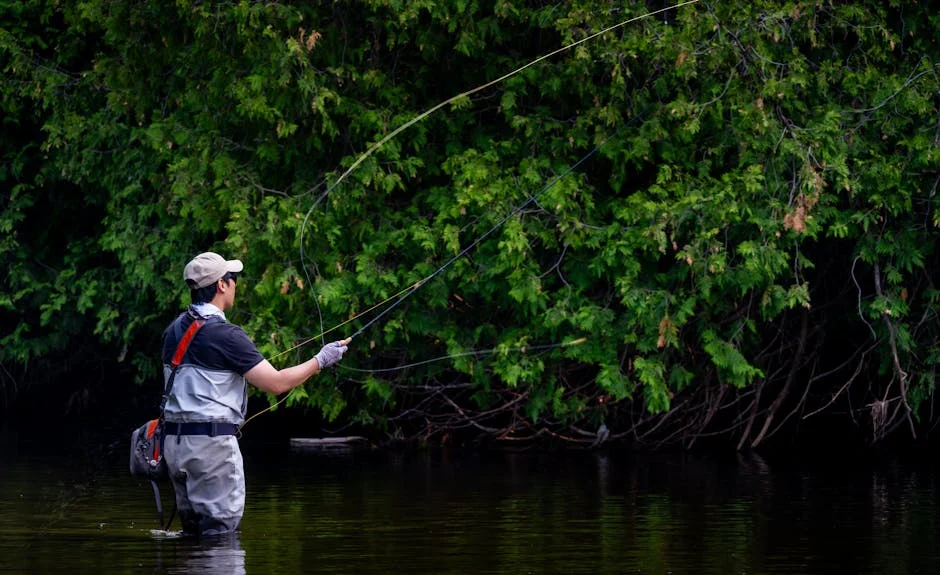
Overlining is most useful at close-to-medium range, roughly 20 to 45 feet. Within that window, the extra mass gets your rod loaded faster with less false casting, which is a real advantage in tight quarters: small streams, brushy pocket water, underneath overhanging cottonwoods on the Arkansas above Salida. Beginners benefit especially here because the heavier line is more forgiving of timing errors. You can feel the load easier, which builds muscle memory.
The tradeoff shows up past 50 feet. A heavy line carrying more mass means more wind resistance and a line that doesn’t shoot as cleanly through the guides. If you’re trying to reach rising fish on the far bank of a flat glide, an overlined setup will cost you distance and often accuracy. The other tradeoff is presentation. A heavier front taper hits the water with more force on the turnover, which matters enormously on pressured tailwaters. I learned this the hard way at Cheesman Canyon. For years I couldn’t figure out why I was spooking fish on long, flat glides that other anglers were catching fish on. A guide finally watched my cast and pointed out that the heavy front taper on my line was slapping the surface on turnover. Switching to a softer presentation line fixed the problem. On technical water, a heavier-than-rated line is often the worst possible choice.
Overlining vs. Changing Taper Profile
These are different levers, and it’s worth separating them. Overlining means going up in weight. Changing taper profile means selecting a different line design at the same weight. A double-taper line at the rated weight often loads a fast rod better at close range than a weight-forward line at the same rating, because the DT has a longer, more even front taper and distributes mass differently along its length.
After switching to a double-taper on my Sage X based on a customer conversation at the shop, I found the DT5F rolled over a dry fly more quietly at 30 feet than any WF5 I’d tried. That softer turnover matters on pressured fish. The point is: before you go up a line weight, consider whether a taper change at your current weight solves the same problem with fewer tradeoffs.
Rod Action and the Overlining Sweet Spot
Ultra-fast, high-modulus rods benefit from overlining more than moderate-action rods do. A fast 5wt that feels lifeless and crispy at 25 feet often comes alive with a 6wt line, especially for beginners still developing casting stroke length. Moderate and slow-action rods are already softer and load more readily at short range; overlining them pushes toward overcorrection and loss of loop control.
Budget and mid-range combo rods frequently fall into a middle-speed category where overlining by one weight is the standard recommendation from shop staff. It compensates for blank inconsistencies and gives newer casters more feel during the load phase, which accelerates the learning curve meaningfully.
Overlining Combo Kits: What to Expect
Factory combo kits almost universally come spooled with the matching line weight to the rod. Whether that’s the ideal setup depends entirely on the rod’s actual action, the casting situation you’re in, and your experience level. The two kits below are mid-range options commonly recommended for new anglers, and both raise the overlining question quickly once buyers start casting them in the field.
Gonex Fly Fishing Rod and Reel Combo Starter Kit
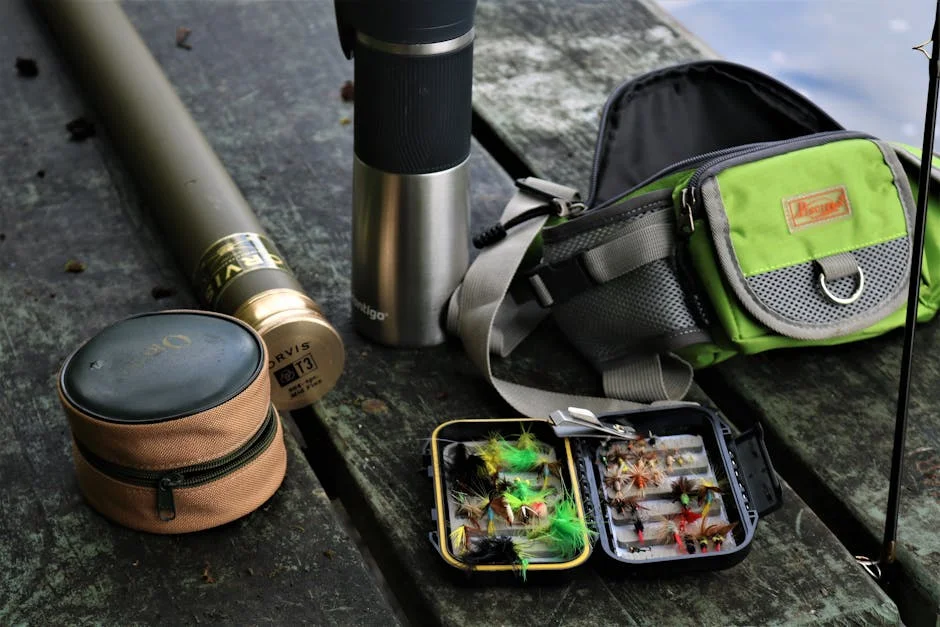
The Gonex Fly Fishing Rod and Reel Combo Starter Kit is a four-piece carbon fiber package that includes an aluminum reel, fly line, 12 fly patterns, a nipper, and a travel case. It’s oriented at the new-to-fly-fishing buyer who wants a complete out-of-the-box setup without sourcing individual components.
Verified buyers note that the rod blank has a moderate-to-fast action profile, which is typical for this category. Owner reviews indicate that the included line feels slightly stiff in cold conditions and can be difficult to load at shorter distances, a common complaint with budget-tier factory-spooled lines. Field reports from buyers who have fished this kit suggest that going up one line weight, from the rated weight to one above, produces noticeably better feel at the 20-to-35-foot distances most beginners operate in.
Spec data shows the rod is built as a four-piece travel-friendly blank, which suits the buyer who wants something portable for vacation or occasional use. The fly selection included is basic but functional for surface presentations. The aluminum reel in this category serves its purpose, though drag adjustment is limited compared to mid-range dedicated reels. For a new angler learning the mechanics of a cast on small water, the combo provides enough to get started, and the overlining adjustment is low-cost to make since it only requires purchasing an additional line spool.
Check current price on Amazon.
TOPFORT Fly Fishing Rod and Reel Combo
The TOPFORT Fly Fishing Rod and Reel Combo is a four-piece kit that includes a pre-spooled reel, fly selection, leader, forceps, a nipper, and a carrying case. The inclusion of forceps and a nipper makes this slightly more field-ready out of the box compared to kits that skip terminal tackle accessories.
Owner reviews consistently describe the rod action as moderate, which places it in a category where overlining has less dramatic benefit than it would on a fast-action blank. That said, verified buyers on technical review forums note that the factory-spooled line casts better once a season of use breaks it in, suggesting the stiffness issue common to packaged lines applies here as well. Field reports suggest the pre-spooled line works adequately on still water but can feel heavy-handed on moving water presentations, which aligns with the taper slap issue on flat glides.
The leader included in this kit is a starting point rather than a finished system. Verified buyers recommend replacing it early with a tapered leader suited to the flies being fished. For the buyer who wants to overline this setup, going up one weight is the commonly reported sweet spot, giving the moderate blank more to work with during the load while keeping turnover manageable. This kit targets the same beginner-to-early-intermediate buyer as the Gonex option, with the added accessories tipping it slightly toward practical readiness on day one.
Check current price on Amazon.
Buying Guide: Choosing the Right Line Setup for Your Rod
Understanding What Your Rod Actually Needs
Rod ratings are a starting point, not a mandate. Manufacturers rate their blanks under idealized casting conditions with a specific line length in the air, roughly 30 feet outside the tip. Real fishing conditions almost never match that. If you’re buying a packaged combo or a rod in the mid-range price band, the actual action often benefits from a half-to-full line weight adjustment up, particularly for casters still developing timing.
Before overlining, ask what problem you’re trying to solve. If the rod feels dead at 25 feet, overlining may fix it. If the rod loads fine but turnover is sloppy, the taper profile is the variable to change, not the weight. Getting clear on the actual failure mode saves money and prevents chasing solutions to problems you haven’t correctly identified.
Taper Profile Matters as Much as Weight
A weight-forward line concentrates mass near the front of the head, which aids distance and handles wind reasonably well. A double-taper distributes mass more evenly and produces a longer, softer front taper that turns over more quietly at close range. On a pressured tailwater with visible fish in flat water, presentation differences between these two designs are real and measurable in spook rates.
For the angler who fishes the same 200 yards of river repeatedly, the Lines, Leaders & Tippet hub has detailed coverage of taper profiles worth reading before you buy a replacement line. The decision between a WF and DT at the same weight is often more impactful than going up one weight class.
How Water Type Should Drive the Decision
Freestone rivers with varied currents, pocket water, and bankside structure reward the angler who can load quickly and change direction fast. In that environment, overlining by one weight works well because most casts are short, precision matters more than distance, and the heavier line loads faster on abbreviated strokes. The Arkansas River above Salida is good example water: boulders, seams, and short windows mean a quickly loaded cast beats a technically perfect 60-foot delivery almost every time.
Tailwater fishing inverts those priorities. Flat, clear, slow-moving water with pressured fish punishes heavy taper turnover. On that water, underlining or using a presentation-specific line at the rated weight often outperforms an overlined setup, even if the overlined rod feels better in the hand during practice casting. Match the line choice to the water, not just to what the rod feels like on a lawn.
Combo Kits and the Overlining Default
Factory combo kits in the mid-range price band almost always benefit from going up one line weight once the buyer has learned the basics. The factory line is functional but rarely optimized. Budget lines in these kits tend to be level or near-level taper designs that don’t turn over cleanly at standard distances.
The practical upgrade path is simple: fish the kit as-packaged for a month, then evaluate whether the rod feels dead at typical casting distances. If it does, try a quality weight-forward line one size up from the rod’s rating. Many buyers find the rod performs noticeably better, and the cost difference between the factory line and a mid-range replacement line is modest enough to justify the experiment early in the learning process.
Frequently Asked Questions
Does overlining a fly rod damage it?
Overlining by one weight does not damage a fly rod under normal casting conditions. The stresses involved in casting a line one weight above the rod’s rating fall within the structural tolerances of any modern carbon fiber blank. Where damage risk increases is with excessive false casting, particularly with heavier rigs or weighted flies, because the cumulative stress on the blank increases. Stick to one weight over the rating for the practical benefits without meaningful risk.
How much should I overline my fly rod?
One weight over the rod’s rating is the standard recommendation and covers most situations where overlining is useful. Going two weights over is occasionally done with very stiff, fast-action rods to compensate for extreme tip stiffness at close range, but it tends to reduce loop control and hurt turnover quality. Verified buyers of combo kits in the mid-range price band report that one weight up is the practical limit before presentation quality degrades.
Should beginners overline their fly rods?
Most beginners benefit from overlining by one weight because it makes the load phase more forgiving of timing errors. A heavier line bends the rod more readily with less line in the air, which helps a new caster feel the load and develop stroke timing. The downside is that this can instill habits that don’t transfer cleanly to properly lined setups later. Field reports from instructors suggest the benefit is real but worth revisiting once the basic stroke is dialed in.
Is overlining better for dry fly fishing or nymphing?
It depends on the method. For Euro nymphing, line weight is essentially irrelevant because the system uses a level monofilament core with no traditional fly line belly at all. The rod loads through direct contact with the flies. For dry fly fishing at close-to-medium range, overlining can help load the rod faster, but the heavier front taper increases the risk of presentation slap on flat water with pressured fish.
Can I overline a combo kit fly rod?
Yes, and it’s one of the most practical early upgrades for combo kit buyers. Factory-spooled lines in mid-range kits tend to be lower-quality level or near-level tapers that don’t perform as well as a dedicated weight-forward or double-taper line. Buying a quality replacement line one weight above the rod’s rating often produces a noticeably better casting feel. Owner reviews on multiple combo kit models report this as a worthwhile improvement, especially for buyers who plan to fish the rod seriously beyond occasional use.
<script type="application/ld+json">
{
 "@context": "https://schema.org",
 "@type": "FAQPage",
 "mainEntity": [
 {
 "@type": "Question",
 "name": "Does overlining a fly rod damage it?",
 "acceptedAnswer": {
 "@type": "Answer",
 "text": "Overlining by one weight does not damage a fly rod under normal casting conditions. The stresses involved in casting a line one weight above the rod's rating fall within the structural tolerances of any modern carbon fiber blank. Where damage risk increases is with excessive false casting, particularly with heavier rigs or weighted flies, because the cumulative stress on the blank increases. Stick to one weight over the rating for the practical benefits without meaningful risk."
 }
 },
 {
 "@type": "Question",
 "name": "How much should I overline my fly rod?",
 "acceptedAnswer": {
 "@type": "Answer",
 "text": "One weight over the rod's rating is the standard recommendation and covers most situations where overlining is useful. Going two weights over is occasionally done with very stiff, fast-action rods to compensate for extreme tip stiffness at close range, but it tends to reduce loop control and hurt turnover quality. Verified buyers of combo kits in the mid-range price band report that one weight up is the practical limit before presentation quality degrades."
 }
 },
 {
 "@type": "Question",
 "name": "Should beginners overline their fly rods?",
 "acceptedAnswer": {
 "@type": "Answer",
 "text": "Most beginners benefit from overlining by one weight because it makes the load phase more forgiving of timing errors. A heavier line bends the rod more readily with less line in the air, which helps a new caster feel the load and develop stroke timing. The downside is that this can instill habits that don't transfer cleanly to properly lined setups later. Field reports from instructors suggest the benefit is real but worth revisiting once the basic stroke is dialed in."
 }
 },
 {
 "@type": "Question",
 "name": "Is overlining better for dry fly fishing or nymphing?",
 "acceptedAnswer": {
 "@type": "Answer",
 "text": "It depends on the method. For Euro nymphing, line weight is essentially irrelevant because the system uses a level monofilament core with no traditional fly line belly at all. For dry fly fishing at close-to-medium range, overlining can help load the rod faster, but the heavier front taper increases the risk of presentation slap on flat water with pressured fish. On technical tailwater, a properly weighted presentation line at the rated weight usually outperforms an overlined setup for dry fly work."
 }
 },
 {
 "@type": "Question",
 "name": "Can I overline a combo kit fly rod?",
 "acceptedAnswer": {
 "@type": "Answer",
 "text": "Yes, and it's one of the most practical early upgrades for combo kit buyers. Factory-spooled lines in mid-range kits tend to be lower-quality level or near-level tapers that don't perform as well as a dedicated weight-forward or double-taper line. Buying a quality replacement line one weight above the rod's rating often produces a noticeably better casting feel. Owner reviews on multiple combo kit models report this as a worthwhile improvement, especially for buyers who plan to fish the rod seriously beyond occasional use."
 }
 }
 ]
}
</script>Where to Buy
Gonex Fly Fishing Rod and Reel Combo Starter Kit, Fly Rod 4-Piece Carbon Fiber, Aluminum Fly Reel, 12Pcs Fly Flies, Fishing Line, Scissors, Premium Travel Case Portable LightweightSee Gonex Fly Fishing Rod and Reel Combo … on Amazon