Setting the Hook in Fly Fishing: Mechanics and Technique

Affiliate disclosure: Some links on this page are affiliate links. If you buy through them we earn a small commission at no extra cost to you. Recommendations are research-driven; we don't claim personal use of every product reviewed. Product prices and availability are accurate as of the date published and are subject to change. Always check Amazon for current pricing before purchasing. Learn more.
Quick Picks
Fly-Hooks-for-Fly-Tying-Dry-Wet-Barbless-BL-Nymph-Flies Curved Czech Scud Fishing Hooks 10# ~16# Assortment Pack of 100-240 Hooks with Box
Buy on AmazonFly and Ice Fishing Knot Tying Tool - Easily Tie Hooks, Jigs and Flies, Grip Eyelet, Thread Line, and Clip Fishing Line With One Accessory
Buy on Amazon| Product | Price Range | Top Strength | Key Weakness | Buy |
|---|---|---|---|---|
| Fly-Hooks-for-Fly-Tying-Dry-Wet-Barbless-BL-Nymph-Flies Curved Czech Scud Fishing Hooks 10# ~16# Assortment Pack of 100-240 Hooks with Box also consider | $ | Buy on Amazon | ||
| Umpqua U-Series Fly Tying Hooks U202 also consider | $ | Buy on Amazon | ||
| Fly and Ice Fishing Knot Tying Tool - Easily Tie Hooks, Jigs and Flies, Grip Eyelet, Thread Line, and Clip Fishing Line With One Accessory also consider | $ | Buy on Amazon |
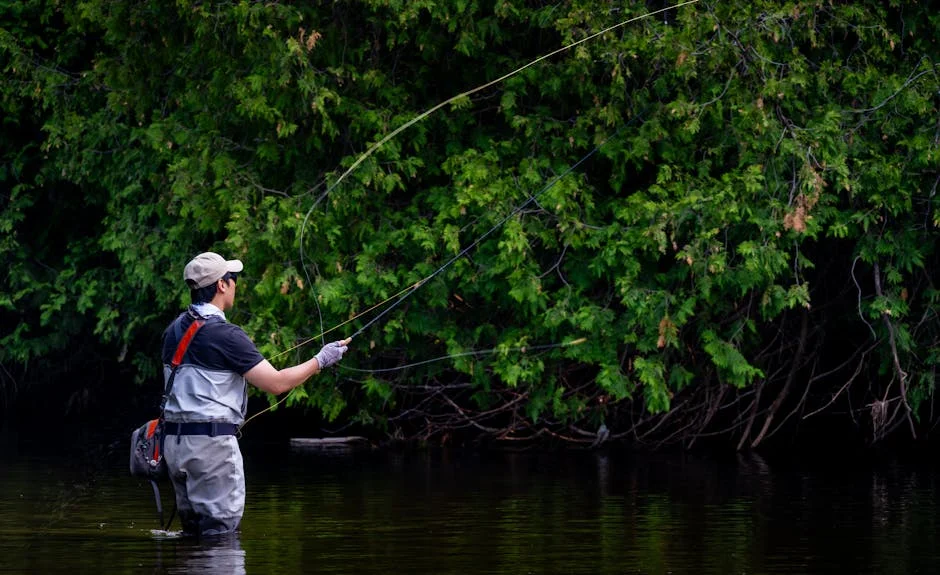
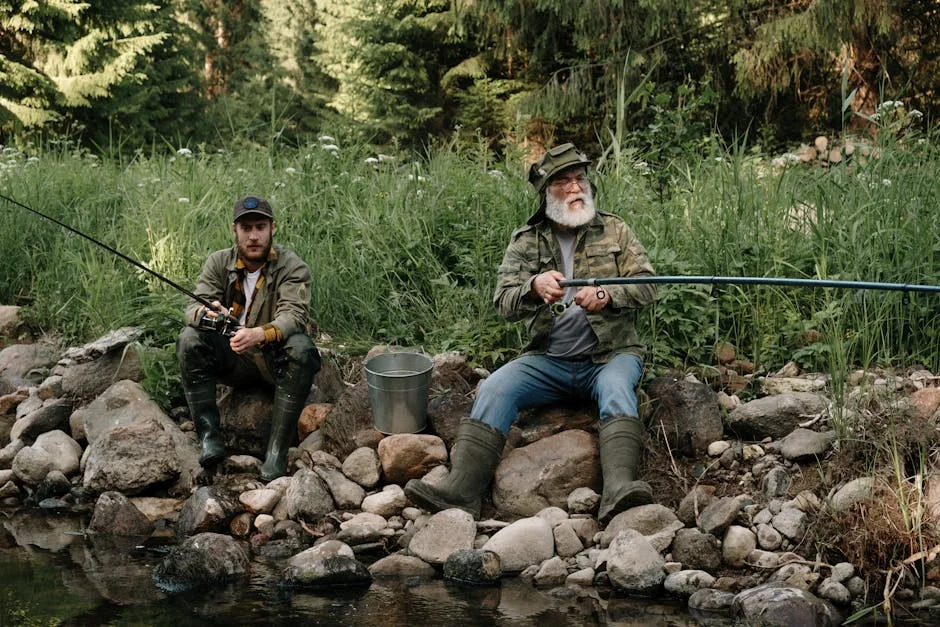
Setting the hook in fly fishing is one of those deceptively simple skills that separates consistent anglers from frustrated ones. Get it right and the fish stays on. Get it wrong and you’re retying tippet and wondering what happened. After twenty years on Colorado tailwaters and freestone rivers, I still occasionally blow a hook set I shouldn’t.
The mechanics are worth understanding before you ever wet a line. This is foundational stuff covered in Fly Fishing Basics for good reason, because a bad hook set undoes everything else you did right.
Why Setting the Hook in Fly Fishing Is Harder Than It Looks
Most new anglers come from conventional fishing backgrounds where you rear back hard when something bites. Baitcasting or spinning rods, heavy monofilament, treble hooks with wide gaps, the physics actually reward that aggressive strip-and-yank response. Fly fishing is a different system entirely, and applying the same instinct will cost you fish every single time.
The fly rod itself is part of the problem, or rather, part of the equation. A nine-foot graphite rod with any meaningful flex has a built-in energy-absorbing quality. When you set hard, the blank loads and rebounds before the force fully transmits down a floating fly line to a near-weightless hook. Add a long leader, slack from natural drift, and a tiny barbless hook, and the physics of “strike hard” simply don’t stack up.
The other factor is timing, which varies by technique, water type, and fish species. What works on a slow spring creek for selective tailwater browns is completely different from what works nymphing fast pocket water on the Arkansas. I’ve had to re-learn this almost every time I’ve switched contexts.
The Basic Mechanics of a Fly Fishing Hook Set
Lift vs. Strip vs. Sideways
There are three primary hook set directions in fly fishing, and choosing the wrong one for the situation is a reliable way to lose fish.
The lift set is what most beginners learn. You raise the rod tip when you see the take or feel the strike. This works well for dry fly fishing at moderate distances, where slack is minimal and the line stays relatively straight between rod tip and fly. On Cheesman Canyon in low clear water, when a fish tips up for a size 20 para-baetis, a smooth upward rod lift is the move. You don’t need force. You need timing and the simple upward pressure is enough to seat a sharp hook in the lip.
The strip set is what saltwater and streamer fishing demand. Instead of lifting the rod, you pull the line back with your line hand while keeping the rod low and pointed toward the fly. This removes slack and drives the hook before the rod’s flex can absorb the force. When I fished Belize flats in 2014, guides there were emphatic about the strip set. A permit or bone won’t stay on if you lift the rod first. Same logic applies on the Arkansas when you’re swinging a weighted streamer and a brown crushes it.
The sideways or sweep set is underused but valuable, especially in tight quarters. Instead of lifting up (where you can drive the fly out of a fish’s mouth) or stripping (where you need a relatively straight line to the fly), you sweep the rod horizontally. This is useful in brushy streams on my Orvis 8’6” 4wt where the ceiling is low, or when the fish is directly downstream and a lift would pull the hook rearward and out.
Slack Is the Enemy
Consistent hook sets come down to managing slack before and during the strike. Slack in the fly line, slack in the leader, slack created by current drag, they all add up to delayed force transfer and missed fish.
Euro nymphing, which I’ve been doing since 2018 on a Cortland Competition Nymph setup, eliminates most of this problem by design. The long rod, near-zero fly line on the water, and tight sighter-to-fly connection means hook sets are almost automatic with a simple wrist lift. Field reports from euro nymph anglers across Colorado tailwaters consistently confirm this: the hook-up rate improvement over traditional indicator nymphing is real, and slack management is the primary reason.
On traditional indicator rigs, the float itself adds a delay. The indicator has to move, you have to register that movement, and then you have to set. During that sequence, slack keeps accumulating. Mending aggressively before the drift and watching the indicator with full attention closes that gap.
Tippet Diameter and Hook Gap: The Terminal Tackle Connection
The relationship between your tippet diameter and hook gap matters more than most beginners realize. A size 18 hook with a narrow gap and heavy 4X tippet creates a mechanical disadvantage. The stiff tippet resists the subtle flex needed for the hook to rotate into position. Most experienced tailwater anglers drop to 5X or 6X tippet on small nymphs and dry flies, and the hook-up rate reflects it.
Sharp hooks are the other half of this equation. A dull hook requires more force to penetrate, and in a short-gap strike on a small fly, more force usually means the fish ejects the fly before that force lands. Sharpness is especially critical on barbless or debarbed hooks, where the hook must penetrate cleanly on the initial set since there’s no barb holding it in place during the fight.
Top Picks for Hook Tying and Terminal Tackle
The products below are referenced illustratively, as tools that represent what anglers are actually working with when learning to set the hook properly. Hook selection and the knot connecting hook to tippet both factor into whether your hook set translates into a landed fish.
Fly Hooks for Fly Tying Dry Wet Barbless BL Nymph Flies Curved Czech Scud Assortment Pack
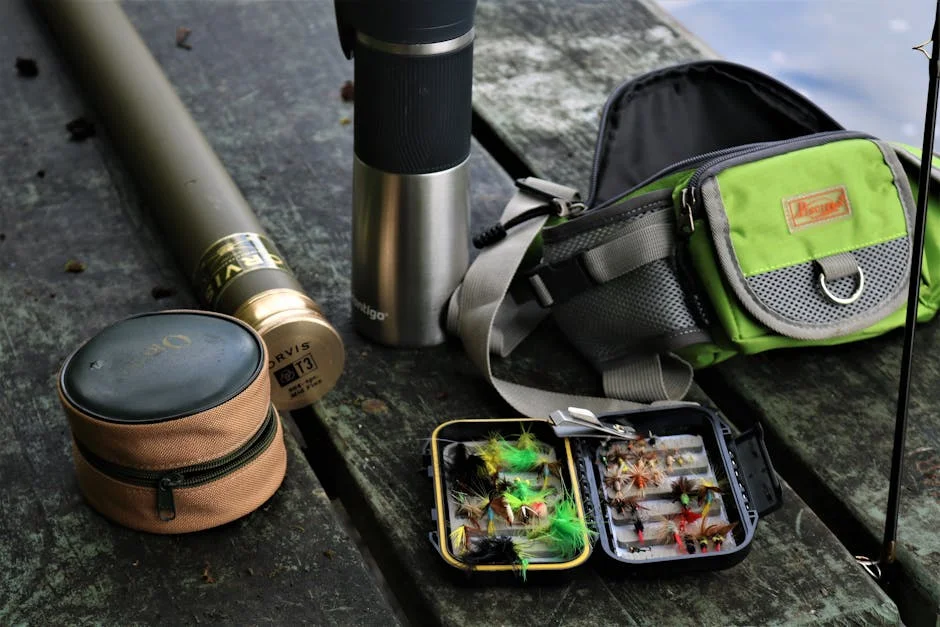
The Fly Hooks for Fly Tying Dry Wet Barbless BL Nymph Flies Curved Czech Scud Fishing Hooks represent what budget-tier assortment packs offer the tying angler: variety across hook styles (curved scud, nymph, standard) in a single organized box across sizes from roughly 10 through 16. For someone learning to tie nymphs and understanding how hook bend, gap, and wire weight affect hook-set mechanics, having multiple styles on hand for comparison is genuinely useful.
Owner reviews note the barbless (BL) designation as a legitimate feature rather than just debarbed hooks filed down from barbed stock, which matters for catch-and-release fishing on Colorado tailwaters where barbless is often mandatory. Verified buyers report adequate sharpness out of the pack for tying practice and fishing, with some noting that higher-end hooks show a measurable edge in tip sharpness on close inspection. For volume tying, exploring pattern variations, and learning how curved vs. straight hook gaps affect drift and hook set angle, an assortment pack at the budget price band is a reasonable starting point.
Check current price on Amazon.
Umpqua U-Series Fly Tying Hooks U202
The Umpqua U-Series Fly Tying Hooks U202 are a step up in consistency and quality control compared to unbranded assortment packs. Umpqua is a known quantity in the fly fishing industry, and the U202 model is a standard nymph hook with the geometry (straight shank, round bend, standard wire) that suits a wide range of subsurface patterns: pheasant tails, hare’s ears, RS2s, the kind of flies that do serious work on tailwaters.
Spec data on the U202 shows chemically sharpened points, which translates directly to hook-set performance. A chemically sharpened hook requires meaningfully less force to penetrate than a mechanically sharpened one, and on light tippet (5X, 6X) with a subtle wrist-set, that difference matters. Verified buyers consistently note the point sharpness and uniform wire diameter as the reasons they return to this hook over budget alternatives. For tiers who want reliable geometry and point quality at a budget-friendly price band, the U202 is a practical choice.
Check current price on Amazon.
Fly and Ice Fishing Knot Tying Tool
The Fly and Ice Fishing Knot Tying Tool addresses one of the often-overlooked links between hook geometry and hook-set performance: knot quality. A poorly tied knot that seats off-center or slips slightly under pressure changes the hook’s plane when force is applied, reducing the chance that the point drives correctly into the fish’s mouth.
Owner reviews highlight the tool’s utility for gripping small hook eyes (sizes 16 through 22) and threading fine tippet, both tasks that become genuinely difficult with cold hands on a February tailwater. Verified buyers note that consistent use of a knot tool builds repeatable technique, which is what you want. A clinch knot tied cleanly and consistently with the correct number of wraps will out-perform a knot tied by feel every time. For budget-tier price, this is a functional accessory that supports terminal tackle integrity, which is a real part of hook-set success.
Check current price on Amazon.
Buying Guide: Gear Factors That Affect Hook Set Performance
Understanding hook sets is not purely about technique. Several gear variables influence whether your strike translates into a landed fish. Recognizing those variables helps you make smarter choices at the fly shop and on the water.
Hook Point Sharpness and Wire Gauge
A dull hook is the single most avoidable cause of failed hook sets. This sounds obvious, but verified field reports from guide clients and shop feedback consistently show that most anglers are fishing dull hooks far longer than they should. The test is simple: drag the point lightly across your thumbnail. A sharp hook catches. A dull one slides.
Wire gauge matters alongside sharpness. Heavy wire hooks provide strength for large fish but require more force to penetrate. Light wire hooks are easier to set on small fish with fine tippet, but bend out on big fish if the fight goes long. Match wire weight to the fish size and tippet diameter you’re fishing. Tailwater trout on 6X generally call for light wire, fine-gap hooks.
Hook Style and Bend Geometry
Different hook designs are built around different hook-set mechanics. Curved scud hooks (the Czech nymph style) are designed so the bend positions the point at a specific angle when a fish inhales the fly, theoretically improving hook-up rate during the passive takes common in euro nymphing. Straight-shank hooks with a standard round bend are versatile, covering dry flies, standard nymphs, and wet flies. Wide-gap hooks accommodate bulkier fly bodies without the material covering the point gap.
For more on how gear choices connect across the full system, the Fly Fishing Basics section at /learn/ has foundational breakdowns that put terminal tackle in context with rod, line, and presentation. Understanding why a hook style is designed the way it is helps you fish it correctly.
Tippet Connection and Knot Integrity
The knot between tippet and hook is a mechanical link in the hook-set system. A well-tied improved clinch knot or Palomar knot seats the hook cleanly and transfers force directly. A knot that seats off-axis changes the pull direction and reduces penetration efficiency. This is especially important on small hooks (size 18 and smaller) where the margin for error in force application is already narrow.
Retie regularly. Tippet weakens from UV exposure, abrasion against rocks, and repeated flexing during the fight. Most experienced anglers retie every few hours, or immediately after landing a significant fish. This habit costs a few minutes and pays back with confidence in every hook set.
Rod Action and the Energy Transfer Problem
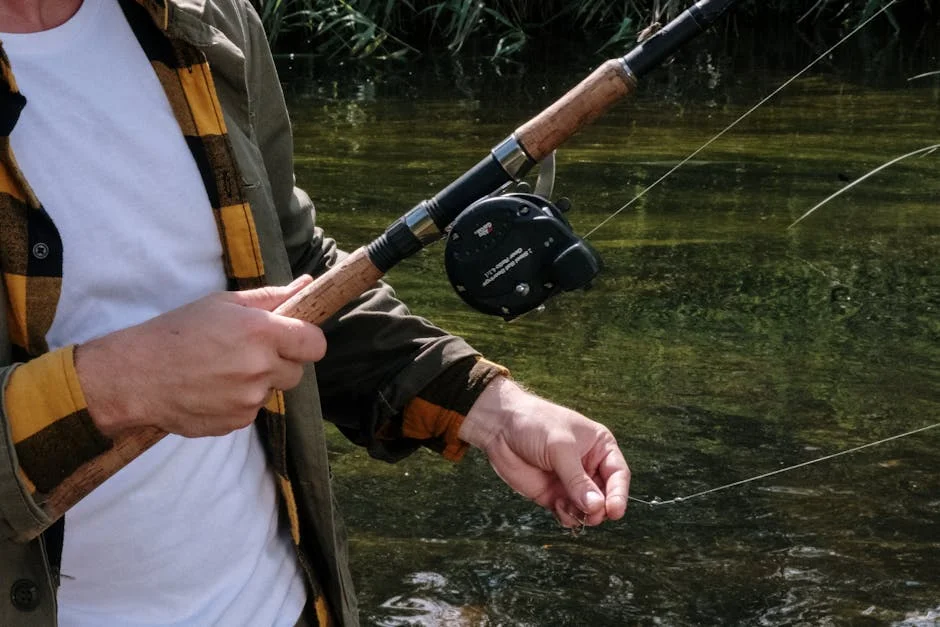
Rod action directly shapes hook-set performance in ways that beginners often don’t anticipate. The first rod I bought on my own, before anyone corrected me, was a stiff fast-action blank. I thought it would help me cast farther. It did the opposite, and it also made hook sets harder to calibrate. Fast-action rods load crisply but also absorb and rebound energy differently than medium or medium-fast actions.
A medium-fast action gives most anglers a more forgiving strike window: enough sensitivity to feel takes, enough dampening to avoid ripping the fly out of a soft-mouthed fish. Fast-action rods reward dialed technique and punish imprecision. If you’re still dialing in your hook sets, a medium-fast action rod will teach you more, faster, than a fast-action rod that punishes every mistake.
Line Control Before the Set
Slack in the fly line between your rod hand and the first guide is where a lot of hook sets fail. Proper line control means having your line hand ready to strip, no extra coils loose on the water, and a consistent grip so that when the strike comes your body responds without thinking.
On longer casts, especially on the South Platte where you might have 50 feet of line out in slower pools, stack mending before the drift and keep line hand contact throughout. The set itself is the last moment in a sequence that starts with how you managed your line during the presentation.
Frequently Asked Questions
What does “setting the hook” mean in fly fishing?
Setting the hook in fly fishing means applying enough force and direction to drive a hook point through the tough membrane of a fish’s mouth after it takes your fly. Unlike conventional fishing, the technique varies significantly by fly type, water type, and target species. A dry fly hook set is a gentle upward rod lift, while a streamer or saltwater hook set typically involves a firm strip of the line hand. Timing and slack management are at least as important as the force applied.
Why do I keep missing fish when I set the hook?
Missed strikes usually come down to one of three things: too much slack in the system, wrong set direction for the technique, or a dull or poorly sized hook. On indicator nymph rigs, the most common culprit is a delayed response to an indicator signal that already went past before you saw it. On dry flies, setting too hard or too fast will pull the fly forward out of the fish’s mouth before the hook can rotate and seat. Slowing your reaction by a half-beat on dry flies improves hook-up rate for most anglers.
Should I use barbless hooks, and does it change how I set the hook?
Barbless hooks are required on many Colorado tailwaters and are a good practice for catch-and-release fishing everywhere. They do change hook-set dynamics slightly: without a barb to hold the hook during penetration, the point must seat cleanly on the initial set and you must maintain steady tension throughout the fight. Field reports from guide clients indicate that barbless hooks actually improve hook-up rate in many situations because they penetrate with less initial force. Keep consistent pressure and you’ll find barbless fishing is not a disadvantage.
Does rod action matter for hook sets?
Yes, rod action has a measurable effect on hook-set performance. A fast-action rod loads quickly and has less dampening, which can be an advantage on long-distance sets but punishes imprecision on close presentations. A medium-fast or medium-action rod has more built-in flex, which helps absorb the energy of an overly aggressive set and reduces the chance of breaking light tippet or ripping a small hook free. Most guides working with newer clients recommend medium-fast action rods specifically because they create a wider margin for hook-set error.
How important is knot quality to hook-set success?
Knot quality is more important than most anglers give it credit for. A knot that seats off-center or slips under load changes the direction of force applied to the hook point, reducing penetration efficiency. On small hooks with fine tippet, even a slight misalignment is enough to cause a miss or a pulled hook during the fight. An improved clinch knot or Palomar knot tied carefully and consistently, seated properly with no twists, gives you the best mechanical advantage for every hook set.
<script type="application/ld+json">
{
 "@context": "https://schema.org",
 "@type": "FAQPage",
 "mainEntity": [
 {
 "@type": "Question",
 "name": "What does 'setting the hook' mean in fly fishing?",
 "acceptedAnswer": {
 "@type": "Answer",
 "text": "Setting the hook in fly fishing means applying enough force and direction to drive a hook point through the tough membrane of a fish's mouth after it takes your fly. Unlike conventional fishing, the technique varies significantly by fly type, water type, and target species. A dry fly hook set is a gentle upward rod lift, while a streamer or saltwater hook set typically involves a firm strip of the line hand. Timing and slack management are at least as important as the force applied."
 }
 },
 {
 "@type": "Question",
 "name": "Why do I keep missing fish when I set the hook?",
 "acceptedAnswer": {
 "@type": "Answer",
 "text": "Missed strikes usually come down to one of three things: too much slack in the system, wrong set direction for the technique, or a dull or poorly sized hook. On indicator nymph rigs, the most common culprit is a delayed response to an indicator signal that already went past before you saw it. On dry flies, setting too hard or too fast will pull the fly forward out of the fish's mouth before the hook can rotate and seat. Slowing your reaction by a half-beat on dry flies improves hook-up rate for most anglers."
 }
 },
 {
 "@type": "Question",
 "name": "Should I use barbless hooks, and does it change how I set the hook?",
 "acceptedAnswer": {
 "@type": "Answer",
 "text": "Barbless hooks are required on many Colorado tailwaters and are a good practice for catch-and-release fishing everywhere. They do change hook-set dynamics slightly: without a barb to hold the hook during penetration, the point must seat cleanly on the initial set and you must maintain steady tension throughout the fight. Field reports from guide clients indicate that barbless hooks actually improve hook-up rate in many situations because they penetrate with less initial force. Keep consistent pressure and you'll find barbless fishing is not a disadvantage."
 }
 },
 {
 "@type": "Question",
 "name": "Does rod action matter for hook sets?",
 "acceptedAnswer": {
 "@type": "Answer",
 "text": "Yes, rod action has a measurable effect on hook-set performance. A fast-action rod loads quickly and has less dampening, which can be an advantage on long-distance sets but punishes imprecision on close presentations. A medium-fast or medium-action rod has more built-in flex, which helps absorb the energy of an overly aggressive set and reduces the chance of breaking light tippet or ripping a small hook free. Most guides working with newer clients recommend medium-fast action rods specifically because they create a wider margin for hook-set error."
 }
 },
 {
 "@type": "Question",
 "name": "How important is knot quality to hook-set success?",
 "acceptedAnswer": {
 "@type": "Answer",
 "text": "Knot quality is more important than most anglers give it credit for. A knot that seats off-center or slips under load changes the direction of force applied to the hook point, reducing penetration efficiency. On small hooks with fine tippet, even a slight misalignment is enough to cause a miss or a pulled hook during the fight. An improved clinch knot or Palomar knot tied carefully and consistently, seated properly with no twists, gives you the best mechanical advantage for every hook set."
 }
 }
 ]
}
</script>Where to Buy
Fly-Hooks-for-Fly-Tying-Dry-Wet-Barbless-BL-Nymph-Flies Curved Czech Scud Fishing Hooks 10# ~16# Assortment Pack of 100-240 Hooks with BoxSee Fly-Hooks-for-Fly-Tying-Dry-Wet-Barbl… on Amazon