Mending Fly Line: Master This Essential Fly Fishing Skill

Affiliate disclosure: Some links on this page are affiliate links. If you buy through them we earn a small commission at no extra cost to you. Recommendations are research-driven; we don't claim personal use of every product reviewed. Product prices and availability are accurate as of the date published and are subject to change. Always check Amazon for current pricing before purchasing. Learn more.
Quick Picks
HERCULES Fly Fishing Line Floating Weight Forward Fly Line with Double Welded Loop
Buy on AmazonPiscifun Sword Fly Fishing Line with Welded Loop, Weight Forward Floating Fly Line, Available in WF1, WF2, WF3, WF4, WF5, WF6, WF7, WF8, WF9, and WF10 Weights, in Lengths of 90 and 100 Feet
Buy on AmazonSF Fly Fishing Line with Two Welded Loops Weight Forward Floating Fly Lines Trout 90FT WF2 3 4 5 6 7 8 9F Multi-Color Freshwater
Buy on Amazon| Product | Price Range | Top Strength | Key Weakness | Buy |
|---|---|---|---|---|
| HERCULES Fly Fishing Line Floating Weight Forward Fly Line with Double Welded Loop also consider | $ | Buy on Amazon | ||
| Piscifun Sword Fly Fishing Line with Welded Loop, Weight Forward Floating Fly Line, Available in WF1, WF2, WF3, WF4, WF5, WF6, WF7, WF8, WF9, and WF10 Weights, in Lengths of 90 and 100 Feet also consider | $ | Buy on Amazon | ||
| SF Fly Fishing Line with Two Welded Loops Weight Forward Floating Fly Lines Trout 90FT WF2 3 4 5 6 7 8 9F Multi-Color Freshwater also consider | $ | Buy on Amazon |
Mending fly line is one of those skills that separates anglers who occasionally catch fish from anglers who consistently catch fish. It sounds simple on paper: lift and reposition your fly line on the water to correct drag. In practice, it takes real time on the water to feel when a mend is needed, how much line to move, and which direction to throw it.
If you’re new to the concept, the Fly Fishing Basics hub is a good starting point before working through the technique details here. Twenty years in, I’m still refining my mends on tailwaters like Cheesman Canyon, where a bad upstream mend on a size 22 midge can pull your fly completely out of the feeding lane before a fish ever sees it.
What Mending Fly Line Actually Means
When your fly line lands on moving water, different current speeds act on different sections of the line simultaneously. The belly of the line (usually the thickest, heaviest section) catches current and pulls ahead of the fly. This creates drag: your fly begins moving unnaturally fast or in the wrong direction across the feeding zone. Fish, particularly selective trout on heavily pressured tailwaters, recognize this as wrong and refuse.
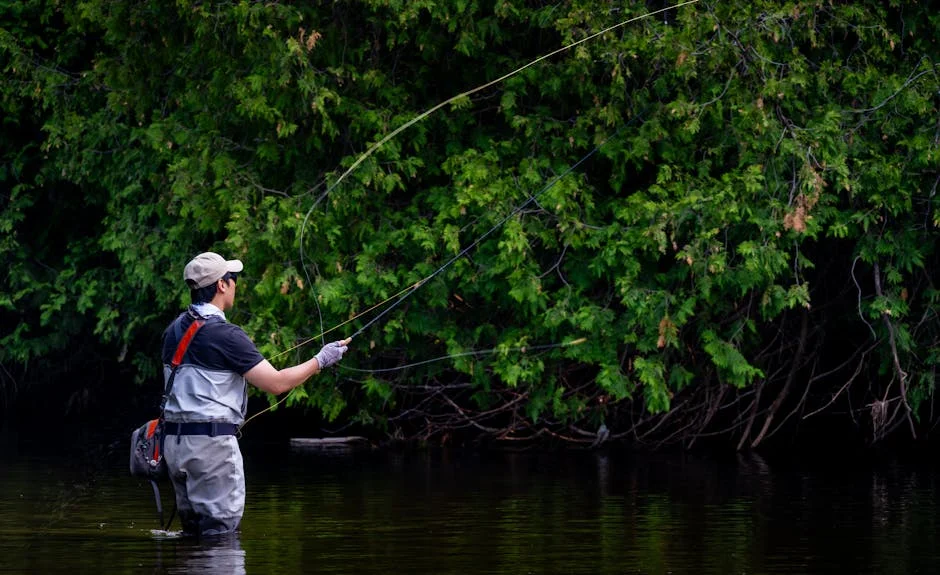
Mending is the act of repositioning your fly line after it lands on the water, without significantly moving the fly itself. You lift the rod tip and flip a portion of line either upstream (the most common mend) or downstream, buying more time for your fly to drift naturally at the speed of the current near it, not at the speed of the main current acting on your line belly.
The word “drag” gets used a lot in fly fishing, and it means something specific here. It does not refer to your reel’s drag system. It refers to unnatural fly movement caused by current differentials acting on your line. A good mend slows or eliminates that effect.
Why Mending Matters More Than Most New Anglers Expect
Early in my fly fishing life, I was focused almost entirely on casting: loop shape, distance, presentation angle. Mending felt like an afterthought. That was a mistake. The cast gets your fly into position. The mend keeps it there.
On freestone streams like the Arkansas River near Salida, currents are complex and irregular. Seams between fast and slow water shift constantly. A fly that’s drifting well one second can be dragged completely off target a moment later as the line belly catches a faster mid-channel current. On tailwaters, the problem is often subtler. Cheesman Canyon runs relatively consistent flows, but even a slight belly forming on the surface will drag a midge nymph out of the thin feeding film. The fish are looking up at that fly and they notice.
Mending isn’t a corrective move you make once. On longer drifts, you may mend two or three times to maintain a clean presentation through the entire run. That’s normal. Guide Frank at Ark Anglers (Salida) always says the cast is the question and the mend is the answer. I’ve found that useful framing.
Upstream vs. Downstream Mends
The Upstream Mend
The upstream mend is the default for most trout fishing situations. If you’re casting across current and the line belly is swinging downstream faster than your fly, you flip that belly upstream. This gives the fly additional time to sink and drift naturally before the line catches current again.
To execute it: after your cast lands, quickly lift the rod tip high (without moving the fly forward), then make a smooth arc with the rod tip in the upstream direction, rolling a loop of line onto the water upstream of your fly. The motion is similar to a slow, low roll cast, redirected upstream.
On the South Platte, I see anglers strip-set before the mend completes because they’re in a hurry. Slow down. A rushed mend that moves the fly is worse than no mend at all.
The Downstream Mend
Downstream mends are less common but important in specific situations. If you’re fishing a wet fly or streamer and you want to accelerate the swing, a downstream mend adds speed to the fly’s cross-current movement. It’s also useful when you’re fishing a soft-hackle just below the surface and want to increase tension across a specific current seam.
On the Madison River in Montana, I’ve watched guides use deliberate downstream mends to set up streamer swings through bucket water. The downstream mend pulls the fly slightly faster through the zone, triggering reaction strikes. It’s not a beginner move, but understanding why it works clarifies the whole concept: mending is line management, not a fixed ritual.
Reach Mends and Aerial Mends
The reach mend happens during the cast, before the line lands on the water. As your forward loop is still unrolling, you extend your casting arm sharply upstream (or downstream), laying the line onto the water with a built-in angle offset. This is one of the most effective mending techniques available because it doesn’t disturb the fly at all. The fly lands where it was aimed, but the line is already positioned to delay drag.
An aerial mend is similar in concept. During the final delivery, you throw a curve or serpentine into the line as it falls, creating slack that absorbs current differential before it can act on the fly. It requires timing and practice, but on technical tailwaters with complex currents, it’s worth developing.
How Line Choice Affects Your Mend
This is where the engineering side of my brain gets interested. A fly line’s taper profile directly affects how easy it is to mend. Specifically, the mass and diameter of the belly section determine how much the line drags in current and how much energy you need to reposition it.
A weight-forward (WF) floating line concentrates mass in the front 30 feet or so, then transitions to a thinner running line. This design helps casting distance but can make mending slightly more demanding at longer distances because you’re moving more mass when you flip that belly. A double-taper (DT) line has a more gradual taper and can be easier to mend at moderate distances because the mass is distributed more evenly. For most trout fishing situations, WF lines are the standard, but understanding the tradeoff is useful.
Line texture and coating stiffness also matter. A supple line with a low-friction coating sits higher on the water surface, which makes it easier to lift and reposition during a mend. A stiffer, denser line is harder to pick up cleanly. Coatings with built-in lubrication, sometimes marketed as “slick” formulations, genuinely reduce the effort required to execute a clean lift-and-mend in cold water conditions.
For anglers learning to mend, a quality floating WF line makes a real difference. This is one area where the line matters more than many beginners expect.
Buying Guide: Fly Lines for Learning and Practicing Mends
Gear decisions affect how well you can practice mending. A line that fights you doesn’t help you build the right muscle memory. Here’s what to consider when choosing a fly line specifically with mending performance in mind.
Taper Profile and Line Weight
Weight-forward floating lines are the correct starting point for learning to mend. The taper concentrates shootable mass at the front, and the 90-foot standard length gives you plenty of line to practice at various distances. Line weight should match your rod: a 5-weight line on a 5-weight rod is the most versatile setup for trout fishing across most conditions. If you’re learning on a medium-action rod (which recommend over a fast-action for beginners, based on my own early mistake of grabbing a stiff fast-action blank before I had the loop formation to load it correctly), a properly matched WF5F line will feel cooperative rather than combative.
The Fly Fishing Basics hub at /learn/ covers rod-to-line matching in more detail if you need that foundation first.
Coating Quality and Float Characteristics
For mending practice, you want a line that floats high and lifts cleanly. Lines with hydrophobic coatings shed water after each cast and sit up on the surface film rather than sinking into it. A line that partially sinks between mends is harder to lift without disturbing the fly. Cold-water performance is a real consideration if you’re fishing Colorado or Montana in shoulder seasons. Some budget lines get stiff and coily in cold water, which adds resistance to the mend lift.
Welded loops at both ends are worth having. A clean loop-to-loop connection between fly line and leader maintains the taper transition and doesn’t add hinge points that affect how the leader turns over, which then affects your mend precision at the fly end of the system.
Budget Considerations
Premium fly lines from major brands offer real advantages in coating durability and taper precision. But for a beginning angler who is primarily focused on learning to mend and developing feel, starting with a budget to mid-range WF floating line is completely reasonable. The technique practice matters more than the tool at this stage. Once you’ve developed clean mending habits, upgrading the line reveals more of what a premium coating can do. Spending premium-level money on a line before you’ve logged two seasons on the water is putting optimization ahead of fundamentals.
Line Visibility
High-visibility lines (bright yellow, chartreuse, orange) are genuinely useful for mending practice. You can watch exactly where the belly is forming, track whether your mend repositioned the line where you intended, and observe how current acts on different sections in real time. Visibility is a teaching tool. Once your mend timing is reliable by feel, you can switch to lower-visibility lines for pressured fish if needed.
Running Line Diameter
The transition from the belly to the running line affects how line shoots through the guides and how it lies on the water beyond the first 30 feet. A thinner running line creates less surface tension and is easier to pick up during a long mend, but can tangle more easily in cold or windy conditions. For most learners working at 30 to 50 feet, this is a secondary concern, but it matters when you’re mending on longer presentations across wide current seams.
Top Picks for Budget Fly Lines to Practice Mending
These three lines are referenced as accessible options for anglers building mending fundamentals. None of them carry premium pricing, which makes them reasonable tools to learn on without significant financial risk.
HERCULES Fly Fishing Line Floating Weight Forward Fly Line with Double Welded Loop
The HERCULES Fly Fishing Line Floating Weight Forward Fly Line with Double Welded Loop is a budget-tier WF floating line with welded loops at both ends. Verified buyers note that it floats reasonably well out of the package and that the level of stiffness is manageable in moderate temperatures. For a new angler practicing mend timing at distances under 40 feet, owner reviews suggest it performs acceptably and delivers on the basic requirements: it floats, it shoots, and it can be repositioned with standard mending motion. Field reports from buyer communities note that cold-water performance can be inconsistent, which is worth keeping in mind for early-season Colorado fishing. As a learning tool, spec data shows standard WF taper geometry and double welded loops, which simplifies the leader connection.
Check current price on Amazon.
Piscifun Sword Fly Fishing Line with Welded Loop, Weight Forward Floating Fly Line
The Piscifun Sword Fly Fishing Line with Welded Loop is one of the more widely reviewed budget lines in its category, available in a full range of weights from WF1 through WF10 and in both 90 and 100-foot lengths. Verified buyers consistently note good float height and a supple coating that mends more cooperatively than stiffer budget alternatives. Owner reviews from trout fishing communities specifically mention that the line picks up cleanly for mending at standard trout-fishing distances. The availability across all standard weights makes it easy to match precisely to your rod setup, which matters for how the line loads during the mend lift. Field reports note good color visibility, which is a practical benefit for learners tracking belly position.
Check current price on Amazon.
SF Fly Fishing Line with Two Welded Loops Weight Forward Floating Fly Lines Trout 90FT
The SF Fly Fishing Line with Two Welded Loops is available in a multi-color option and comes in a 90-foot WF format covering weights from WF2 through WF9. Verified buyers note the high-visibility coloring as a practical benefit, specifically for watching the line belly during drift. Owner reviews indicate the welded loops are well-constructed for the price tier, with minimal hinge issues at the fly line-to-leader connection. Spec data shows a standard WF taper profile. Field reports from freshwater trout communities note adequate float characteristics and smooth enough coating for practicing upstream mends without excessive surface adhesion. For a learner working through mending fundamentals on a local tailwater or freestone stream, it functions as a practical, low-cost practice tool.
Check current price on Amazon.
Common Mending Mistakes and How to Fix Them
Over-Mending
Over-mending moves the fly. It’s probably the most common mistake I see beginners make, and it’s understandable: you’re trying to correct drag aggressively, so you throw a big mend upstream. But if your rod tip travels too far or your mend is too energetic, the entire leader moves with the line belly and you’ve re-cast your fly into the wrong position.
The fix is reducing the energy of the mend and focusing movement on the line belly, not the leader. Keep the rod tip motion controlled and think about rolling only the section of line between your rod tip and the fly, not the fly itself. A good drill: watch a specific target (a bubble or leaf on the water) and practice mending without moving it.
Mending Too Late
By the time drag has fully developed, the fly has already moved unnaturally through the feeding zone. The fish already saw the wrong presentation. Effective mending is anticipatory. You mend before drag develops, not after it’s obvious.
On a new piece of water, watch the current for a moment before you fish it. Identify where the fast seams are, anticipate where the line belly will form, and plan your mend before the cast. This mental step is what guides do automatically and what beginners skip.
Mending Upstream When You Need Downstream (or Vice Versa)
Reading which direction to mend requires understanding which current is acting on which part of your line. If the main current between you and the fly is faster than the water your fly is in, you need an upstream mend to slow the belly. If the current between you and the fly is slower, the fly is running ahead of the line and you may need a downstream mend or slack throw to let the fly continue naturally.
I still occasionally mend the wrong direction on unfamiliar water. It’s embarrassing but instructive. When I met a guide on the Frying Pan who walked me through a complex mending sequence on a multi-seam presentation, it was a reminder that reading current and mending correctly is genuinely difficult, and that there’s no substitute for time on specific water.
Frequently Asked Questions
What is mending fly line and why does it matter?
Mending fly line means repositioning your line on the water after it lands, without moving the fly, in order to reduce or eliminate drag. Drag is the unnatural movement caused by current differentials acting on different sections of your line. It matters because trout, especially on pressured tailwaters, recognize drag as unnatural and refuse flies that are moving incorrectly. A good mend extends your natural drift and keeps the fly in the feeding zone longer, which directly increases strike opportunities.
When should I mend upstream versus downstream?
Mend upstream when the main current between you and your fly is faster than the current your fly is in, which is the most common trout-fishing scenario. The upstream mend repositions the belly so current takes longer to catch it and pull the fly off course. Mend downstream when fishing swinging presentations like wet flies or streamers, where you want to accelerate the fly’s movement across the current. Most dry fly and nymph fishing situations call for upstream mends.
Does fly line choice affect how easy it is to mend?
Yes, meaningfully so. A supple line with a hydrophobic coating sits high on the surface and lifts cleanly during a mend, which reduces the energy needed to reposition it without disturbing the fly. Stiffer lines, particularly budget options in cold water, resist the lift and require more rod tip movement, which increases the risk of moving the fly. A weight-forward taper concentrates mass at the front, which affects how much effort a long mend requires at distance.
Can I mend effectively with a beginner setup?
Yes. Clean mending technique matters far more than premium gear. A budget WF floating line on a mid-action 5-weight rod is a perfectly functional learning setup. High-visibility lines are actually useful at this stage because you can watch exactly where the line belly forms and verify that your mend repositioned it correctly.
How long does it take to develop good mending habits?
Honest answer: it takes a full season of regular fishing before mending becomes intuitive, and longer than that to mend well on complex multi-current situations. Basic upstream mends on simple current seams can be functional within a few outings. Reading which direction to mend, timing the mend correctly before drag develops, and executing aerial or reach mends consistently requires more time. The Fly Fishing Basics resources at /learn/ are a good supplement between water sessions, but there’s no shortcut to time on the water.
<script type="application/ld+json">
{
 "@context": "https://schema.org",
 "@type": "FAQPage",
 "mainEntity": [
 {
 "@type": "Question",
 "name": "What is mending fly line and why does it matter?",
 "acceptedAnswer": {
 "@type": "Answer",
 "text": "Mending fly line means repositioning your line on the water after it lands, without moving the fly, in order to reduce or eliminate drag. Drag is the unnatural movement caused by current differentials acting on different sections of your line. It matters because trout, especially on pressured tailwaters, recognize drag as unnatural and refuse flies that are moving incorrectly. A good mend extends your natural drift and keeps the fly in the feeding zone longer, which directly increases strike opportunities."
 }
 },
 {
 "@type": "Question",
 "name": "When should I mend upstream versus downstream?",
 "acceptedAnswer": {
 "@type": "Answer",
 "text": "Mend upstream when the main current between you and your fly is faster than the current your fly is in, which is the most common trout-fishing scenario. The upstream mend repositions the belly so current takes longer to catch it and pull the fly off course. Mend downstream when fishing swinging presentations like wet flies or streamers, where you want to accelerate the fly's movement across the current. Most dry fly and nymph fishing situations call for upstream mends."
 }
 },
 {
 "@type": "Question",
 "name": "Does fly line choice affect how easy it is to mend?",
 "acceptedAnswer": {
 "@type": "Answer",
 "text": "Yes, meaningfully so. A supple line with a hydrophobic coating sits high on the surface and lifts cleanly during a mend, which reduces the energy needed to reposition it without disturbing the fly. Stiffer lines, particularly budget options in cold water, resist the lift and require more rod tip movement, which increases the risk of moving the fly. A weight-forward taper concentrates mass at the front, which affects how much effort a long mend requires at distance."
 }
 },
 {
 "@type": "Question",
 "name": "Can I mend effectively with a beginner setup?",
 "acceptedAnswer": {
 "@type": "Answer",
 "text": "Yes. Clean mending technique matters far more than premium gear. A budget WF floating line on a mid-action 5-weight rod is a perfectly functional learning setup. High-visibility lines are actually useful at this stage because you can watch exactly where the line belly forms and verify that your mend repositioned it correctly. Focus on the technique first. Gear upgrades matter more after you've established reliable mending habits over a full season or two."
 }
 },
 {
 "@type": "Question",
 "name": "How long does it take to develop good mending habits?",
 "acceptedAnswer": {
 "@type": "Answer",
 "text": "Honest answer: it takes a full season of regular fishing before mending becomes intuitive, and longer than that to mend well on complex multi-current situations. Basic upstream mends on simple current seams can be functional within a few outings. Reading which direction to mend, timing the mend correctly before drag develops, and executing aerial or reach mends consistently requires more time. Fly fishing basics resources are a good supplement between water sessions, but there is no shortcut to time on the water."
 }
 }
 ]
}
</script>Where to Buy
HERCULES Fly Fishing Line Floating Weight Forward Fly Line with Double Welded LoopSee HERCULES Fly Fishing Line Floating We… on Amazon