Stripping Fly Line Technique: Beyond the Basics

Affiliate disclosure: Some links on this page are affiliate links. If you buy through them we earn a small commission at no extra cost to you. Recommendations are research-driven; we don't claim personal use of every product reviewed. Product prices and availability are accurate as of the date published and are subject to change. Always check Amazon for current pricing before purchasing. Learn more.
Quick Picks
Fly Line Basket Authentic Danish Fisker Design Fishing Stripping Basket Ergonomic Smooth Curved Super Light Tangles with Silicone Spike for Line Tray
Buy on AmazonFly Line Basket Authentic Danish Fisker Design Fishing Stripping Basket Ergonomic Smooth Curved Super Light Tangles with Silicone Spike for Line Tray
Buy on AmazonFly Line Basket Authentic Danish Fisker Design Fishing Stripping Basket Ergonomic Smooth Curved Super Light Tangles with Silicone Spike for Line Tray
Buy on Amazon| Product | Price Range | Top Strength | Key Weakness | Buy |
|---|---|---|---|---|
| Fly Line Basket Authentic Danish Fisker Design Fishing Stripping Basket Ergonomic Smooth Curved Super Light Tangles with Silicone Spike for Line Tray also consider | $ | Buy on Amazon | ||
| Fly Line Basket Authentic Danish Fisker Design Fishing Stripping Basket Ergonomic Smooth Curved Super Light Tangles with Silicone Spike for Line Tray also consider | $ | Buy on Amazon | ||
| Fly Line Basket Authentic Danish Fisker Design Fishing Stripping Basket Ergonomic Smooth Curved Super Light Tangles with Silicone Spike for Line Tray also consider | $ | Buy on Amazon |
Stripping fly line is one of those mechanics that looks simple from the bank but contains real depth once you start breaking it down. Whether you’re working a nymph through a tailwater run, presenting a streamer on the Arkansas, or pulling a crab pattern across a Belize flat, the way you manage line with your non-casting hand controls almost everything that follows, from strike detection to hook sets to the cast you’re about to make.
Most beginners learn the grip and the pull, and that’s where the instruction stops. This article goes further, covering technique fundamentals, water-type variables, common problems, and the gear that makes line management cleaner in every situation. If you’re still building the foundation, the Fly Fishing Basics hub at /learn/ is worth bookmarking alongside this piece.
What Stripping Fly Line Actually Means
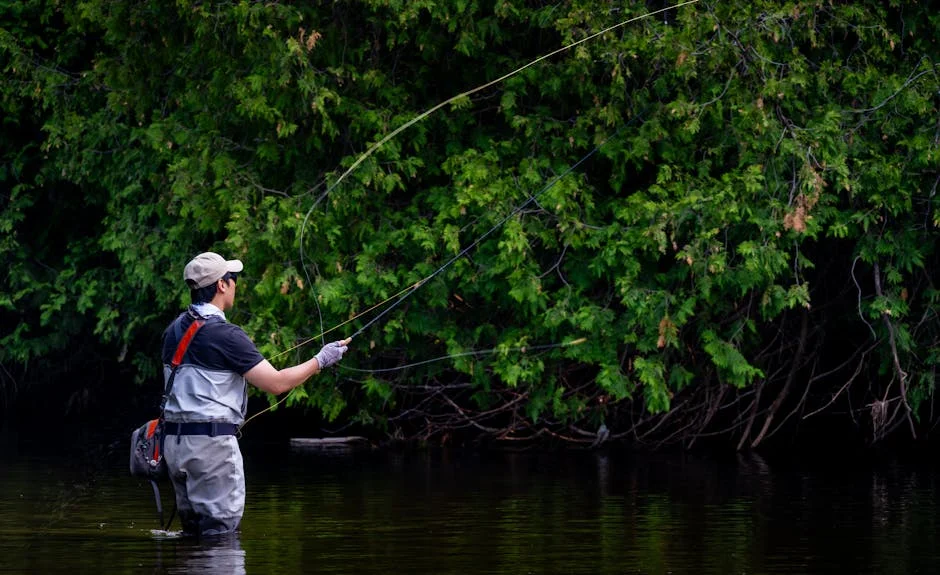
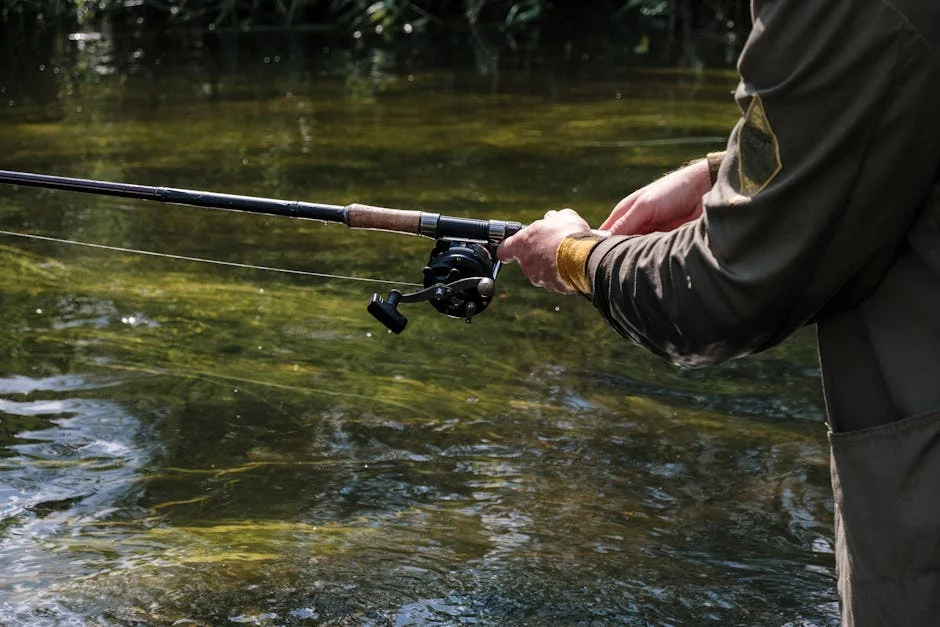
“Stripping” refers to pulling line back through the rod guides with your non-dominant hand while holding the rod in your dominant hand. The rod tip points roughly at the fly. As you pull line back with your stripping hand, the fly moves. That movement creates the action that triggers strikes.
The mechanics sound straightforward. The variables are where it gets complicated: strip speed, strip length, pause timing, line tension, current speed, water depth, fly type, and what species you’re targeting all interact. Getting those variables right for a given situation is the skill. Getting the basic mechanics clean enough that they don’t introduce problems is the prerequisite.
The Line Hand’s Job
Your line hand (the one not holding the rod) does three things at once: it strips line to animate the fly, it controls tension on the line so you can detect strikes, and it stages the line for the next cast. Miss any one of those jobs and something downstream suffers.
Strip detection is the one most beginners overlook. You want just enough tension between rod tip and fly to feel the take, not so much that the fly drags unnaturally. On tailwaters like Cheesman Canyon where fish are selective, that tension balance matters enormously. A trout refusing to chase gets spooked by drag before it ever commits.
Rod Tip Position
Most guides will tell you: rod tip low and pointed at the fly. There’s a reason. High rod tips create slack in the system. When a fish hits and you lift to set, that slack has to come out before pressure actually reaches the fish’s mouth. By the time it does, the fish may have already spit the hook.
Keeping the tip low and in line with the fly means the connection is tighter. You feel more. Your hook set is more direct. This is especially true for streamers where fish often hit hard and fast, and for euro nymphing where the whole system is built around direct contact. I’ve fished with people who have technically solid casts but lose fish consistently because the rod stays up through the retrieve.
Strip Types and When to Use Them
No single strip style works everywhere. The water type, fly pattern, and target species all shape which retrieve makes sense.
Short, Quick Strips
Two to four inches of line pulled fast, sometimes with almost no pause. This works well for small baitfish imitations and for creating darting action that suggests a panicked prey item. On freestone streams with turbulent flows, short strips help maintain contact when current is actively working against a clean presentation.
Smaller flies and lighter tippet benefit from this technique too, because the reduced strip force means less chance of breaking off on a hard take. On the Arkansas through the Royal Gorge section, where the water is big and pushy, short strips help me stay in control during cross-current retrieves.
Long, Slow Strips
Twelve to eighteen inches, with deliberate pauses. Leech patterns, large Woolly Buggers, and articulated streamers often fish better this way. The pause is where many strikes happen, as the fly drops and swings before the next pull. On stillwater or slower runs, this retrieve gives fish time to track and commit.
Field reports from anglers fishing Bighorn River streamers consistently note that slow, deliberate retrieves outperform fast strips for brown trout in cold water conditions, particularly in fall when fish are more territorial than actively feeding.
The Strip-Set
The strip-set deserves its own discussion because it trips up nearly every angler who comes to streamer or saltwater fishing from a trout nymphing background.
When a fish takes, the instinct is to lift the rod. That’s fine for nymphs under an indicator. It’s a disaster for streamers and most saltwater scenarios. Lifting the rod tip pulls the fly upward and away, often pulling it right out of the fish’s mouth before the hook can set.
The strip-set keeps the rod low and drives the hook home by pulling line with the line hand while the rod stays pointed at the fish. Only after you’ve felt solid resistance and the fish is on do you raise the rod to fight it.
I spent a season on the Arkansas making this mistake on streamers before a guide on a float trip corrected me. Once the strip-set became habit, my conversion rate on follows improved noticeably.
Line Management: Where Most Tangles Happen
Clean line handling before and during the cast is one of those skills that separates consistent anglers from frustrated ones. Loose line in the water wraps around rocks, gets sucked under, tangles in boot laces, and blows back into rod guides. Loose line on a boat deck piles into knots.
Shooting Line During the Cast
When you cast, the line you’ve stripped in has to go somewhere. On a wading situation, that line often falls at your feet or into the water. The current moves it. The problem is that tangled or wet-clumped line catches on guides when you shoot it forward, robbing the cast of distance and sometimes cracking off a fly from the sudden jerk.
Managing that shooting line cleanly means either looping it over the fingers of your rod hand before casting (an old technique that works but has limits), dropping it into slow water behind you (works in calm conditions), or using a stripping basket.
Stripping Baskets: What They Solve
A stripping basket is a container, usually worn around the waist or clipped to a belt, that catches stripped line as you retrieve. The line coils into the basket instead of falling into the water or onto the ground. When you cast, it shoots cleanly out of the basket without the tangles and drag that come from wet line in current.
Stripping baskets are most commonly associated with surf fishing and flats fishing, but wade anglers on tailwaters and bigger rivers use them too. If you’ve ever watched a guide roll out a 70-foot cast on a flats boat and the line shoots perfectly, a stripping basket was involved. The technique is also increasingly common among western anglers fishing big rivers where current would otherwise tangle any stripped line.
Buying Guide: Choosing a Stripping Basket
The fundamentals covered in our Fly Fishing Basics section apply here too. Gear that fits the situation outperforms gear that’s technically superior but designed for a different problem. Here’s what to think through before buying a stripping basket.
Basket Shape and Depth
Shallow, flat baskets work poorly in wind and current because line blows out or washes over the lip. Curved or contoured basket shapes help line coil inward and stay put. Owner reviews on several budget-tier baskets note that curved sidewalls are the single most-mentioned upgrade from flat-bottomed designs.
Depth matters for line volume. Fishing a single-handed 5-weight at moderate distances, a mid-depth basket handles the stripped line fine. Move to a two-handed setup or a longer shooting head and you need more volume or the line will heap up and overflow.
Silicone Spikes vs. Open Baskets
Spikes or cones inside the basket, usually made of silicone or rubber, prevent line from tangling on itself as it piles in. Without them, particularly when you have a significant amount of line in the basket, the line tends to bunch and knot. Verified buyers on spike-equipped baskets consistently rate tangle reduction as the primary reason they chose the design over open-bowl options.
The trade-off is that spikes can sometimes snag leader knots, particularly larger wind knots or loop-to-loop connections. Most spike designs address this with flexible silicone rather than rigid posts. If you have heavy loop connectors, check that the spike spacing accommodates them.
Attachment and Weight
How the basket attaches to your body matters more than reviews often acknowledge. A basket that shifts, spins, or rides too low introduces a new problem every time you reposition for a cast. Look for adjustable belt systems that cinch firmly and stay put. Clip-on designs are convenient but can rotate and dump line if the clip loosens.
Weight is the other variable. A basket you barely notice encourages you to use it consistently. A basket that feels like a bucket of water after a full day wading will stay in the truck. The lightest designs in the budget tier rely on thin plastic construction that some field reports describe as brittle in cold temperatures.
Wading vs. Boat Use
Baskets designed primarily for boat use often prioritize volume and stability, sometimes mounting directly to the gunwale or standing platform. Wade baskets prioritize body attachment, lighter weight, and lower profile. The two categories overlap considerably, but if you’re primarily a wade fisher, a hip-worn design will serve better than a deck basket.
One note: if you mostly fish euro nymphing or short-line nymphing on smaller streams, a stripping basket adds more hassle than it removes. Baskets earn their place on longer casts and in moving water that would otherwise tangle your stripped line. Match the tool to the situation.
Top Picks
The products below illustrate different variants of the Danish Fisker design, a basket style built around ergonomic curve and silicone spike construction that owner reviews consistently identify as producing clean line management across wading and light boat applications.
Fly Line Basket Authentic Danish Fisker Design (B0DY741SCZ)
The Fly Line Basket Authentic Danish Fisker Design Fishing Stripping Basket Ergonomic Smooth Curved Super Light Tangles with Silicone Spike for Line Tray carries the core features that define this design family: curved basin walls, silicone spikes to prevent line tangling, and a lightweight build that verified buyers describe as barely noticeable during a full day of wading. Owner reviews note that the curved profile keeps coiled line inside even in moderate current, which is the primary failure point of flat-bottomed alternatives.
Spec data shows construction oriented toward budget-tier pricing, which positions this as an accessible entry point for anglers new to stripping baskets or those wanting to test the format before committing to a premium option. Field reports from surf and flats anglers who also wade rivers describe the basket as performing above its price point on cast quality and line management. Based on owner feedback, the attachment system holds reasonably well across a day of active wading, though some users recommend threading the belt through wader loops for additional stability.
Check current price on Amazon.
Fly Line Basket Authentic Danish Fisker Design (B071VJ6XB2)
The Fly Line Basket Authentic Danish Fisker Design Fishing Stripping Basket Ergonomic Smooth Curved Super Light Tangles with Silicone Spike for Line Tray represents a variant in the same design family, with owner reviews indicating comparable performance characteristics to the other basket versions reviewed here. The silicone spike array is noted across verified buyer reports as effective at separating stripped line into manageable coils rather than allowing it to pile into a single mass that tangles on the next shoot.
Budget-tier pricing makes this a practical option for anglers testing whether stripping basket use fits their fishing style before investing in a premium design. Field reports specifically from wade anglers on bigger western rivers describe meaningful improvement in shooting distance and cast consistency once stripped line was managed in a basket rather than dropped into the water at their feet. The lightweight build is a consistent positive across reviews, particularly for longer wading days.
Check current price on Amazon.
Fly Line Basket Authentic Danish Fisker Design (B072BM799R)
The Fly Line Basket Authentic Danish Fisker Design Fishing Stripping Basket Ergonomic Smooth Curved Super Light Tangles with Silicone Spike for Line Tray rounds out the Danish Fisker design variants available at budget pricing. Owner reviews on this variant note the same ergonomic curve and spike configuration as the other entries, with particular mention of the basket’s suitability for single-handed line management during active streamer retrieves where strip frequency is high and line piles up quickly.
Verified buyers fishing both freshwater and saltwater applications describe the spike design as functional for standard tippet and leader connections, with a few notes advising care around larger loop-to-loop connectors that can momentarily catch on the spikes during fast retrieves. Overall field reports position this variant as performing consistently with the design family’s core strengths: light weight, tangle reduction, and curve-assisted line containment that holds up in moving water conditions.
Check current price on Amazon.
Putting It Together on the Water
The skill of stripping fly line connects directly to every other part of the cast and retrieve cycle. Clean line in the basket means a clean cast. Direct contact to the fly means better strike detection. A consistent strip-set habit means more fish landed. None of this requires elite casting ability. It requires attention to the mechanics and patience to build the muscle memory.
If there’s one thing I’d pass along from twenty years of getting these fundamentals slowly sorted out, it’s this: the parts of fly fishing that look like background mechanics, how you hold line, how you strip, where that line goes, are often the parts that determine whether a good cast and a good fly actually produce a fish. The presentation matters, but so does everything that happens with the line before and after it lands.
For more foundational technique and gear coverage, the Fly Fishing Basics section at /learn/ is where we’ve collected the pieces that build on each other.
Frequently Asked Questions
What does “stripping” mean in fly fishing?
Stripping means pulling the fly line back through the guides with your non-casting hand while the rod stays pointed roughly toward the fly. The motion moves the fly through the water to imitate prey. Strip speed, length, and pause timing all affect how the fly behaves and whether fish will commit to taking it. Most retrieve techniques are built on variations of this basic pull-and-pause action.
Do I need a stripping basket for trout fishing?
Most trout fishing on smaller streams and rivers does not require a stripping basket. Baskets become genuinely useful when you’re casting longer distances, shooting significant amounts of line, or fishing water where current would tangle stripped line at your feet. Anglers targeting trout on bigger tailwaters with streamer setups, or fishing from a boat platform, report more benefit than those fishing short-line nymphing or tight-loop presentations on smaller water.
How do I stop losing fish on streamer takes?
The most common cause is setting the hook with a rod lift instead of a strip-set. Lifting the rod pulls the fly upward and often out of the fish’s mouth before the hook can seat. A strip-set keeps the rod low and drives the hook by pulling line with the line hand while maintaining a low rod angle. Only raise the rod once you feel solid resistance.
Can a stripping basket be used in a river while wading?
Yes, and wade anglers on larger rivers increasingly use them. The basket catches stripped line before current grabs it and creates tangles. Owner reviews from anglers wading big western rivers and surf-fishing beaches both describe significantly cleaner casts once stripped line is managed in a basket rather than dropped into the water. The main adjustment is getting used to the basket’s position on your body so it doesn’t interfere with your casting stroke.
What is the difference between a short strip and a long strip?
Strip length changes how the fly moves through the water. Short strips of two to four inches create quick, darting action that suggests a panicked or injured prey item. Long strips of twelve to eighteen inches produce sweeping movement with pronounced pauses where the fly drops and swings. The best choice depends on the fly pattern, water temperature, target species, and how fish are responding on a given day. Starting with slow, longer strips and adjusting faster based on follows and refusals is a sound default approach.
<script type="application/ld+json">
{
 "@context": "https://schema.org",
 "@type": "FAQPage",
 "mainEntity": [
 {
 "@type": "Question",
 "name": "What does \"stripping\" mean in fly fishing?",
 "acceptedAnswer": {
 "@type": "Answer",
 "text": "Stripping means pulling the fly line back through the guides with your non-casting hand while the rod stays pointed roughly toward the fly. The motion moves the fly through the water to imitate prey. Strip speed, length, and pause timing all affect how the fly behaves and whether fish will commit to taking it. Most retrieve techniques are built on variations of this basic pull-and-pause action."
 }
 },
 {
 "@type": "Question",
 "name": "Do I need a stripping basket for trout fishing?",
 "acceptedAnswer": {
 "@type": "Answer",
 "text": "Most trout fishing on smaller streams and rivers does not require a stripping basket. Baskets become genuinely useful when you're casting longer distances, shooting significant amounts of line, or fishing water where current would tangle stripped line at your feet. Anglers targeting trout on bigger tailwaters with streamer setups, or fishing from a boat platform, report more benefit than those fishing short-line nymphing or tight-loop presentations on smaller water."
 }
 },
 {
 "@type": "Question",
 "name": "How do I stop losing fish on streamer takes?",
 "acceptedAnswer": {
 "@type": "Answer",
 "text": "The most common cause is setting the hook with a rod lift instead of a strip-set. Lifting the rod pulls the fly upward and often out of the fish's mouth before the hook can seat. A strip-set keeps the rod low and drives the hook by pulling line with the line hand while maintaining a low rod angle. Only raise the rod once you feel solid resistance. This habit takes deliberate practice to build if you've been nymphing with an indicator for years."
 }
 },
 {
 "@type": "Question",
 "name": "Can a stripping basket be used in a river while wading?",
 "acceptedAnswer": {
 "@type": "Answer",
 "text": "Yes, and wade anglers on larger rivers increasingly use them. The basket catches stripped line before current grabs it and creates tangles. Owner reviews from anglers wading big western rivers and surf-fishing beaches both describe significantly cleaner casts once stripped line is managed in a basket rather than dropped into the water. The main adjustment is getting used to the basket's position on your body so it doesn't interfere with your casting stroke."
 }
 },
 {
 "@type": "Question",
 "name": "What is the difference between a short strip and a long strip?",
 "acceptedAnswer": {
 "@type": "Answer",
 "text": "Strip length changes how the fly moves through the water. Short strips of two to four inches create quick, darting action that suggests a panicked or injured prey item. Long strips of twelve to eighteen inches produce sweeping movement with pronounced pauses where the fly drops and swings. The best choice depends on the fly pattern, water temperature, target species, and how fish are responding on a given day. Starting with slow, longer strips and adjusting faster based on follows and refusals is a sound default approach."
 }
 }
 ]
}
</script>Where to Buy
Fly Line Basket Authentic Danish Fisker Design Fishing Stripping Basket Ergonomic Smooth Curved Super Light Tangles with Silicone Spike for Line TraySee Fly Line Basket Authentic Danish Fisk… on Amazon